



Cancer Targeted Therapy
Cancer targeted therapy is the foundation of precision medicine; it uses drugs or other substances to target specific genes and proteins that control cancer cells’ growth, division and spreading. Compared to traditional chemotherapy drugs, targeted-drugs can specifically act on cancer cells with high efficacy without damaging normal cells. Drugs used in cancer targeted therapy mainly includes small molecules and macromolecules (e.g., monoclonal antibodies), which can target cancer cells and constituents in the tumor microenvironment to activate the immune system. Anti-angiogenesis drugs, such as those targeting vascular endothelial growth factor (VEGF), epidermal growth factor receptor (EGFR), transforming growth factor (TGF)-α, TGF-β, Tumor necrosis factor (TNF)-α, and platelet-derived endothelial growth factor (PDGFR) inhibit the proliferation and metastasis of cancer cells. In recent years, the proportion of antibody drugs in cancer treatment has gradually become prominent. Antibody-drug conjugates (ADCs) are a new type of targeted drugs that are composed of monoclonal antibody, cytotoxic drug and linker. ADCs can deliver drugs to tumor cells and minimize the toxicity to normal tissues. Proteolysis-targeting chimera (PROTAC) is a useful technology for targeted protein degradation. PROTAC exploits the ubiquitin-proteasome system and forms a ternary complex with a hijacked E3 ubiquitin ligase and target protein, leading to polyubiquitination and degradation of the target protein.
Targeted therapy is a useful strategy in treatment of cancer either alone or in combination with standard chemotherapy. At present, targeted therapy has proved significant clinical success in the treatment of many types of cancer, including breast cancer, colorectal cancer, leukemia, ovarian cancer and lung cancer.
-
DMG-PEG2000-CGKRK
 0 ImagesCat. No.: HY-187950ASynonyms: DMG-PEG2000-Mal-Cys-CGKRK
DMG-PEG2000-CGKRK (DMG-PEG2000-Mal-Cys-CGKRK) is a functionalized PEGylated phospholipid conjugate composed of three modular components: dimyristoylglycerol (DMG) as a lipid anchoring group, a 2000 Da polyethylene glycol (PEG) spacer arm, and a CGKRK peptide as a terminal targeting/functional ligand. DMG-PEG2000-CGKRK can be used in research on tumor angiogenesis-targeted drug delivery, among other applications.
-
ERK1/2 inhibitor 6
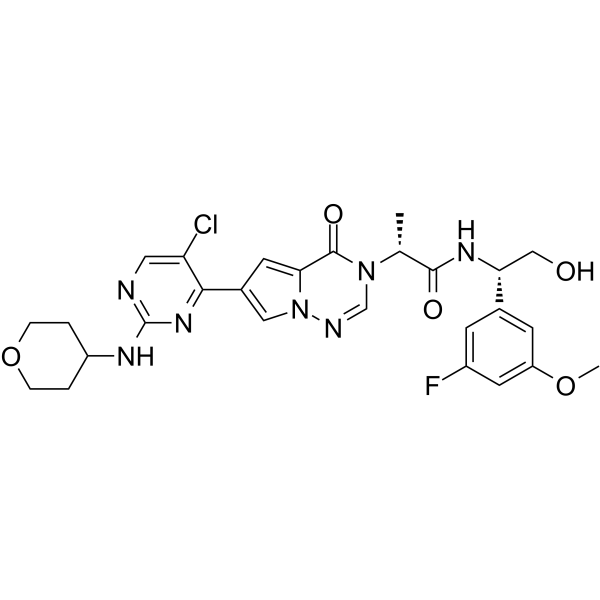 0 ImagesCat. No.: HY-145028CAS No.: 2634816-13-8
ERK1/2 inhibitor 6 is a potent inhibitor of ERK1/2. Mitogen-activated protein kinase (MAPK) plays an extremely important role in the signal transduction pathway, and extracellular signal regulated kinase (ERK) is a member of the MAPK family. ERK1/2 inhibitor 6 has the potential for the research or prevention of cancer, inflammation or other proliferative diseases (extracted from patent WO2021063335A1, compound 1).
-
2’-Deoxy-N6-(4-methoxybenzyl)adenosine
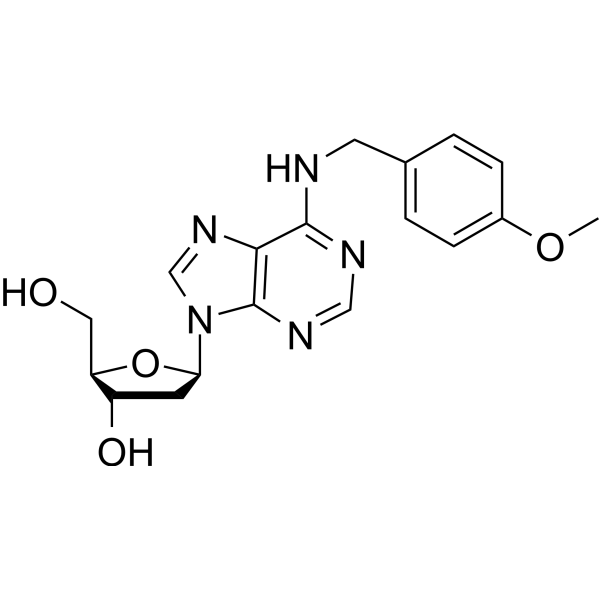 0 ImagesCat. No.: HY-154457CAS No.: 157640-47-6
2’-Deoxy-N6-(4-methoxybenzyl)adenosine is a purine nucleoside analog. Purine nucleoside analogs have broad antitumor activity targeting indolent lymphoid malignancies. Anticancer mechanisms in this process rely on inhibition of DNA synthesis, induction of apoptosis, etc.
-
YM-08
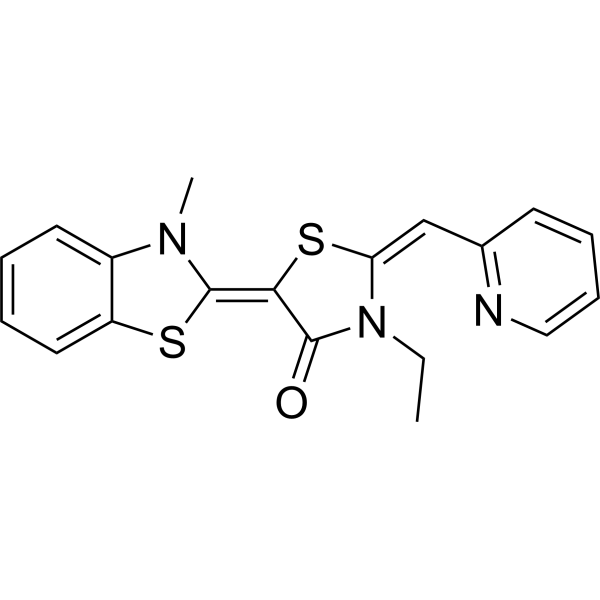 0 ImagesCat. No.: HY-139144CAS No.: 812647-88-4
-
rno-miR-298-3p inhibitor
 0 ImagesCat. No.: HY-RI04328
rno-miR-298-3p inhibitors are chemically-modified oligonucleotides that hybridize with mature miRNAs. The miRNA inhibitors have full-length nucleotide 2'-methoxy modification. The miRNA inhibitors strongly compete with mature miRNAs to prevent the complementary pairing of miRNAs and their target genes, thereby inhibiting miRNAs from functioning.
-
dTBP-3
 0 ImagesCat. No.: HY-P11903
dTBP-3 is a fully D-configured polypeptide competitive inhibitor that targets TIGIT. dTBP-3 can competitively occupy the binding interface between TIGIT and its ligand PVR, block TIGIT-mediated immunosuppressive signals, and reverse the immune exhaustion of NK cells and CD8+ T cells. dTBP-3 possesses anti-proteolytic activity and tumor tissue penetration ability, and can also enhance the tumor penetration capacity and cellular internalization efficiency of nanocarriers. dTBP-3 can be used in studies related to liver cancer, triple-negative breast cancer and non-small cell lung cancer.

-
hsa-miR-4284 inhibitor
 0 ImagesCat. No.: HY-RI00963
hsa-miR-4284 inhibitors are chemically-modified oligonucleotides that hybridize with mature miRNAs. The miRNA inhibitors have full-length nucleotide 2'-methoxy modification. The miRNA inhibitors strongly compete with mature miRNAs to prevent the complementary pairing of miRNAs and their target genes, thereby inhibiting miRNAs from functioning.
-
hsa-miR-5196-3p antagomir
 0 ImagesCat. No.: HY-RI01583A
hsa-miR-5196-3p antagomirs are chemically-modified oligonucleotides that hybridize with mature miRNAs. The miRNA antagomirs have 2 phosphorothioates at the 5' end, 4 phosphorothioates at the 3' end, 1 cholesterol group at the 3' end, and full-length nucleotide 2'-methoxy modification. The miRNA antagomirs strongly compete with mature miRNAs to prevent the complementary pairing of miRNAs and their target genes, thereby inhibiting miRNAs from functioning. Stability of miRNA antagomirs appears to be significantly higher than miRNA inhibitors, they exhibits enhanced cellular uptake, stability and regulatory activity in vivo.
-
PROTAC BRAF-V600E degrader-2
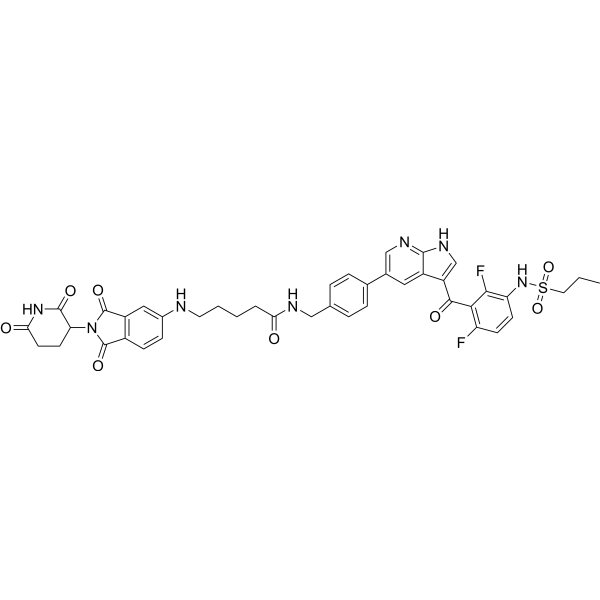 0 ImagesCat. No.: HY-137488CAS No.: 2417296-82-1
PROTAC BRAF-V600E degrader-2 is a PROTAC degrader targeting BRAF-V600E. The Kd values of PROTAC BRAF-V600E degrader-2 for BRAF and BRAF-V600E are 14.4 nM and 9 nM, respectively. PROTAC BRAF-V600E degrader-2 selectively degrades BRAF-V600E but does not degrade wild-type BRAF. PROTAC BRAF-V600E degrader-2 inhibits the MEK/ERK kinase cascade and suppresses the growth of melanoma cells. PROTAC BRAF-V600E degrader-2 can be used in studies related to melanoma and colon cancer.
-
KIM-161
 0 ImagesCat. No.: HY-172964CAS No.: 2559686-28-9
KIM-161 is a PIK3CA inhibitor. KIM-161 has significant antiproliferative activity with IC50 values of 1.428 and 1.562 µM against PI3KCA mutant breast cancer MCF7 and T47D cells, respectively. KIM-161 induces apoptosis and cell cycle arrest by inhibiting the PI3K/AKT/mTOR signaling pathway and inducing ROS production. KIM-161 can be used to study breast cancer and its PI3KCA mutant subtypes.
-
HS-PEG5-CH2CH2N3
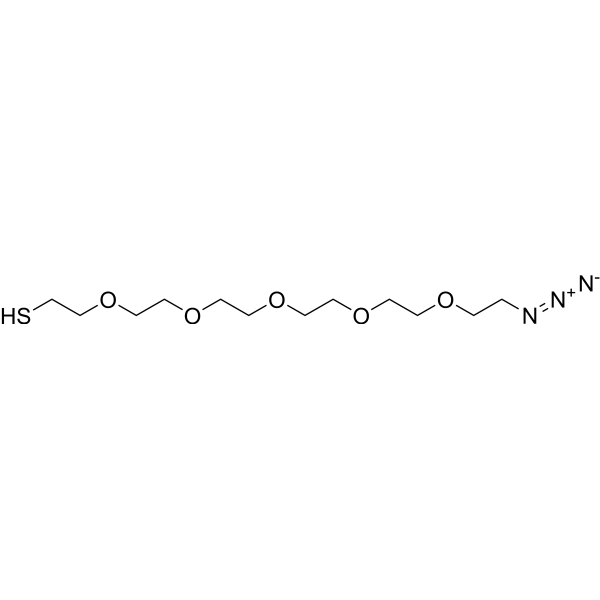 0 ImagesCat. No.: HY-130879CAS No.: 1449390-11-7
HS-PEG5-CH2CH2N3 is a PEG-based PROTAC linker that can be used in the synthesis of PROTACs. HS-PEG5-CH2CH2N3 is a click chemistry reagent, it contains an Azide group and can undergo copper-catalyzed azide-alkyne cycloaddition reaction (CuAAc) with molecules containing Alkyne groups. It can also undergo strain-promoted alkyne-azide cycloaddition (SPAAC) reactions with molecules containing DBCO or BCN groups.
-
Pseudolycorine
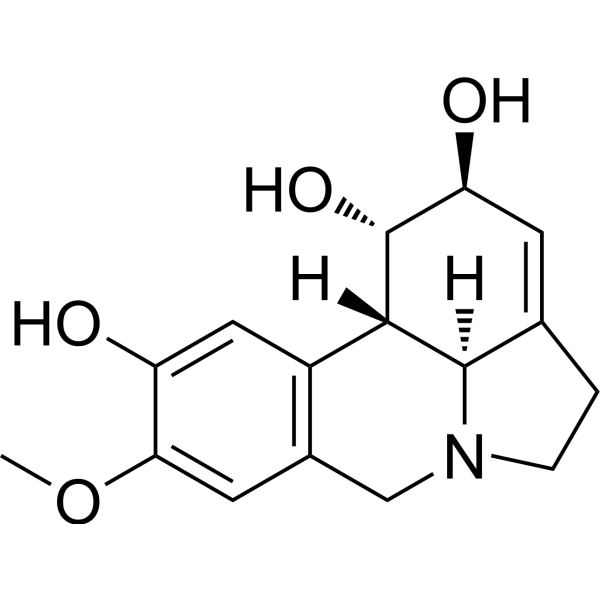 0 ImagesCat. No.: HY-117190CAS No.: 29429-03-6
Pseudolycorine is an Amaryllidaceae alkaloid with anticancer activity.
-
Rapaglutin E
 0 ImagesCat. No.: HY-176051Synonyms: RgE
Rapaglutin E (RgE) is a glucose transporter (GLUT) inhibitor. Rapaglutin E exhibits dose-dependent inhibition of [3H]-2DG uptake in A549, Jurkat T, PANC10.05, and RBC, with IC50 values 8.9 nM, 3.1 nM, 35.5 nM, 74.2 nM. Rapaglutin E inhibits cell proliferation in A549, PANC10.05, HeLa, Jurkat T, and HEK293T cells.
-
TMU454
 0 ImagesCat. No.: HY-180909
TMU454 is an ASGPR-targeting GalNAc-PROTAC BRD4 degrader conjugate. TMU454 undergoes ASGPR-mediated endocytosis and CTSB cleavage to release MZ1, which selectively degrades BRD4 in ASGPR-positive hepatocellular carcinoma cells via the VHL/UPS/proteasome pathway. TMU454 inhibits cancer cell proliferation and colony formation, and suppresses tumor growth in vivo. TMU454 can be used for research related to hepatocellular carcinoma.
-
mmu-miR-339-3p inhibitor
 0 ImagesCat. No.: HY-RI03034
mmu-miR-339-3p inhibitors are chemically-modified oligonucleotides that hybridize with mature miRNAs. The miRNA inhibitors have full-length nucleotide 2'-methoxy modification. The miRNA inhibitors strongly compete with mature miRNAs to prevent the complementary pairing of miRNAs and their target genes, thereby inhibiting miRNAs from functioning.
-
mmu-miR-6966-3p inhibitor
 0 ImagesCat. No.: HY-RI03659
mmu-miR-6966-3p inhibitors are chemically-modified oligonucleotides that hybridize with mature miRNAs. The miRNA inhibitors have full-length nucleotide 2'-methoxy modification. The miRNA inhibitors strongly compete with mature miRNAs to prevent the complementary pairing of miRNAs and their target genes, thereby inhibiting miRNAs from functioning.
-
PD-1/PD-L1-IN-64
 0 ImagesCat. No.: HY-183775CAS No.: 3114769-08-0
PD-1/PD-L1-IN-64 is a PD-1/PD-L1 interaction inhibitor. PD-1/PD-L1-IN-64 induces PD-L1 internalization and oligomerization, enhances T-cell activation, proliferation, and cancer cell elimination. PD-1/PD-L1-IN-64 can be used for the research of cancer.
-
AFG206
 0 ImagesCat. No.: HY-126920CAS No.: 630122-37-1
AFG206 is a first-generation ATP competitive “type II” FLT3 inhibitor. AFG206 potently inhibits cell proliferation (IC50 around 0.1 µM) via induction of Apoptosis in FLT3-ITD-Ba/F3 cells and D835Y-Ba/F3 cells. AFG206 is promising for research of acute myeloid leukemia.



