



Cancer Targeted Therapy
Cancer targeted therapy is the foundation of precision medicine; it uses drugs or other substances to target specific genes and proteins that control cancer cells’ growth, division and spreading. Compared to traditional chemotherapy drugs, targeted-drugs can specifically act on cancer cells with high efficacy without damaging normal cells. Drugs used in cancer targeted therapy mainly includes small molecules and macromolecules (e.g., monoclonal antibodies), which can target cancer cells and constituents in the tumor microenvironment to activate the immune system. Anti-angiogenesis drugs, such as those targeting vascular endothelial growth factor (VEGF), epidermal growth factor receptor (EGFR), transforming growth factor (TGF)-α, TGF-β, Tumor necrosis factor (TNF)-α, and platelet-derived endothelial growth factor (PDGFR) inhibit the proliferation and metastasis of cancer cells. In recent years, the proportion of antibody drugs in cancer treatment has gradually become prominent. Antibody-drug conjugates (ADCs) are a new type of targeted drugs that are composed of monoclonal antibody, cytotoxic drug and linker. ADCs can deliver drugs to tumor cells and minimize the toxicity to normal tissues. Proteolysis-targeting chimera (PROTAC) is a useful technology for targeted protein degradation. PROTAC exploits the ubiquitin-proteasome system and forms a ternary complex with a hijacked E3 ubiquitin ligase and target protein, leading to polyubiquitination and degradation of the target protein.
Targeted therapy is a useful strategy in treatment of cancer either alone or in combination with standard chemotherapy. At present, targeted therapy has proved significant clinical success in the treatment of many types of cancer, including breast cancer, colorectal cancer, leukemia, ovarian cancer and lung cancer.
-
hsa-miR-5100 antagomir
 0 ImagesCat. No.: HY-RI01535A
hsa-miR-5100 antagomirs are chemically-modified oligonucleotides that hybridize with mature miRNAs. The miRNA antagomirs have 2 phosphorothioates at the 5' end, 4 phosphorothioates at the 3' end, 1 cholesterol group at the 3' end, and full-length nucleotide 2'-methoxy modification. The miRNA antagomirs strongly compete with mature miRNAs to prevent the complementary pairing of miRNAs and their target genes, thereby inhibiting miRNAs from functioning. Stability of miRNA antagomirs appears to be significantly higher than miRNA inhibitors, they exhibits enhanced cellular uptake, stability and regulatory activity in vivo.
-
Thalidomide-NH-amido-C6-NH2 (hydrochloride)
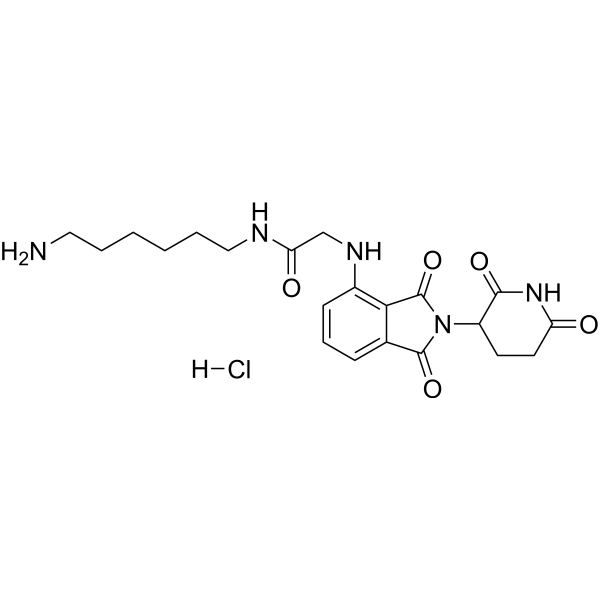 0 ImagesCat. No.: HY-138852ACAS No.: 2983057-92-5
Thalidomide-NH-amido-C6-NH2 hydrochloride is a synthesized E3 ligase ligand-linker conjugate that incorporates the Thalidomide based cereblon ligand and a linker used in PROTAC technology.
-
m-PEG4-CH2-methyl ester
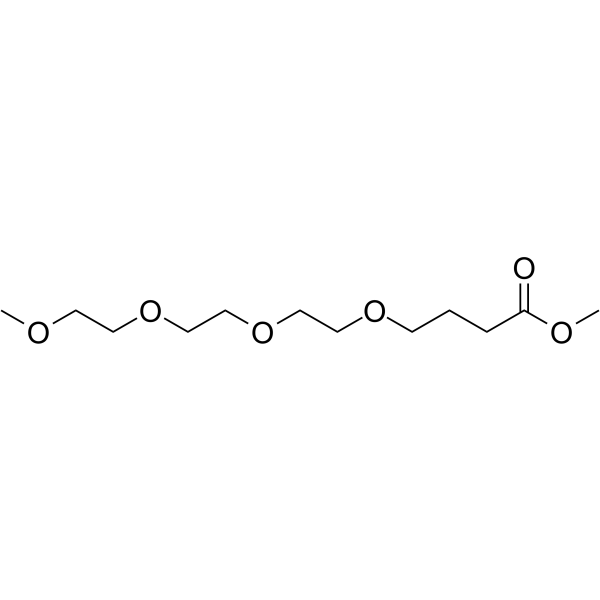 0 ImagesCat. No.: HY-141404CAS No.: 1920109-55-2

-
Deucravacitinib analog 1
 0 ImagesCat. No.: HY-181278CAS No.: 1609529-70-5
Deucravacitinib analog 1 (compound 3), Deucravacitinib (HY-117287) derivative, is a TYK2 allosteric ligand. Deucravacitinib analog 1 binds to the JH2 domain of TYK2. Deucravacitinib analog 1 serves as a starting point for development of TYK2-targeting PROTAC degraders. Deucravacitinib analog 1 can be used for the researches of psoriasis and cancer.
-
E07 aptamer
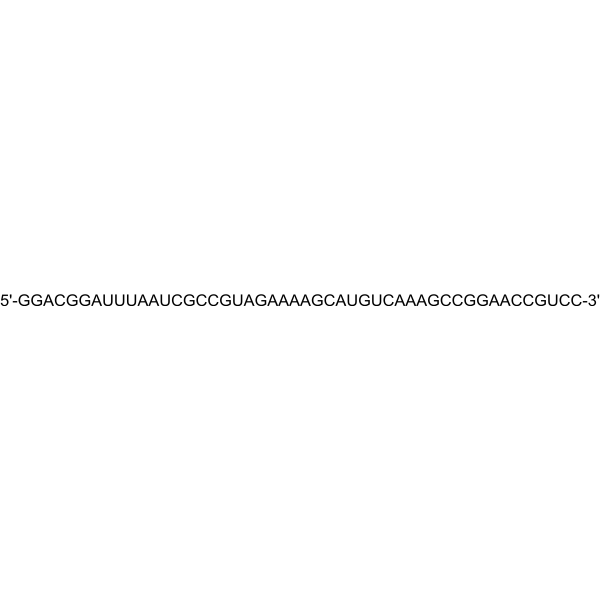 0 ImagesCat. No.: HY-155983
E07 aptamer is an aptamer that targets human EGFR. E07 aptamer can compete with EGF for binding, binds to a novel epitope on EGFR. E07 aptamer binds to cells expressing EGFR, blocks receptor autophosphorylation, and prevents proliferation of tumor cells in three-dimensional matrices. E07 aptamer can be used for tomor disease research.
-
SGK1-IN-9
 0 ImagesCat. No.: HY-185412CAS No.: 2803840-82-4
-
BET BD2-IN-3
 0 ImagesCat. No.: HY-159602CAS No.: 2677039-66-4
-
hsa-miR-7110-5p inhibitor
 0 ImagesCat. No.: HY-RI02364
hsa-miR-7110-5p inhibitors are chemically-modified oligonucleotides that hybridize with mature miRNAs. The miRNA inhibitors have full-length nucleotide 2'-methoxy modification. The miRNA inhibitors strongly compete with mature miRNAs to prevent the complementary pairing of miRNAs and their target genes, thereby inhibiting miRNAs from functioning.
-
mmu-miR-3099-5p inhibitor
 0 ImagesCat. No.: HY-RI02986
mmu-miR-3099-5p inhibitors are chemically-modified oligonucleotides that hybridize with mature miRNAs. The miRNA inhibitors have full-length nucleotide 2'-methoxy modification. The miRNA inhibitors strongly compete with mature miRNAs to prevent the complementary pairing of miRNAs and their target genes, thereby inhibiting miRNAs from functioning.
-
mmu-miR-6943-3p inhibitor
 0 ImagesCat. No.: HY-RI03611
mmu-miR-6943-3p inhibitors are chemically-modified oligonucleotides that hybridize with mature miRNAs. The miRNA inhibitors have full-length nucleotide 2'-methoxy modification. The miRNA inhibitors strongly compete with mature miRNAs to prevent the complementary pairing of miRNAs and their target genes, thereby inhibiting miRNAs from functioning.
-
rno-miR-1-3p inhibitor
 0 ImagesCat. No.: HY-RI04232
rno-miR-1-3p inhibitors are chemically-modified oligonucleotides that hybridize with mature miRNAs. The miRNA inhibitors have full-length nucleotide 2'-methoxy modification. The miRNA inhibitors strongly compete with mature miRNAs to prevent the complementary pairing of miRNAs and their target genes, thereby inhibiting miRNAs from functioning.
-
P18IN005 hydrochloride
 0 ImagesCat. No.: HY-115893ACAS No.: 7403-44-3
P18IN005 hydrochloride is a novel inhibitor of p18, exhibiting potent activity in negatively regulating haematopoietic stem cell (HSC) self-renewal. P18IN005 hydrochloride has been shown to be more effective than p27 in inhibiting HSC self-renewal in mouse models. P18IN005 hydrochloride promotes the expansion of functional HSCs in short-term cultures. P18IN005 hydrochloride serves as a valuable tool for dissecting the signaling pathways involved in stem cell self-renewal.
-
hsa-miR-217-3p inhibitor
 0 ImagesCat. No.: HY-RI00454
hsa-miR-217-3p inhibitors are chemically-modified oligonucleotides that hybridize with mature miRNAs. The miRNA inhibitors have full-length nucleotide 2'-methoxy modification. The miRNA inhibitors strongly compete with mature miRNAs to prevent the complementary pairing of miRNAs and their target genes, thereby inhibiting miRNAs from functioning.
-
hsa-miR-4471 inhibitor
 0 ImagesCat. No.: HY-RI01075
hsa-miR-4471 inhibitors are chemically-modified oligonucleotides that hybridize with mature miRNAs. The miRNA inhibitors have full-length nucleotide 2'-methoxy modification. The miRNA inhibitors strongly compete with mature miRNAs to prevent the complementary pairing of miRNAs and their target genes, thereby inhibiting miRNAs from functioning.
-
hsa-miR-548p antagomir
 0 ImagesCat. No.: HY-RI01695A
hsa-miR-548p antagomirs are chemically-modified oligonucleotides that hybridize with mature miRNAs. The miRNA antagomirs have 2 phosphorothioates at the 5' end, 4 phosphorothioates at the 3' end, 1 cholesterol group at the 3' end, and full-length nucleotide 2'-methoxy modification. The miRNA antagomirs strongly compete with mature miRNAs to prevent the complementary pairing of miRNAs and their target genes, thereby inhibiting miRNAs from functioning. Stability of miRNA antagomirs appears to be significantly higher than miRNA inhibitors, they exhibits enhanced cellular uptake, stability and regulatory activity in vivo.

-
Anticancer agent 31
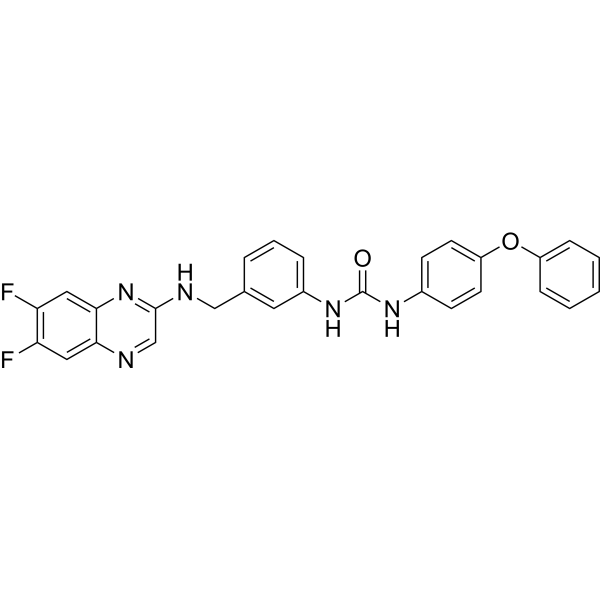 0 ImagesCat. No.: HY-143302CAS No.: 2222930-72-3
Anticancer agent 31 is a 1,3-diphenylurea quinoxaline derivative, and a anticancer agent. Anticancer agent 31 exhibits antitumor acitvity by arresting cell cycle at S phase and inducing apoptosis.
-
LN-439A
 0 ImagesCat. No.: HY-169213CAS No.: 2991822-04-7
LN-439A (compound LN-439A) is a BAP1 inhibitor that inhibits the growth of basal-like breast cancer by degrading KLF5..
-
Tubulin polymerization-IN-11
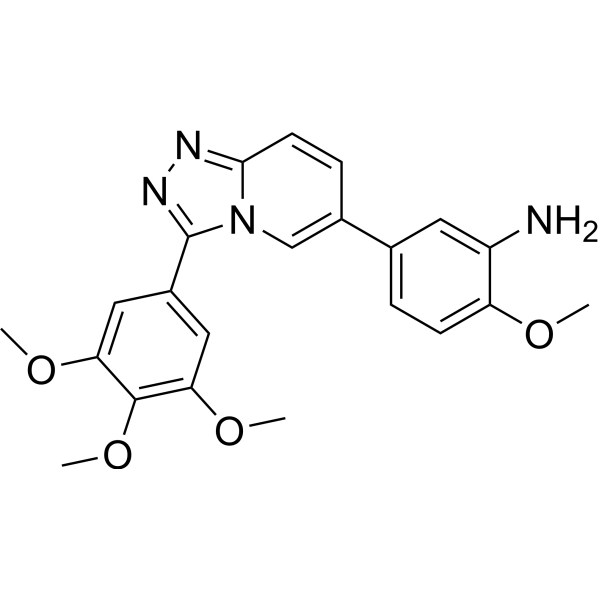 0 ImagesCat. No.: HY-146817CAS No.: 2470063-59-1
Tubulin polymerization-IN-11 is a potent tubulin polymerization inhibitor with an IC50 value of 3.4 μM. Tubulin polymerization-IN-11 shows antiproliferative activity. Tubulin polymerization-IN-11 induces Apoptosis and cell cycle arrest at G2/M phase. Tubulin polymerization-IN-11 decreases the expression of cyclin B1, p-cdc2, and Bcl-2 protein levels and increases the expression of cleaved PARP.



