



Cancer Targeted Therapy
Cancer targeted therapy is the foundation of precision medicine; it uses drugs or other substances to target specific genes and proteins that control cancer cells’ growth, division and spreading. Compared to traditional chemotherapy drugs, targeted-drugs can specifically act on cancer cells with high efficacy without damaging normal cells. Drugs used in cancer targeted therapy mainly includes small molecules and macromolecules (e.g., monoclonal antibodies), which can target cancer cells and constituents in the tumor microenvironment to activate the immune system. Anti-angiogenesis drugs, such as those targeting vascular endothelial growth factor (VEGF), epidermal growth factor receptor (EGFR), transforming growth factor (TGF)-α, TGF-β, Tumor necrosis factor (TNF)-α, and platelet-derived endothelial growth factor (PDGFR) inhibit the proliferation and metastasis of cancer cells. In recent years, the proportion of antibody drugs in cancer treatment has gradually become prominent. Antibody-drug conjugates (ADCs) are a new type of targeted drugs that are composed of monoclonal antibody, cytotoxic drug and linker. ADCs can deliver drugs to tumor cells and minimize the toxicity to normal tissues. Proteolysis-targeting chimera (PROTAC) is a useful technology for targeted protein degradation. PROTAC exploits the ubiquitin-proteasome system and forms a ternary complex with a hijacked E3 ubiquitin ligase and target protein, leading to polyubiquitination and degradation of the target protein.
Targeted therapy is a useful strategy in treatment of cancer either alone or in combination with standard chemotherapy. At present, targeted therapy has proved significant clinical success in the treatment of many types of cancer, including breast cancer, colorectal cancer, leukemia, ovarian cancer and lung cancer.
-
KIF18A-IN-19
 0 ImagesCat. No.: HY-180641CAS No.: 3109363-72-3
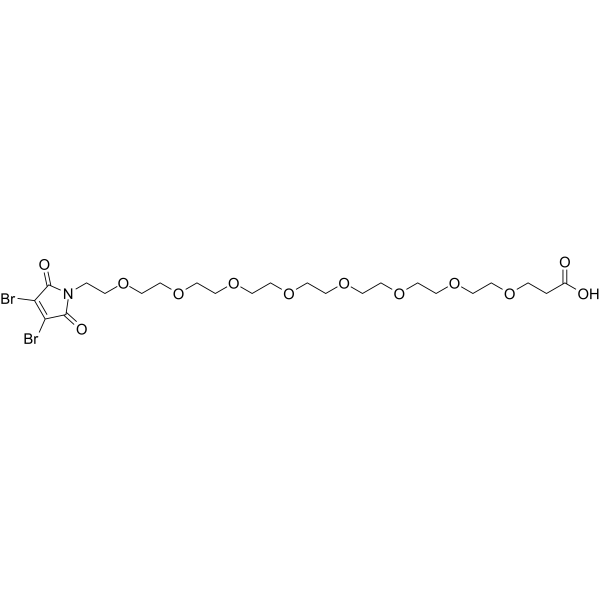
KIF18A-IN-19 (Compound 1) is an orally active KIF18A inhibitor with an IC50 of <0.1 μM. KIF18A-IN-19 has anti-cancer activity against ovarian cancer.
-
Sirtuin modulator 5
 0 ImagesCat. No.: HY-148322CAS No.: 694469-31-3
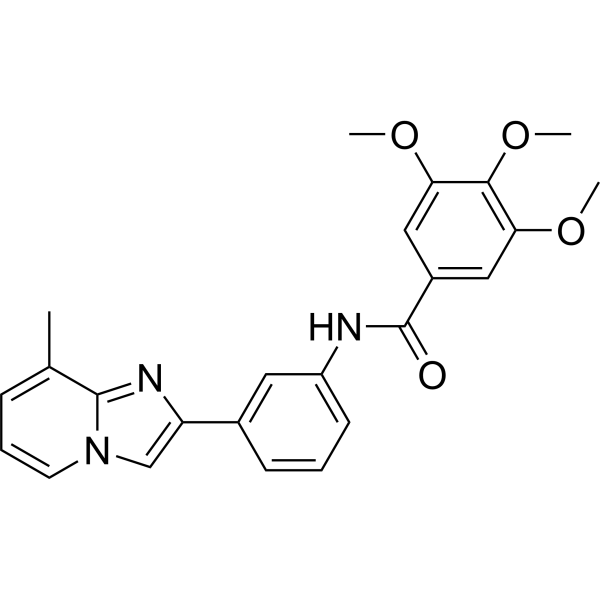
Sirtuin modulator 5 is a sirtuin modulating agent. Sirtuin modulator 5 can activate SIRT1 with a DC50 value of <50 μM. Sirtuin modulator 5 can be used for increasing the lifespan of a cell and used for the research of variety of diseases including, for example, diseases or disorders related to aging or stress, diabetes, obesity, neurodegenerative diseases, cardiovascular disease, blood clotting disorders, inflammation, cancer, and/or flushing as well as diseases or disorders that would benfit from increased mitochondrial activity.
-
Antitumor agent-106
 0 ImagesCat. No.: HY-155040
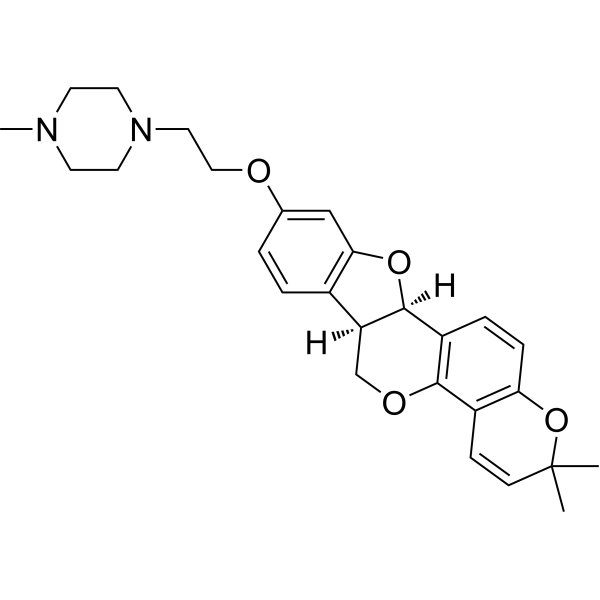
Antitumor agent-106 (compound 42) is an anticancer agent that exhibits good inhibitory activity (IC50=4.2-6.6 µM) against both lung cancer and colon cancer cell lines.
-
USP1-IN-10
 0 ImagesCat. No.: HY-161878CAS No.: 2857051-98-8
USP1-IN-10 (compound 2) is a potent tricyclic USP1 inhibitor with an IC50 of 7.6 nM. USP1-IN-10 inhibits MDA-MB-436 viability (IC50=21.58 nM). USP1-IN-10 has the potential for cancers research.
-
Methotrexate-alpha-alanine
 0 ImagesCat. No.: HY-165164CAS No.: 116819-28-4
Methotrexate-alpha-alanine is a prodrug for activation by enzyme-monoclonal antibody conjugates of Methotrexate (HY-14519). Methotrexate-alpha-alanine shows cytotoxicity.
-
Tubulin polymerization-IN-76
 0 ImagesCat. No.: HY-170924
Tubulin polymerization-IN-76 (compound 20b) is a potent and orally active Tubulin polymerization inhibitor. Tubulin polymerization-IN-76 inhibits Tubulin polymerization with an IC50 of 2.505 μM by acting on the colchicine binding site, thereby disrupting intracellular Microtubule networks and interfering with cell mitosis. Tubulin polymerization-IN-76 demonstrates exceptional efficacy against MGC-803 and HGC-27 cells with IC50s of 1.61 and 1.82 nM, respectively. Tubulin polymerization-IN-76 effectively inhibits the colony formation and cell migration activities, and induces G2/M phase cycle arrest and Apoptosis in MGC-803 and HGC-27 cells.Tubulin polymerization-IN-76 shows a broad-spectrum antiproliferative activity.
-
hsa-miR-8089 antagomir
 0 ImagesCat. No.: HY-RI02481A
hsa-miR-8089 antagomirs are chemically-modified oligonucleotides that hybridize with mature miRNAs. The miRNA antagomirs have 2 phosphorothioates at the 5' end, 4 phosphorothioates at the 3' end, 1 cholesterol group at the 3' end, and full-length nucleotide 2'-methoxy modification. The miRNA antagomirs strongly compete with mature miRNAs to prevent the complementary pairing of miRNAs and their target genes, thereby inhibiting miRNAs from functioning. Stability of miRNA antagomirs appears to be significantly higher than miRNA inhibitors, they exhibits enhanced cellular uptake, stability and regulatory activity in vivo.
-
mmu-miR-374b-3p antagomir
 0 ImagesCat. No.: HY-RI03103A
mmu-miR-374b-3p antagomirs are chemically-modified oligonucleotides that hybridize with mature miRNAs. The miRNA antagomirs have 2 phosphorothioates at the 5' end, 4 phosphorothioates at the 3' end, 1 cholesterol group at the 3' end, and full-length nucleotide 2'-methoxy modification. The miRNA antagomirs strongly compete with mature miRNAs to prevent the complementary pairing of miRNAs and their target genes, thereby inhibiting miRNAs from functioning. Stability of miRNA antagomirs appears to be significantly higher than miRNA inhibitors, they exhibits enhanced cellular uptake, stability and regulatory activity in vivo.
-
mmu-miR-6998-3p antagomir
 0 ImagesCat. No.: HY-RI03728A
mmu-miR-6998-3p antagomirs are chemically-modified oligonucleotides that hybridize with mature miRNAs. The miRNA antagomirs have 2 phosphorothioates at the 5' end, 4 phosphorothioates at the 3' end, 1 cholesterol group at the 3' end, and full-length nucleotide 2'-methoxy modification. The miRNA antagomirs strongly compete with mature miRNAs to prevent the complementary pairing of miRNAs and their target genes, thereby inhibiting miRNAs from functioning. Stability of miRNA antagomirs appears to be significantly higher than miRNA inhibitors, they exhibits enhanced cellular uptake, stability and regulatory activity in vivo.
-
rno-miR-324-3p antagomir
 0 ImagesCat. No.: HY-RI04349A
rno-miR-324-3p antagomirs are chemically-modified oligonucleotides that hybridize with mature miRNAs. The miRNA antagomirs have 2 phosphorothioates at the 5' end, 4 phosphorothioates at the 3' end, 1 cholesterol group at the 3' end, and full-length nucleotide 2'-methoxy modification. The miRNA antagomirs strongly compete with mature miRNAs to prevent the complementary pairing of miRNAs and their target genes, thereby inhibiting miRNAs from functioning. Stability of miRNA antagomirs appears to be significantly higher than miRNA inhibitors, they exhibits enhanced cellular uptake, stability and regulatory activity in vivo.
-
Carbonic anhydrase inhibitor 10
 0 ImagesCat. No.: HY-115994CAS No.: 2883453-30-1
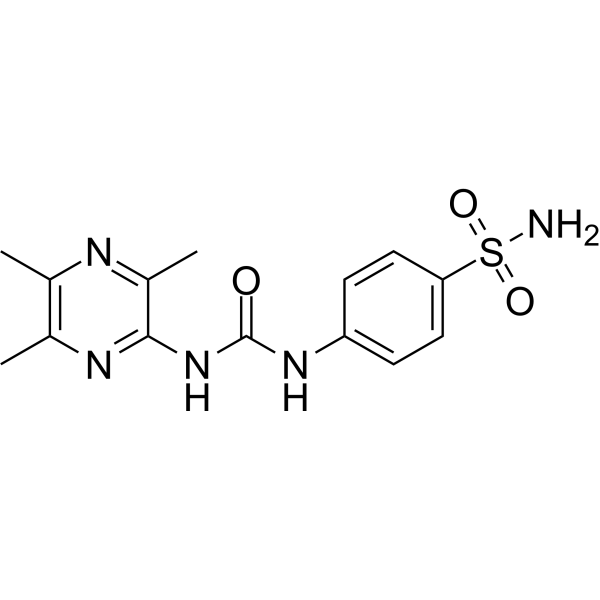
Carbonic anhydrase inhibitor 10 is a potent hCA IX inhibitor with a Ki value of 6.2 nM. Carbonic anhydrase inhibitor 10 exhibits anti-proliferative activity against MCF-7 cancer cell line with an IC50 of 11.9 μM. Carbonic anhydrase inhibitor 10 can be used for cancer research.
-
740 Y-P TFA
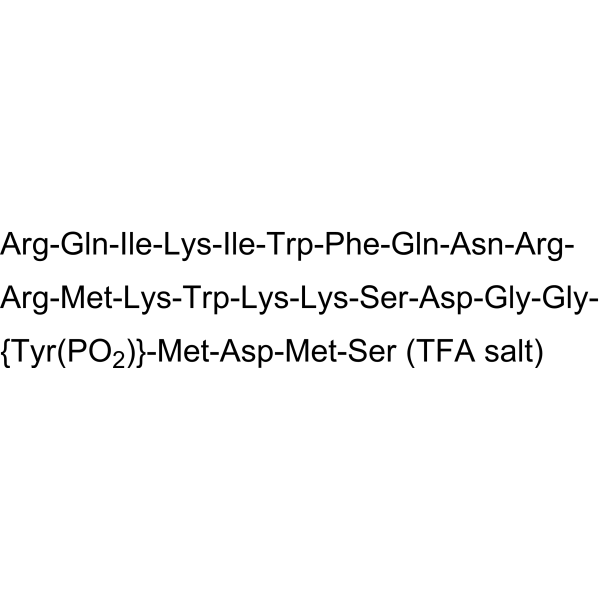 0 ImagesCat. No.: HY-P0175ASynonyms: 740YPDGFR TFA; PDGFR 740Y-P TFA
740 Y-P TFA is a potent and cell-permeable PI3K activator. 740 Y-P TFA readily binds GST fusion proteins containing both the N- and C- terminal SH2 domains of p85 but fails to bind GST alone.
-
JCAR-023
 0 ImagesCat. No.: HY-P991296
JCAR-023 is a human monoclonal antibody (mAb) targeting CAML1/CD171. JCAR-023 can be used in Neuroblastoma research.
-
hsa-miR-3622b-3p antagomir
 0 ImagesCat. No.: HY-RI00747A
hsa-miR-3622b-3p antagomirs are chemically-modified oligonucleotides that hybridize with mature miRNAs. The miRNA antagomirs have 2 phosphorothioates at the 5' end, 4 phosphorothioates at the 3' end, 1 cholesterol group at the 3' end, and full-length nucleotide 2'-methoxy modification. The miRNA antagomirs strongly compete with mature miRNAs to prevent the complementary pairing of miRNAs and their target genes, thereby inhibiting miRNAs from functioning. Stability of miRNA antagomirs appears to be significantly higher than miRNA inhibitors, they exhibits enhanced cellular uptake, stability and regulatory activity in vivo.
-
hsa-miR-4754 antagomir
 0 ImagesCat. No.: HY-RI01368A
hsa-miR-4754 antagomirs are chemically-modified oligonucleotides that hybridize with mature miRNAs. The miRNA antagomirs have 2 phosphorothioates at the 5' end, 4 phosphorothioates at the 3' end, 1 cholesterol group at the 3' end, and full-length nucleotide 2'-methoxy modification. The miRNA antagomirs strongly compete with mature miRNAs to prevent the complementary pairing of miRNAs and their target genes, thereby inhibiting miRNAs from functioning. Stability of miRNA antagomirs appears to be significantly higher than miRNA inhibitors, they exhibits enhanced cellular uptake, stability and regulatory activity in vivo.
-
hsa-miR-665 inhibitor
 0 ImagesCat. No.: HY-RI01989
hsa-miR-665 inhibitors are chemically-modified oligonucleotides that hybridize with mature miRNAs. The miRNA inhibitors have full-length nucleotide 2'-methoxy modification. The miRNA inhibitors strongly compete with mature miRNAs to prevent the complementary pairing of miRNAs and their target genes, thereby inhibiting miRNAs from functioning.
-
Melicopidine
 0 Images
Melicopidine (NSC 34757) is a DNA topoisomerase inhibitor, which is an acridone alkaloid found in the bark of Medicosma subsessilis. Melicopidine exerts potential antitumor activity by binding to DNA or inhibiting related enzyme activity.
-
CA9hu-1
 0 ImagesCat. No.: HY-P991887
-
hsa-miR-141-5p antagomir
 0 ImagesCat. No.: HY-RI00275A
hsa-miR-141-5p antagomirs are chemically-modified oligonucleotides that hybridize with mature miRNAs. The miRNA antagomirs have 2 phosphorothioates at the 5' end, 4 phosphorothioates at the 3' end, 1 cholesterol group at the 3' end, and full-length nucleotide 2'-methoxy modification. The miRNA antagomirs strongly compete with mature miRNAs to prevent the complementary pairing of miRNAs and their target genes, thereby inhibiting miRNAs from functioning. Stability of miRNA antagomirs appears to be significantly higher than miRNA inhibitors, they exhibits enhanced cellular uptake, stability and regulatory activity in vivo.



