



Cancer Targeted Therapy
Cancer targeted therapy is the foundation of precision medicine; it uses drugs or other substances to target specific genes and proteins that control cancer cells’ growth, division and spreading. Compared to traditional chemotherapy drugs, targeted-drugs can specifically act on cancer cells with high efficacy without damaging normal cells. Drugs used in cancer targeted therapy mainly includes small molecules and macromolecules (e.g., monoclonal antibodies), which can target cancer cells and constituents in the tumor microenvironment to activate the immune system. Anti-angiogenesis drugs, such as those targeting vascular endothelial growth factor (VEGF), epidermal growth factor receptor (EGFR), transforming growth factor (TGF)-α, TGF-β, Tumor necrosis factor (TNF)-α, and platelet-derived endothelial growth factor (PDGFR) inhibit the proliferation and metastasis of cancer cells. In recent years, the proportion of antibody drugs in cancer treatment has gradually become prominent. Antibody-drug conjugates (ADCs) are a new type of targeted drugs that are composed of monoclonal antibody, cytotoxic drug and linker. ADCs can deliver drugs to tumor cells and minimize the toxicity to normal tissues. Proteolysis-targeting chimera (PROTAC) is a useful technology for targeted protein degradation. PROTAC exploits the ubiquitin-proteasome system and forms a ternary complex with a hijacked E3 ubiquitin ligase and target protein, leading to polyubiquitination and degradation of the target protein.
Targeted therapy is a useful strategy in treatment of cancer either alone or in combination with standard chemotherapy. At present, targeted therapy has proved significant clinical success in the treatment of many types of cancer, including breast cancer, colorectal cancer, leukemia, ovarian cancer and lung cancer.
-
Tubulin polymerization-IN-52
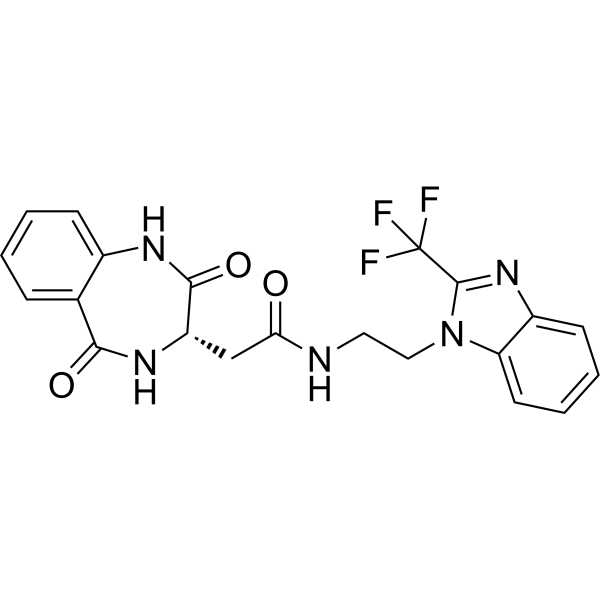 0 ImagesCat. No.: HY-156271CAS No.: 2108615-05-8
Tubulin polymerization-IN-52 (compound SC23) is a potent tubulin polymerization inhibitor, with an IC50 of 2.9 μM.
-
HO-PEG24-CH2COOH
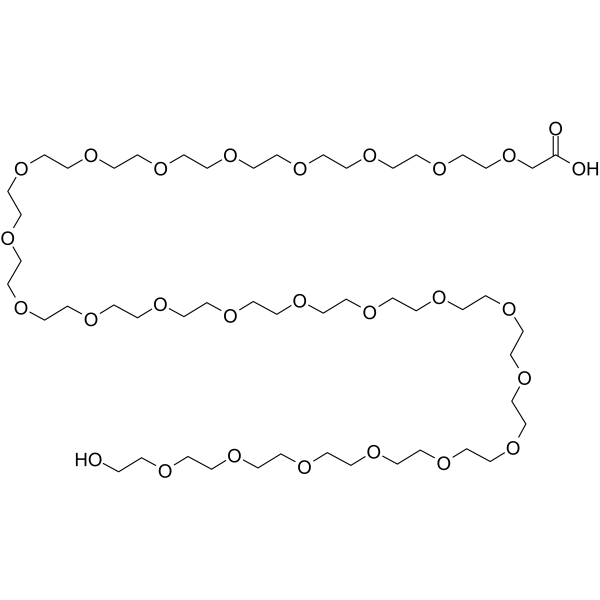 0 ImagesCat. No.: HY-133305CAS No.: 2933173-82-9
-
mmu-miR-181b-2-3p antagomir
 0 ImagesCat. No.: HY-RI02696A
mmu-miR-181b-2-3p antagomirs are chemically-modified oligonucleotides that hybridize with mature miRNAs. The miRNA antagomirs have 2 phosphorothioates at the 5' end, 4 phosphorothioates at the 3' end, 1 cholesterol group at the 3' end, and full-length nucleotide 2'-methoxy modification. The miRNA antagomirs strongly compete with mature miRNAs to prevent the complementary pairing of miRNAs and their target genes, thereby inhibiting miRNAs from functioning. Stability of miRNA antagomirs appears to be significantly higher than miRNA inhibitors, they exhibits enhanced cellular uptake, stability and regulatory activity in vivo.
-
mmu-miR-5625-3p inhibitor
 0 ImagesCat. No.: HY-RI03318
mmu-miR-5625-3p inhibitors are chemically-modified oligonucleotides that hybridize with mature miRNAs. The miRNA inhibitors have full-length nucleotide 2'-methoxy modification. The miRNA inhibitors strongly compete with mature miRNAs to prevent the complementary pairing of miRNAs and their target genes, thereby inhibiting miRNAs from functioning.
-
mmu-miR-7117-3p antagomir
 0 ImagesCat. No.: HY-RI03943A
mmu-miR-7117-3p antagomirs are chemically-modified oligonucleotides that hybridize with mature miRNAs. The miRNA antagomirs have 2 phosphorothioates at the 5' end, 4 phosphorothioates at the 3' end, 1 cholesterol group at the 3' end, and full-length nucleotide 2'-methoxy modification. The miRNA antagomirs strongly compete with mature miRNAs to prevent the complementary pairing of miRNAs and their target genes, thereby inhibiting miRNAs from functioning. Stability of miRNA antagomirs appears to be significantly higher than miRNA inhibitors, they exhibits enhanced cellular uptake, stability and regulatory activity in vivo.
-
rno-miR-702-3p inhibitor
 0 ImagesCat. No.: HY-RI04564
rno-miR-702-3p inhibitors are chemically-modified oligonucleotides that hybridize with mature miRNAs. The miRNA inhibitors have full-length nucleotide 2'-methoxy modification. The miRNA inhibitors strongly compete with mature miRNAs to prevent the complementary pairing of miRNAs and their target genes, thereby inhibiting miRNAs from functioning.
-
Trk-IN-7
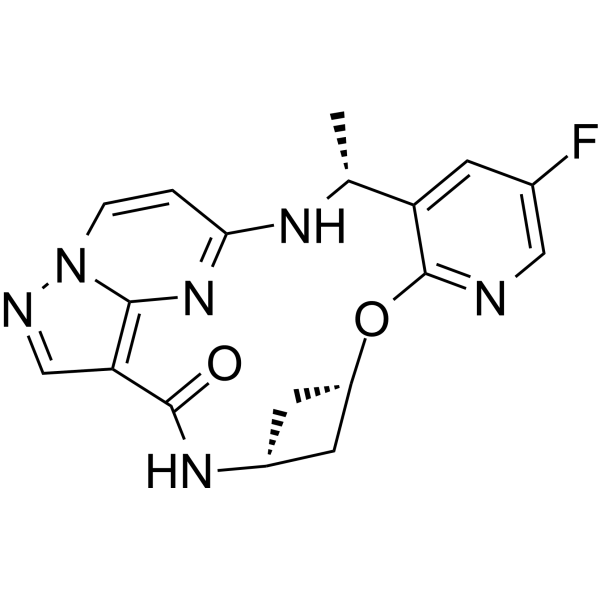 0 ImagesCat. No.: HY-143557CAS No.: 2383011-61-6
-
8-Bromo-2'-deoxyguanosine-13C,15N2
 0 ImagesCat. No.: HY-W767399
8-Bromo-2'-deoxyguanosine-13C,15N2 is the 13C- and 15N-labeled 8-Bromo-2'-deoxyguanosine (HY-W011168). 8-Bromo-2'-deoxyguanosine is an inflammation-related DNA halogenated adduct and an early biomarker of inflammation-induced oxidative tissue damage. The formation of 8-Bromo-2'-deoxyguanosine precedes that of oxidative and nitrative products, and it can be generated via the MPO-H2O2-Cl--Br- system. 8-Bromo-2'-deoxyguanosine serves as the immunogen for preparing the monoclonal antibody mAb8B3, which can be used to detect early DNA modifications in preclinical models; its urinary level also increases significantly in inflammatory disease models. 8-Bromo-2'-deoxyguanosine can also be produced in the dermis of UV-B irradiated mice, and the extract of Coprinus comatus significantly reduces its level. 8-Bromo-2'-deoxyguanosine finds applications in studies related to inflammatory diseases, diabetes, hepatocellular carcinoma, and UV-B induced skin inflammation.
-
2’-O-Me-2-thio-U-3’-phos phoramidite
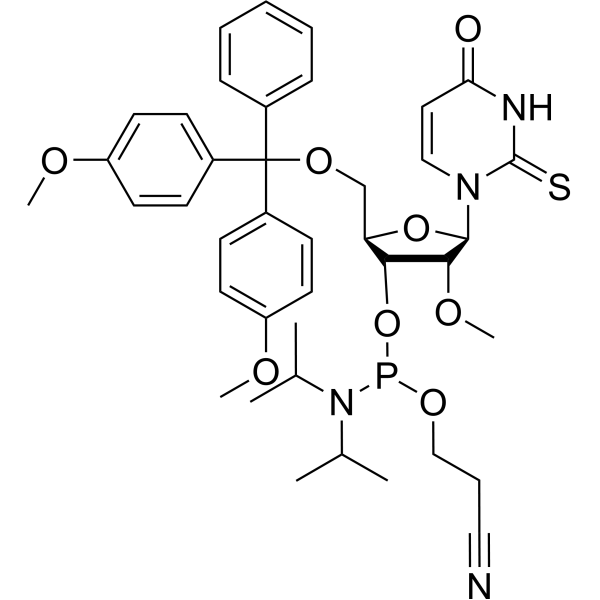 0 ImagesCat. No.: HY-154224CAS No.: 302918-84-9
2’-O-Me-2-thio-U-3’-phos phoramidite is a purine nucleoside analog. Purine nucleoside analogs have broad antitumor activity targeting indolent lymphoid malignancies. Anticancer mechanisms in this process rely on inhibition of DNA synthesis, induction of apoptosis, etc.
-
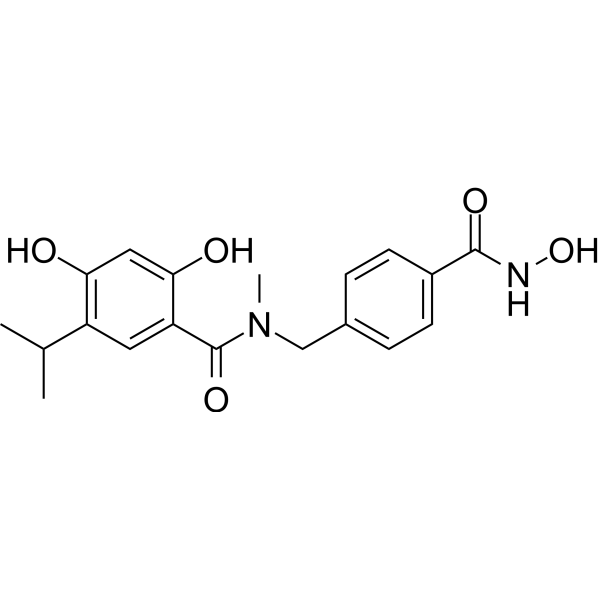
PROTAC HDAC4 Degrader-1
 0 ImagesCat. No.: HY-179321CAS No.: 3036245-14-1
PROTAC HDAC4 Degrader-1 (compound SCT-1) is a potent and selective PROTAC HDAC4 degrader. PROTAC HDAC4 Degrader-1 reduces HDAC4 protein level, induces S phase cell cycle arrest, and inhibits cell colony formation, thereby inhibiting proliferation of the tumor cells. PROTAC HDAC4 Degrader-1 exhibits efficacy in a H460 mouse model. PROTAC HDAC4 Degrader-1 can be used for cancer research, such as lung cancer.
-
CAIX/CAXII-IN prodrug-1
 0 ImagesCat. No.: HY-183580
CAIX/CAXII-IN prodrug-1 is a subtype-dependent prodrug inhibitor of carbonic anhydrase IX and XII (CAIX/CAXII). CAIX/CAXII-IN prodrug-1 itself shows no activity against carbonic anhydrases, and after hydrolysis, it exhibits Ki values of 54 nM and 62 nM against hCA IX and hCA XII, respectively. CAIX/CAXII-IN prodrug-1 exerts antiproliferative activity against cancer cells and induces cell apoptosis (apoptosis) via the endogenous mitochondrial pathway. CAIX/CAXII-IN prodrug-1 can be used in the research of breast cancer, colorectal adenocarcinoma and prostate cancer.
-
Paroxetine-d2
 0 ImagesCat. No.: HY-111124CAS No.: 923932-43-8Synonyms: BRL29060-d2
Paroxetine-d2 (BRL29060-d2) is the deuterated-labeled Paroxetine (HY-122272). Paroxetine (BRL29060) is an orally active and selective serotonin reuptake inhibitor (SSRI) and apoptosis inducer with blood-brain barrier permeability. Paroxetine inhibits nitric oxide synthase and CYP2D6, induces desensitization of 5-HT1A/1B/1D autoreceptors, downregulates 5-HT2 receptors, and promotes the production of inflammatory cytokines. Paroxetine is a weak norepinephrine (NE) uptake inhibitor and possesses antitumor activity. Paroxetine is widely used in research concerning depression, obsessive-compulsive disorder, panic disorder, social phobia, generalized anxiety disorder, post-traumatic stress disorder, premenstrual dysphoric disorder, hot flashes, and related conditions.
-
EGFR-IN-113
 0 ImagesCat. No.: HY-158969CAS No.: 2549192-10-9
EGFR-IN-113 (compound II-1) is an EGFR kinase inhibitor with an IC50 of 14.79 μM. EGFR-IN-113 can induce apoptosis and inhibit cell proliferation by downregulating Akt and Erk1/2 signaling. EGFR-IN-113 can be used for research in EGFR-driven cancers, such as lung cancer, pancreatic cancer, and breast cancer.
-
LSD1-IN-39
 0 ImagesCat. No.: HY-172170CAS No.: 3024554-34-2
LSD1-IN-39 (Compound 14) is a reversible inhibitor for LSD1 with an IC50 of 0.18 μM. LSD1-IN-39 exhibits broad-spectrum anti-proliferative activity against cancer cells, inhibits the cell migration of HepG2 and inhibits the epithelial-mesenchymal transition. LSD1-IN-39 exhibits antitumor activity in mouse models.
-
hsa-miR-106b-3p inhibitor
 0 ImagesCat. No.: HY-RI00055
hsa-miR-106b-3p inhibitors are chemically-modified oligonucleotides that hybridize with mature miRNAs. The miRNA inhibitors have full-length nucleotide 2'-methoxy modification. The miRNA inhibitors strongly compete with mature miRNAs to prevent the complementary pairing of miRNAs and their target genes, thereby inhibiting miRNAs from functioning.
-
hsa-miR-4711-5p antagomir
 0 ImagesCat. No.: HY-RI01298A
hsa-miR-4711-5p antagomirs are chemically-modified oligonucleotides that hybridize with mature miRNAs. The miRNA antagomirs have 2 phosphorothioates at the 5' end, 4 phosphorothioates at the 3' end, 1 cholesterol group at the 3' end, and full-length nucleotide 2'-methoxy modification. The miRNA antagomirs strongly compete with mature miRNAs to prevent the complementary pairing of miRNAs and their target genes, thereby inhibiting miRNAs from functioning. Stability of miRNA antagomirs appears to be significantly higher than miRNA inhibitors, they exhibits enhanced cellular uptake, stability and regulatory activity in vivo.
-
hsa-miR-642b-5p inhibitor
 0 ImagesCat. No.: HY-RI01919
hsa-miR-642b-5p inhibitors are chemically-modified oligonucleotides that hybridize with mature miRNAs. The miRNA inhibitors have full-length nucleotide 2'-methoxy modification. The miRNA inhibitors strongly compete with mature miRNAs to prevent the complementary pairing of miRNAs and their target genes, thereby inhibiting miRNAs from functioning.
-
hsa-miR-3118 antagomir
 0 ImagesCat. No.: HY-RI00549A
hsa-miR-3118 antagomirs are chemically-modified oligonucleotides that hybridize with mature miRNAs. The miRNA antagomirs have 2 phosphorothioates at the 5' end, 4 phosphorothioates at the 3' end, 1 cholesterol group at the 3' end, and full-length nucleotide 2'-methoxy modification. The miRNA antagomirs strongly compete with mature miRNAs to prevent the complementary pairing of miRNAs and their target genes, thereby inhibiting miRNAs from functioning. Stability of miRNA antagomirs appears to be significantly higher than miRNA inhibitors, they exhibits enhanced cellular uptake, stability and regulatory activity in vivo.
-
hsa-miR-765 antagomir
 0 ImagesCat. No.: HY-RI02411A
hsa-miR-765 antagomirs are chemically-modified oligonucleotides that hybridize with mature miRNAs. The miRNA antagomirs have 2 phosphorothioates at the 5' end, 4 phosphorothioates at the 3' end, 1 cholesterol group at the 3' end, and full-length nucleotide 2'-methoxy modification. The miRNA antagomirs strongly compete with mature miRNAs to prevent the complementary pairing of miRNAs and their target genes, thereby inhibiting miRNAs from functioning. Stability of miRNA antagomirs appears to be significantly higher than miRNA inhibitors, they exhibits enhanced cellular uptake, stability and regulatory activity in vivo.



