



Cancer Targeted Therapy
Cancer targeted therapy is the foundation of precision medicine; it uses drugs or other substances to target specific genes and proteins that control cancer cells’ growth, division and spreading. Compared to traditional chemotherapy drugs, targeted-drugs can specifically act on cancer cells with high efficacy without damaging normal cells. Drugs used in cancer targeted therapy mainly includes small molecules and macromolecules (e.g., monoclonal antibodies), which can target cancer cells and constituents in the tumor microenvironment to activate the immune system. Anti-angiogenesis drugs, such as those targeting vascular endothelial growth factor (VEGF), epidermal growth factor receptor (EGFR), transforming growth factor (TGF)-α, TGF-β, Tumor necrosis factor (TNF)-α, and platelet-derived endothelial growth factor (PDGFR) inhibit the proliferation and metastasis of cancer cells. In recent years, the proportion of antibody drugs in cancer treatment has gradually become prominent. Antibody-drug conjugates (ADCs) are a new type of targeted drugs that are composed of monoclonal antibody, cytotoxic drug and linker. ADCs can deliver drugs to tumor cells and minimize the toxicity to normal tissues. Proteolysis-targeting chimera (PROTAC) is a useful technology for targeted protein degradation. PROTAC exploits the ubiquitin-proteasome system and forms a ternary complex with a hijacked E3 ubiquitin ligase and target protein, leading to polyubiquitination and degradation of the target protein.
Targeted therapy is a useful strategy in treatment of cancer either alone or in combination with standard chemotherapy. At present, targeted therapy has proved significant clinical success in the treatment of many types of cancer, including breast cancer, colorectal cancer, leukemia, ovarian cancer and lung cancer.
-
hsa-miR-3912-3p inhibitor
 0 ImagesCat. No.: HY-RI00869
hsa-miR-3912-3p inhibitors are chemically-modified oligonucleotides that hybridize with mature miRNAs. The miRNA inhibitors have full-length nucleotide 2'-methoxy modification. The miRNA inhibitors strongly compete with mature miRNAs to prevent the complementary pairing of miRNAs and their target genes, thereby inhibiting miRNAs from functioning.
-
hsa-miR-5002-3p antagomir
 0 ImagesCat. No.: HY-RI01489A
hsa-miR-5002-3p antagomirs are chemically-modified oligonucleotides that hybridize with mature miRNAs. The miRNA antagomirs have 2 phosphorothioates at the 5' end, 4 phosphorothioates at the 3' end, 1 cholesterol group at the 3' end, and full-length nucleotide 2'-methoxy modification. The miRNA antagomirs strongly compete with mature miRNAs to prevent the complementary pairing of miRNAs and their target genes, thereby inhibiting miRNAs from functioning. Stability of miRNA antagomirs appears to be significantly higher than miRNA inhibitors, they exhibits enhanced cellular uptake, stability and regulatory activity in vivo.
-
hsa-miR-6774-3p inhibitor
 0 ImagesCat. No.: HY-RI02110
hsa-miR-6774-3p inhibitors are chemically-modified oligonucleotides that hybridize with mature miRNAs. The miRNA inhibitors have full-length nucleotide 2'-methoxy modification. The miRNA inhibitors strongly compete with mature miRNAs to prevent the complementary pairing of miRNAs and their target genes, thereby inhibiting miRNAs from functioning.
-
mmu-miR-1906 inhibitor
 0 ImagesCat. No.: HY-RI02731
mmu-miR-1906 inhibitors are chemically-modified oligonucleotides that hybridize with mature miRNAs. The miRNA inhibitors have full-length nucleotide 2'-methoxy modification. The miRNA inhibitors strongly compete with mature miRNAs to prevent the complementary pairing of miRNAs and their target genes, thereby inhibiting miRNAs from functioning.
-
mmu-miR-6346 antagomir
 0 ImagesCat. No.: HY-RI03352A
mmu-miR-6346 antagomirs are chemically-modified oligonucleotides that hybridize with mature miRNAs. The miRNA antagomirs have 2 phosphorothioates at the 5' end, 4 phosphorothioates at the 3' end, 1 cholesterol group at the 3' end, and full-length nucleotide 2'-methoxy modification. The miRNA antagomirs strongly compete with mature miRNAs to prevent the complementary pairing of miRNAs and their target genes, thereby inhibiting miRNAs from functioning. Stability of miRNA antagomirs appears to be significantly higher than miRNA inhibitors, they exhibits enhanced cellular uptake, stability and regulatory activity in vivo.
-
mmu-miR-7220-5p inhibitor
 0 ImagesCat. No.: HY-RI03978
mmu-miR-7220-5p inhibitors are chemically-modified oligonucleotides that hybridize with mature miRNAs. The miRNA inhibitors have full-length nucleotide 2'-methoxy modification. The miRNA inhibitors strongly compete with mature miRNAs to prevent the complementary pairing of miRNAs and their target genes, thereby inhibiting miRNAs from functioning.
-
Boc-NH-PEG6-propargyl
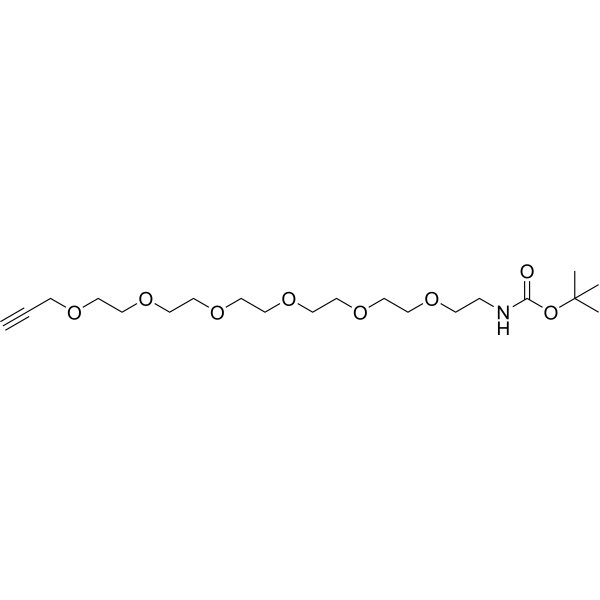 0 ImagesCat. No.: HY-140881CAS No.: 1262991-52-5
-
TRK/ALK-IN-1
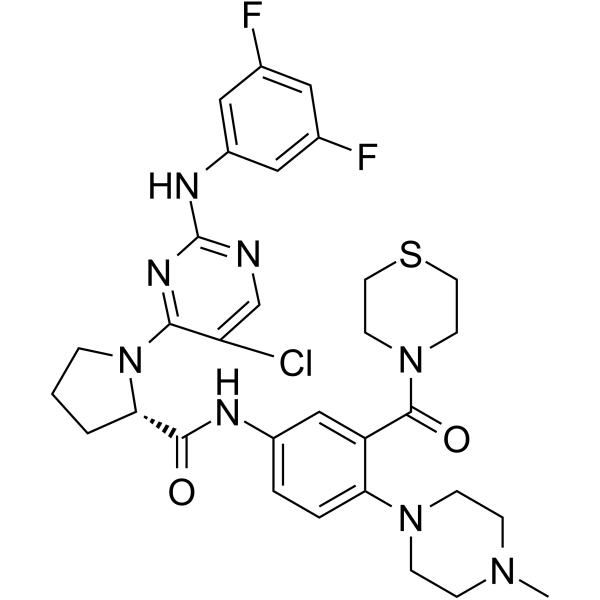 0 ImagesCat. No.: HY-144732CAS No.: 3052405-64-5
TRK/ALK-IN-1 (compound 21) is a potent and dual inhibitor of TRK and ALK. TRK/ALK-IN-1 in the enzymatic assays is in good accordance with anti-proliferative activity with IC50 values of 2.2, 9.3 and 38 nM towards TRKA, ALKWT and ALKL1196M, respectively. TRK/ALK-IN-1 has the potential for the research of cancer diseases.
-
EGFR/HER2-IN-5
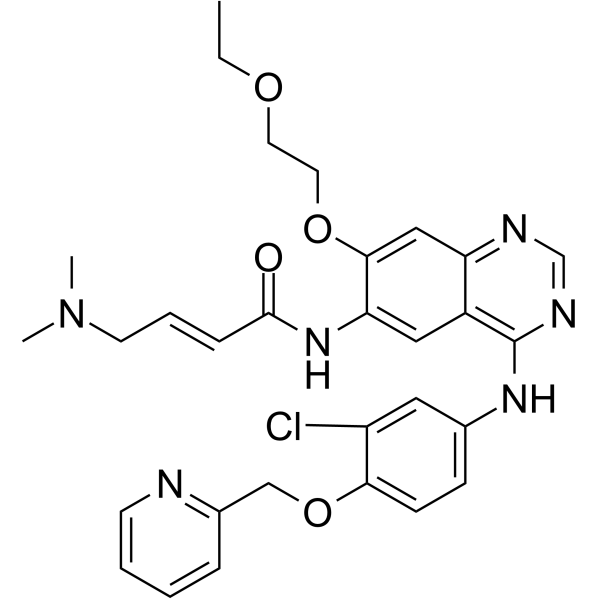 0 ImagesCat. No.: HY-147994CAS No.: 1879071-97-2
EGFR/HER2-IN-5 (compound 6h) is an orally active irreversible dual inhibitor. EGFR/HER2-IN-5 inhibits EGFR with an IC50 value of 1.01 nM and demonstrates potent EGFR kinase inhibitory activities on L858R and T790M mutations. EGFR/HER2-IN-5 has potent antitumor efficacy in vivo and can be used for lung cancer research.
-
CSRM617 (Standard)
 0 ImagesCat. No.: HY-122611RCAS No.: 787504-88-5
CSRM617 (Standard) is the analytical standard of CSRM617. This product is intended for research and analytical applications. CSRM617 is a selective small-molecule inhibitor of the transcription factor ONECUT2 (OC2, a master regulator of androgen receptor) with a Kd of 7.43 uM in SPR assays, binding to OC2-HOX domain directly. CSRM617 induces apoptosis by appearance of cleaved Caspase-3 and PARP. CSRM617 is well tolerated in the prostate cancer mouse model
-
p53 Activator 17
 0 ImagesCat. No.: HY-179507
p53 Activator 17 is a p53-Y220C activator. p53 Activator 17 exhibits selective cytotoxicity and pro-apoptotic activity in p53-Y220C mutant cancer cell lines, with minimal effects in wild-type or p53-null cells. p53 Activator 17 induces a mutant-to-wild-type conformational shift in cellular p53-Y220C, accompanied by transcriptional activation of canonical p53 target genes, including BBC3 (PUMA) and MDM2. p53 Activator 17 can be used for the study of hepatocellular carcinoma and breast cancer.
-
EGFR-IN-213
 0 ImagesCat. No.: HY-183754CAS No.: 3115216-45-7
EGFR-IN-213 is a selective inhibitor of EGFRL858R/T790M/C797S with a human IC50 of 0.48 nM. EGFR-IN-213 acts as an antiproliferative agent, inducing apoptosis and cell cycle arrest, and inhibiting colony formation, cell migration, and tube formation. EGFR-IN-213 can be used for the research of non-small cell lung cancer, chronic myeloid leukemia, gastric cancer, prostate cancer.
-
Artemisinin-13C,d4
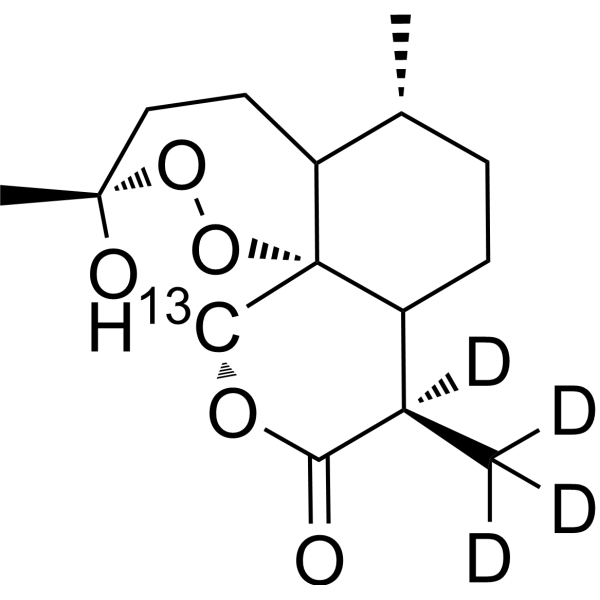 0 ImagesCat. No.: HY-B0094S3Synonyms: Qinghaosu-13C,d4; NSC 369397-13C,d4
Artemisinin-13C,d4 is 13C and deuterated labeled Artemisinin (HY-B0094). Artemisinin (Qinghaosu), a sesquiterpene lactone, is an anti-malarial agent isolated from the aerial parts of Artemisia annua L. plants. Artemisinin inhibits AKT signaling pathway by decreasing pAKT in a dose-dependent manner. Artemisinin reduces cancer cell proliferation, migration, invasion, tumorigenesis and metastasis and has neuroprotective effects.
-
hsa-let-7a-2-3p antagomir
 0 ImagesCat. No.: HY-RI00001A
hsa-let-7a-2-3p antagomirs are chemically-modified oligonucleotides that hybridize with mature miRNAs. The miRNA antagomirs have 2 phosphorothioates at the 5' end, 4 phosphorothioates at the 3' end, 1 cholesterol group at the 3' end, and full-length nucleotide 2'-methoxy modification. The miRNA antagomirs strongly compete with mature miRNAs to prevent the complementary pairing of miRNAs and their target genes, thereby inhibiting miRNAs from functioning. Stability of miRNA antagomirs appears to be significantly higher than miRNA inhibitors, they exhibits enhanced cellular uptake, stability and regulatory activity in vivo.
-
rno-miR-880-5p antagomir
 0 ImagesCat. No.: HY-RI04590A
rno-miR-880-5p antagomirs are chemically-modified oligonucleotides that hybridize with mature miRNAs. The miRNA antagomirs have 2 phosphorothioates at the 5' end, 4 phosphorothioates at the 3' end, 1 cholesterol group at the 3' end, and full-length nucleotide 2'-methoxy modification. The miRNA antagomirs strongly compete with mature miRNAs to prevent the complementary pairing of miRNAs and their target genes, thereby inhibiting miRNAs from functioning. Stability of miRNA antagomirs appears to be significantly higher than miRNA inhibitors, they exhibits enhanced cellular uptake, stability and regulatory activity in vivo.
-
Boc-PEG6-Val-Cit-PAB-OH
 0 ImagesCat. No.: HY-W800626CAS No.: 2055024-53-6
Boc-PEG6-Val-Cit-PAB-OH is an ADC linker that can be used for synthesizing antibody-drug conjugates (ADC). Boc-PEG6-Val-Cit-PAB-OH can be used for cancer research.
-
Phenazoviridin
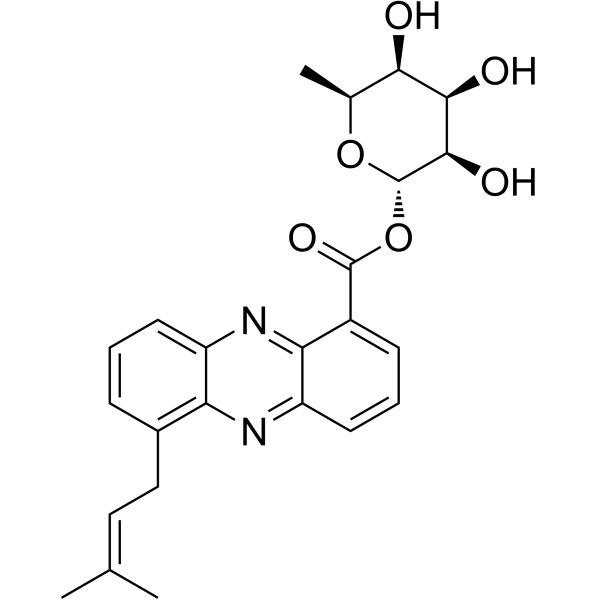 0 ImagesCat. No.: HY-114651CAS No.: 155233-15-1
Phenazoviridin is a free radical scavenger. Phenazoviridin shows strong inhibitory activity against lipid peroxidation in rat brain homogenate and exhibits antihypoxic activity in mice.
-
3’-Deoxy-3’-flluoro-3-deazauridine
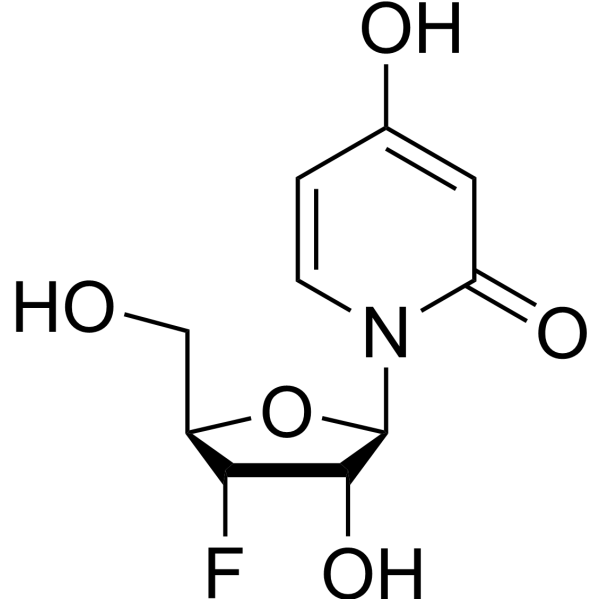 0 ImagesCat. No.: HY-154066CAS No.: 2072145-34-5
3’-Deoxy-3’-flluoro-3-deazauridine is a purine nucleoside analog. Purine nucleoside analogs have broad antitumor activity targeting indolent lymphoid malignancies. Anticancer mechanisms in this process rely on inhibition of DNA synthesis, induction of apoptosis, etc.
-
WK692
 0 ImagesCat. No.: HY-169218CAS No.: 2694055-38-2
WK692 is a BCL6 inhibitor that inhibits the BCL6BTB/SMRT interaction. WK692 can effectively inhibit the growth of diffuse large B-cell lymphoma cells and synergize with EZH2 and PRMT5 inhibitors..
-
BPRCX 714
 0 ImagesCat. No.: HY-177799CAS No.: 1892574-13-8
BPRCX 714 is a CXCR4 (CXC chemokine receptor type 4) receptor antagonist. BPRCX 714 can be used for the study of hepatocellular carcinoma.



