



Cancer Targeted Therapy
Cancer targeted therapy is the foundation of precision medicine; it uses drugs or other substances to target specific genes and proteins that control cancer cells’ growth, division and spreading. Compared to traditional chemotherapy drugs, targeted-drugs can specifically act on cancer cells with high efficacy without damaging normal cells. Drugs used in cancer targeted therapy mainly includes small molecules and macromolecules (e.g., monoclonal antibodies), which can target cancer cells and constituents in the tumor microenvironment to activate the immune system. Anti-angiogenesis drugs, such as those targeting vascular endothelial growth factor (VEGF), epidermal growth factor receptor (EGFR), transforming growth factor (TGF)-α, TGF-β, Tumor necrosis factor (TNF)-α, and platelet-derived endothelial growth factor (PDGFR) inhibit the proliferation and metastasis of cancer cells. In recent years, the proportion of antibody drugs in cancer treatment has gradually become prominent. Antibody-drug conjugates (ADCs) are a new type of targeted drugs that are composed of monoclonal antibody, cytotoxic drug and linker. ADCs can deliver drugs to tumor cells and minimize the toxicity to normal tissues. Proteolysis-targeting chimera (PROTAC) is a useful technology for targeted protein degradation. PROTAC exploits the ubiquitin-proteasome system and forms a ternary complex with a hijacked E3 ubiquitin ligase and target protein, leading to polyubiquitination and degradation of the target protein.
Targeted therapy is a useful strategy in treatment of cancer either alone or in combination with standard chemotherapy. At present, targeted therapy has proved significant clinical success in the treatment of many types of cancer, including breast cancer, colorectal cancer, leukemia, ovarian cancer and lung cancer.
-
mmu-miR-7064-3p inhibitor
 0 ImagesCat. No.: HY-RI03872
mmu-miR-7064-3p inhibitors are chemically-modified oligonucleotides that hybridize with mature miRNAs. The miRNA inhibitors have full-length nucleotide 2'-methoxy modification. The miRNA inhibitors strongly compete with mature miRNAs to prevent the complementary pairing of miRNAs and their target genes, thereby inhibiting miRNAs from functioning.
-
rno-miR-489-5p antagomir
 0 ImagesCat. No.: HY-RI04492A
rno-miR-489-5p antagomirs are chemically-modified oligonucleotides that hybridize with mature miRNAs. The miRNA antagomirs have 2 phosphorothioates at the 5' end, 4 phosphorothioates at the 3' end, 1 cholesterol group at the 3' end, and full-length nucleotide 2'-methoxy modification. The miRNA antagomirs strongly compete with mature miRNAs to prevent the complementary pairing of miRNAs and their target genes, thereby inhibiting miRNAs from functioning. Stability of miRNA antagomirs appears to be significantly higher than miRNA inhibitors, they exhibits enhanced cellular uptake, stability and regulatory activity in vivo.
-
AZD0011-PL
 0 ImagesCat. No.: HY-182718CAS No.: 2374807-39-1
-
DMG-PEG2000-CTT2
 0 ImagesCat. No.: HY-187824A
DMG-PEG2000-CTT2 is a functionalized PEGylated phospholipid conjugate composed of three modular components: dimyristoylglycerol (DMG) as a lipid anchoring group, a 2000 Da polyethylene glycol (PEG) spacer arm, and the CTT2 peptide as a terminal targeting/functional ligand. DMG-PEG2000-CTT2 can be used in research on targeted drug delivery to the tumor microenvironment.
-
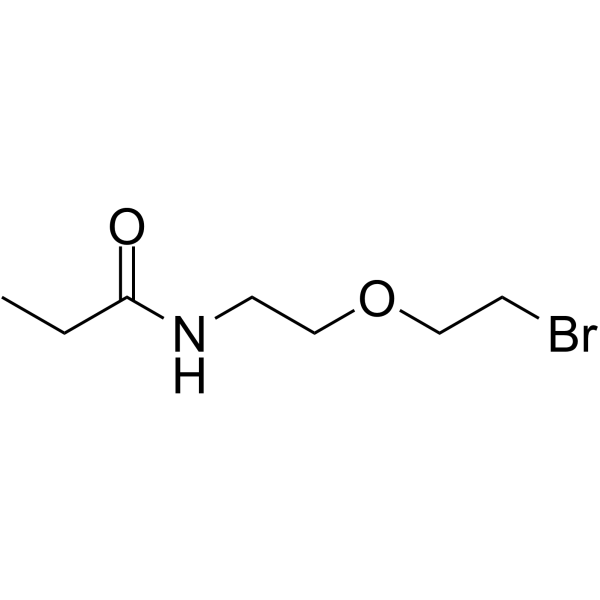
N-Ethylpropionamide-PEG1-Br
 0 ImagesCat. No.: HY-134732CAS No.: 1539080-27-7
-
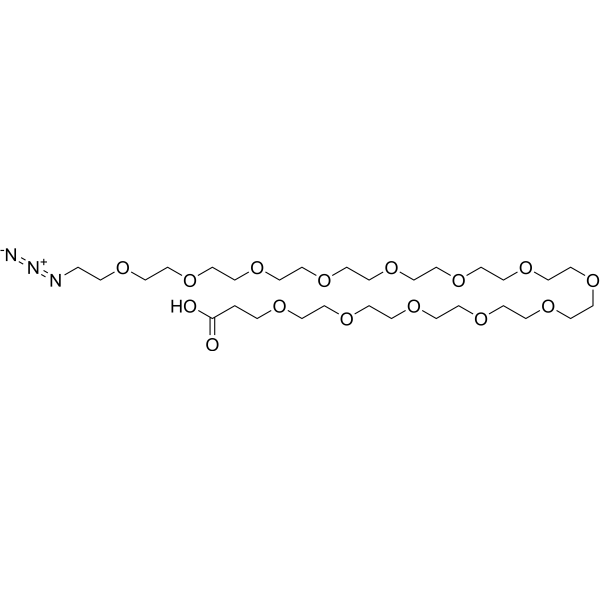
Azido-PEG13-acid
 0 ImagesCat. No.: HY-138435
Azido-PEG13-acid is a PEG-based PROTAC linker that can be used in the synthesis of PROTACs. Azido-PEG13-acid is a click chemistry reagent, it contains an Azide group and can undergo copper-catalyzed azide-alkyne cycloaddition reaction (CuAAc) with molecules containing Alkyne groups. It can also undergo strain-promoted alkyne-azide cycloaddition (SPAAC) reactions with molecules containing DBCO or BCN groups.
-
JMW-3B3
 0 ImagesCat. No.: HY-P991959
JMW-3B3 is a humanized IgG1λ monoclonal antibody targeting CTLA-4. JMW-3B3 selectively binds the unique C-terminal sequence of sCTLA-4 to block its immunoregulatory and immunosuppressive activity without cross-reacting with full-length CTLA-4 receptor. JMW-3B3 enhances cytokine profiles in PBMC cultures responding to lupus autoantigen-derived peptides. JMW-3B3 enhances IFN-γ production in anti-CD3 stimulated PBMC from melanoma patients at low anti-CD3 doses. JMW-3B3 can be used for the research of systemic lupus erythematosus and malignant melanoma.
-
hsa-miR-1470 antagomir
 0 ImagesCat. No.: HY-RI00290A
hsa-miR-1470 antagomirs are chemically-modified oligonucleotides that hybridize with mature miRNAs. The miRNA antagomirs have 2 phosphorothioates at the 5' end, 4 phosphorothioates at the 3' end, 1 cholesterol group at the 3' end, and full-length nucleotide 2'-methoxy modification. The miRNA antagomirs strongly compete with mature miRNAs to prevent the complementary pairing of miRNAs and their target genes, thereby inhibiting miRNAs from functioning. Stability of miRNA antagomirs appears to be significantly higher than miRNA inhibitors, they exhibits enhanced cellular uptake, stability and regulatory activity in vivo.
-
hsa-miR-3973 antagomir
 0 ImagesCat. No.: HY-RI00911A
hsa-miR-3973 antagomirs are chemically-modified oligonucleotides that hybridize with mature miRNAs. The miRNA antagomirs have 2 phosphorothioates at the 5' end, 4 phosphorothioates at the 3' end, 1 cholesterol group at the 3' end, and full-length nucleotide 2'-methoxy modification. The miRNA antagomirs strongly compete with mature miRNAs to prevent the complementary pairing of miRNAs and their target genes, thereby inhibiting miRNAs from functioning. Stability of miRNA antagomirs appears to be significantly higher than miRNA inhibitors, they exhibits enhanced cellular uptake, stability and regulatory activity in vivo.
-
hsa-miR-509-3p inhibitor
 0 ImagesCat. No.: HY-RI01532
hsa-miR-509-3p inhibitors are chemically-modified oligonucleotides that hybridize with mature miRNAs. The miRNA inhibitors have full-length nucleotide 2'-methoxy modification. The miRNA inhibitors strongly compete with mature miRNAs to prevent the complementary pairing of miRNAs and their target genes, thereby inhibiting miRNAs from functioning.
-
hsa-miR-6794-3p antagomir
 0 ImagesCat. No.: HY-RI02152A
hsa-miR-6794-3p antagomirs are chemically-modified oligonucleotides that hybridize with mature miRNAs. The miRNA antagomirs have 2 phosphorothioates at the 5' end, 4 phosphorothioates at the 3' end, 1 cholesterol group at the 3' end, and full-length nucleotide 2'-methoxy modification. The miRNA antagomirs strongly compete with mature miRNAs to prevent the complementary pairing of miRNAs and their target genes, thereby inhibiting miRNAs from functioning. Stability of miRNA antagomirs appears to be significantly higher than miRNA inhibitors, they exhibits enhanced cellular uptake, stability and regulatory activity in vivo.
-
mmu-miR-1955-3p antagomir
 0 ImagesCat. No.: HY-RI02774A
mmu-miR-1955-3p antagomirs are chemically-modified oligonucleotides that hybridize with mature miRNAs. The miRNA antagomirs have 2 phosphorothioates at the 5' end, 4 phosphorothioates at the 3' end, 1 cholesterol group at the 3' end, and full-length nucleotide 2'-methoxy modification. The miRNA antagomirs strongly compete with mature miRNAs to prevent the complementary pairing of miRNAs and their target genes, thereby inhibiting miRNAs from functioning. Stability of miRNA antagomirs appears to be significantly higher than miRNA inhibitors, they exhibits enhanced cellular uptake, stability and regulatory activity in vivo.
-
mmu-miR-6389 inhibitor
 0 ImagesCat. No.: HY-RI03395
mmu-miR-6389 inhibitors are chemically-modified oligonucleotides that hybridize with mature miRNAs. The miRNA inhibitors have full-length nucleotide 2'-methoxy modification. The miRNA inhibitors strongly compete with mature miRNAs to prevent the complementary pairing of miRNAs and their target genes, thereby inhibiting miRNAs from functioning.
-
mmu-miR-7241-5p antagomir
 0 ImagesCat. No.: HY-RI04020A
mmu-miR-7241-5p antagomirs are chemically-modified oligonucleotides that hybridize with mature miRNAs. The miRNA antagomirs have 2 phosphorothioates at the 5' end, 4 phosphorothioates at the 3' end, 1 cholesterol group at the 3' end, and full-length nucleotide 2'-methoxy modification. The miRNA antagomirs strongly compete with mature miRNAs to prevent the complementary pairing of miRNAs and their target genes, thereby inhibiting miRNAs from functioning. Stability of miRNA antagomirs appears to be significantly higher than miRNA inhibitors, they exhibits enhanced cellular uptake, stability and regulatory activity in vivo.
-
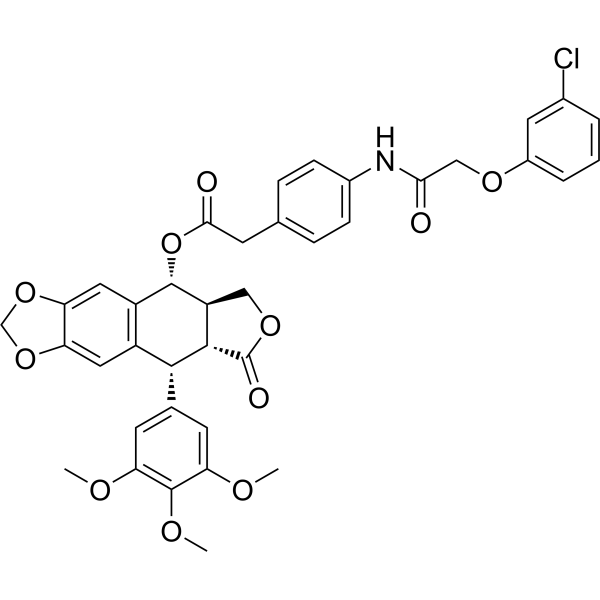
Tubulin/AKT1-IN-1
 0 ImagesCat. No.: HY-154960CAS No.: 2988927-63-3
Tubulin/AKT1-IN-1 (Compound D1-1) is an inhibitor of tubulin polymerization and AKT pathway activation. Tubulin/AKT1-IN-1 significantly inhibits the proliferation and metastasis of H1975 cells and slightly induced their apoptosis and can be used for non-small-cell lung cancer (NSCLC) research .
-
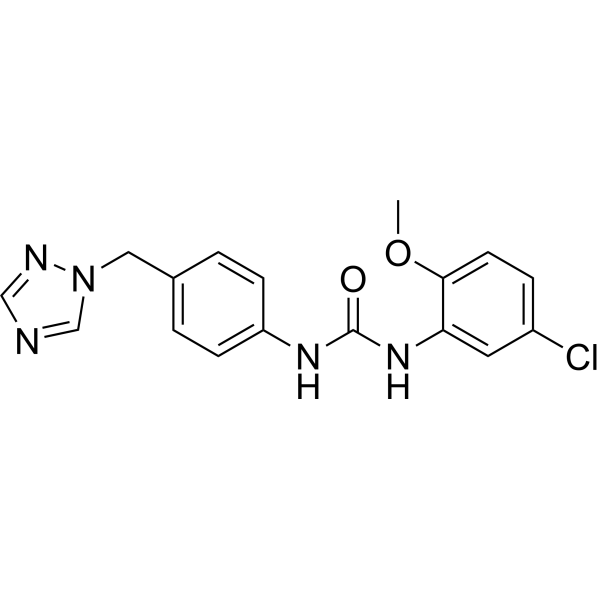
ZINC09875266
 0 ImagesCat. No.: HY-157965CAS No.: 925200-00-6
-
Antiproliferative agent-52
 0 ImagesCat. No.: HY-161824CAS No.: 2913194-20-2
Antiproliferative agent-52 is a tubulin inhibitor with a porcine tubulin KD of 29.65 μM. Antiproliferative agent-52 binds to the colchicine-binding site at the α-tubulin and β-tubulin interface and inhibits tubulin polymerization. Antiproliferative agent-52 exhibits antiproliferative activity against tumor cells. Antiproliferative agent-52 serves as a lead compound for development of thienopyrimidine and heterocyclic fused pyrimidines with antiproliferative activity. Antiproliferative agent-52 can be used for the research of ovarian cancer, non-small cell lung cancer.
-
TTK/PLK1-IN-1
 0 ImagesCat. No.: HY-164955CAS No.: 1817791-70-0
TTK/PLK1-IN-1 (Formula I) is the inhibitor for threonine tyrosine kinase (TTK) and polo-like kinase 1 (PLK1) with IC50 of 7 nM and 72 nM. TTK/PLK1-IN-1 regulates spindle assembly checkpoint (SAC), and exhibits antitumor efficacy against TNBC.

-
XSJ151
 0 ImagesCat. No.: HY-179520CAS No.: 1685279-23-5
XSJ151 is a topoisomerase I inhibitor, stabilizing the DNA-Topo I covalent complex and inducing DNA double-strand breaks. XSJ151-induces DNA damage activates the p53-p21 signaling pathway, specifically regulating the expression of cyclins, leading to G2/M phase cell cycle arrest and disrupting the dynamic homeostasis of Bcl-2 family proteins, thereby triggering apoptosis in gastric cancer cells. XSJ151 can be used for the study of gastric cancer.



