



Cancer Targeted Therapy
Cancer targeted therapy is the foundation of precision medicine; it uses drugs or other substances to target specific genes and proteins that control cancer cells’ growth, division and spreading. Compared to traditional chemotherapy drugs, targeted-drugs can specifically act on cancer cells with high efficacy without damaging normal cells. Drugs used in cancer targeted therapy mainly includes small molecules and macromolecules (e.g., monoclonal antibodies), which can target cancer cells and constituents in the tumor microenvironment to activate the immune system. Anti-angiogenesis drugs, such as those targeting vascular endothelial growth factor (VEGF), epidermal growth factor receptor (EGFR), transforming growth factor (TGF)-α, TGF-β, Tumor necrosis factor (TNF)-α, and platelet-derived endothelial growth factor (PDGFR) inhibit the proliferation and metastasis of cancer cells. In recent years, the proportion of antibody drugs in cancer treatment has gradually become prominent. Antibody-drug conjugates (ADCs) are a new type of targeted drugs that are composed of monoclonal antibody, cytotoxic drug and linker. ADCs can deliver drugs to tumor cells and minimize the toxicity to normal tissues. Proteolysis-targeting chimera (PROTAC) is a useful technology for targeted protein degradation. PROTAC exploits the ubiquitin-proteasome system and forms a ternary complex with a hijacked E3 ubiquitin ligase and target protein, leading to polyubiquitination and degradation of the target protein.
Targeted therapy is a useful strategy in treatment of cancer either alone or in combination with standard chemotherapy. At present, targeted therapy has proved significant clinical success in the treatment of many types of cancer, including breast cancer, colorectal cancer, leukemia, ovarian cancer and lung cancer.
-
S-Acetyl-PEG8-OH
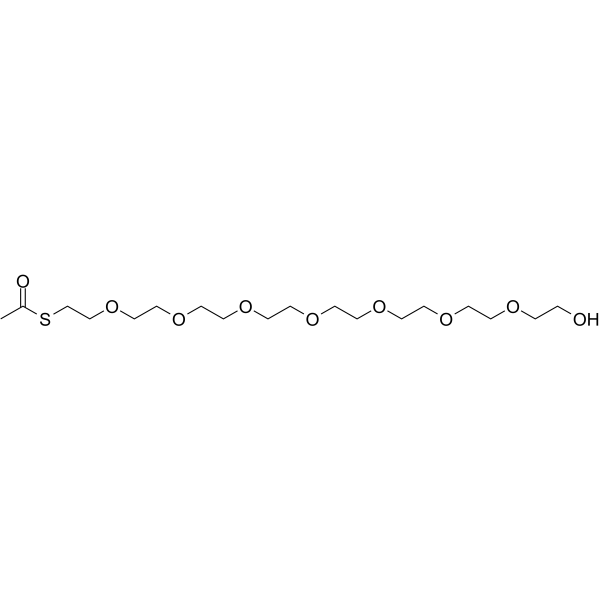 0 ImagesCat. No.: HY-130209CAS No.: 1334177-81-9
-
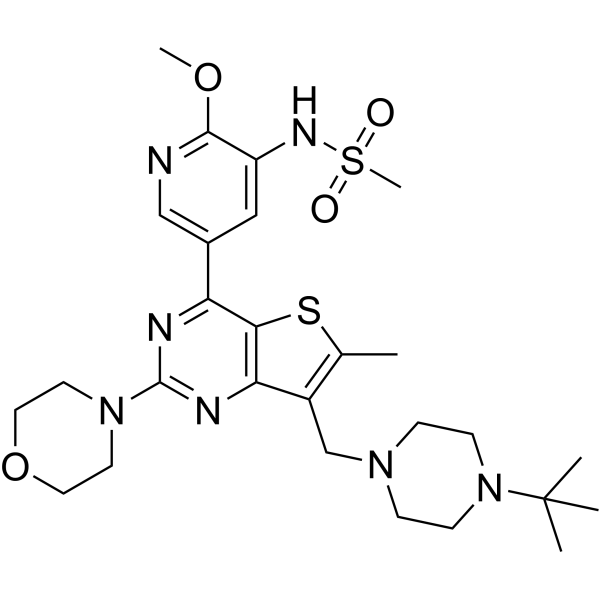
LDHA-IN-6
 0 ImagesCat. No.: HY-162627CAS No.: 3043790-18-4
LDHA-IN-6 (compound 6) is an oral bioactive inhibitor of lactate dehydrogenase-A (LDHA), with the IC50 of 46 nM. LDHA-IN-6 has antitumor activity.

-
DSPE-PEG3400-K237
 0 ImagesCat. No.: HY-172488A
DSPE-PEG3400-K237 is a PEG compound which composed of DSPE and a KDR targeting peptide (K237). K237 can functionally disrupt the interaction between VEGF and the KDR receptor and cause potent biological effects that include the inhibition of angiogenesis and tumor growth. DSPE-PEG3400-K237 can be used for drug delivery.
-
Z-Val-Arg-Pro-DL-Arg-Fluoromethylketone
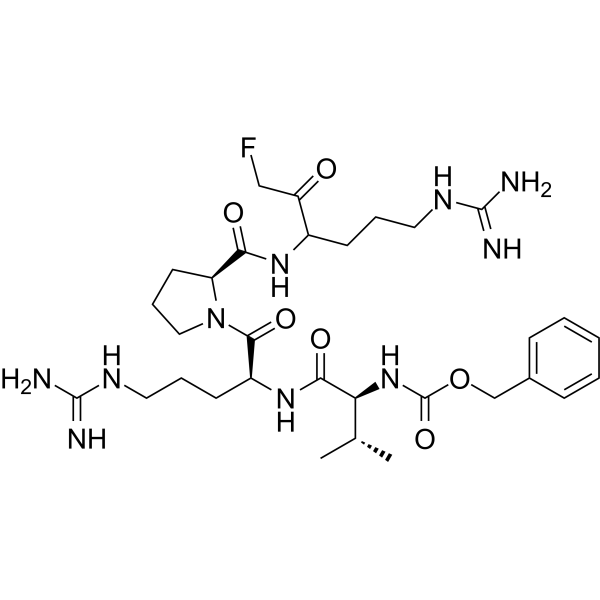 0 ImagesCat. No.: HY-P4544CAS No.: 1926163-57-6
Z-Val-Arg-Pro-DL-Arg-Fluoromethylketone is an irreversible MALT1 protein inhibitor. Z-Val-Arg-Pro-DL-Arg-Fluoromethylketone inhibits the growth and invasion of diffuse large B-cell lymphoma by inhibiting MALT1-induced NF-κB activation and MMP expression.
-
hsa-miR-2682-5p antagomir
 0 ImagesCat. No.: HY-RI00492A
hsa-miR-2682-5p antagomirs are chemically-modified oligonucleotides that hybridize with mature miRNAs. The miRNA antagomirs have 2 phosphorothioates at the 5' end, 4 phosphorothioates at the 3' end, 1 cholesterol group at the 3' end, and full-length nucleotide 2'-methoxy modification. The miRNA antagomirs strongly compete with mature miRNAs to prevent the complementary pairing of miRNAs and their target genes, thereby inhibiting miRNAs from functioning. Stability of miRNA antagomirs appears to be significantly higher than miRNA inhibitors, they exhibits enhanced cellular uptake, stability and regulatory activity in vivo.
-
hsa-miR-449c-5p antagomir
 0 ImagesCat. No.: HY-RI01113A
hsa-miR-449c-5p antagomirs are chemically-modified oligonucleotides that hybridize with mature miRNAs. The miRNA antagomirs have 2 phosphorothioates at the 5' end, 4 phosphorothioates at the 3' end, 1 cholesterol group at the 3' end, and full-length nucleotide 2'-methoxy modification. The miRNA antagomirs strongly compete with mature miRNAs to prevent the complementary pairing of miRNAs and their target genes, thereby inhibiting miRNAs from functioning. Stability of miRNA antagomirs appears to be significantly higher than miRNA inhibitors, they exhibits enhanced cellular uptake, stability and regulatory activity in vivo.
-
hsa-miR-5584-3p inhibitor
 0 ImagesCat. No.: HY-RI01734
hsa-miR-5584-3p inhibitors are chemically-modified oligonucleotides that hybridize with mature miRNAs. The miRNA inhibitors have full-length nucleotide 2'-methoxy modification. The miRNA inhibitors strongly compete with mature miRNAs to prevent the complementary pairing of miRNAs and their target genes, thereby inhibiting miRNAs from functioning.
-
Biotin-PEG12-TFP ester
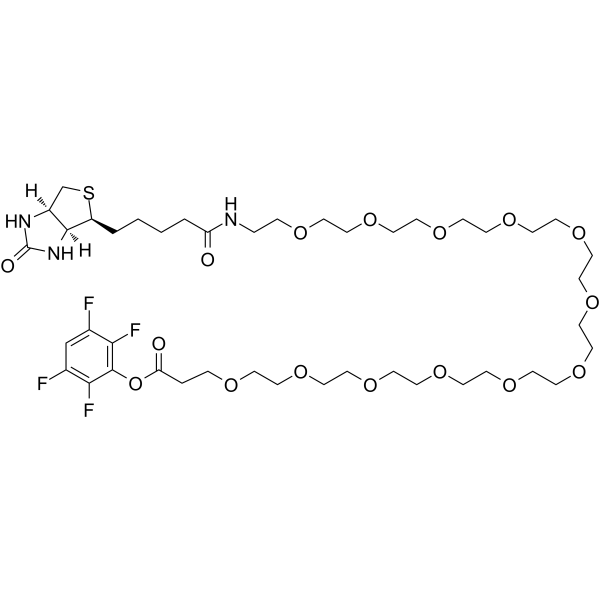 0 ImagesCat. No.: HY-140904CAS No.: 3017961-69-9
-
hsa-miR-6873-3p antagomir
 0 ImagesCat. No.: HY-RI02306A
hsa-miR-6873-3p antagomirs are chemically-modified oligonucleotides that hybridize with mature miRNAs. The miRNA antagomirs have 2 phosphorothioates at the 5' end, 4 phosphorothioates at the 3' end, 1 cholesterol group at the 3' end, and full-length nucleotide 2'-methoxy modification. The miRNA antagomirs strongly compete with mature miRNAs to prevent the complementary pairing of miRNAs and their target genes, thereby inhibiting miRNAs from functioning. Stability of miRNA antagomirs appears to be significantly higher than miRNA inhibitors, they exhibits enhanced cellular uptake, stability and regulatory activity in vivo.
-
PROTAC CBP/P300 Degrader-4
 0 ImagesCat. No.: HY-183802
PROTAC CBP/P300 Degrader-4 is a p300/CBP PROTAC degrader with DC50 of 17.4 nM and 10.2 nM against p300 and CBP in U2OS cells, respectively. PROTAC CBP/P300 Degrader-4 forms ternary complexes with p300 or CBP and an E3 ligase, drives ubiquitination, and mediates proteasomal degradation. PROTAC CBP/P300 Degrader-4 can be used for the research of hematological malignancies.
-
mmu-miR-3071-3p antagomir
 0 ImagesCat. No.: HY-RI02928A
mmu-miR-3071-3p antagomirs are chemically-modified oligonucleotides that hybridize with mature miRNAs. The miRNA antagomirs have 2 phosphorothioates at the 5' end, 4 phosphorothioates at the 3' end, 1 cholesterol group at the 3' end, and full-length nucleotide 2'-methoxy modification. The miRNA antagomirs strongly compete with mature miRNAs to prevent the complementary pairing of miRNAs and their target genes, thereby inhibiting miRNAs from functioning. Stability of miRNA antagomirs appears to be significantly higher than miRNA inhibitors, they exhibits enhanced cellular uptake, stability and regulatory activity in vivo.
-
mmu-miR-6916-3p antagomir
 0 ImagesCat. No.: HY-RI03553A
mmu-miR-6916-3p antagomirs are chemically-modified oligonucleotides that hybridize with mature miRNAs. The miRNA antagomirs have 2 phosphorothioates at the 5' end, 4 phosphorothioates at the 3' end, 1 cholesterol group at the 3' end, and full-length nucleotide 2'-methoxy modification. The miRNA antagomirs strongly compete with mature miRNAs to prevent the complementary pairing of miRNAs and their target genes, thereby inhibiting miRNAs from functioning. Stability of miRNA antagomirs appears to be significantly higher than miRNA inhibitors, they exhibits enhanced cellular uptake, stability and regulatory activity in vivo.
-
mmu-miR-874-5p antagomir
 0 ImagesCat. No.: HY-RI04174A
mmu-miR-874-5p antagomirs are chemically-modified oligonucleotides that hybridize with mature miRNAs. The miRNA antagomirs have 2 phosphorothioates at the 5' end, 4 phosphorothioates at the 3' end, 1 cholesterol group at the 3' end, and full-length nucleotide 2'-methoxy modification. The miRNA antagomirs strongly compete with mature miRNAs to prevent the complementary pairing of miRNAs and their target genes, thereby inhibiting miRNAs from functioning. Stability of miRNA antagomirs appears to be significantly higher than miRNA inhibitors, they exhibits enhanced cellular uptake, stability and regulatory activity in vivo.
-
Ferulic acid sodium (Standard)
 0 ImagesSynonyms: Coniferic acid sodium (Standard)
10-Deacetyltaxol (Standard) is the analytical standard of 10-Deacetyltaxol. This product is intended for research and analytical applications. 10-Deacetyltaxol (10-Deacetylpaclitaxel) is a taxane derivative isolated from Taxus wallichiana Zucc. 10-Deacetyltaxol (10-Deacetylpaclitaxel) promotes the polymerization of tubulin and to inhibit the depolymerization of microtubules induced by cold or by calcium ions in vitro. 10-Deacetyltaxol (10-Deacetylpaclitaxel) exhibits cytotoxicity in human glial and neuroblastoma cell-lines.
-
7,8-Dihydro-8-oxo-7-propargyl-3’-deoxy-3’-fluoro guanosine
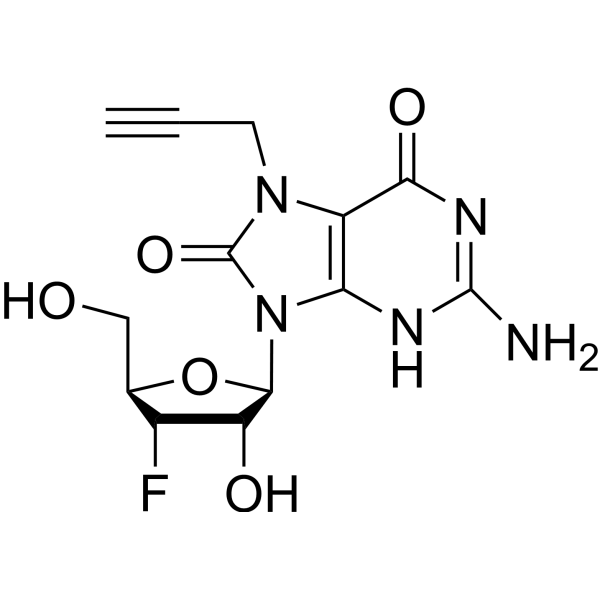 0 ImagesCat. No.: HY-152364CAS No.: 2389988-55-8
7,8-Dihydro-8-oxo-7-propargyl-3’-deoxy-3’-fluoro guanosine is a purine nucleoside analog. Purine nucleoside analogs have broad antitumor activity targeting indolent lymphoid malignancies. Anticancer mechanisms in this process rely on inhibition of DNA synthesis, induction of apoptosis, etc. 7,8-Dihydro-8-oxo-7-propargyl-3’-deoxy-3’-fluoro guanosine is a click chemistry reagent, it contains an Alkyne group and can undergo copper-catalyzed azide-alkyne cycloaddition (CuAAc) with molecules containing Azide groups.

-
Wnt/β-catenin-IN-5
 0 ImagesCat. No.: HY-173489CAS No.: 2805248-10-4
Wnt/β-catenin-IN-5 (compound 19T) is a Wnt/β-catenin signaling pathway inhibitor. Wnt/β-catenin-IN-5 inhibits HCT 116, SW480, and A549 cells activity with IC50s of 3.05, 3.27 and 34.91 μM, respectively.
-
Pixofisiran sodium
 0 ImagesCat. No.: HY-177657A



