Inflammation/Immunology
-
Inflammation/Immunology Related Products (20637)
Related Products (20637)

-
Antibodies (115)
-
Related Compound Screening Libraries (4)
-
Anti-Mouse NKG2A/C/E Antibody (20D5)
 0 ImagesCat. No.: HY-P990180
Anti-Mouse NKG2A/C/E Antibody (20D5) is an anti-mouse NKG2A/C/E IgG2a monoclonal antibody. Anti-Mouse NKG2A/C/E Antibody (20D5) can activate natural killer (NK) and CD8+ T cells. Anti-Mouse NKG2A/C/E Antibody (20D5) can exacerbate liver pathological damage by enhancing the activation of iNKT cells. Anti-Mouse NKG2A/C/E Antibody (20D5) can be used for researches on cancer and immunology such as lymphoma.

-
Anti-CD80 Antibody (TKMF5)
 0 ImagesCat. No.: HY-P991907
-
1-Palmitoyl-2-linoleoyl-sn-glycero-3-PC
 0 ImagesSynonyms: PLPC
1-Palmitoyl-2-linoleoyl-sn-glycero-3-PC (PLPC) is a phosphatidylcholine phospholipid. 1-Palmitoyl-2-linoleoyl-sn-glycero-3-PC and oxidized derivatives serve as models for investigating lipid peroxidation, membrane structure, and phospholipase A2 activity. 1-Palmitoyl-2-linoleoyl-sn-glycero-3-PC can be applied in research on atherosclerosis, oxidative stress, and the properties of lipid bilayers.
-
IGRP(206-214)
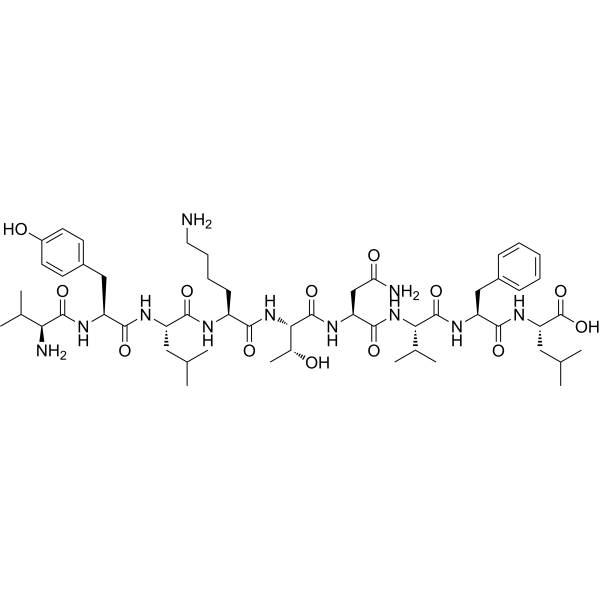 0 ImagesCat. No.: HY-P5489CAS No.: 849069-99-4
IGRP(206-214) is a biological active peptide. IGRP(206-214) corresponds to residues 206-214 of murine islet-specific glucose-6-phosphatase catalytic subunit-related protein (IGRP). IGRP(206-214) is T cells specific for proinsulin and IGRP induces diabetes in non-obese diabetic (NOD) mice.
-
trans-Trimethoxyresveratrol
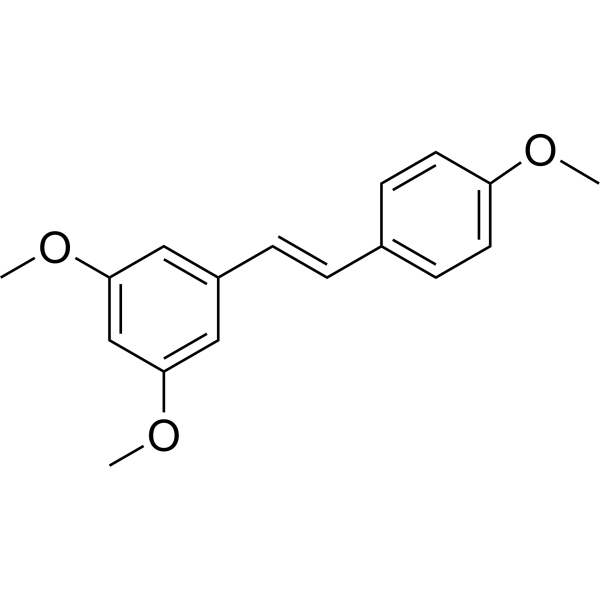 0 ImagesSynonyms: trans-trismethoxy Resveratrol; (E)-Resveratrol trimethyl ether; trans-3,5,4'-Trimethoxystilbene
Trans-Trimethoxyresveratrol (trans-trismethoxy Resveratrol; (E)-Resveratrol trimethyl ether; trans-3,5,4'-Trimethoxystilbene) is an orally active natural derivative of Resveratrol (HY-16561). Trans-Trimethoxyresveratrol has an enhanced anticancer profile compared to Resveratrol, exhibiting higher potency than resveratrol, with improved cancer cell proliferation inhibition, induction of cell cycle arrest, decreased metastasis, and increased apoptosis. Trans-Trimethoxyresveratrol causes microtubule disassembling and tubulin depolymerization and exerts anti-angiogenic effects through VEGFR2. Trans-Trimethoxyresveratrol can be used for the studies of anti-angiogenic and anti-cancer (such as non-small cell lung cancer and osteosarcoma).
-
Anti-IL-15 Antibody (DISC0280)
 0 ImagesCat. No.: HY-P990446Purity: 99.35%Synonyms: DISC0280
The Anti-IL-15 Antibody (DISC0280) is a CHO-expressed human antibody that targets IL-15. The Anti-IL-15 Antibody (DISC0280) has a huIgG1 heavy chain and a huλ light chain, with a predicted molecular weight (MW) of 145 kDa. The isotype control for Anti-IL-15 Antibody (DISC0280) can be referenced as Human IgG1 kappa, Isotype Control (HY-P99001).
-
Anti-Mouse GITR Antibody (DTA-1)
 0 ImagesCat. No.: HY-P990124Purity: 98.47%
Anti-Mouse GITR Antibody (DTA-1) is a rat derived IgG2b monoclonal agonist antibody targeting mouse GITR. Anti-Mouse GITR Antibody (DTA-1) can activate T cells and B cells to enhance immune response. Anti-Mouse GITR Antibody (DTA-1) selectively enhances Th2 cell effector function through GITR signaling. Anti-Mouse GITR Antibody (DTA-1) may exacerbate allergic reactions. Anti-Mouse GITR Antibody (DTA-1) can be used for researches on cancer and allergic conditions such as colon cancer and allergic asthma. The recommed isotype control of Anti-Mouse GITR Antibody (DTA-1) is Rat IgG2b kappa, Isotype Control (HY-P990682).
-
Cereulide
 0 ImagesCat. No.: HY-P3003CAS No.: 157232-64-9
Cereulide is an orally active, blood-brain barrier-permeable emetic toxin. Cereulide acts as a potassium ionophore that inserts into membranes, forms complexes with K+, and transports K+ from the cytoplasm into the mitochondrial matrix. Cereulide disrupts the electrochemical gradient of the inner mitochondrial membrane, leading to mitochondrial swelling and dysfunction, uncoupling of oxidative phosphorylation, inhibition of ATP synthesis, ROS accumulation, and ultimately triggering apoptosis and autophagy. Cereulide exhibits multi-organ toxicity and can be used for research on emetic food poisoning.
-
Anti-CXCR3/GPR9/CD183 Antibody
 0 ImagesCat. No.: HY-P990394Purity: 98.45%
Anti-CXCR3/GPR9/CD183 Antibody is a human-derived antibody expressed in CHO, targeting CXCR3/GPR9/CD183. The Anti-CXCR3/GPR9/CD183 Antibody has a huIgG1 heavy chain and a huκ light chain, with a predicted molecular weight (MW) of 150 kDa. For the isotype control of Anti-CXCR3/GPR9/CD183 Antibody, please refer to Human IgG1 kappa, Isotype Control (HY-P99001).
-
Casanthranol
 0 Images
Casanthranol is a naturally derived, orally active mixture of anthraquinone glycosides that exhibits inhibitory activity against α-synuclein and bioactivities related to laxation. Casanthranol inhibits seed-induced α-synuclein fibrillation in cell-free systems and rescues preformed fibril-induced cytotoxicity in differentiated N2a cells. Casanthranol promotes intestinal transit in both the small and large intestines of mice with experimental constipation. Casanthranol can be used in research related to constipation.
-
CORM-A1
 0 ImagesCat. No.: HY-W782399CAS No.: 17363-08-5Synonyms: Sodium boranocarbonate
CORM-A1 (Sodium boranocarbonate) is a water-soluble carbon monoxide (CO) releasing molecule that facilitates the investigation of CO's impact on cellular systems. As CO is generated from heme degradation by the enzyme heme oxygenase, it serves as a crucial gaseous signaling mediator in mammalian cells. CORM-A1 not only exhibits anti-oxidant and anti-inflammatory properties but also regulates CO release in a manner dependent on pH and temperature, promoting mild vasorelaxation and hypotension. Furthermore, CORM-A1 has been shown to provide cytoprotection in primary cultures of astrocytes under oxidative stress while also enhancing autophagy due to its boron-containing composition.

-
Allopurinol (Standard)
 0 Images
Allopurinol (Standard) is the analytical standard of Allopurinol. This product is intended for research and analytical applications. Allopurinol is a potent and orally active xanthine oxidase inhibitor with an IC50 value of 0.2-50 μM. Allopurinol can be used in the research of hyperuricemia and gout. Allopurinol decreases the expression of HIF-1α and HIF-2α protein. Allopurinol shows anti-depressant and anti-nociception activity. Anti-leishmanial effect.
-
Glucosylceramide, plant
 0 ImagesSynonyms: GluCer (Soy)
Glucosylceramide, plant (GluCer (Soy)) is an orally active, plant-derived glucosylceramide. Glucosylceramide, plant inhibits lipopolysaccharide-induced cytokine production and Apoptosis. Glucosylceramide, plant suppresses DSS-induced body weight loss, colonic crypt damage and intestinal inflammation in mice. Glucosylceramide, plant can be used in research related to inflammatory bowel disease and colon cancer.