Inflammation/Immunology
-
Inflammation/Immunology Related Products (20711)
Related Products (20711)

-
Antibodies (115)
-
Related Compound Screening Libraries (4)
-
Betiatide
 0 Images
Betiatide, as a chelating agent for Technetium-99m (99mTc), is used to prepare 99mTc-MAG3 (mercaptoacetyltriglycine), a radiopharmaceutical for renal function imaging. Betiatide is used for the diagnosis of congenital and acquired abnormalities, renal failure, urinary tract obstructions, and calculi. Betiatide can be used for the synthesis/research of Radionuclide-Drug Conjugates (RDCs).
-
Dioctyl phthalate-d4
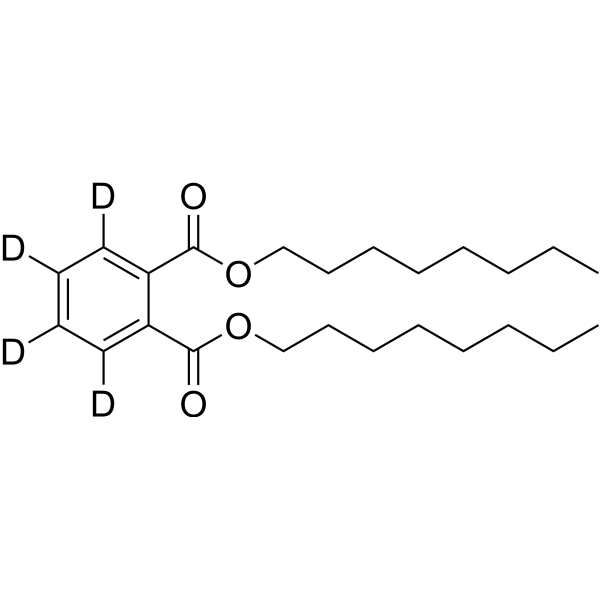 0 ImagesSynonyms: DNOP-d4; Di-n-octyl phthalate-d4; Phthalic acid dioctyl ester-d4
Dioctyl phthalate-d4 (DNOP-d4) is the d4-labeled Dioctyl phthalate (HY-W013755). Dioctyl phthalate (DNOP) is a plasticizer. Dioctyl phthalate increases the activities of alanine aminotransferase (ALT) and alkaline phosphatase (ALP) in the liver, as well as the levels of creatinine and urea in the kidney. Exposure to Dioctyl phthalate disrupts the homeostasis of the intestinal microbial community, increases the abundance of pathogenic bacteria, and reduces the abundance of beneficial bacteria such as Lactobacillus. Dioctyl phthalate induces significant and dose-dependent inflammatory responses in the liver, spleen and kidney of mice.
-
IGRP(206-214)
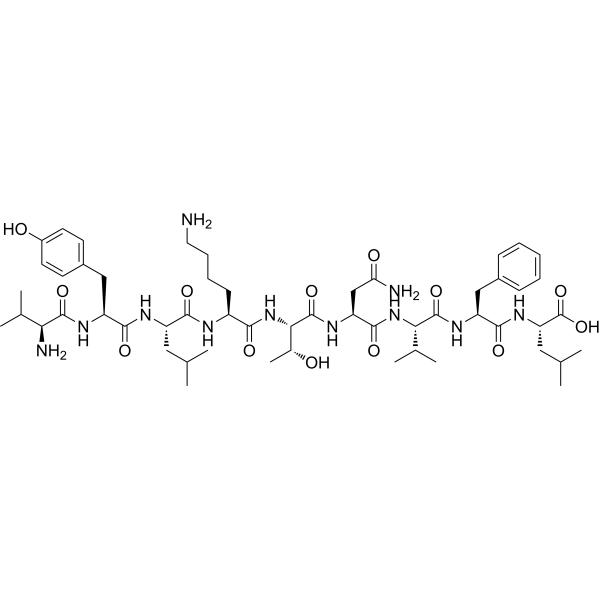 0 ImagesCat. No.: HY-P5489CAS No.: 849069-99-4
IGRP(206-214) is a biological active peptide. IGRP(206-214) corresponds to residues 206-214 of murine islet-specific glucose-6-phosphatase catalytic subunit-related protein (IGRP). IGRP(206-214) is T cells specific for proinsulin and IGRP induces diabetes in non-obese diabetic (NOD) mice.
-
Taurochenodeoxycholic acid sodium (Standard)
 0 ImagesSynonyms: 12-Deoxycholyltaurine sodium (Standard)
Taurochenodeoxycholic acid (sodium) (Standard) is the analytical standard of Taurochenodeoxycholic acid (sodium). This product is intended for research and analytical applications. Taurochenodeoxycholic acid (12-Deoxycholyltaurine) sodium is one of the main bioactive substances of animals' bile acid. Taurochenodeoxycholic acid sodium induces apoptosis and shows obvious anti-inflammatory and immune regulation properties.
-
Anti-Mouse CD205 Antibody (NLDC-145)
 0 ImagesCat. No.: HY-P990284
Anti-Mouse CD205 Antibody (NLDC-145) is a rat-derived IgG2aκ type antibody inhibitor, targeting to mouse CD205. Anti-Mouse CD205 Antibody (NLDC-145) reacts with CD205 also known as DEC-205. Anti-Mouse CD205 Antibody (NLDC-145) can be used for the researches of cancer, inflammation, immunology and metabolic disease, such as colitis, D2F2/E2 tumor and diabetes.
-
Fiboflapon sodium
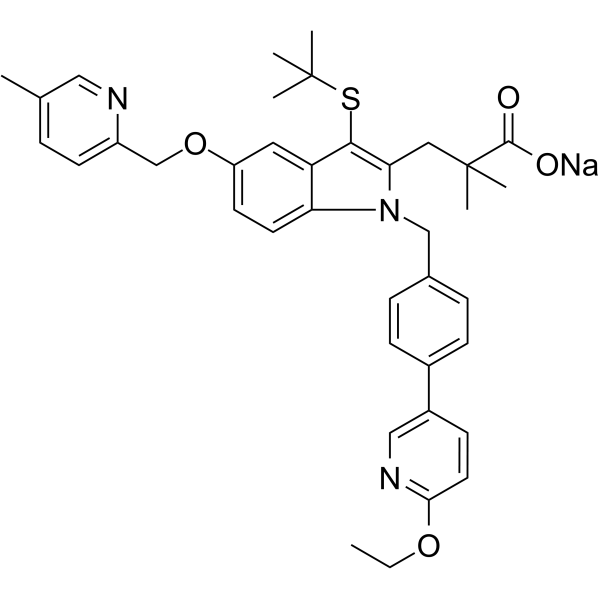 0 ImagesSynonyms: GSK2190915 sodium salt; AM-803 sodium
-
Peficitinib (Standard)
 0 ImagesSynonyms: ASP015K (Standard); JNJ-54781532 (Standard)
-
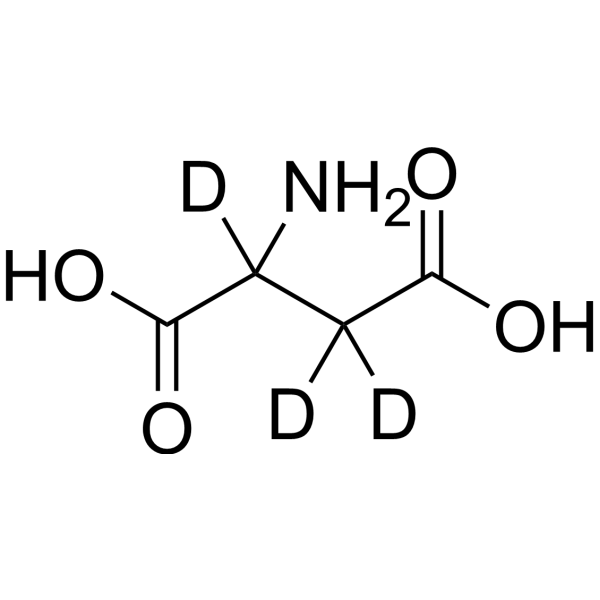
DL-Aspartic acid-d3
 0 Images
DL-Aspartic acid-d3 is the deuterium labeled L-Aspartic acid. L-Aspartic aicd is an amino acid that can penetrate the blood-brain barrier. L-Aspartic aicd is commonly used for preparing prodrugs to target colon and cecal tissues. L-Aspartic aicd commonly used in the study of inflammatory conditions.
-
Anti-IL-15 Antibody (DISC0280)
 0 ImagesCat. No.: HY-P990446Purity: 99.35%Synonyms: DISC0280
The Anti-IL-15 Antibody (DISC0280) is a CHO-expressed human antibody that targets IL-15. The Anti-IL-15 Antibody (DISC0280) has a huIgG1 heavy chain and a huλ light chain, with a predicted molecular weight (MW) of 145 kDa. The isotype control for Anti-IL-15 Antibody (DISC0280) can be referenced as Human IgG1 kappa, Isotype Control (HY-P99001).
-
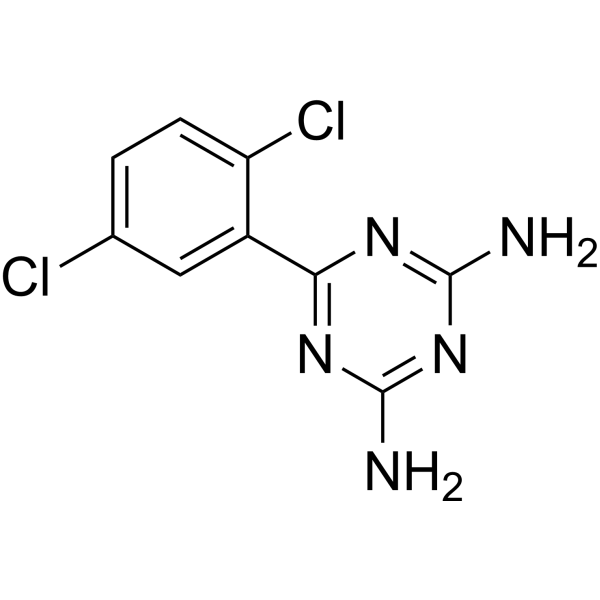
Irsogladine
 0 ImagesSynonyms: Dicloguamine
Irsogladine (Dicloguamine) is an orally active gastric mucosal protective agent. Irsogladine inhibits breast cancer recurrence and lung metastasis in nude mice. Irsogladine inhibits the transcriptional activities of NF-κB and AP-1, suppresses the activities of PDE and PDE4 to elevate intracellular cAMP levels, and activates TRPV1 and KATP channels. Irsogladine enhances iNOS expression, NO production, and the activation of cAMP-responsive elements. Irsogladine inhibits the development and progression of intestinal polyps in Apc-mutant mice. Irsogladine alleviates oxidative stress, increases gastric mucosal blood flow, and stimulates the production of endogenous prostaglandins. Irsogladine promotes insulin secretion in MIN6 cells. Irsogladine inhibits tumor angiogenesis, cancer cell proliferation, and the production of proinflammatory cytokines. Irsogladine exerts protective effects on astrocytes in ethanol/hydrochloric acid-induced gastric ulcers in mice. Irsogladine prevents colitis in IL-10 gene-deficient mice by reducing the production of IL-12 and IL-23. Irsogladine upregulates gap junction intercellular communication in pancreatic cancer cells via the PKA pathway. Irsogladine is applicable to research related to breast cancer, intestinal polyposis, gastric ulcer, spontaneous colitis, glioma, liver cancer, and pancreatic cancer[5][6].
-
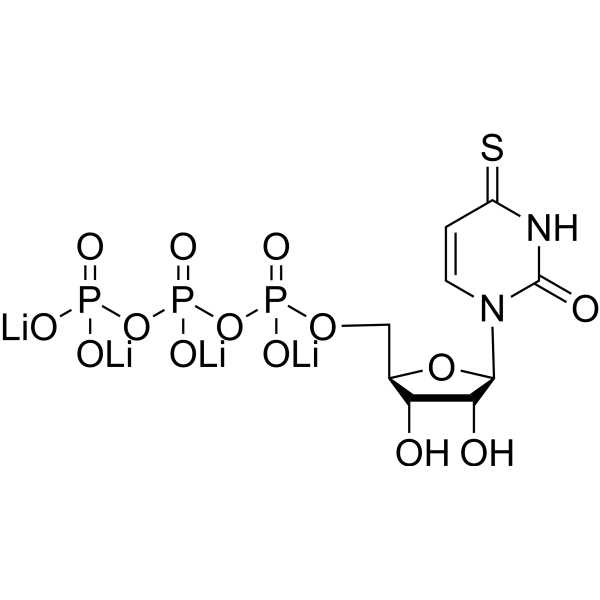
4-Thiouridine 5′-triphosphate tetralithium
 0 ImagesCat. No.: HY-154840CAS No.: 20188-72-1Synonyms: 4-Thio-UTP tetralithium
4-Thiouridine 5′-triphosphate (4-Thio-UTP) tetrasodium (Compound 15) is a UTP analog and potent P2Y2 and P2Y4 agonist with EC50 values of 35 and 350 nM for hP2Y2 and hP2Y4, respectively. 4-Thiouridine 5′-triphosphate tetrasodium can be used in cross-linking experiments and transcriptional complex labeling studies.
-
DA-1241
 0 Images
DA-1241 is a GPR119 agonist. DA-1241 reduces macrophage differentiation through downregulation of NFκB signaling by activating GPR119. DA-1241, alone and in combination with a DPP4 inhibitor, reduces liver inflammation and restores inflammation-related liver gene expression. DA-1241 can be used for the research of metabolic dysfunction-associated steatohepatitis (MASH).

-
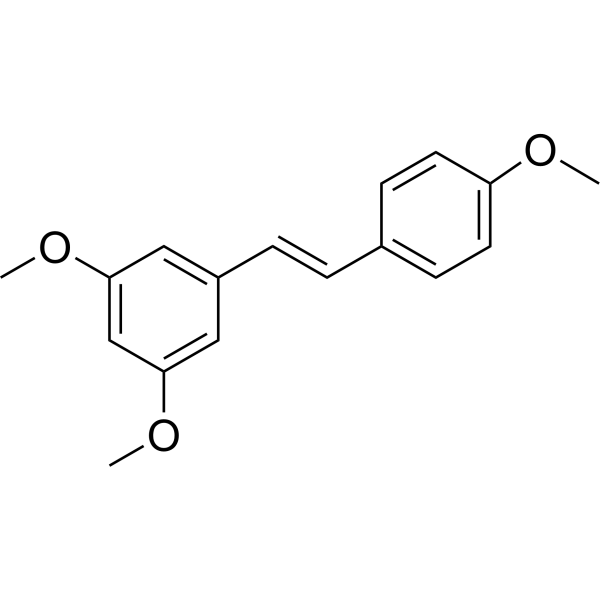
trans-Trimethoxyresveratrol
 0 ImagesSynonyms: trans-trismethoxy Resveratrol; (E)-Resveratrol trimethyl ether; trans-3,5,4'-Trimethoxystilbene
Trans-Trimethoxyresveratrol (trans-trismethoxy Resveratrol; (E)-Resveratrol trimethyl ether; trans-3,5,4'-Trimethoxystilbene) is an orally active natural derivative of Resveratrol (HY-16561). Trans-Trimethoxyresveratrol has an enhanced anticancer profile compared to Resveratrol, exhibiting higher potency than resveratrol, with improved cancer cell proliferation inhibition, induction of cell cycle arrest, decreased metastasis, and increased apoptosis. Trans-Trimethoxyresveratrol causes microtubule disassembling and tubulin depolymerization and exerts anti-angiogenic effects through VEGFR2. Trans-Trimethoxyresveratrol can be used for the studies of anti-angiogenic and anti-cancer (such as non-small cell lung cancer and osteosarcoma).
-
Lithium 2-hydroxypropanoate
 0 Images
Lithium 2-hydroxypropanoate is a lithium salt. Lithium 2-hydroxypropanoate has immunomodulatory activity (slightly enhancing PHA (HY-N7038)-induced lymphocyte proliferation). Lithium 2-hydroxypropanoate can be used in antioxidant activity assays. Lithium 2-hydroxypropanoate can be used in the research of mental diseases.
-
C10 Bisphosphonate
 0 Images
C10 Bisphosphonate is an acid sphingomyelinase (aSMase) inhibitor with an IC50 of 0.02 μM in rats. C10 Bisphosphonate inhibits Dexamethasone (HY-14648)-induced cell apoptosis (apoptosis) and alleviates platelet-activating factor (PAF)-induced pulmonary edema. C10 Bisphosphonate can be used for the research of pulmonary edema.
-
Glucosylceramide, plant
 0 ImagesSynonyms: GluCer (Soy)
Glucosylceramide, plant (GluCer (Soy)) is an orally active, plant-derived glucosylceramide. Glucosylceramide, plant inhibits lipopolysaccharide-induced cytokine production and Apoptosis. Glucosylceramide, plant suppresses DSS-induced body weight loss, colonic crypt damage and intestinal inflammation in mice. Glucosylceramide, plant can be used in research related to inflammatory bowel disease and colon cancer.
-
IRAB-B
 0 ImagesCat. No.: HY-P991290Purity: 98.30%
IRAB-B is a human monoclonal antibody targeting INSR. IRAB-B is an insulin receptor (IR) antagonist and can be used in the study of insulin resistance and diabetes.
-
Anti-PDGFRB/CD140b Antibody (IMC-2C5)
 0 ImagesCat. No.: HY-P990489Purity: 99.90%Synonyms: IMC-2C5
Anti-PDGFRB/CD140b Antibody (IMC-2C5) is a humanized antibody expressed in CHO cells that targets PDGFRB/CD140b. Anti-PDGFRB/CD140b Antibody (IMC-2C5) contains huIgG1 heavy chain and huκ light chain, with a predicted molecular weight (MW) of 145.54 kDa. The isotype control for Anti-PDGFRB/CD140b Antibody (IMC-2C5) can be referenced as Human IgG1 kappa, Isotype Control (HY-P99001).