Inflammation/Immunology
-
Inflammation/Immunology Related Products (20898)
Related Products (20898)

-
Antibodies (115)
-
Related Compound Screening Libraries (4)
-
Floctafenine
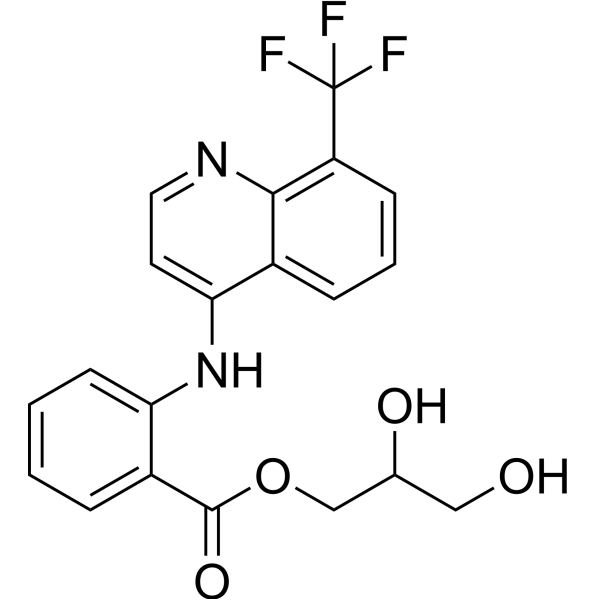 0 ImagesCat. No.: HY-A0259CAS No.: 23779-99-9
-
Ac-RFAAKAA-COOH
 0 Images
Ac-RFAAKAA-COOH is a heptapeptide with one reactive Lys residue. Ac-RFAAKAA-COOH forms stable covalent adducts with isothiocyanates, resulting in peptide depletion over time. Ac-RFAAKAA-COOH acts as a model peptide in direct peptide reactivity assays, where its chemical reactivity is evaluated via fluorescamine-based free amine assays. Ac-RFAAKAA-COOH can be used in studies related to allergic contact dermatitis and skin sensitization.
-
BML-260
 0 Images
BML-260 is a potent inhibitor of dual-specific phosphatases JSP-1 and DUSP22. BML-260 can activate UCP1 and thermogenesis in adipocytes in a JSP-1-independent manner. The effect of BML-260 on adipocytes is partially achieved through the activation of CREB, STAT3, and PPAR signaling pathways. BML-260 can be used in the research of inflammatory and proliferative disorders associated with JNK signaling dysfunction as well as obesity.
-
iNOs-IN-1
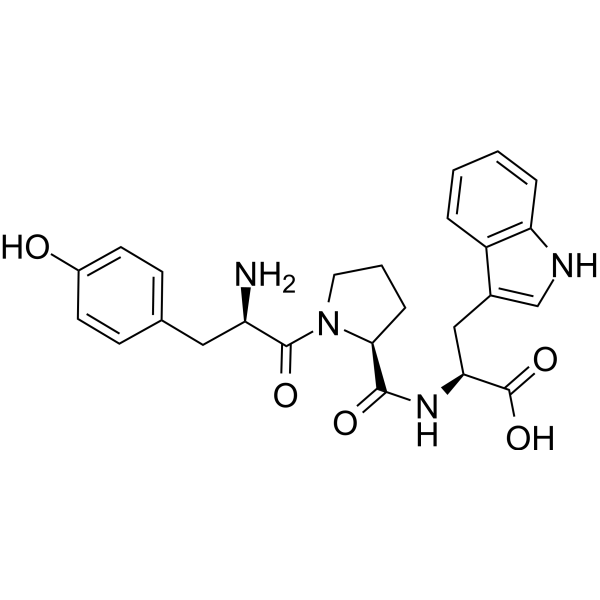 0 ImagesCat. No.: HY-145846Purity: 98.07%
iNOs-IN-1 (YPW) is a potent inducible nitric oxide synthase (iNOS) inhibitor. iNOs-IN-1 can significantly inhibit the expression of IL-6 and iNOS, as well as reduce LPS-induced NO generation with dose-dependent manner in mouse macrophages. Anti-inflammatory effects.
-
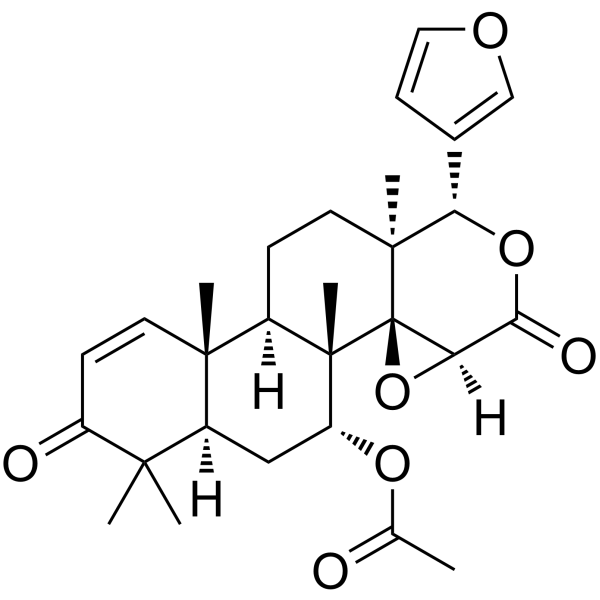
Gedunin
 0 Images
Gedunin is a limonoid with anti-cancer, anti-viral, anti-inflammatory and insecticidal activities. Gedunin acts as a potent Hsp90 inhibitor and induces the degradation of Hsp90-dependent client proteins. Geduni may obstructs the entry of SARS-CoV-2 virus into human host cells and can be used for COVID-19 research.
-
Nolavetbart
 0 ImagesCat. No.: HY-P990713CAS No.: 2750248-93-0Synonyms: VTQ-2101
-
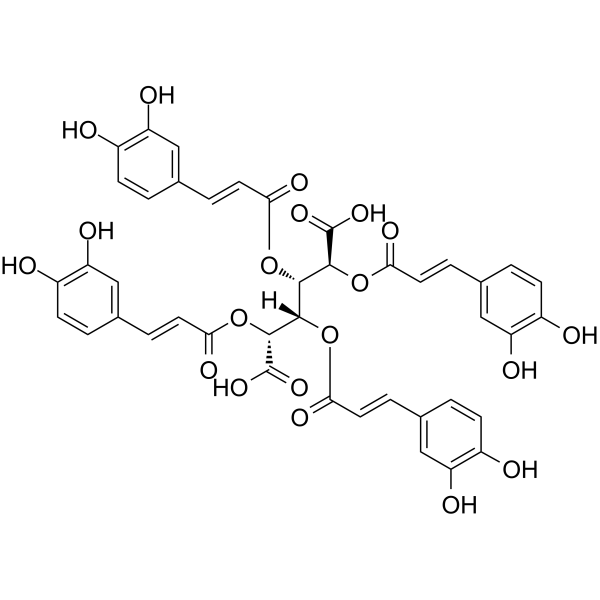
2,3,4,5-Tetracaffeoyl-D-Glucaric acid
 0 Images
2,3,4,5-Tetracaffeoyl-D-Glucaric acid is a caffeoyl-D-glucaric acid derivative isolated from the Genus Gnaphalium.
-
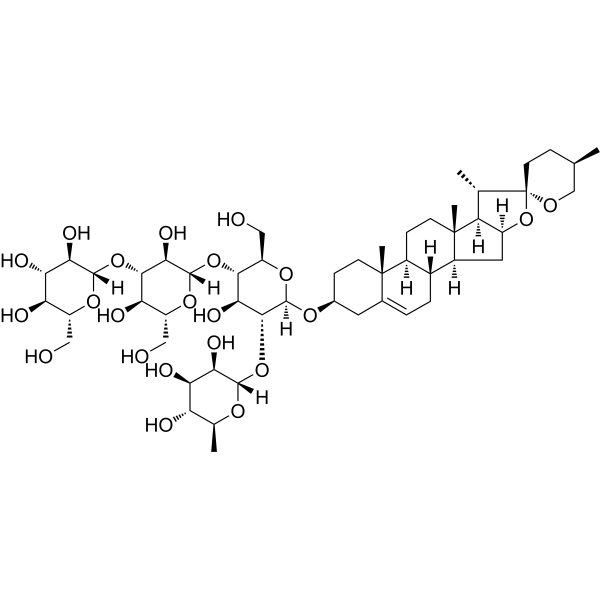
Zingiberen newsaponin
 0 ImagesSynonyms: Zingiberensis newsaponin
Zingiberen Newsaponin (Zingiberensis newsaponin) is an orally active type of steroid saponin compound. Zingiberen Newsaponin exerts anti-hepatocellular carcinoma (HCC) effects by inhibiting autophagy and the AKR1C1/JAK2/STAT3 pathway. Zingiberen Newsaponin activates oxidative stress (upregulates ROS and MDA) and mitochondrial pathways, promoting cancer cell apoptosis. Zingiberen Newsaponin alleviates cerebral ischemia-reperfusion (I/R) injury by decreasing the concentration of pro-inflammatory cytokines and inhibits NF-κB. Zingiberen Newsaponin can enhance the activity of SOD, eliminate free radicals and protect nerve cells. Zingiberen Newsaponin induces platelet aggregation.

-
CDH11-IN-1
 0 Images
CDH11-IN-1 is a CDH11 inhibitor. CDH11-IN-1 regulates CDH11-mediated biological pathways. CDH11-IN-1 can be used for research on cancer and rheumatoid arthritis.
-
Sancycline
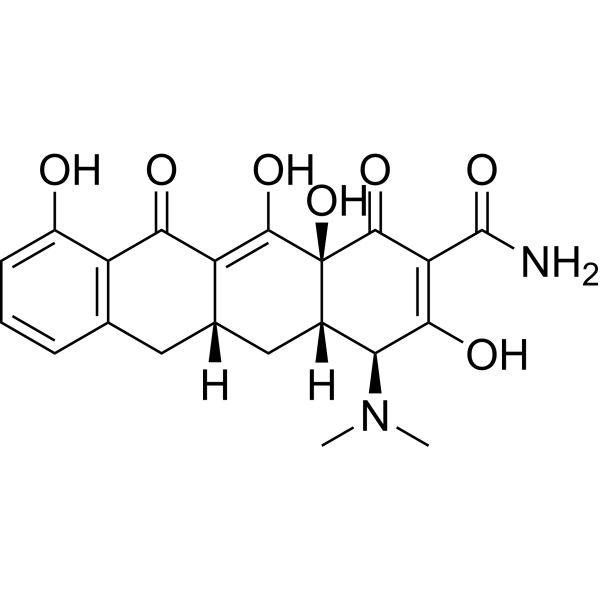 0 ImagesSynonyms: Bonomycin; 6-Demethyl-6-deoxytetracycline
Sancycline (6-Demethyl-6-deoxytetracycline) acts by reversibly binding to the 30 S ribosomal subunit and inhibiting protein translation by blocking entry of aminoacyl-tRNA into the ribosome a site similar to tetracycline (HY-A0107). Sancycline, four linearly fused six-membered rings with four stereocenters, is a rare semi-synthetic tetracycline (HY-A0107) prepared by hydrogenolysis of the chloro and benzylic hydroxy moieties of Declomycin.
-
SIK-IN-1
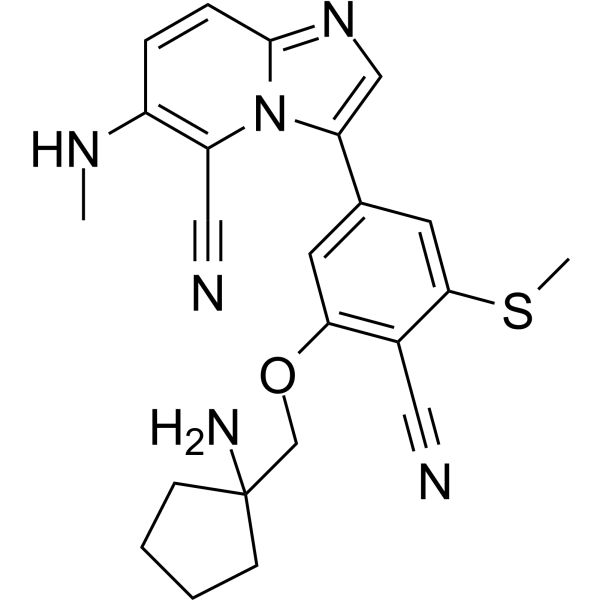 0 Images
SIK-IN-1 (Compound 53) is an inhibitor for salt-inducible kinase (SIK), which inhibits SIK1, SIK2 and SIK3 with IC50s of 0.1, 0.4 and 1.5 nM, respectively. SIK-IN-1 inhibits the release of TNFa with IC50 of 0.5 nM, stimulates the LPS (HY-D1056) -induced IL-10 release with EC50 of 4 nM in human macrophages.
-
Astragenol
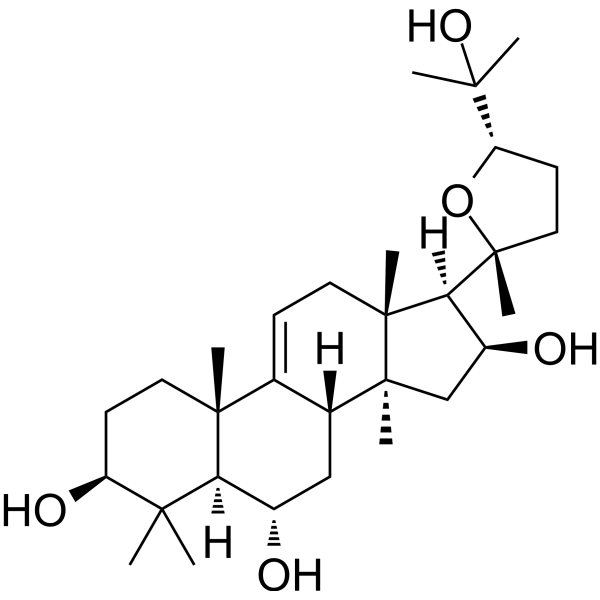 0 Images
Astragenol is an intermediate used for Astragenol derivative synthesis. Astragenol derivatives are promising anti-inflammatory agents for prostate cancer research.
-
Lupenone
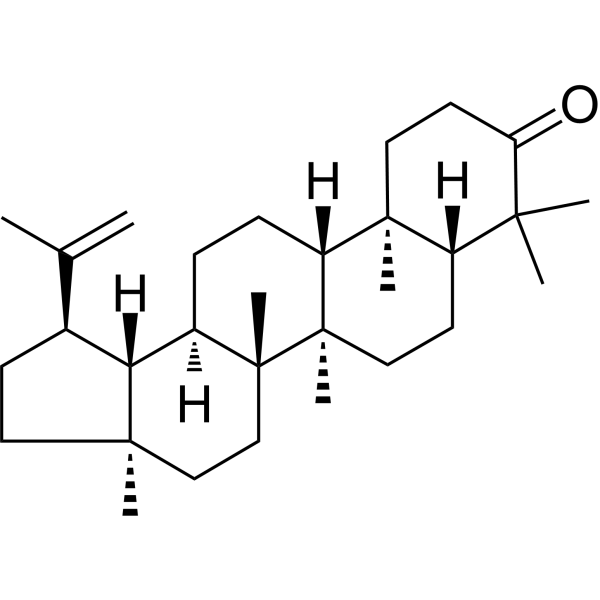 0 Images
Lupenone is an orally active lupine-type triterpenoid that can be isolated from Musa basjoo. Lupenone Lupenone plays a role through the PI3K/Akt/mTOR and NF-κB signaling pathways. Lupenone has anti-inflammatory, antiviral, antidiabetic and anticancer activities.
-
Moxilubant
 0 ImagesSynonyms: CGS 25019C free base
Moxilubant (CGS 25019C free base) is an orally active BLT1 antagonist. Moxilubant inhibits LTB4 signaling with a potency of 2-4 nM. Moxilubant blocks LTB4-induced neutrophil functions. Moxilubant inhibits ear edema and neutrophil infiltration in mice. Moxilubant can be used in research related to chronic obstructive pulmonary disease.
-
cis-INCB3344
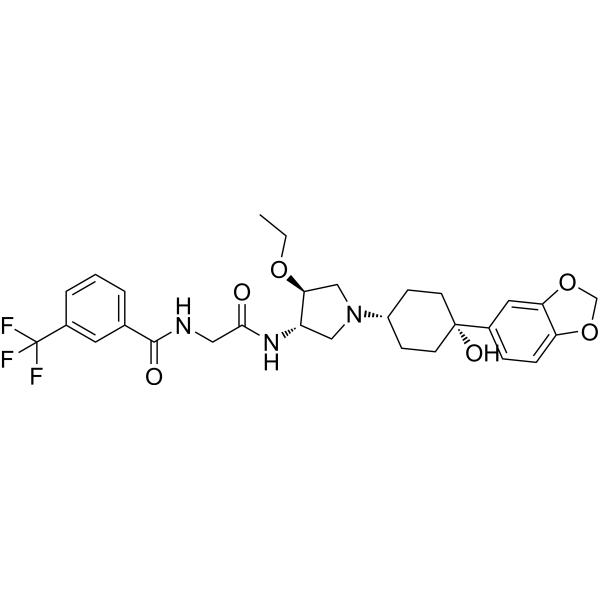 0 ImagesCat. No.: HY-77111CAS No.: 1285539-85-6
cis-INCB3344 is the isomer of INCB3344 (HY-50674), and can be used as an experimental control. INCB3344 is a potent, selective and orally bioavailable CCR2 antagonist with IC50 values of 5.1 nM (hCCR2) and 9.5 nM (mCCR2) in binding antagonism and 3.8 nM (hCCR2) and 7.8 nM (mCCR2) in antagonism of chemotaxis activity.
-
Sericoside
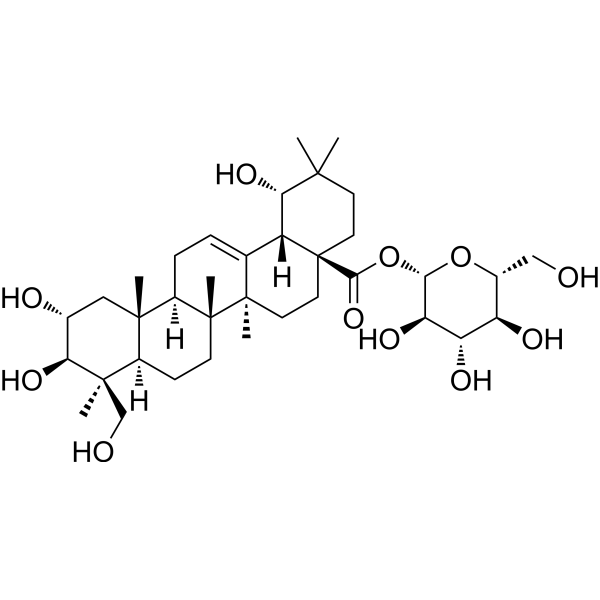 0 Images
Sericoside is a triterpenoid with anti-inflammatory activity, can be isolated form Terminalia. Sericoside has a strong lipolytic activity. Sericoside can also reduce skin wrinkles and ameliorating skin texture.