Inflammation/Immunology
-
Inflammation/Immunology Related Products (20632)
Related Products (20632)

-
Antibodies (115)
-
Related Compound Screening Libraries (4)
-
TBK1 Recombinant Human Active Protein Kinase
 0 ImagesCat. No.: HY-E70865
TBK1 is a member of the IκB kinase (IKK) family and shows ubiquitous expression. TBK1 plays an important role in the regulation of the immune response to bacterial and viral challenges. TBK1 Recombinant Human Active Protein Kinase is a recombinant TBK1 protein that can be used to study TBK1-related functions.
-
Citric acid-13C2
 0 ImagesCat. No.: HY-N1428S2CAS No.: 224054-26-6
Citric acid-13C2 is the 13C-labeled Citric acid (HY-N1428). Citric acid is a natural preservative and food tartness enhancer. Citric acid induces apoptosis and cell cycle arrest at G2/M phase and S phase in HaCaT cells. Citric acid cause oxidative damage of the liver by means of the decrease of antioxidative enzyme activities. Citric acid is also an acidulant, emulsifier, sequestrant and buffering agent widely used across many industries.
-
12-Acetoxyganoderic acid D
 0 ImagesCat. No.: HY-N15221CAS No.: 2374206-92-3
12-Acetoxyganoderic acid D is a triterpenoid compound found in Ganoderma sinense. 12-Acetoxyganoderic acid D exhibits certain anti-inflammatory activity and inhibits NO production in LPS (HY-D1056) stimulated RAW 264.7 macrophages.
-
Ganglioside GT1b (bovine) trisodium
 0 ImagesCat. No.: HY-175073
Ganglioside GT1b bovine trisodium is a trisialic acid ganglioside. Ganglioside GT1b bovine trisodium binds to botulinum toxin type A (BTxA), BTxA heavy chain, and tetanus toxin with IC50 values of 11, 0.74, and 7.2 μM, respectively. Ganglioside GT1b bovine trisodium acts as a TLR2 agonist, leading to microglial activation, increased expression of pro-inflammatory factors, and increased pain sensitivity in spinal microglia. Ganglioside GT1b bovine trisodium also reduces the production of IL-6, IL-10, IgG, IgM, and IgA in human peripheral blood mononuclear cells (PBMCs). Ganglioside GT1b bovine trisodium increases extracellular glutamate levels in neural cell models. Ganglioside GT1b bovine trisodium has potential applications in research on immune system diseases and nervous system diseases.
-
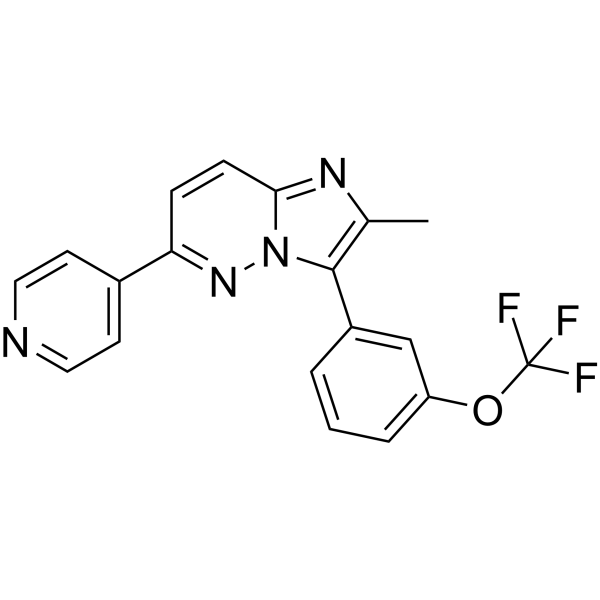
COX-1/2-IN-2
 0 ImagesCat. No.: HY-115967CAS No.: 2882832-86-0
COX-1/2-IN-2 is a potent COX1/2 inhibitor. COX-1/2-IN-2 exhibits significant inhibitory effect against COX-1 and COX-2 inhibitor with IC50 values of 9.7 ± 0.09 µM and 4.6 ± 1.45 µM, respectively.
-
trans-Isoferulic acid-d3
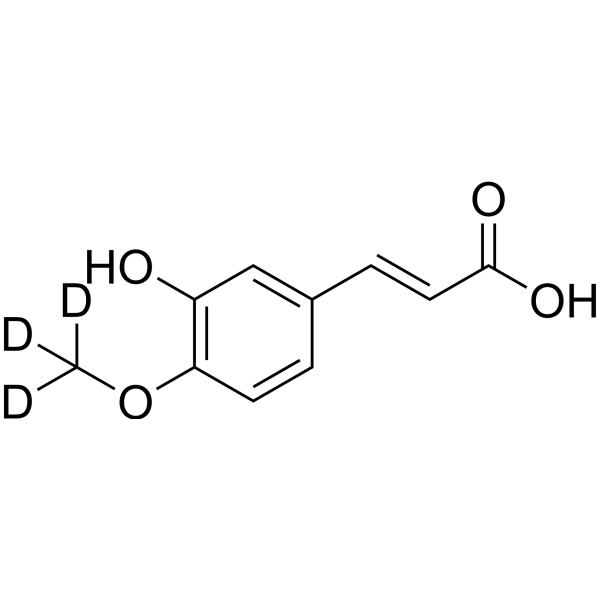 0 ImagesCat. No.: HY-N0761ASCAS No.: 1028203-97-5
trans-Isoferulic acid-d3 is the deuterium labeled trans-Isoferulic acid. trans-Isoferulic acid (trans-3-Hydroxy-4-methoxycinnamic acid) is an aromatic acid isolated from the roots of Clematis florida var. plena. trans-Isoferulic acid exhibits anti-inflammatory activity.trans-isoferulic acid suppresses NO and PGE2 production through the induction of Nrf2-dependent heme oxygenase-1 (HO-1).
-
TAT-CBD3
 0 ImagesCat. No.: HY-P10357CAS No.: 1355359-36-2
TAT-CBD3, a 15-amino acid peptide from CRMP2, fused to the TAT cell-penetrating motif of the HIV-1 protein, disrupts CRMP2-NMDAR interaction without change in NMDAR localization.
-
(Rac)-NPD6433
 0 ImagesCat. No.: HY-167879CAS No.: 895908-81-3
(Rac)-NPD6433 is a racemate of NPD6433. NPD6433 is a triazenyl indole with broad-spectrum activity against all screening fungal strains. NPD6433 targets the enoyl reductase domain of fatty acid synthase 1 (Fas1), covalently inhibiting its flavin mononucleotide-dependent NADPH-oxidation activity and arresting essential fatty acid biosynthesis.
-
Maropitant citrate hydrate
 0 Images
Maropitant citrate hydrate is the citrate hydrate of Maropitant (HY-10053). Maropitant is an orally active NK1 receptor antagonist. Maropitant prevents vomiting and inhibits ulcerative dermatitis.

-
Antibacterial agent 78
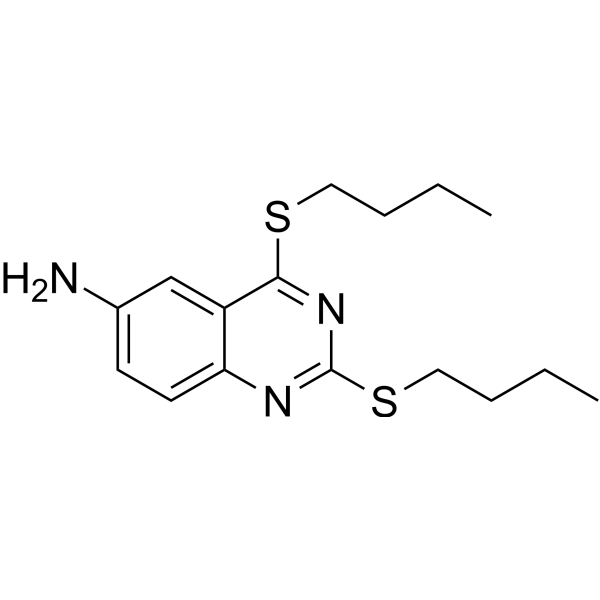 0 ImagesCat. No.: HY-145876CAS No.: 2902561-42-4
Antibacterial agent 78 (compound 30) is an antibacterial agent.
-
9-O-β-D-Glucopyranosyl-3,4-dimethoxy-cinnamic acid
 0 ImagesCat. No.: HY-N15722CAS No.: 223137-18-6
9-O-β-D-Glucopyranosyl-3,4-dimethoxy-cinnamic acid is an orally active phenylpropanoid glycoside found in Microlepia pilosissima, acting as an antioxidant. 9-O-β-D-Glucopyranosyl-3,4-dimethoxy-cinnamic acid shows a DPPH radical scavenging activity with an ED50 value of 38.1 μM. 9-O-β-D-Glucopyranosyl-3,4-dimethoxy-cinnamic acid is promising for research of oxidative stress-related diseases such as inflammation and liver injury.
-
4,6-Dichloroguaiacol
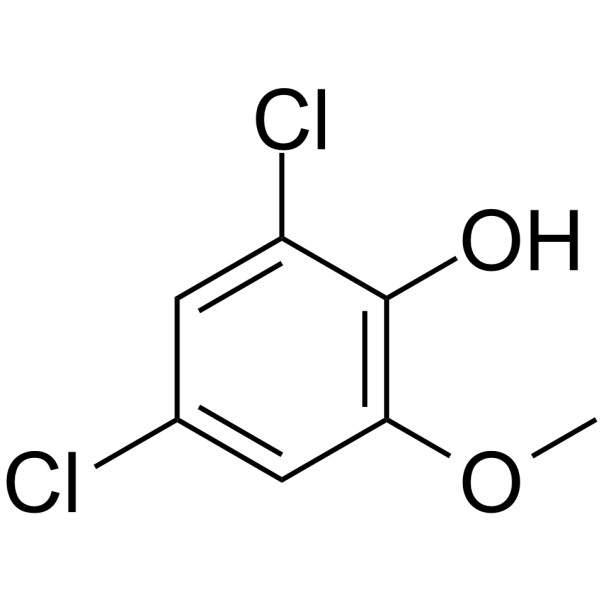 0 ImagesCat. No.: HY-133608CAS No.: 16766-31-7
4,6-Dichloroguaiacol induces biochemical and morphological changes in human peripheral blood lymphocytes in vitro.
-
D-α-Methyl DOPA
 0 ImagesCat. No.: HY-W387035CAS No.: 2799-15-7
D-α-Methyl DOPA is an inhibitor of the binding of DQ8 peptide to MHC class II molecules. D-α-Methyl DOPA occupies a pocket along the DQ8 peptide binding groove. D-α-Methyl DOPA inhibits the binding of a DQ8 peptide to an MHC class II molecule for presentation to CD4+ T cells, thereby slowing the development or progression of type 1 diabete or celiac disease.
-
CJ-13,610 hydrochloride
 0 ImagesCat. No.: HY-106200ACAS No.: 179420-27-0
CJ-13,610 (hydrochloride) is an orally active and potent nonredox-type 5-lipoxygenase inhibitor with an IC50 value of 0.07 μM. CJ-13,610 (hydrochloride) competes with activating LOOH at a regulatory LOOH-binding site with high affinity, thereby preventing 5-lipoxygenase catalysis. CJ-13,610 (hydrochloride) is promising for research of diseases related to elevated levels of 5-lipoxygenase such as inflammatory reactions, allergic asthma, various types of cancer and atherosclerosis.
-
Fingolimod hydrochloride (Standard)
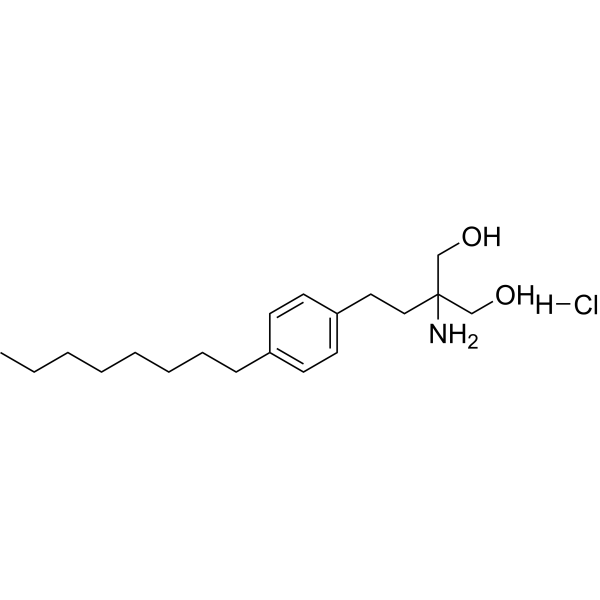 0 ImagesSynonyms: FTY720 (Standard)
Fingolimod (hydrochloride) (Standard) is the analytical standard of Fingolimod (hydrochloride). This product is intended for research and analytical applications. Fingolimod hydrochloride (FTY720), an analog of sphingosine, is a potent sphingosine 1-phosphate (S1P) receptors modulator. Fingolimod hydrochloride is phosphorylated by sphingosine kinases, particularly by SK2, and then binds S1PR1, 3, 4, and 5. Fingolimod hydrochloride induces the internalization of S1P1, and consequently, inhibits S1P activity. Fingolimod hydrochloride also is a pak1 activator.
-
Endotrophin (Mus musculus)
 0 ImagesCat. No.: HY-P5081CAS No.: 1678414-54-4
Endotrophin (Mus musculus) is an adipokine, a cleavage fragment derived from Collagen VI, whose levels are elevated in adipose tissue and breast tumors of obese mice. Endotrophin (Mus musculus) activates the TGF-β signaling pathway and reduces the expression of hormone-sensitive lipase. Endotrophin (Mus musculus) induces adipogenesis, lipid accumulation, fibrosis, inflammation, angiogenesis, adipose tissue expansion, epithelial-mesenchymal transition, and insulin resistance; it also induces Cisplatin (HY-17394) resistance in cancer cells. Endotrophin (Mus musculus) can be used in research related to metabolic diseases such as obesity and type 2 diabetes, as well as cancers such as breast cancer.