Inflammation/Immunology
-
Inflammation/Immunology Related Products (20898)
Related Products (20898)

-
Antibodies (115)
-
Related Compound Screening Libraries (4)
-
IT 066 hydrochloride
 0 ImagesCat. No.: HY-19105ACAS No.: 126463-66-9
IT 066 hydrochloride is a Histamine H2 receptor antagonist. IT 066 hydrochloride possesses antioxidant activity and can protect rats against acute gastric mucosal injury induced by ischemia-reperfusion. IT 066 hydrochloride can also inhibit secretagogue-induced gastric acid secretion in rats and exert a long-acting anti-lesion effect on experimental gastric and duodenal lesions in rats. IT 066 hydrochloride is applicable for the research of gastrointestinal diseases.
-
Cucurbitacin IIa (Standard)
 0 ImagesCat. No.: HY-N1988RCAS No.: 58546-34-2Synonyms: Hemslecin A (Standard)
Cucurbitacin IIa (Hemslecin A) (Standard) is the analytical standard for Cucurbitacin IIa (HY-N1988). This product is used for research and analytical applications. Cucurbitacin IIa is an orally active, blood-brain barrier-penetrating EGFR inhibitor with an IC50 of 1.455 nM for human EGFR. Cucurbitacin IIa induces caspase-3 dependent cell apoptosis, downregulates survivin expression, enhances autophagy levels, disrupts the actin cytoskeleton through actin aggregation, blocks the cell cycle at the G2/M phase, and inhibits the EGFR-MAPK signaling pathway to exert anti-inflammatory activity. Cucurbitacin IIa can be used in research on inflammatory-related diseases, depression, and non-small cell lung cancer and other cancers.
-
Bambusa arundinacea extract
 0 ImagesCat. No.: HY-N18770CAS No.: 91771-32-3
Bambusa arundinacea extract is rich in various bioactive compounds, including flavonoids, phenolic acids, and lignans. Bambusa arundinacea extract possesses antioxidant, anti-inflammatory, and antibacterial properties.
-
Isochlorogenic acid A (Standard)
 0 ImagesSynonyms: 3,5-Dicaffeoylquinic acid (Standard); 3,5-CQA (Standard)
Isochlorogenic acid A (Standard) is the analytical standard of Isochlorogenic acid A. This product is intended for research and analytical applications. Isochlorogenic acid A (3,5-Dicaffeoylquinic acid) is a natural phenolic acid with anti-mutagenicity, anti-HBV, anti-HIV, anti-oxidant, anti-bacterial, and anti-inflammatoryy activities.
-
Chitin, from shrimp shells (powder)
 0 ImagesCat. No.: HY-126389ACAS No.: 1398-61-4
Chitin, from shrimp shells (powder) is a long-chain polymer of N-acetylglucosamine with β-(1-4) linkages. Chitin, from shrimp shells (powder) is found in the exoskeleton of crabs. Chitin, from shrimp shells (powder) inhibits the activation of NF-κB p65, alters the translocation of NF-κB p65 to the nucleus, and interacts with the cell wall of Candida species. Chitin, from shrimp shells (powder) exerts antifungal and anti-inflammatory effects. Chitin, from shrimp shells (powder) can be used in the research of gastric ulcer and candidiasis.
-
SC-67655
 0 ImagesCat. No.: HY-120794CAS No.: 182134-00-5
SC 67655 is a potent and stable pentapeptide MHC class II haplotype DR4 (DR4 Dw4 or DRB 1"0401) ligand with an IC50 of 50 nM. SC 67655 can be used for the study of autoimmune diseases.
-
FAM labled Cobitolimod sodium
 0 ImagesCat. No.: HY-160040C
FAM labled Cobitolimod sodiumis a FAM labled Cobitolimod sodium.
-
NLRP3-IN-36
 0 ImagesCat. No.: HY-163494CAS No.: 3033732-58-7
NLRP3-IN-36 (Compound 111) is an NLRP3 inhibitor (IC50 <1 μM).
-
Staphylionoside D
 0 ImagesCat. No.: HY-N15527CAS No.: 663919-93-5
Staphylionoside D is found in Annona squamosa L.. Staphylionoside D can inhibit the NO production and exhibit anti-inflammatory activity.
-
CHI3L1 binder 1
 0 ImagesCat. No.: HY-179115CAS No.: 1381229-36-2
CHI3L1 binder 1 (Compound A9) is a CHI3L1 binder with a Kd of 182 µM. CHI3L1 binder 1 can be used in the research of immunity, tissue remodeling, and cancer.
-
6,4'-Dihydroxy-7-methoxyflavanone
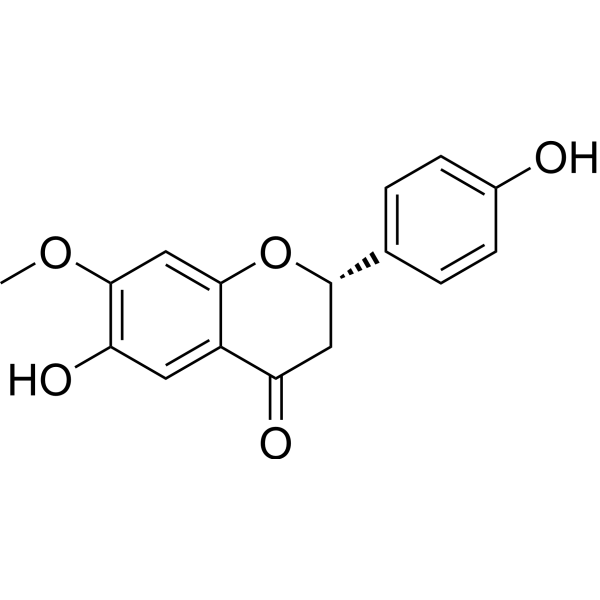 0 ImagesCat. No.: HY-N9736CAS No.: 189689-32-5
6,4'-Dihydroxy-7-methoxyflavanone, a flavonoid, is a nature product that could be isolated from Heartwood Dalbergia odorifera. 6,4'-Dihydroxy-7-methoxyflavanone inhibits receptor activators of nuclear factor kappa-B ligand (RANKL) induced osteoclastogenesis. 6,4'-Dihydroxy-7-methoxyflavanone has antioxidant, anti-inflammatory and neuroprotective effects. 6,4'-Dihydroxy-7-methoxyflavanone can be used in research of osteoporosis.
-
DHODH-IN-12
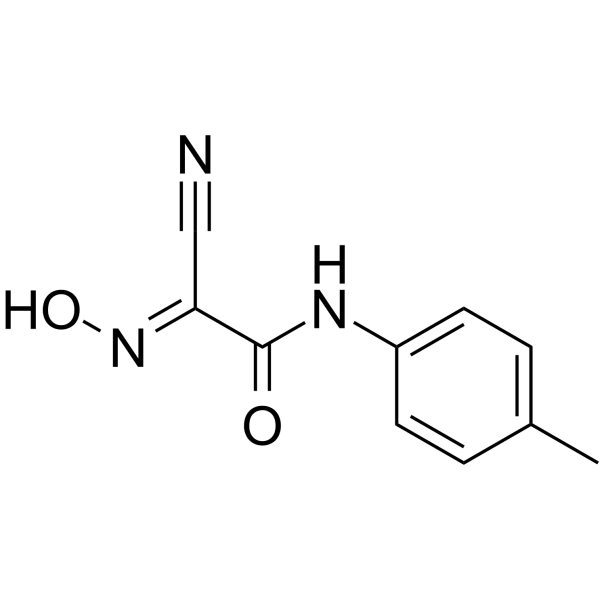 0 ImagesCat. No.: HY-135676CAS No.: 1263303-93-0
DHODH-IN-12 (Compound 12b) is a Leflunomide derivative and a weak dihydroorotate dehydrogenase (DHODH) inhibitor with a pKa of 5.07.

-
Navafenterol saccharinate
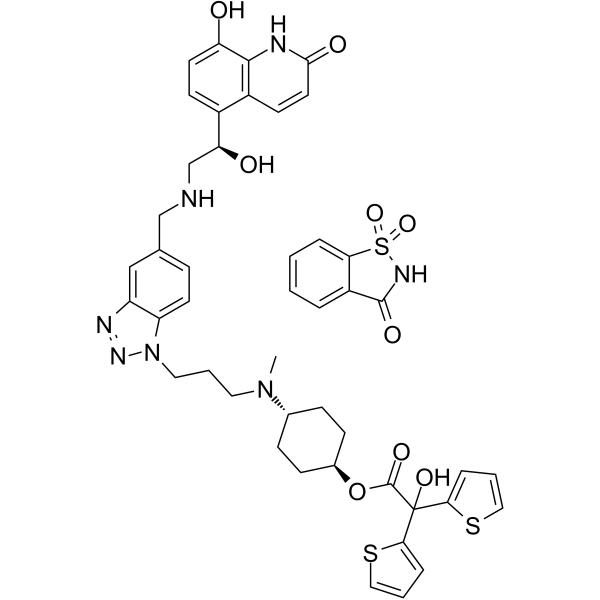 0 ImagesCat. No.: HY-120802ACAS No.: 1648550-37-1Synonyms: AZD-8871 saccharinate; LAS191351 saccharinate
Navafenterol (AZD-8871) saccharinate is an inhaled dual-acting, potent, selective, and long-lasting M3-antagonist/β2-agonist (MABA) with long-lasting effects and favorable safety profile. The pIC50 is 9.5 for human M3 receptor, and the pEC50 is 9.5 for β2-adrenoceptor. Navafenterol saccharinate can be used for the research of chronic obstructive pulmonary disease (COPD). Bronchoprotective and antisialagogue effects. Favorable cardiovascular profile.
-
Angiotensin II/BSA
 0 ImagesCat. No.: HY-161530
Angiotensin II/BSA is an antigen-adjuvant conjugate formed by the coupling of Angiotensin II with bovine serum albumin (BSA). By coupling the antigen with a protein adjuvant, the production of antigen-specific antibodies in vaccine models can be enhanced. The conjugate does not affect protein folding or disrupt major epitopes, and it can enhance cross-presentation and the generation of antigen-specific T cells.
-
Tropesin
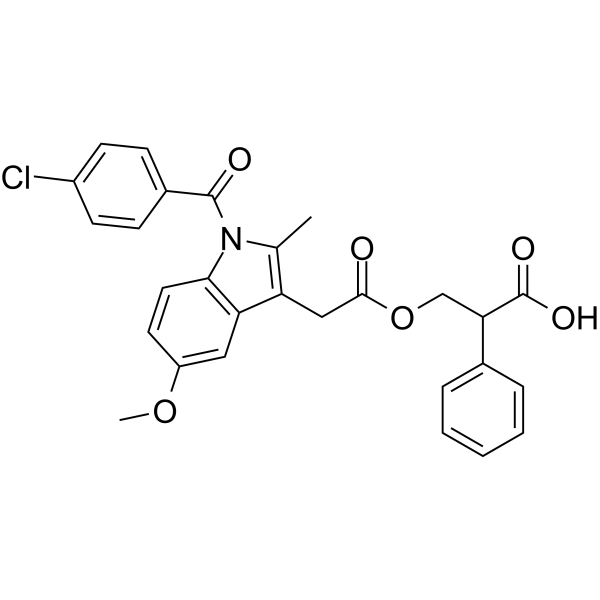 0 ImagesCat. No.: HY-108280CAS No.: 65189-78-8Synonyms: VUFB 12018; Repanidal
Tropesin (VUFB 12018; Repanidal) is a nonsteroid antiinflammatory agent (NSAIA) that inhibits the growth of Trichoderma viride.
-
(8R,12R,13R)-8,12-Epoxylabd-14-en-13-ol
 0 ImagesCat. No.: HY-N13817CAS No.: 56682-25-8
(8R,12R,13R)-8,12-Epoxylabd-14-en-13-ol is a diterpene found in Abies georgei. (8R,12R,13R)-8,12-Epoxylabd-14-en-13-ol is a nuclear factor kappa B (NF-κB) inhibitor that inhibits TNFα-triggered NF-κB activity (IC50 = 8.7 μg/mL). (8R,12R,13R)-8,12-Epoxylabd-14-en-13-ol exhibits anti-inflammatory activity and can inhibit NO production. (8R,12R,13R)-8,12-Epoxylabd-14-en-13-ol shows significant cytotoxicity against tumor cells.
-
Calcium citrate,AR,99%
 0 ImagesSynonyms: Tricalcium dicitrate
Calcium citrate,AR,99% (Tricalcium dicitrate) is an alkalinizing agent. Calcium citrate,AR,99% attenuates tubulointerstitial damage. Calcium citrate,AR,99% ameliorates the progression of chronic renal injury.
-
Nec-4
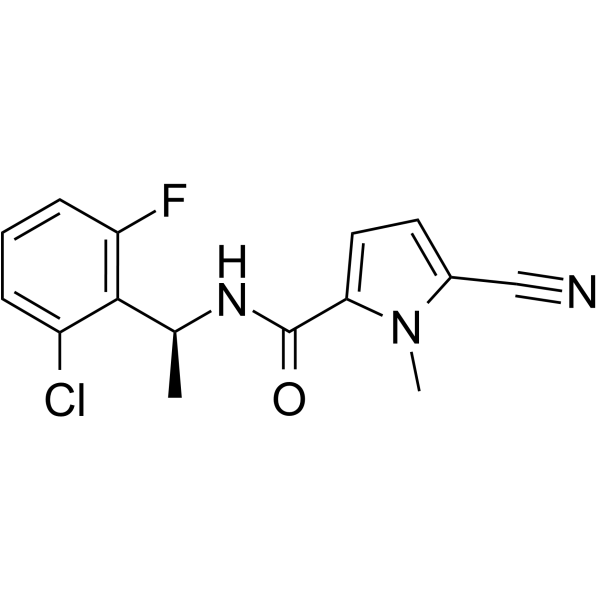 0 ImagesCat. No.: HY-18900CAS No.: 1041644-43-2
Nec-4, a tricyclic derivative, is a potent receptor interacting protein 1 (RIP1) inhibitor, with an IC50 of 2.6 μM, Ki of 0.46 μM.