



Bacterial
Anything that destroys bacteria or suppresses their growth or their ability to reproduce. Heat, chemicals such as chlorine, and antibiotic drugs all have antibacterial properties. Many antibacterial products for cleaning and handwashing are sold today. Such products do not reduce the risk for symptoms of viral infectious diseases in otherwise healthy persons. This does not preclude the potential contribution of antibacterial products to reducing symptoms of bacterial diseases in the home.
All Product Categories
-
Bacterial Inhibitors
(7527)
View all products
-
Bacterial Agonists
(3)
View all products
-
Bacterial Antagonists
(9)
View all products
-
Bacterial Activators
(24)
View all products
-
Bacterial Modulators
(27)
View all products
-
Bacterial Chemicals
(2)
View all products
-
Bacterial Inducers
(6)
View all products
-
Bacterial Controls
(14)
View all products
-
Bacterial Substrates
(2)
View all products
-
Bacterial Ligand
(1)
View all products
-
Bacterial Related Products (8858)
Related Products (8858)

-
Antibodies (14)
-
Related Compound Screening Libraries (1)
-
DX-619
 0 ImagesCat. No.: HY-187934CAS No.: 431058-65-0DX-619 is an antibacterial agent. DX-619 inhibits bacterial type II topoisomerases, DNA gyrase (GyrA), and topoisomerase IV (GrlA). DX-619 can be used in research related to bacterial infections, pneumonia, and other conditions.
-
Quabodepistat-d4
 0 ImagesCat. No.: HY-134940S1Synonyms: OPC-167832-d4Quabodepistat-d4 (OPC-167832-d4) is the deuterium labeled Quabodepistat (HY-134940). Quabodepistat (OPC-167832) is a potent and orally active dprE1 inhibitor with an IC50 of 0.258 μM. Quabodepistat has antituberculosis activity and can be used for the research of tuberculosis caused by Mycobacterium tuberculosis.
-
Glycyrrhiza glabra extract
 0 ImagesCat. No.: HY-N18641CAS No.: 84775-66-6Glycyrrhiza glabra extract is rich in bioactive compounds such as glycyrrhizic acid, glycyrrhetinic acid, flavonoids, and glycyrrhizin, and has antioxidant, anti-inflammatory, antibacterial, and skin-protective effects.
-
Lauric acid-d5
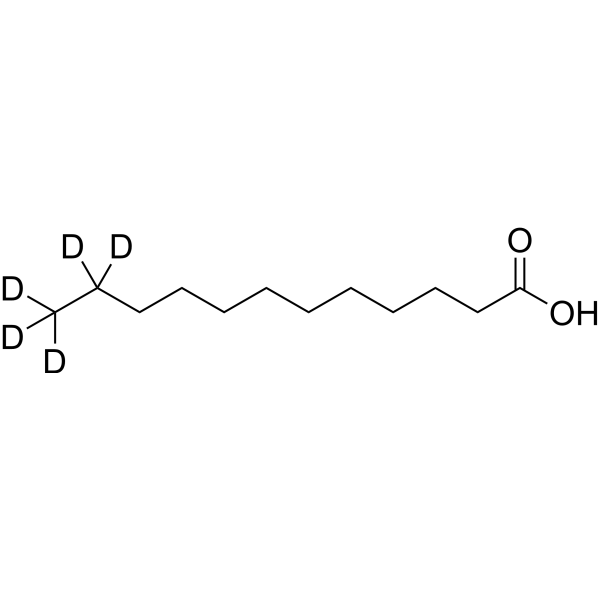 0 ImagesCat. No.: HY-Y0366S5CAS No.: 1219804-38-2Lauric acid-d5 is the deuterium labeled Lauric acid. Lauric acid is a middle chain-free fatty acid with strong bactericidal properties. The EC50s for P. acnes, S.aureus, S. epidermidis, are 2, 6, 4 μg/mL, respectively.
-
Mab-SaS-IN-1
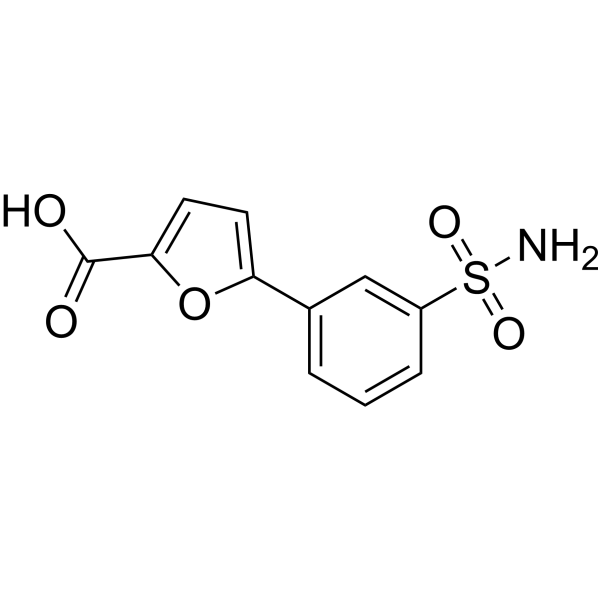 0 ImagesCat. No.: HY-157433CAS No.: 773869-38-8Mab-SaS-IN-1 (compoud 1H) is Mab-SaS inhibitor with the IC50 of 2 μM. Mab-SaS-IN-1 can be used for study of antibiosis by blocking iron uptake and metabolism.
-
Dieckol (Standard)
 0 ImagesCat. No.: HY-147059RCAS No.: 88095-77-6Buclizine (dihydrochloride) (Standard) is the analytical standard of Buclizine (dihydrochloride). This product is intended for research and analytical applications. Buclizine dihydrochloride is an orally active antihistamine antiallergic compound. Buclizine dihydrochloride is a potent teratogen in the rat and shows anti-tumor activity.
-
f-MKKFRW
 0 ImagesCat. No.: HY-P11704f-MKKFRW is a selective mouse formyl peptide receptor 3 (Fpr3) activator and bacterial MgrB-derived peptide motif. f-MKKFRW activates Fpr3 to trigger downstream signaling and calcium responses in Fpr3-expressing cells. f-MKKFRW stimulates a subset of mouse vomeronasal sensory neurons in the accessory olfactory system to evoke calcium responses. f-MKKFRW drives innate avoidance behavior in mice via nasal contact.
-
PNU-176798
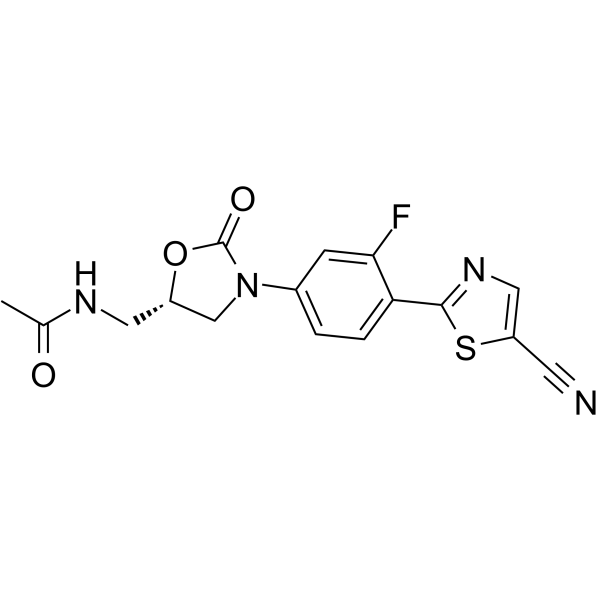 0 ImagesCat. No.: HY-100306CAS No.: 428861-91-0PNU-176798 is an antimicrobial agent, targeting protein synthesis in a wide spectrum of gram-positive and anaerobic bacteria.
-
MAC-0547630
 0 ImagesCat. No.: HY-119022CAS No.: 950386-41-1MAC-0547630 is a potent inhibitor of undecaprenyl diphosphate synthase (UppS), with IC50s of 0.05 μM and 1.6 μM for UppSBS and UppSBA, respectively. MAC-0547630 is active against B. subtilis in vitro (MIC 0.1 ng/mL).
-
FtsZ-IN-1
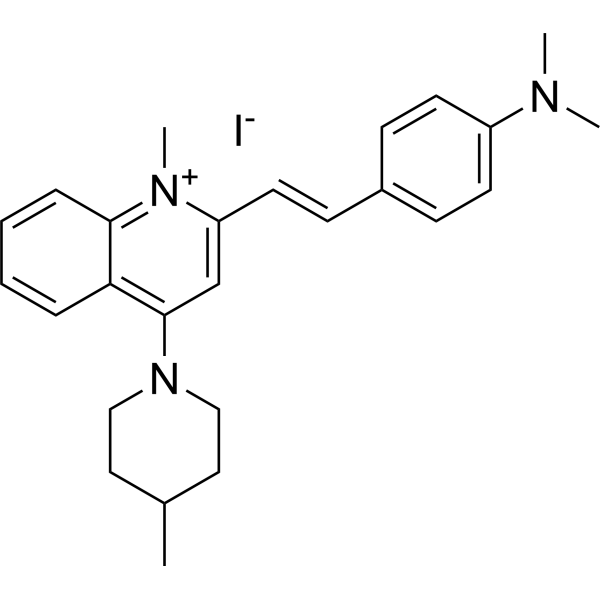 0 ImagesCat. No.: HY-146595CAS No.: 2516246-24-3FtsZ-IN-1 is a potent FtsZ inhibitor with quinolinium ring. FtsZ-IN-1 has stronger antibacterial activity against Gram-positive bacteria with MICs of 0.5-8 μg/mL. FtsZ-IN-1 significantly causes cell elongation of B. subtilis by enhancing FtsZ polymerization. FtsZ-IN-1 exhibits low hemolytic toxicity and low tendency to induce agent resistance. FtsZ-IN-1 has against drug-resistant bacteria activity.
-
Bactobolin B
 0 ImagesCat. No.: HY-122146CAS No.: 74141-68-7Synonyms: Alanylbactobolin; Y-12896Bactobolin B (Alanylbactobolin) is a chlorine-containing antibiotic with antitumor activities.
-
Mazethramycin B
 0 ImagesCat. No.: HY-N16374CAS No.: 68373-95-5Mazethramycin B (Compound II) is an antitumor antibiotic. Mazethramycin B can be isolated from the Streptomyces thioluteusM ME561-L4. Mazethramycin B has a broad-spectrum antimicrobial activity (such as MICs of 1.56 and 6.25 μg/mL for the bacteria Bacillus subtilis PCI 219 and the fungus Candida pseudotropicalis, resepectively). Mazethramycin B significantly increases survival in L1210 leukemia mice model.
-
Neoabietic acid (Standard)
 0 ImagesCat. No.: HY-133592RCAS No.: 471-77-2Neoabietic acid (Standard) is the analytical standard of Neoabietic acid. This product is intended for research and analytical applications. Neoabietic acid, an abietic-type acid, is a nature product that could be isolated from the oleoresin and rosin of Pinus palustris. Neoabietic acid is highly susceptible to mineral acid. Neoabietic acid has antibacterial activity.
-
MMV676584
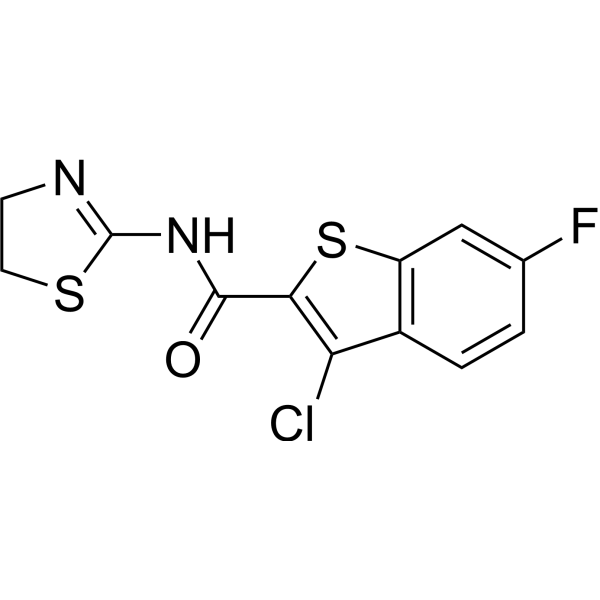 0 ImagesMMV676584 has anti-tuberculosis avtivity. MMV676584 is a novel agent candidate for eumycetoma.
-
Kapurimycin A3
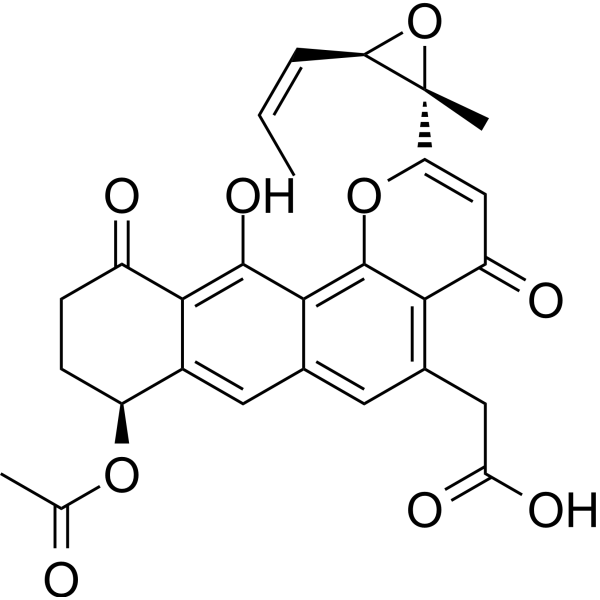 0 ImagesCat. No.: HY-125633CAS No.: 129966-45-6Kapurimycin A3 is an antitumor and antibacterial antibiotic. Kapurimycin A3 has DNA binding and breakage activity. Kapurimycin A3 can be isolated from Streptomyces.
-
Defensin NP-3A
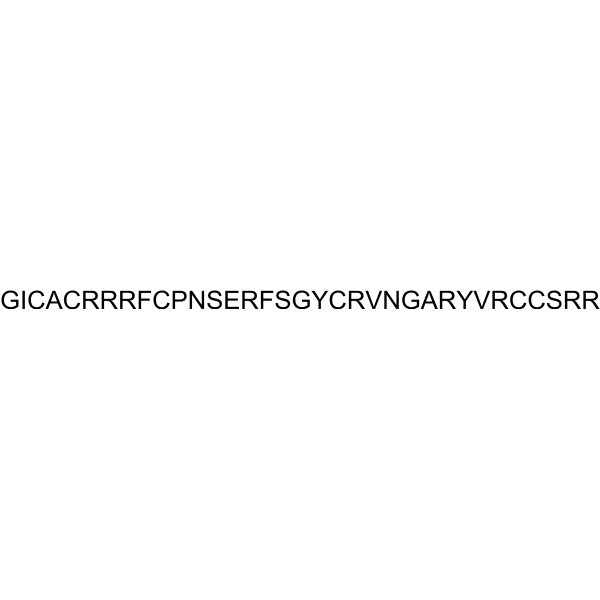 0 ImagesCat. No.: HY-P3981CAS No.: 134090-73-6Synonyms: NP-3A; Corticostatin 1, rabbitDefensin NP-3A (NP-3A; Corticostatin 1) is a human granulocyte peptide, with anti-ACTH activity. Defensins are antimicrobial peptides with and cytotoxic activity.
-
MF 5137
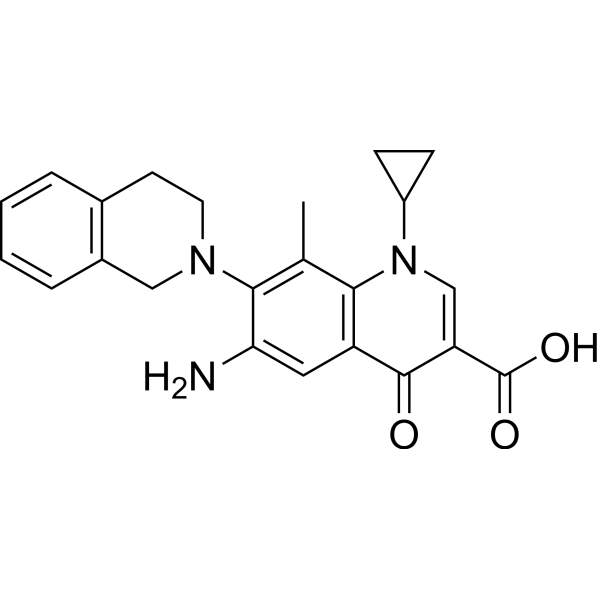 0 ImagesCat. No.: HY-100289CAS No.: 148927-23-5MF 5137 is a potent antibacterial agent.
-
Antitubercular agent-29
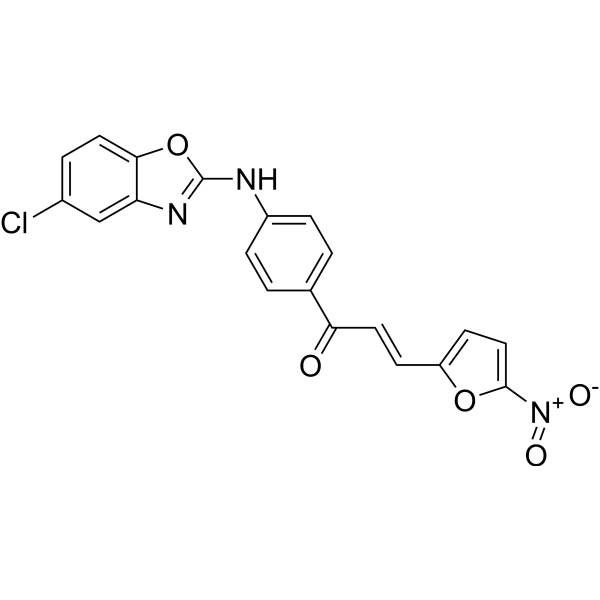 0 ImagesCat. No.: HY-150554Antitubercular agent-29 (compound 6xa) is a potent agent resistant (DR) Mycobacterium tuberculosis (Mtb) inhibitor with MIC of 0.03 μg/mL against agent-susceptible (DS)-Mtb strains, MIC of 0.03-0.06 μg/mL against DR-Mtb strains, and favourable selectivity (SI>40) against Vero cells.
-
L-Cefadroxil-d4 trifluoroacetate
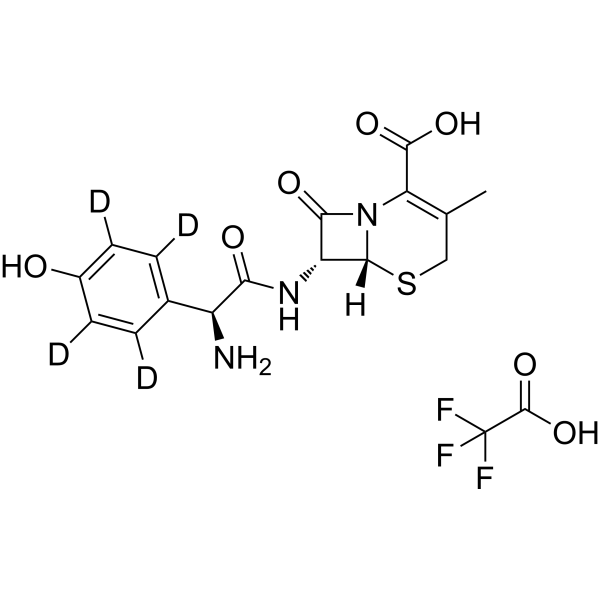 0 ImagesCat. No.: HY-B1190BSSynonyms: L-BL-S 578-d4 trifluoroacetateL-Cefadroxil-d4 (trifluoroacetate) is deuterium labeled L-Cefadroxil.
-
Glenthmycin E
 0 ImagesCat. No.: HY-N19290CAS No.: 3040055-84-0Glenthmycin E is an antibacterial agent found in Australian sheep pasture-derived Streptomyces sp. CMB-PB041. Glenthmycin E inhibits growth of multiple bacterial and exhibits no detectable cytotoxicity to eukaryotic cells including fungal and human carcinoma cells. Glenthmycin E can be used for the research of bacterial infections.




