



Biochemical Assay Reagents
Biochemical agents refers to the life science research related to biological material or organic compounds. Due to a wide range of life sciences, rapid development, and therefore a wide variety of such agents, complex in nature. There are electrophoresis reagents, chromatography reagents, centrifuged reagents, immunological reagent, labeled reagent, staining agents, penetration agents and carcinogens variable, insecticides, culture, buffering agents, electron microscopy reagents, protein and nucleic acid precipitating agent, condensing agent ultrafiltration membrane, clinical diagnostic reagents, dyes, antioxidants, preservatives, detergents and surfactants, standard biochemical reagents, biochemical reagents quality control materials, separation material, etc..
All Product Categories
-
Biochemical Assay Reagents Inhibitors
(10)
View all products
-
Biochemical Assay Reagents Modulator
(1)
View all products
-
Biochemical Assay Reagents Chemicals
(7)
View all products
-
Biochemical Assay Reagents Inducer
(1)
View all products
-
Biochemical Assay Reagents Controls
(59)
View all products
-
Biochemical Assay Reagents Substrates
(4)
View all products
-
Biochemical Assay Reagents Ligands
(2)
View all products
-
Biochemical Assay Reagents Related Products (16048)
Related Products (16048)

-
Antibodies (44)
-
Dithiooxamide
 0 ImagesDithiooxamide (Rubeanic Acid) is a selective chelating agent and sulfur-containing analog of Oxamide. Dithiooxamide forms stable chelates with various metal ions (such as lead, iron, cadmium, manganese, and aluminum), which can be separated, enriched, and detected by adsorption on solid adsorbents or electrode surfaces.
-
3'-ONH2-dGTP sodium solution (100 mM)
 0 ImagesCat. No.: HY-158713Purity: 99.0%3'-ONH2-dGTP sodium solution (100 mM) is a labeled modified deoxyoligonucleotide (dNTP) that can release pyrophosphate to produce fluorescence and has special applications in gene synthesis and sequencing.
-
Cesiumiodide
 0 ImagesSynonyms: CesiumiodidewhitextlCesiumiodide (Cesiumiodidewhitextl) is a biological material or organic compound that can be used in life science research.
-
Whole Glucan Particles
 0 ImagesCat. No.: HY-159114Whole Glucan Particles is a Dectin-1a agonist. Whole Glucan Particles activates the innate immune system to improve the function of macrophages, monocytes and other immune cells.
-
1,3-Propanesultam
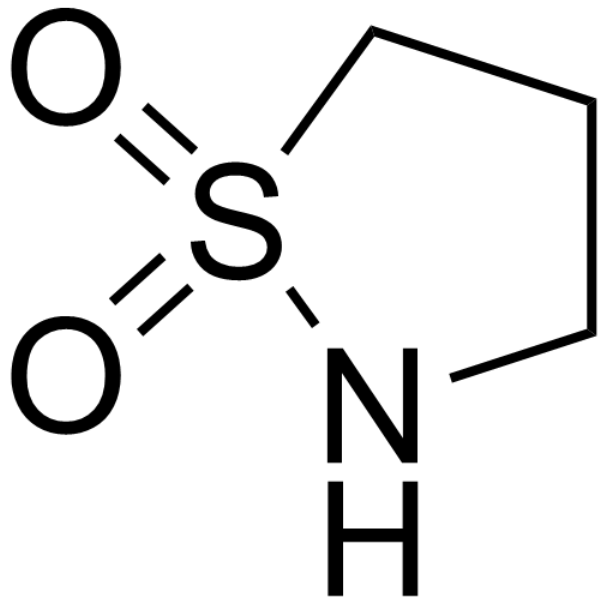 0 ImagesSynonyms: 1,1-Dioxoisothiazolidine1,3-Propanesultam (1,1-Dioxoisothiazolidine) is a cyclic sulfonamide monomer. Polymerization of 1,3-Propanesultam under base catalysis produces high-molecular-weight polypropanesulfonamide, while polymerization under acid catalysis yields low-molecular-weight polypropanesulfonamide. 1,3-Propanesultam serves as a coupling partner in copper-catalyzed C-N cross-coupling reactions for the synthesis of 3-aminopyrazole phenylacetamide analogs. 1,3-Propanesultam is applicable to research related to organic synthesis.
-
4-Iodobenzoic acid
 0 Images4-Iodobenzoic acid is a 4-iodobenzoic acid that crystallizes as a dimer in the monoclinic space group P21/n, with a phase transition center temperature of 230.77 K, and exhibits intermolecular iodine-iodine van der Waals interactions. 4-Iodobenzoic acid can be used in studies of hydrogen bonding, crystal packing and solid-state phase transitions.
-
Calcium carbonate, 99%
 0 ImagesSynonyms: Limestone, 99%Calcium carbonate, 99% (Limestone, 99%) is a calcium carbonate salt and also a mineral. Calcium carbonate, 99% serves as a thickener and acidity regulator.
-
Sodium laureth sulfate (70% in water)
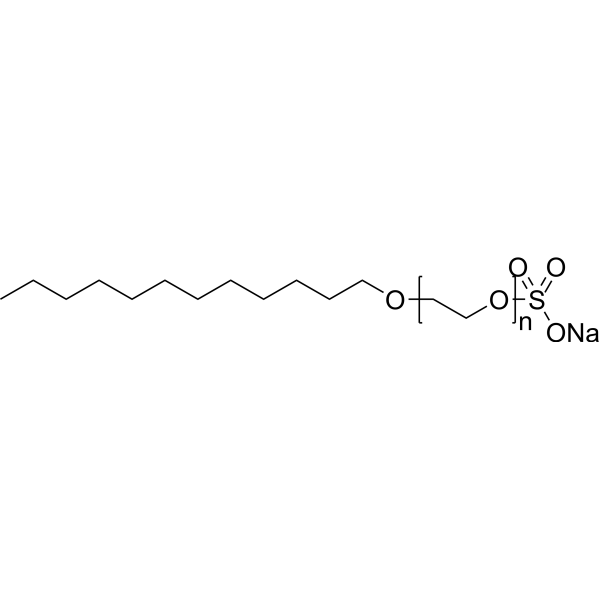 0 ImagesSodium laureth sulfate (70% in water) (Sodium lauryl polyoxyethylene ether sulfate) is an anionic active agent with excellent decontamination, emulsification, dispersion, wetting, antifungal and other properties.
-
Poly-L-lysine solution (0.01%, sterile-filtered, MW 70000-150000)
 0 ImagesCat. No.: HY-126437KCAS No.: 25988-63-0Synonyms: PLL solution 0.01%, sterile-filtered, hydrobromide, MW 70000-150000, for cell culturePoly-L-lysine solution (0.01%, sterile-filtered, MW 70000-150000) (PLL solution (0.01%, sterile-filtered, hydrobromide, MW 70000-150000, for cell culture)) is a polycationic electrolyte polymer solution polymerized from L-lysine monomers and can be used for cell culture.
-
Sodium chloride, meets analytical specification of Ph. Eur. BP USP, ≤0.00002% Al
 0 ImagesSynonyms: Halite, meets analytical specification of Ph. Eur. BP USPSodium chloride, meets analytical specification of Ph. Eur. BP USP, ≤0.00002% Al, an inorganic salt is an orally active salt. Sodium chloride, meets analytical specification of Ph. Eur. BP USP, ≤0.00002% Al, an inorganic salt induces the expression of ATP1A1. Sodium chloride, meets analytical specification of Ph. Eur. BP USP, ≤0.00002% Al, an inorganic salt induces the pro-inflammatory cytokines IL-2, TNFα, IL-9 and several chemokines. Sodium chloride, meets analytical specification of Ph. Eur. BP USP, ≤0.00002% Al, an inorganic salt enhances the anti-tumor activities of Digoxin (HY-B1049) against small cell lung cancer. Sodium chloride, meets analytical specification of Ph. Eur. BP USP, ≤0.00002% Al, an inorganic salt drives autoimmune disease by the induction of pathogenic Th17 cells.
-
Ponceau S, BS
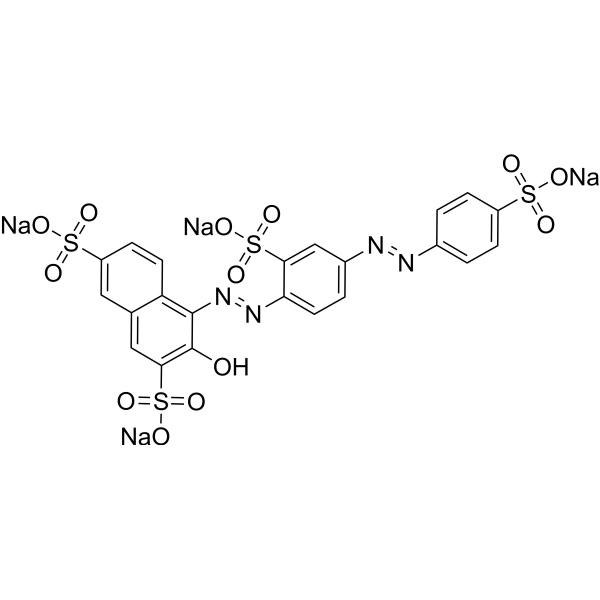 0 ImagesBoth Ponceau S and Ponceau BS are synthetic dyes commonly used in biological research. They are commonly used as protein stains to visualize proteins in western blots and other protein detection analyses. Ponceau S is a red dye, while Ponceau BS is a blue shade of the same dye. Both dyes bind to positively charged amino acid residues in proteins for easy visualization. However, Ponceau S is more commonly used due to its higher sensitivity.
-
Thalline
 0 ImagesCat. No.: HY-W000806CAS No.: 120-15-0Synonyms: ThallinThalline (Thallin) is a tetrahydroquinoline derivative that can be used in chemical synthesis.
-
Ethylenediaminetetraacetic acid tetrasodium
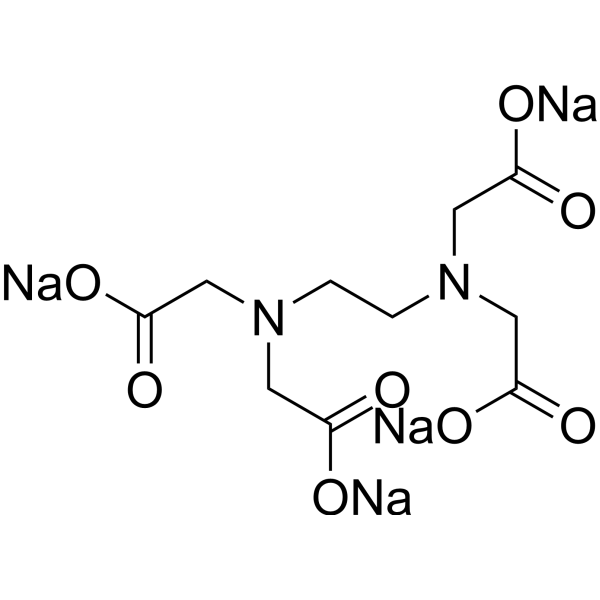 0 ImagesEthylenediaminetetraacetic acid (EDTA) tetrasodium is a kind of metal chelating agent (binds to bivalent and trivalent metal cations, including calcium). Ethylenediaminetetraacetic acid tetrasodium has antibacterial, anti-inflammatory, antioxidant, anti-hypercalcemia and anticoagulant activities. Ethylenediaminetetraacetic acid tetrasodium decreases the metal ion-catalyzed oxidative damage to proteins, and allows maintenance of reducing environment during protein purification. Ethylenediaminetetraacetic acid tetrasodium can alleviate the liver fibrosis. Ethylenediaminetetraacetic acid tetrasodium can be used for coronary artery disease and neural system disease research.
-
6-Chloropyridin-3-amine
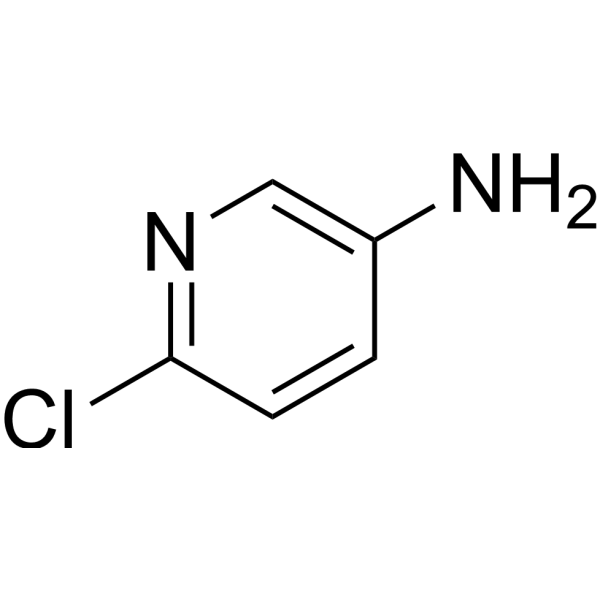 0 Images6-Chloropyridin-3-amine is a biochemical reagent that can be used as a biological material or organic compound for life science related research.
-
Thiol-PEG5000-CH2COOH
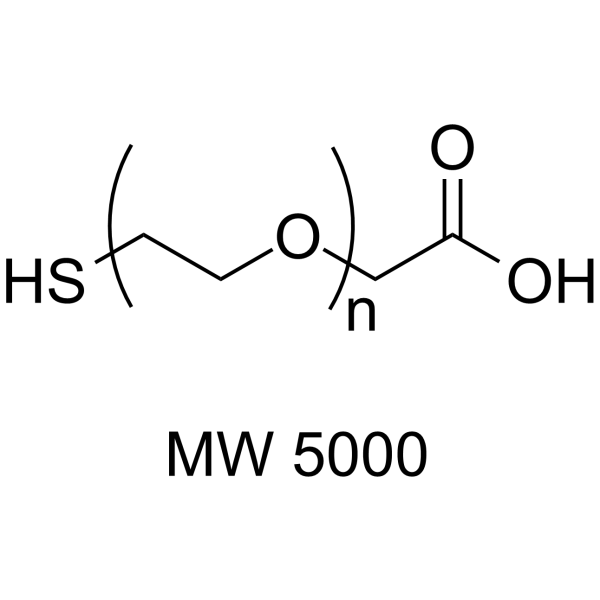 0 ImagesCat. No.: HY-140730Thiol-PEG5000-CH2COOH is a functionalized PEG derivative widely used in drug delivery and chemical synthesis.
-
2-Chloro-4-iodopyridine
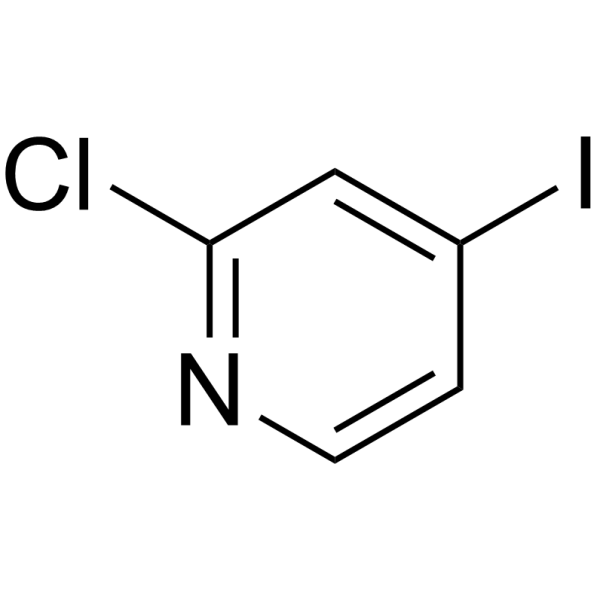 0 ImagesSynonyms: 2-Chloro-4-iodopyridine2-Chloro-4-iodopyridine is a biochemical reagent that can be used as a biological material or organic compound for life science related research.
-
Dimethyl silicone oil, viscosity 100 cSt (25 °C)
 0 ImagesCat. No.: HY-104035ECAS No.: 63148-62-9Synonyms: Poly(dimethylsiloxane) (PDMS), viscosity 100 cSt (25 °C); Dimethylsilcone fluid, viscosity 100 cSt (25 °C)Dimethyl silicone oil, viscosity 100 cSt (25 °C) (Poly(dimethylsiloxane) (PDMS), viscosity 100 cSt (25 °C); Dimethylsilcone fluid, viscosity 100 cSt (25 °C)) is a transparent, colorless, and inert polydimethylsiloxane liquid with stable properties. Dimethyl silicone oil, viscosity 100 cSt (25 °C) exhibits high dielectric strength and excellent lubrication, cushioning, and thermal conductivity. Dimethyl silicone oil, viscosity 100 cSt (25 °C) can be used in cosmetics, lubricants, and electronics.
-
Carbon-13C
 0 ImagesCat. No.: HY-Y1213SCAS No.: 14762-74-4Carbon-13C is the 13C labeled Carbon (HY-Y1213). Carbon possesses unique physicochemical properties such as electrical and structural characteristics, making it a core material in the field of fuel cells. Carbon also serves as a pharmaceutical excipient and can be used in the synthesis of other compounds.
-
3-Carboxyphenylboronic acid pinacol ester
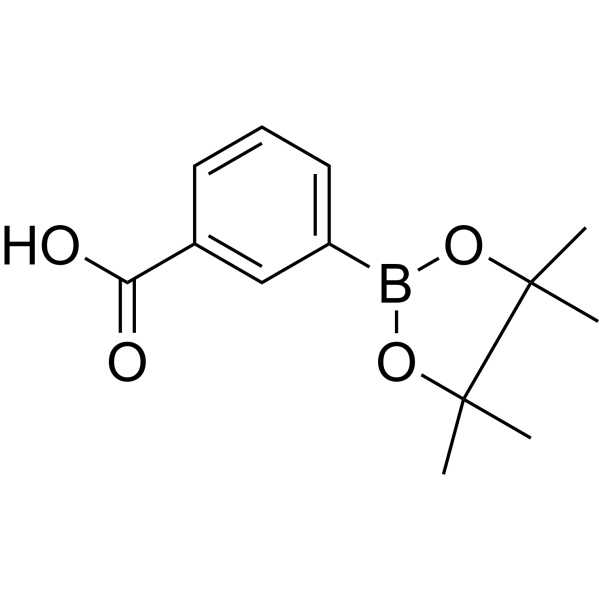 0 ImagesCat. No.: HY-W003049CAS No.: 269409-73-63-Carboxyphenylboronic Acid Pinacol Ester is a biochemical reagent that can be used as a biological material or organic compound for life science related research.




