



Caspase 7 Modulator
-
XL413
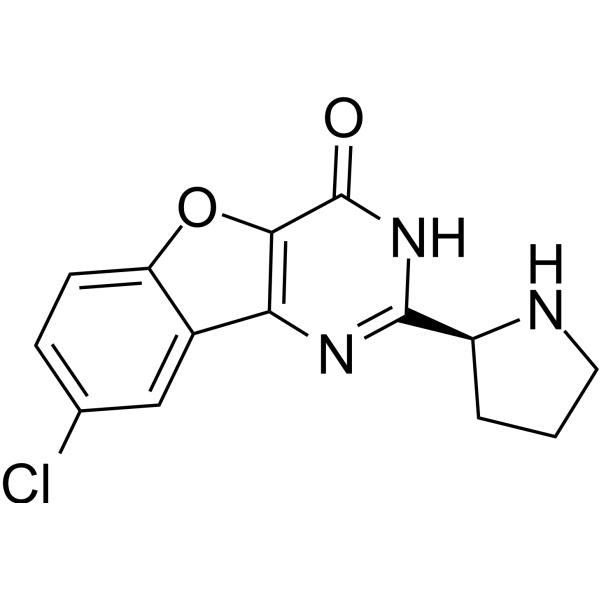 0 ImagesSynonyms: BMS-863233
XL413 (BMS-863233) is an orally active, ATP-competitive, selective CDC7 kinase inhibitor. XL413 reduces MCM2 phosphorylation levels, decreases DNA replication origin activation, and inhibits CD69 upregulation in stimulated lymphocytes. XL-413 possesses cell-dependent antiproliferative and pro-apoptotic activities. XL413 attenuates ATR inhibitor-induced excessive origin activation, altered replication fork speed, and antiproliferative effects in sensitive cancer cells. XL413 inhibits SARS-CoV-2 infection. XL413 can be used for research related to cancer and SARS-CoV-2 infection.
-
XL413 monohydrochloride
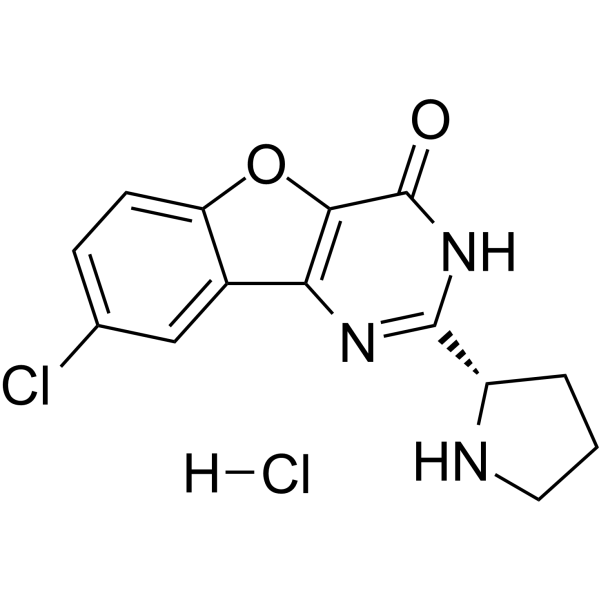 0 ImagesSynonyms: BMS-863233 monohydrochloride
XL413 monohydrochloride (BMS-863233 monohydrochloride) is an orally active, ATP-competitive, selective CDC7 kinase inhibitor. XL413 monohydrochloride reduces MCM2 phosphorylation levels, decreases DNA replication origin activation, and inhibits CD69 upregulation in stimulated lymphocytes. XL-413 possesses cell-dependent antiproliferative and pro-apoptotic activities. XL413 monohydrochloride attenuates ATR inhibitor-induced excessive origin activation, altered replication fork speed, and antiproliferative effects in sensitive cancer cells. XL413 monohydrochloride inhibits SARS-CoV-2 infection. XL413 monohydrochloride can be used for research related to cancer and SARS-CoV-2 infection.
-
BAL-30072
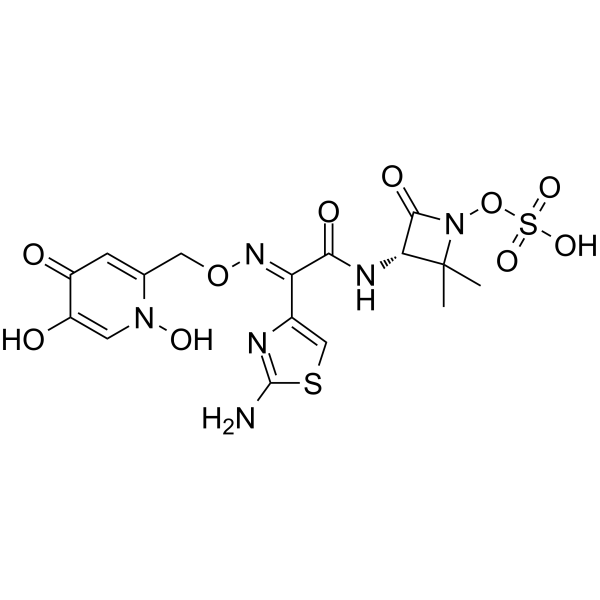 0 Images
BAL-30072 is a siderophore-bearing monocyclic β-lactam antibiotic with antibacterial activity. BAL-30072 inhibits penicillin-binding proteins 1a, 1b, and 3, thereby disrupting bacterial cell wall synthesis. BAL-30072 inhibits mitochondrial electron transport chain complex II and complex III, while also inhibiting glycolysis and mitochondrial fatty acid β-oxidation. BAL-30072 induces mitochondrial ROS production, cellular ATP depletion, reduces mitochondrial membrane potential, and triggers hepatocyte apoptosis via caspase-3/7 activation. BAL-30072 is a substrate of the hepatic uptake transporters OAT1 and OAT3. BAL-30072 can be used in research related to bacterial infections.
-
XL413 hydrochloride
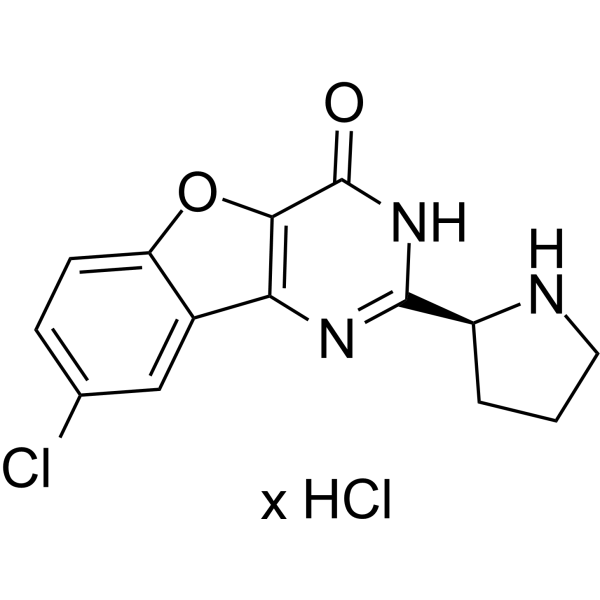 0 ImagesCat. No.: HY-15260CCAS No.: 1169562-71-3Synonyms: BMS-863233 hydrochloride
XL413 hydrochloride (BMS-863233 hydrochloride) is an orally active, ATP-competitive, selective CDC7 kinase inhibitor. XL413 hydrochloride reduces MCM2 phosphorylation levels, decreases DNA replication origin activation, and inhibits CD69 upregulation in stimulated lymphocytes. XL-413 possesses cell-dependent antiproliferative and pro-apoptotic activities. XL413 hydrochloride attenuates ATR inhibitor-induced excessive origin activation, altered replication fork speed, and antiproliferative effects in sensitive cancer cells. XL413 hydrochloride inhibits SARS-CoV-2 infection. XL413 hydrochloride can be used for research related to cancer and SARS-CoV-2 infection.
-
WCF-598
 0 ImagesCat. No.: HY-182331CAS No.: 3059574-58-9
WCF-598 is a RXRγ (Kd: 234.2 nM) PROTAC degrader. WCF-598 induces RXRγ degradation via the ubiquitin-proteasome pathway and binds directly to RXRγ. WCF-598 indirectly induces AR-V7 degradation, impairs the stability of the RXRγ-AR-V7 complex, downregulates AR-V7 levels, and inhibits the transcription of downstream target genes of AR-V7. WCF-598 induces tumor cell apoptosis, inhibits cell proliferation, activates the p53 signaling pathway, and suppresses cell cycle progression. WCF-598 can be used for the research of prostate cancer.
-
PROTAC HDAC8 Degrader-5
 0 ImagesCat. No.: HY-189151CAS No.: 3057302-21-0
PROTAC HDAC8 Degrader-5 is a selective HDAC8 PROTAC degrader that mediates ubiquitination and proteasomal degradation through the formation of a ternary complex. PROTAC HDAC8 Degrader-5 degrades HDAC8 with a DC50 of 1.8 nM in MDA-MB-231 cells and a DC50 of 4.7 nM in Jurkat cells. PROTAC HDAC8 Degrader-5 inhibits cancer cell migration and proliferation, induces apoptosis through caspase 3/7 activation, and increases acetylated SMC3 and α-tubulin. PROTAC HDAC8 Degrader-5 is useful for cancer-related research, such as leukemia, triple-negative breast cancer, etc..



