



Checkpoint Kinase (Chk)
DNA damage checkpoint and the spindle checkpoint are two cell cycle surveillance systems, which guard against genomic instability. The DNA damage checkpoint kinases CHK1 and CHK2 are central to the induction of cell cycle arrest, DNA repair, and apoptosis as elements in the DNA-damage checkpoint. The components of the spindle checkpoint include Mad1, Mad2, Mad3(BubR1), Bub3 and the kinases Bub1, Mph1(Mps1) and Aurora B.
Cells that suffer DNA damage activate the checkpoint kinases CHK1 and CHK2, which signal to initiate repair processes, limit cell-cycle progression and prevent cell replication, until the damaged DNA is repaired.
The spindle checkpoint causes metaphase arrest when kinetochore-microtubules are unattached during mitosis. The SAC consists of ‘sensor’ proteins, such as Mad1, Bub1 and Mps1; a ‘signal transducer’, consisting of the mitotic checkpoint complex, composed of Mad2, Bub3, BubR1 and Cdc20; and an ‘effector’ known as the anaphase promoting complex/cyclosome (APC/C).
Checkpoint Kinase (Chk) Isoform Specific Products
All Product Categories
-
Checkpoint Kinase (Chk) Inhibitors
(96)
View all products
-
Checkpoint Kinase (Chk) Agonist
(1)
View all products
-
Checkpoint Kinase (Chk) Activators
(22)
View all products
-
Checkpoint Kinase (Chk) Degraders
(4)
View all products
-
Checkpoint Kinase (Chk) Substrates
(2)
View all products
-
Checkpoint Kinase (Chk) Ligands
(2)
View all products
-
Checkpoint Kinase 1 (Chk1) Proteins
(2)
View all products
-
Checkpoint Kinase 2 (Chk2) Proteins
(4)
View all products
-
Checkpoint Kinase (Chk) Related Products (133)
Related Products (133)

-
Recombinant Proteins (6)
-
Antibodies (10)
-
Checkpoint Kinase (Chk) Isoform Comparison
-
Graviquinone
 0 ImagesCat. No.: HY-180357CAS No.: 1383995-51-4Graviquinone is a Chk1 inhibitor. Graviquinone exhibits potent cytotoxicity against various cancer cell lines. Graviquinone possesses the characteristics of bypassing ABCB1-mediated multidrug resistance, selectively damaging cancer cell DNA, and regulating the DNA damage response. Graviquinone can also enhance cytotoxicity by increasing ROS levels in cancer cells. Graviquinone can be used for cancer research.
-
CBP-501 acetate
 0 ImagesCat. No.: HY-16129APurity: 99.75%CBP-501 acetate, a cell-permeable calmodulin-binding peptide and a G2-abrogating drug candidate, inhibits the activity of multiple Ser216-specific kinases, such as MAPKAP-K2, C-Tak1, CHK1 and CHK2, with IC50 values of 0.9 μM, 1.4 μM 3.4 μM and 6.5 μM, respectively. CBP-501 acetate is used for various types of cancer.
-
DHI1
 0 ImagesCat. No.: HY-175261DHI1 is an anti-leukemia agent with high selectivity for Jurkat (IC50 = 21.83 μM) and HL-60 (IC50 = 19.14 μM) leukemia cells and has low toxicity to non-cancerous cells. DHI1 can induce G2/M phase cell arrest in Jurkat and HL-60 leukemia cells, as well as S phase arrest in HL-60 cells, and has significant effects on cell cycle signaling molecules Wee1, cyclin B1, cdc2 on Tyr15, and Chk1. DHI1 inhibits the migration and invasion of Jurkat and HL-60 cells by disrupting cytoskeletal actin filaments. DHI1 can be used to study hematological malignancies.

-
BBI-355
 0 ImagesCat. No.: HY-171759CAS No.: 3017958-71-0BBI-355 (Compound 1) is an orally active, checkpoint kinase 1 (CHK1) inhibitor. BBI-355 is useful for the study of cancers with oncogene amplification.
-
Apoptosis inducer 49
 0 ImagesCat. No.: HY-178940Apoptosis inducer 49 is a selective apoptosis inducer with high specificity against CCRF-CEM leukemia cells (IC50 = 2.68 μM). Apoptosis inducer 49 enhances RNA synthesis and replication stress, activates the Chk1-p21 axis, leading to S-phase arrest. Apoptosis inducer 49 can inhibit Bcl-2 and activate caspase-3. Apoptosis inducer 49 can be used for the study of Leukemia.
-
Castalin
 0 ImagesCat. No.: HY-N21945CAS No.: 19086-75-0Castalin is a polyphenolic anticancer compound isolated and identified from the bark or nut shells of Castanea sativa Mill. Castalin induces DNA damage by increasing ROS to activate CHK1, while recruiting 53BP1/RIF1 and activating DNA-PKcs to initiate the NHEJ pathway for DNA repair. Castalin can be used in research related to cervical cancer and breast cancer.
-
Theaflavin-3-gallate (Standard)
 0 ImagesCat. No.: HY-N0245RCAS No.: 30462-34-1Theaflavin-3-gallate (Standard) is the analytical standard of Theaflavin-3-gallate. This product is intended for research and analytical applications. Theaflavin-3-gallate, a black tea theaflavin monomer, is regarded as the biologically important active component of black tea and provides health benefits. Theaflavin-3-gallate acts as prooxidants and induces oxidative stress in the carcinoma cells. Theaflavin-3-gallate reacts directly with reduced glutathione (GSH) in a time- and concentration-dependent manner. Theaflavin-3-gallate induces apoptosis and G1 cell cycle arrest in ovarian cancer A2780/CP70 cells through p53-dependent pathways. Theaflavin-3-gallate induces DNA damage through ATM/Chk/p53 pathway.
-
MA203
 0 ImagesCat. No.: HY-179157MA203 is a selective CHK1 PROTAC degrader. MA203 targets activated CHK1 for degradation by recruiting the CRBN E3 ubiquitin ligase, thereby completely abolishing both its catalytic and non-catalytic functions and ultimately triggering DNA replication catastrophe and apoptosis. MA203 can be used in research related to pancreatic ductal adenocarcinoma, colorectal cancer, and acute lymphoblastic leukemia.
-
CBP501 Affinity Peptide
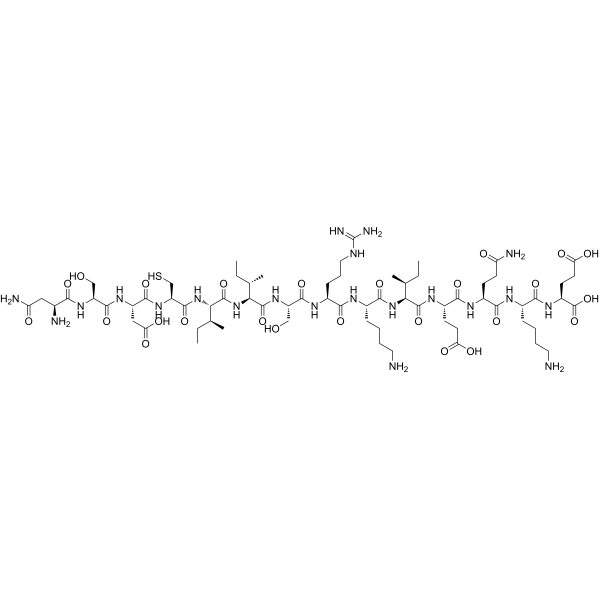 0 ImagesCat. No.: HY-P4978CAS No.: 1351804-17-5CBP501 Affinity Peptide is a Chk kinase inhibitor that can abrogate G2 arrest induced by DNA-damaging agents. CBP501 Affinity Peptide can be used in cancer research.
-
NSC 109555 ditosylate
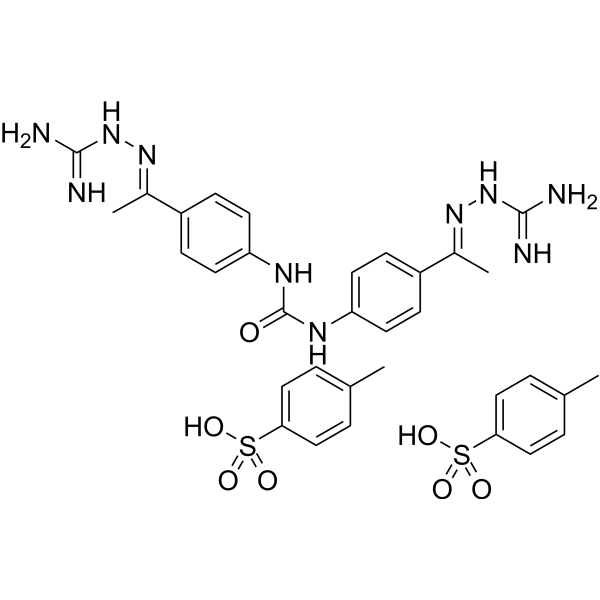 0 ImagesCat. No.: HY-103366CAS No.: 66748-43-4NSC 109555 ditosylate is a potent, selective, ATP-competitive checkpoint kinase 2 (Chk2) inhibitor with an IC50 of 240 nM. NSC 109555 ditosylate can be used for the research of cancer.
-
Zn-DPA-maytansinoid conjugate 1
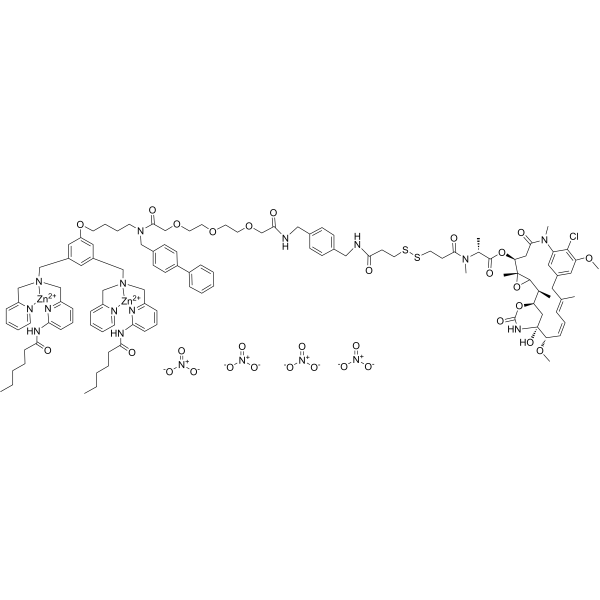 0 ImagesCat. No.: HY-151559CAS No.: 3034629-04-1Zn-DPA-maytansinoid conjugate 1 is a small molecule-based maytansinoid conjugate targeting immune checkpoint. Zn-DPA-maytansinoid conjugate 1 induces lasting regression of tumor growth and rejuvenates tumor microenvironment (TME) to an "inflamed hot tumor" .
-
Chk2-IN-1
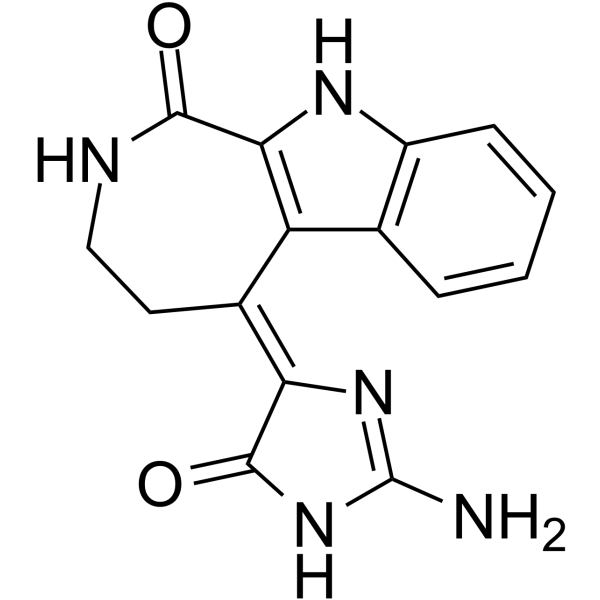 0 ImagesCat. No.: HY-112477CAS No.: 724708-21-8Synonyms: Hymenialdisine analogue-1Chk2-IN-1 (compound 1) is a potent and selective inhibitor of checkpoint kinase 2 (Chk2), with IC50s of 13.5 nM and 220.4 nM for Chk2 and Chk1, respectively. Chk2-IN-1 can elicit a strong ataxia telangiectasia mutated (ATM)-dependent Chk2-mediated radioprotection effect.
-
FLT3/CHK1-IN-2
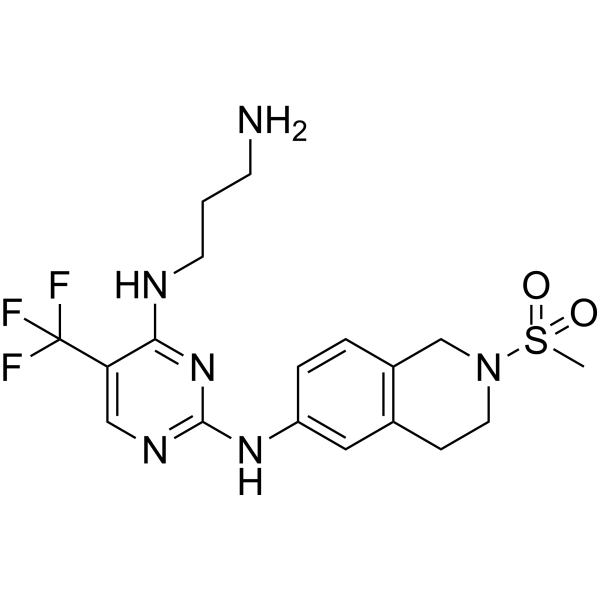 0 ImagesCat. No.: HY-162367FLT3/CHK1-IN-2 (Compound 30) is a dual inhibitor of FLT3 and CHK1, with IC50s of 25.63, 16.39, 22.80 nM for CHK1, FLT3-WT, and FLT-D835Y respectively. FLT3/CHK1-IN-2 has favorable oral PK properties and kinase selectivity. FLT3/CHK1-IN-2 can be used for research of acute myeloid leukemia (AML).
-
GDC0575 hydrochloride
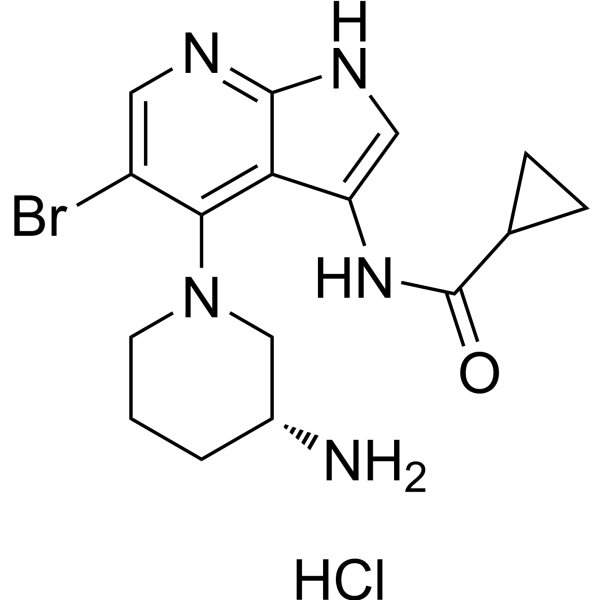 0 ImagesCat. No.: HY-112167BCAS No.: 1196504-54-7Synonyms: ARRY-575 hydrochloride; RG7741 hydrochloride
-
(E/Z)-Chk2-IN-1
 0 ImagesCat. No.: HY-112477ACAS No.: 693222-51-4Synonyms: (E/Z)-Hymenialdisine analogue-1(E/Z)-Chk2-IN-1 ((E/Z)-Hymenialdisine analogue-1) (Compound 1) is a potent and selective cell cycle kinase Chk2 inhibitor with an IC50 of 8 nM. (E/Z)-Chk2-IN-1 exhibits low inhibitory activity against other kinases (such as CK1δ, MEK1, and PKCα/βⅡ) with IC50 values both >89 nM. (E/Z)-Chk2-IN-1 can be used for the research of cancer.

-
Chktide
 0 ImagesCat. No.: HY-P5961CAS No.: 289652-77-3Chktide is a synthetic peptide substrate applicable for activity assays of Chk1 kinase and cyk/CaMKII. Chktide contains the Ser53 phosphorylation site of Xenopus cyclin B2.
-
CCT241533 dihydrochloride
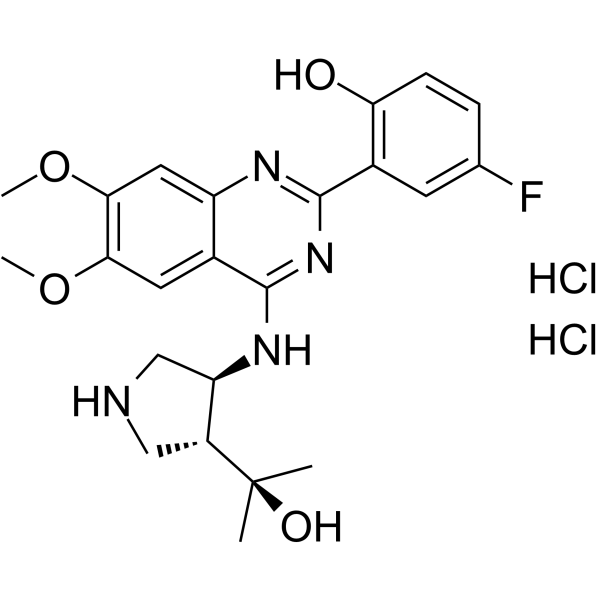 0 ImagesCat. No.: HY-110331CAS No.: 1962925-28-5CCT241533 dihydrochloride is a potent and selective ATP competitive inhibitor of CHK2 with an IC50 of 3 nM and Ki of 1.16 nM.
-
PROTAC ATR degrader-3
 0 ImagesCat. No.: HY-182016CAS No.: 3126270-11-6PROTAC ATR degrader-3 is a potent CRBN-based ATR PROTAC degrader with a DC50 of 127 nM. PROTAC ATR degrader-3 also degrades CHK1 with an DC50 of 135 nM. PROTAC ATR degrader-3 inhibits cancer cells proliferation, migration and invasion, triggers apoptosis and induces S phase arrest and DNA damage. PROTAC ATR degrader-3 achieves tumor growth inhibition in LoVo xenograft mouse model without apparent toxicity. PROTAC ATR degrader-3 can be used for the research of colorectal cancer.




