



Fluorescent Dye
Fluorescence is a phenomenon of photoluminescence in luminescence. When an atom is irradiated by light, some electrons around the nucleus jump from their original orbitals to higher energy orbitals under the influence of light energy, i.e., from the ground state to the first or second excited single-line state, etc. Due to the instability of the first or second excited singlet state, the electron returns from the excited singlet state to the ground state accompanied by released energy, resulting in fluorescence.
Fluorescent dyes can be covalently bound or physically adsorbed in the structure of the substance. The fluorescence properties allow for the characterization, localization and quantitative analysis of the labeled object. Fluorescent dyes have shown great potential for the detection of proteins, nucleic acids, cells, and immunoassays, attributed to the advantages in non-radioactive contamination, simple experimental operation and easy observation.
Fluorescent dyes have penetrated many fields such as pharmacology, physiology, environmental science, and information science, as well as functional studies of proteins and drug screening.
All Product Categories
-
Fluorescent Dye Related Products (4914)
Related Products (4914)

-
Antibodies (4)
-
AldRed 588-A
 0 ImagesCat. No.: HY-D3182CAS No.: 2252329-12-5AldeRed 588-A is a fluorescent labeling reagent and a substrate for aldehyde dehydrogenase (ALDH). AldeRed 588-A is metabolized by functionally active ALDH enzymes, thereby specifically labeling viable ALDHbright cell populations with red-shifted fluorescence. AldeRed 588-A supports one-step isolation and sorting of ALDH-expressing cells (including normal stem cells and cancer stem cells), and can be used in combination with green fluorophores for multicolor experimental applications. AldeRed 588-A is widely applicable to research related to various cancers such as bladder cancer, breast cancer, and head and neck cancer.
-
Fluorescein-O-acetate
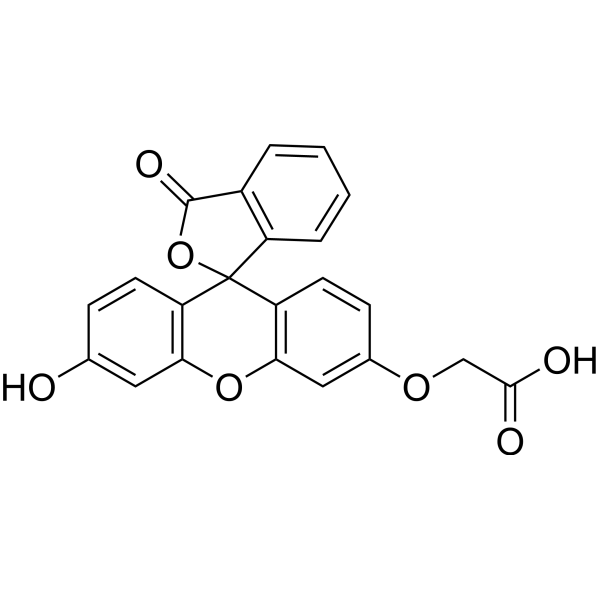 0 ImagesCat. No.: HY-D0104CAS No.: 233759-98-3Fluorescein-O-acetate is a fluorescent reagent.

-
FFP-18-AM
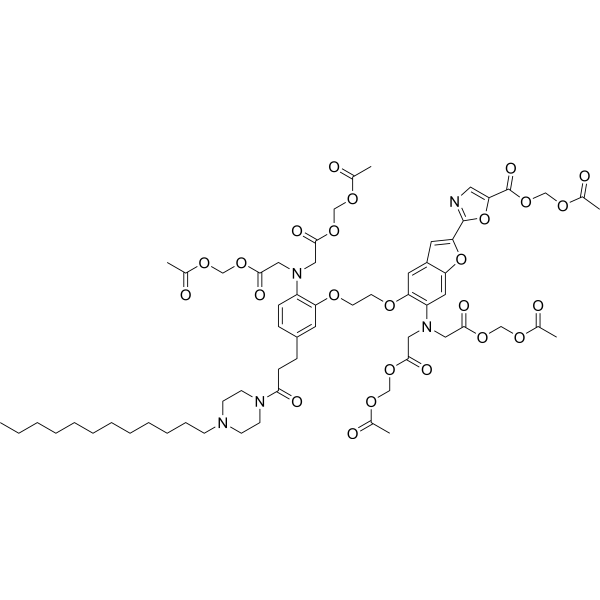 0 ImagesCat. No.: HY-D1776CAS No.: 348079-15-2FFP-18-AM is a cell-permeable fluorescent indicator for measurement of near-membrane calcium.
-
BF6
 0 ImagesCat. No.: HY-D3113BF6 is a blood-brain barrier permeable NIR probe. BF6 can diffuse from intracranial blood vessels into brain tissue, enabling visualization of brain structures and differentiation between glioblastoma (GBM) and normal tissues. The absorption peaks of BF6 in DMSO and FBS range from 727 to 859 nm, with a broad fluorescence emission band spanning 800 to 1400 nm; its emission wavelength falls within the NIR-II region (800-1400 nm).

-
Mito-polarity
 0 ImagesCat. No.: HY-D3086CAS No.: 1668565-72-7Mito-polarity is a mitochondria-targeted polarity probe. Mito-polarity can be used to detect mitochondrial polarity. The detection mechanism of Mito-polarity is based on an intramolecular charge transfer (ICT) system designed with a donor-π-bridge-acceptor (D-π-A) structure. Among them, the 467 nm green emission generated by the Coumarin (HY-N0709) structure is extremely sensitive to polarity changes, while the 642 nm red emission produced by the extended π-conjugation and ICT effect between the Coumarin and benzothiazine structures shows only a weak response, thus forming a ratiometric fluorescence response that is linearly correlated with solvent polarity. When Mito-polarity is excited at 405 nm in methanol, its excitation/emission wavelengths are Ex/Em = 405/467 nm and Ex/Em = 405/642 nm, with maximum absorption wavelengths of 426 nm and 561 nm.
-
3-Nitrobenzaldoxime
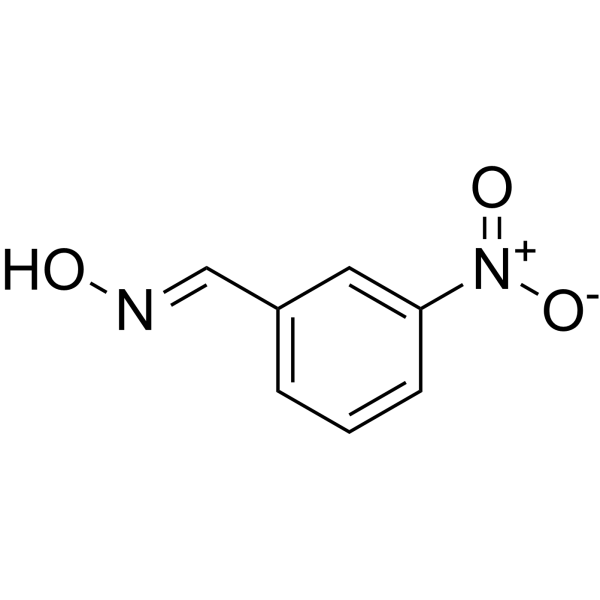 0 ImagesCat. No.: HY-W441766CAS No.: 3431-62-73-Nitrobenzaldoxime is a stain with biological research applications.
-
Galanthus Nivalis Lectin (Fluorescein)
 0 ImagesCat. No.: HY-NP0161Galanthus Nivalis Lectin (Fluorescein) is a plant lectin that can be used as a probe to specifically bind biomolecules (such as polysaccharides, peptides, etc.).Galanthus Nivalis Lectin (Fluorescein) is a biological material or organic compound that can be used in life science research.

-
Z-Gly-Gly-Arg-AMC hydrochloride
 0 ImagesCat. No.: HY-P0019CCAS No.: 102601-58-1Z-Gly-Gly-Arg-AMC hydrochloride is a thrombin-specific fluorogenic substrate for testing of thrombin generation in PRP and platelet-poor plasma (PPP) (Ex/Em = 390/480 nm).

-
1-(Dichloro-1,3,5-triazinyl)-pyrene
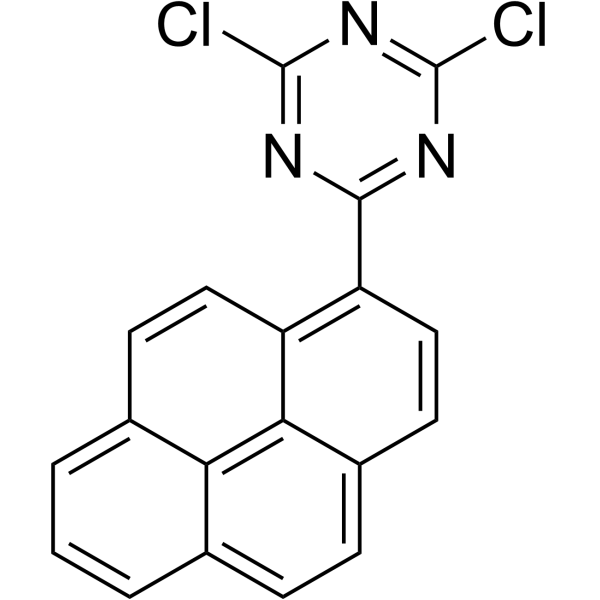 0 Images1-(Dichloro-1,3,5-triazinyl)-pyrene (1-(4,6-Dichloro-1,3,5-triazin-2-yl)pyrene) is a multifunctional dye. Dyes are important tools in biological experiments. They can help researchers observe and analyze cell structures, track biomolecules, evaluate cell functions, distinguish cell types, detect biomolecules, study tissue pathology and monitor microorganisms. Their applications range from basic scientific research to clinical A wide range of diagnostics. Dyes are also widely used in traditional fields such as textile dyeing, as well as in emerging fields such as functional textile processing, food pigments and dye-sensitized solar cells.
-
Lophine
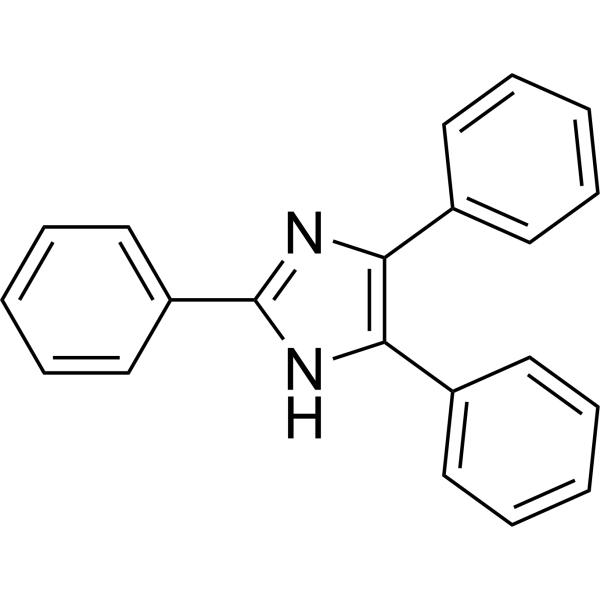 0 ImagesSynonyms: 2,4,5-TriphenylimidazoleLophine is a traditional chemiluminescent and fluorescent probe. Lophine and its derivatives are widely applied for reactive oxygen species (ROS) detection.
-
Cy3 labled Fitusiran sodium
 0 ImagesCat. No.: HY-132587ECy3 labled Fitusiran sodium is a Cy3 labled Fitusiran sodium (HY-132587A). Fitusiran (ALN-AT3SC) sodium is a siRNA strategy. Fitusiran delivers siRNA targeting the SERPINC1 gene in hepatocytes to inhibit antithrombin synthesis. Fitusiran sodium enhances thrombin activity and increases Thrombin generation, thereby restoring hemostatic function. Fitusiran sodium can be used in hemophilia-related research.
-
4-(7-Diethylaminocoumarin-3-yl)benzoyl cyanide
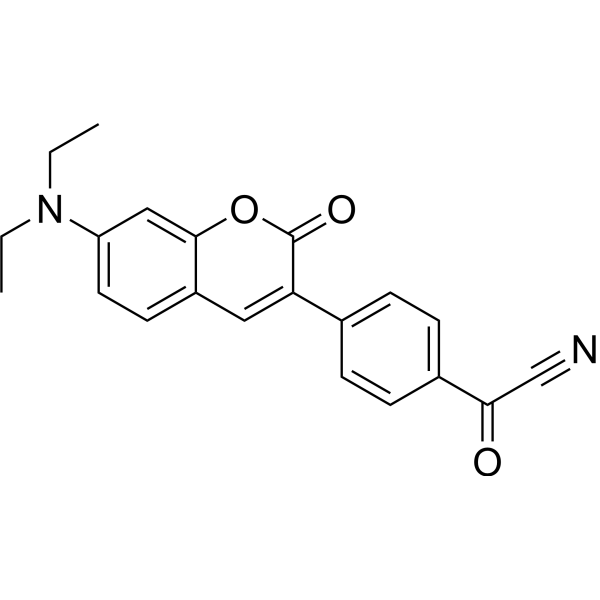 0 ImagesCat. No.: HY-D0061CAS No.: 203256-20-6Synonyms: DACB-CN4-(7-Diethylaminocoumarin-3-yl)benzoyl cyanide (DACB-CN) is a multifunctional dye. Dyes are important tools in biological experiments. They can help researchers observe and analyze cell structures, track biomolecules, evaluate cell functions, distinguish cell types, detect biomolecules, study tissue pathology and monitor microorganisms. Their applications range from basic scientific research to clinical A wide range of diagnostics. Dyes are also widely used in traditional fields such as textile dyeing, as well as in emerging fields such as functional textile processing, food pigments and dye-sensitized solar cells.

-
Rhobo6
 0 ImagesCat. No.: HY-D3411Rhobo6 is a cell-impermeable glycan-binding, fluorescence turn-on imaging agent with a Kd of 53 µM for glycans. Rhobo6 reversibly binds target glycans and enables wash-free live ECM visualization. Rhobo6 can be used for fluorescent labeling of ECM in living samples or decellularized tissues (Ex/Em = 488/561 nm).
-
R-Phycoerythrin ammonium sulfate precipitate
 0 ImagesCat. No.: HY-D0988BCAS No.: 11016-17-4Synonyms: R-PE ammonium sulfate precipitateR-Phycoerythrin (R-PE) (ammonium sulfate precipitate) is found in Heterosiphonia japonica. R-Phycoerythrin (ammonium sulfate precipitate) is an orange-red fluorescent probe with α, β, and γ subunits. R-Phycoerythrin (concentrated solution) can be used in photodynamic therapy (PDT) to induce apoptosis in tumor cells. R-Phycoerythrin (ammonium sulfate precipitate) can be used in fluorescence microscopy, flow cytometry, and immunofluorescence analysis (Ex/Em = 496/578 nm).




