



HDAC
Histone deacetylases
HDAC (Histone deacetylases) are a class of enzymes that remove acetyl groups (O=C-CH3) from an ε-N-acetyl lysine amino acid on ahistone, allowing the histones to wrap the DNA more tightly. This is important because DNA is wrapped around histones, and DNA expression is regulated by acetylation and de-acetylation. Its action is opposite to that of histone acetyltransferase. HDAC proteins are now also called lysine deacetylases (KDAC), to describe their function rather than their target, which also includes non-histone proteins. Together with the acetylpolyamine amidohydrolases and the acetoin utilization proteins, the histone deacetylases form an ancient protein superfamily known as the histone deacetylase superfamily.
HDAC Isoform Specific Products
-
HDAC
(391)
View all products
-
HDAC1
(317)
View all products
-
HDAC2
(211)
View all products
-
HDAC3
(204)
View all products
-
HDAC4
(72)
View all products
-
HDAC5
(56)
View all products
-
HDAC6
(335)
View all products
-
HDAC7
(53)
View all products
-
HDAC8
(188)
View all products
-
HDAC9
(41)
View all products
-
HDAC10
(67)
View all products
-
HDAC11
(71)
View all products
-
HD1
(3)
View all products
-
HD2
(4)
View all products
All Product Categories
-
HDAC Inhibitors
(780)
View all products
-
HDAC Antagonists
(3)
View all products
-
HDAC Activators
(14)
View all products
-
HDAC Modulators
(4)
View all products
-
HDAC MDM2 Inhibitor
(1)
View all products
-
HDAC Degraders
(44)
View all products
-
HDAC Controls
(4)
View all products
-
HDAC Substrates
(3)
View all products
-
HDAC Ligands
(13)
View all products
-
HDAC Related Products (915)
Related Products (915)

-
Antibodies (16)
-
HDAC Signaling Pathway
-
HDAC Isoform Comparison
-
Homobutein
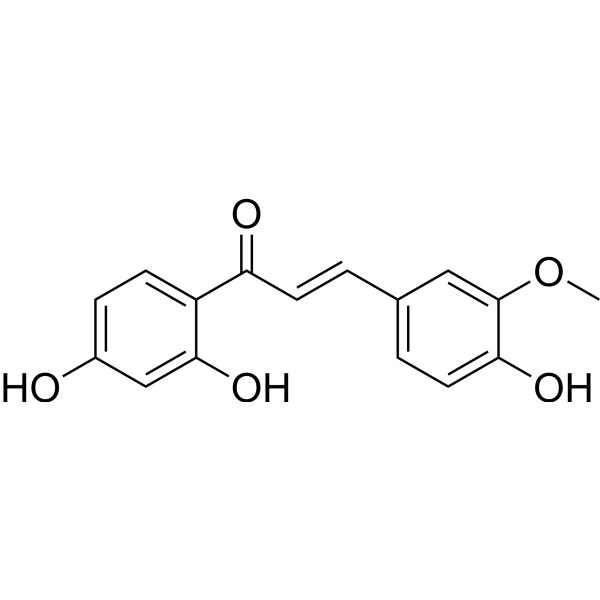 0 ImagesHomobutein a natural chalcones (can be found in many medicinal plants, fruits, vegetables, spices and nuts), is a potent HDACs/NF-κB dual inhibitor with IC50s of 190 and 38 μM, respectively. Homobutein also a chelator of iron (II and III) cations, shows various activities, including anticancer, anti-inflammatory, antiparasite and antioxidation.
-
NI-Pano
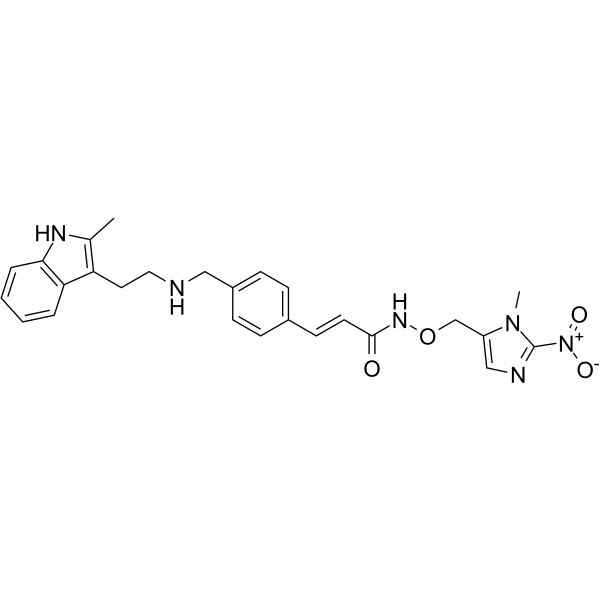 0 ImagesCat. No.: HY-139701CAS No.: 2733559-66-3NI-Pano (CH-03) is a novel hypoxia-activated KDAC inhibitor. NI-Pano (CH-03) is reduced in an O2-dependent manner to release panobinostat.
-
Sulforaphane (Standard)
 0 ImagesSulforaphane (Standard) is the analytical standard of Sulforaphane (HY-13755). This product is intended for research and analytical applications. Sulforaphane is an orally active inducer of the Keap1/Nrf2/ARE pathway. Sulforaphane promotes the transcription of tumor-suppressing proteins and effectively inhibits the activity of HDACs. Through the activation of the Keap1/Nrf2/ARE pathway and further induction of HO-1 expression, Sulforaphane protects the heart. Sulforaphane suppresses high glucose-induced pancreatic cancer through AMPK-dependent signal transmission. Sulforaphane exhibits both anticancer and anti-inflammatory properties.
-
Trichostatin A (Standard)
 0 ImagesCat. No.: HY-15144RCAS No.: 58880-19-6Synonyms: TSA (Standard)Trichostatin A (Standard) is the analytical standard of Trichostatin A (HY-15144). This product is intended for research and analytical applications. Trichostatin A (TSA) is a potent and specific inhibitor of HDAC class I/II, with an IC50 value of 1.8 nM for HDAC.
-
4-Phenylbutyric acid-d4
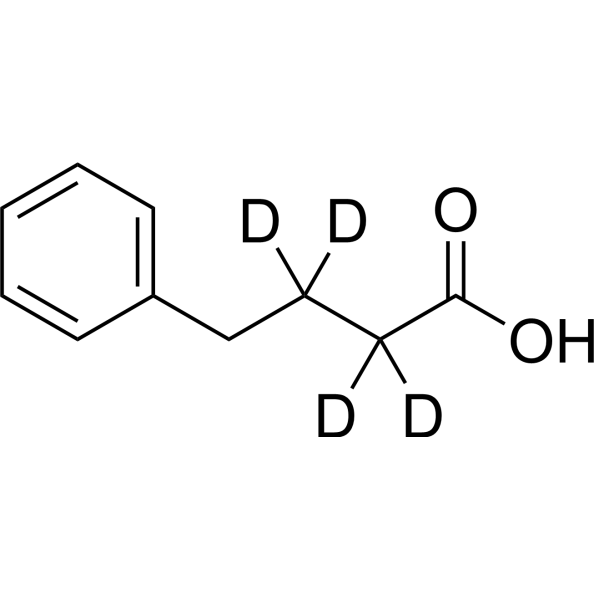 0 ImagesSynonyms: 4-PBA-d4; Benzenebutyric acid-d4
-
FF2049
 0 ImagesCat. No.: HY-168863FF2049 is a selective HDAC1-3 PROTAC degrader (with a DC50 of 257 nM against HDAC1). FF2049 recruits the E3 ligase FEM1B to mediate ubiquitination and proteasomal degradation of HDAC1-3. FF2049 induces cell cycle arrest and Apoptosis in cells. FF2049 can be used in research related to multiple myeloma, acute monocytic leukemia, triple-negative breast cancer and glioblastoma.
-
DNMT1/HDAC-IN-1
 0 ImagesCat. No.: HY-168088CAS No.: 3104460-09-2DNMT1/HDAC-IN-1 (compound (R)-23a) is a DNMT1/HDAC dual inhibitor (HDAC1:IC50=0.05 μM), HDAC1 is a major HDAC isoform that interacts with DNMT1 in multiple protein complexes for transcriptional silencing of TSGs. DNMT1/HDAC-IN-1 can reshape the tumor immune microenvironment and induce tumor regression, and effectively reverse cancer-specific epigenetic abnormalities.
-
MPT0G211 mesylate
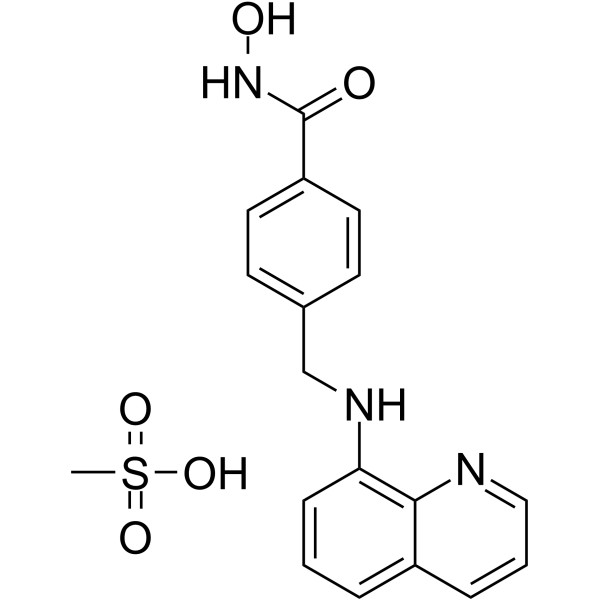 0 ImagesCat. No.: HY-123976ACAS No.: 2151854-33-8MPT0G211 mesylate is a potent, orally active and selective HDAC6 inhibitor (IC50=0.291 nM). MPT0G211 mesylate displays >1000-fold selective for HDAC6 over other HDAC isoforms. MPT0G211 mesylate can penetrate the blood-brain barrier. MPT0G211 mesylate ameliorates tau phosphorylation and cognitive deficits in an Alzheimer’s disease model. MPT0G211 mesylate has anti-metastatic and neuroprotective effects. Anticancer activities.
-
HDAC6-IN-5
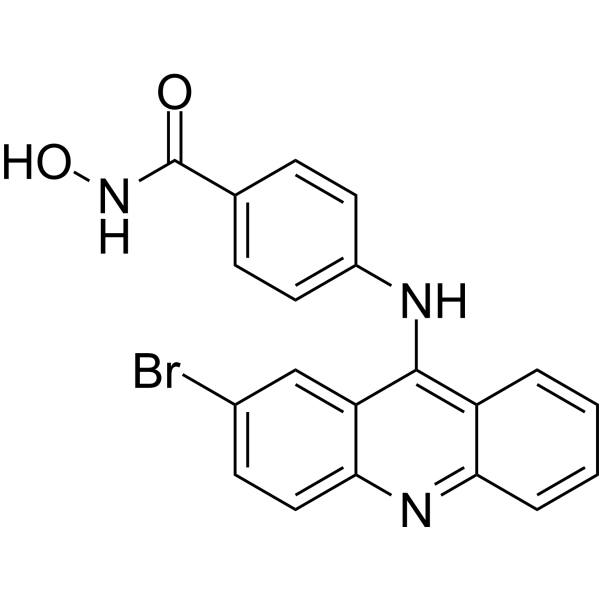 0 ImagesCat. No.: HY-146678CAS No.: 2413603-15-1HDAC6-IN-5 (compound 11b) is a potent and BBB-penetrated HDAC6 inhibitor, with an IC50 of 0.025 μM. HDAC6-IN-5 exhibits strong inhibitory activity against Aβ1-42 self-aggregation and AChE, with IC50 values of 3.0 and 0.72 μM. HDAC6-IN-5 can enhance neurite outgrowth without significant neurotoxicity.
-
IDO1 and HDAC1 Inhibitor
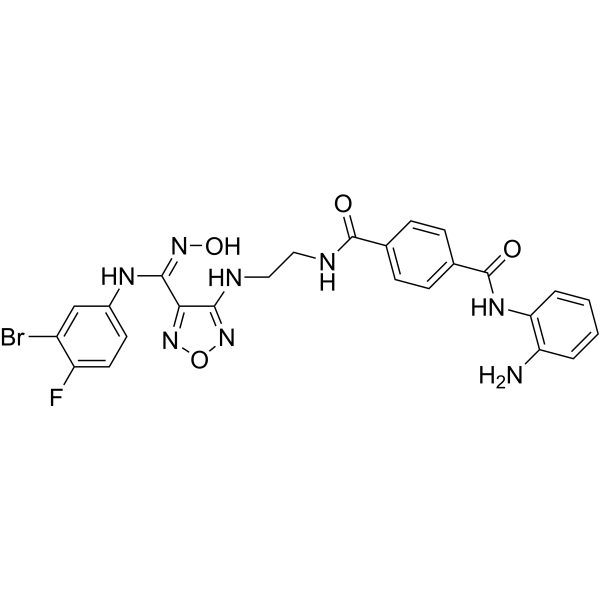 0 ImagesCat. No.: HY-112147CAS No.: 2227044-16-6IDO1 and HDAC1 Inhibitor (Compound 10) is a dual IDO1 and HDAC1 inhibitor with IC50s of 69.0 nM and 66.5 nM, respectively.
-
ST8155AA1
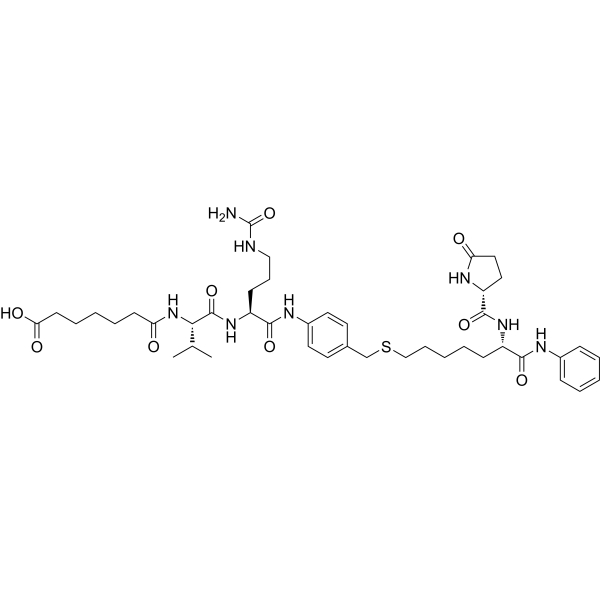 0 ImagesCat. No.: HY-112806CAS No.: 2247025-63-2ST8155AA1 is a part of antibody agent conjugates (ADCs) charged with HDAC inhibitor. ST8155AA1 induces α-tubulin, histone H3/H4 acetylation via direct enzymatic inhibition. ST8155AA1 recognizes and binds EGFR, undergoes internalization into EGFR-expressing tumor cells. ST8155AA1 inhibits cancer cell proliferation and exerts activity in mouse tumor models. ST8155AA1 can be used for the research of non-small cell lung cancer.
-
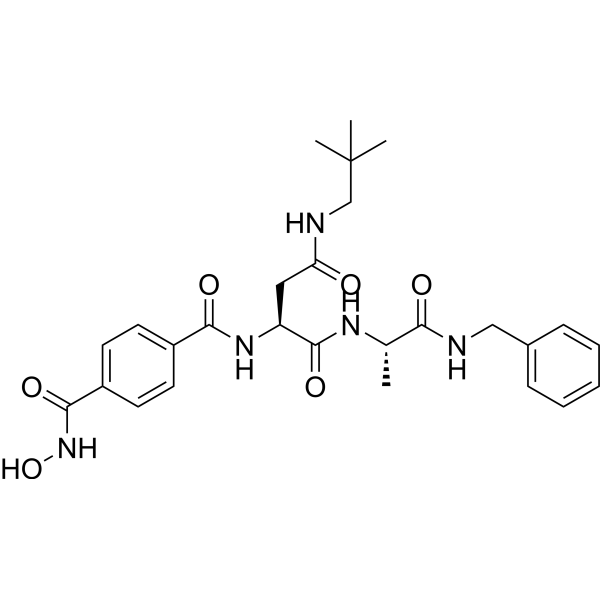
SHP2/HDAC-IN-1
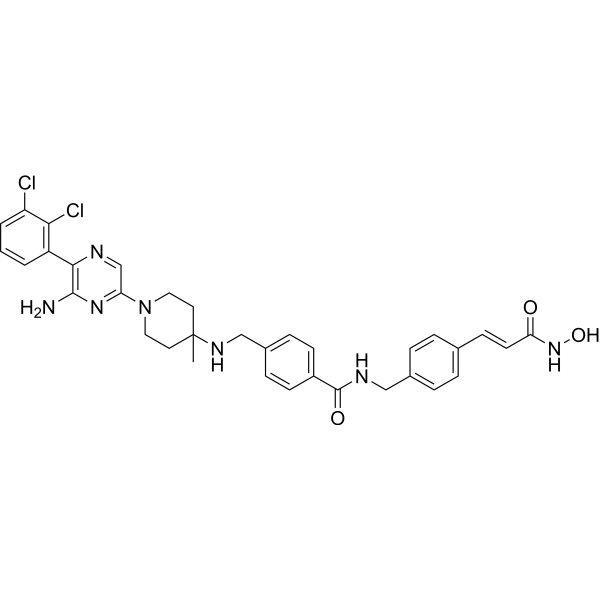 0 ImagesCat. No.: HY-151464CAS No.: 2831230-38-5SHP2/HDAC-IN-1 is a dual allosteric SHP2/HDAC inhibitor with IC50 values of 20.4 nM (SHP2) and 25.3 nM (HDAC1) respectively. SHP2/HDAC-IN-1 triggers efficient antitumor immunity by activating T cells, enhancing the antigen presentation function and promoting cytokine secretion. SHP2/HDAC-IN-1 can be used in the research of cancer immunoresearch.
-
HDAC1/2 and CDK2-IN-1
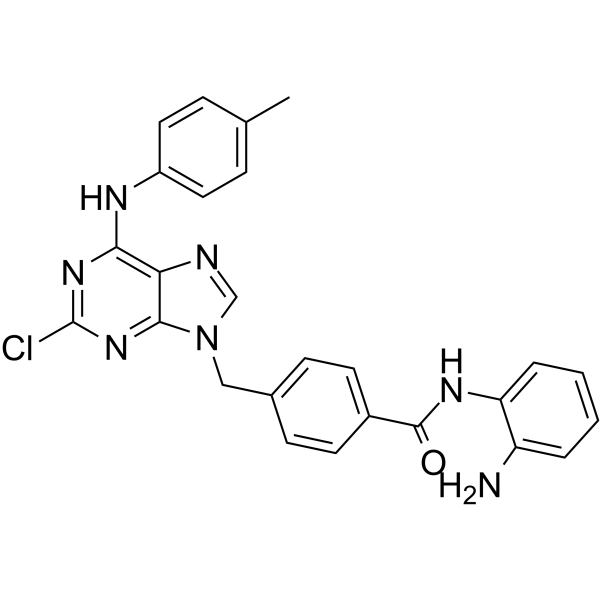 0 ImagesCat. No.: HY-143497CAS No.: 2418559-01-8
-
Pracinostat dihydrochloride
 0 ImagesCat. No.: HY-105246CAS No.: 929016-98-8Pracinostat dihydrochloride is a potent histone deacetylase (HDAC) inhibitor, with IC50s of 40-140 nM, used for cancer research. Pracinostat dihydrochloride also inhibits metallo-β-lactamase domain-containing protein 2 (MBLAC2) hydrolase activity with an EC50 below 10 nM.
-
PI3K/HDAC-IN-1
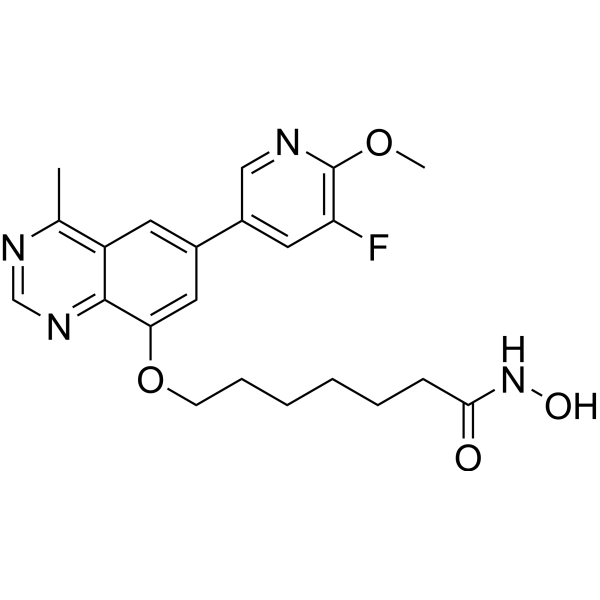 0 ImagesCat. No.: HY-128582CAS No.: 2361418-52-0
-
KA2507 monohydrochloride
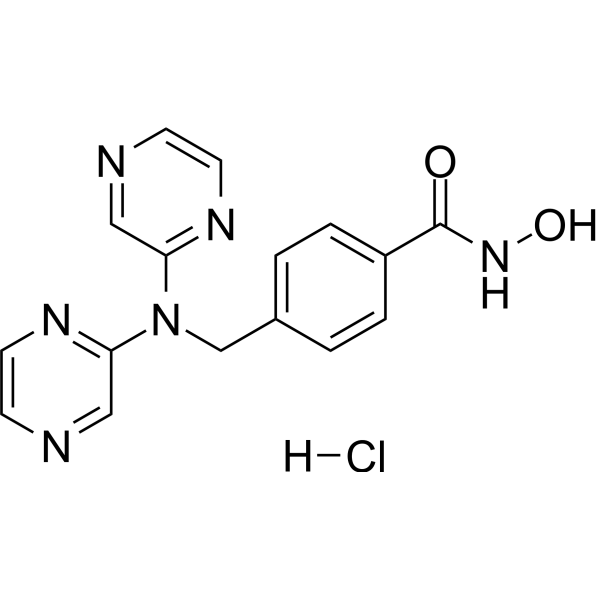 0 ImagesCat. No.: HY-138799ACAS No.: 2972712-63-1KA2507 hydrochloride is a potent and highly selective inhibitor of HDAC6 (IC50=2.5 nM) with no significant toxicities. KA2507 hydrochloride shows antitumor efficacy and immune modulatory effects.
-
LSD1/HDAC6-IN-1
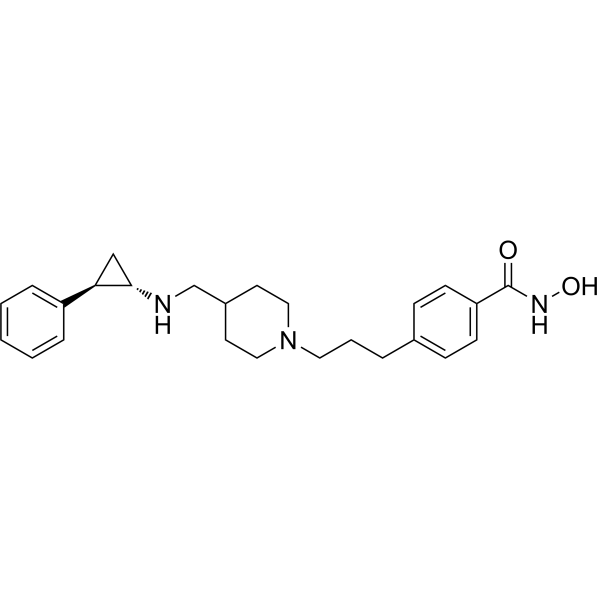 0 ImagesCat. No.: HY-131970CAS No.: 2738306-38-0LSD1/HDAC6-IN-1 is an orally active dual inhibitor of lysine specific demethylase 1(LSD1)/Histone deacetylase 6 (HDAC6), with anti-tumor activity. LSD1/HDAC6-IN-1 can be used for the research of multiple myeloma (MM).
-
OKI-006
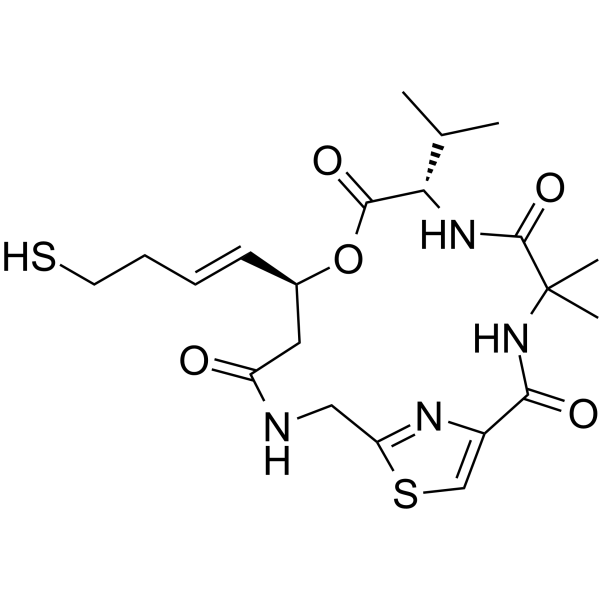 0 ImagesCat. No.: HY-144893CAS No.: 1315334-23-6
-
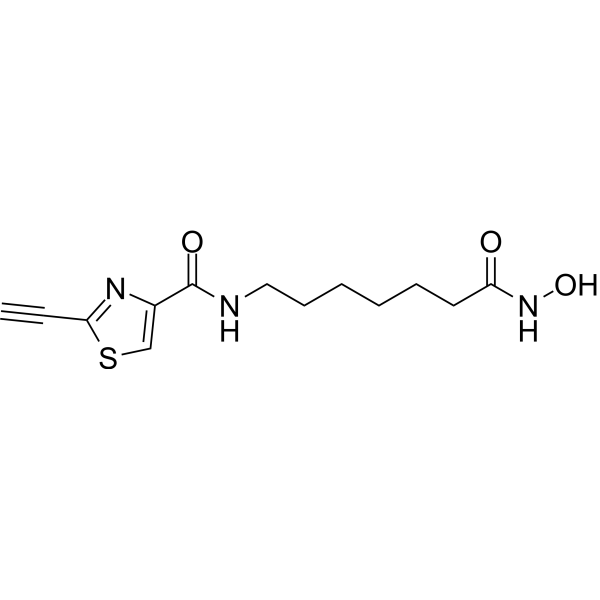
HDAC-IN-48
 0 ImagesCat. No.: HY-151872CAS No.: 3031411-05-6HDAC-IN-48 is a potent HDAC inhibitor. HDAC-IN-48 is a hybrid molecule with great cytotoxic profile (GI50~20 nM). HDAC-IN-48 consists of harmacophores of SAHA and CETZOLE molecules. HDAC-IN-48 induces ferroptosis and inhibits HDAC proteins. HDAC-IN-48 is a click chemistry reagent, it contains an Alkyne group and can undergo copper-catalyzed azide-alkyne cycloaddition (CuAAc) with molecules containing Azide groups.




