



HDAC
Histone deacetylases
HDAC (Histone deacetylases) are a class of enzymes that remove acetyl groups (O=C-CH3) from an ε-N-acetyl lysine amino acid on ahistone, allowing the histones to wrap the DNA more tightly. This is important because DNA is wrapped around histones, and DNA expression is regulated by acetylation and de-acetylation. Its action is opposite to that of histone acetyltransferase. HDAC proteins are now also called lysine deacetylases (KDAC), to describe their function rather than their target, which also includes non-histone proteins. Together with the acetylpolyamine amidohydrolases and the acetoin utilization proteins, the histone deacetylases form an ancient protein superfamily known as the histone deacetylase superfamily.
HDAC Isoform Specific Products
-
HDAC
(393)
View all products
-
HDAC1
(316)
View all products
-
HDAC2
(210)
View all products
-
HDAC3
(204)
View all products
-
HDAC4
(72)
View all products
-
HDAC5
(56)
View all products
-
HDAC6
(337)
View all products
-
HDAC7
(53)
View all products
-
HDAC8
(189)
View all products
-
HDAC9
(41)
View all products
-
HDAC10
(67)
View all products
-
HDAC11
(73)
View all products
-
HD1
(3)
View all products
-
HD2
(4)
View all products
All Product Categories
-
HDAC Inhibitors
(781)
View all products
-
HDAC Antagonists
(3)
View all products
-
HDAC Activators
(14)
View all products
-
HDAC Modulators
(4)
View all products
-
HDAC MDM2 Inhibitor
(1)
View all products
-
HDAC Degraders
(45)
View all products
-
HDAC Controls
(4)
View all products
-
HDAC Substrates
(4)
View all products
-
HDAC Ligands
(15)
View all products
-
HDAC Related Products (920)
Related Products (920)

-
Antibodies (16)
-
HDAC Signaling Pathway
-
HDAC Isoform Comparison
-
CRA-026440 hydrochloride
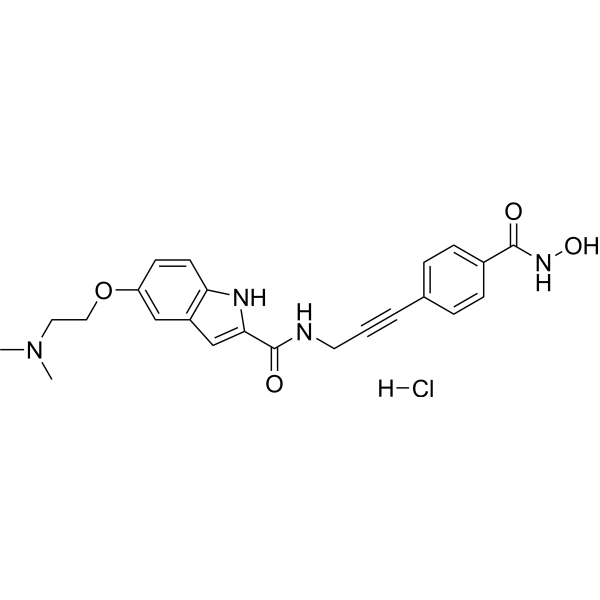 0 ImagesCRA-026440 hydrochloride is a potent, broad-spectrum HDAC (HDAC) inhibitor. The Ki values against recombinant HDAC isoenzymes HDAC1, HDAC2, HDAC3, HDAC6, HDAC8, and HDAC10 are 4 nM, 14 nM, 11 nM, 15 nM, 7 nM, and 20 nM respectively. CRA-026440 hydrochloride shows antitumor and antiangiogenic activities. CRA-026440 (hydrochloride) is a click chemistry reagent, it contains an Alkyne group and can undergo copper-catalyzed azide-alkyne cycloaddition (CuAAc) with molecules containing Azide groups.

-
Tasquinimod-d3
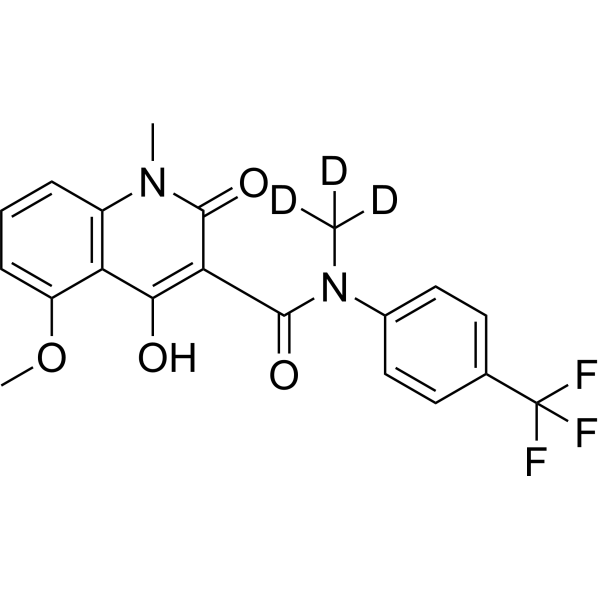 0 ImagesSynonyms: ABR-215050-d3Tasquinimod-d3 (ABR-215050-d3) is the deuterium labeled Tasquinimod (HY-10528). Tasquinimod is an oral antiangiogenic agent, which plays an important role in castration-resistant prostate cancer. Tasquinimod binds to the regulatory Zn2+ binding domain of HDAC4 with Kd of 10-30 nM. Tasquinimod also is a S100A9 inhibitor.
-
Mad1 (6-21)
 0 ImagesMad1 (6-21) is the 6-21 fragment of Mad1 protein. Mad1 (6-21) binds to mammalian Sin3A PAH2 with a Kd of ~29 nM.
-
XSJ-10
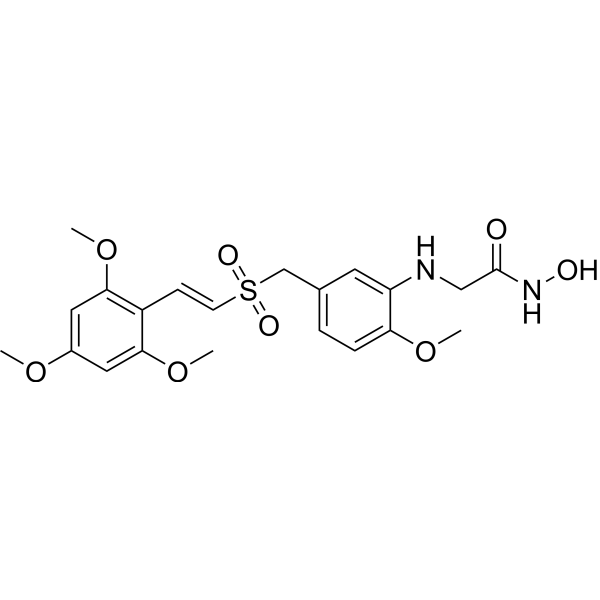 0 ImagesCat. No.: HY-157740XSJ-10 is a HDAC inhibitor containing a RAS/RAF protein interfering unit, with IC50s of 0.05 and 0.04 μM in PANC-1 cells and HT-29 cells. XSJ-10 can effectively induce the apoptosis of cancer cells and suppress the tumor by strongly inhibiting the RAS-RAF-MEK-ERK signaling pathway and the acetylation level of HDAC3.


-
4-Phenylcinnamic acid
 0 ImagesCat. No.: HY-W103792CAS No.: 13026-23-84-Phenylcinnamic acid is a weak HDAC2 inhiibitor (IC50 > 5 μM). 4-Phenylcinnamic acid has weak cell growth inhibition against tumor cells.

-
Coumarin-SAHA
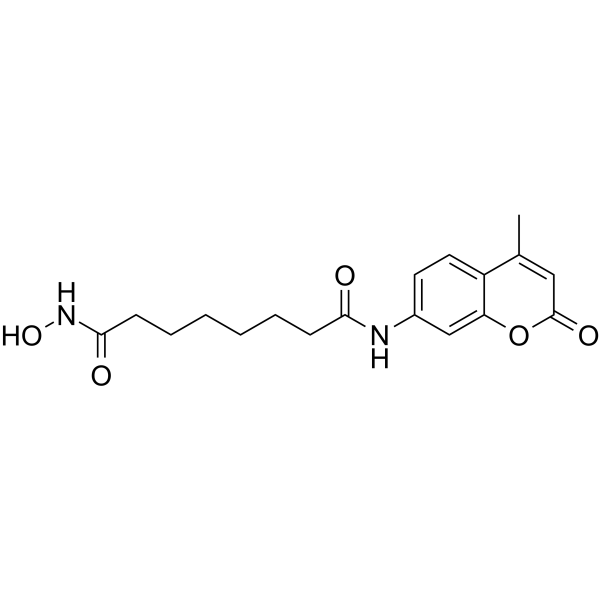 0 ImagesCoumarin-SAHA is a fluorescent probe for determining the binding affinities (kd) and the dissociation off-rates (koff) of the HDAC8-inhibitor complexes.
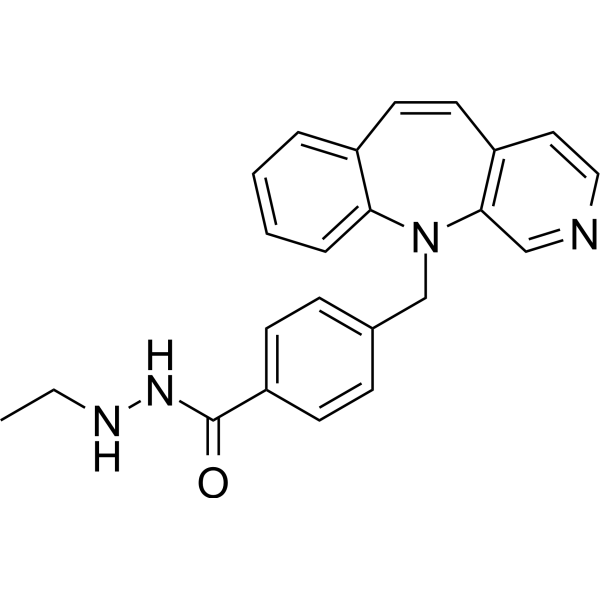
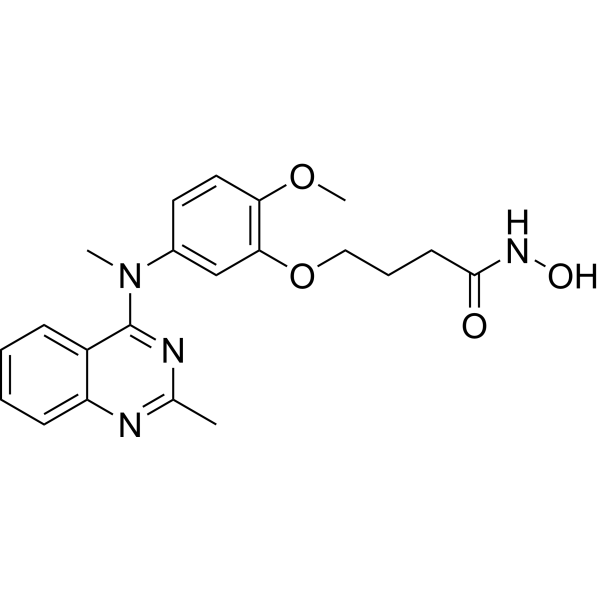
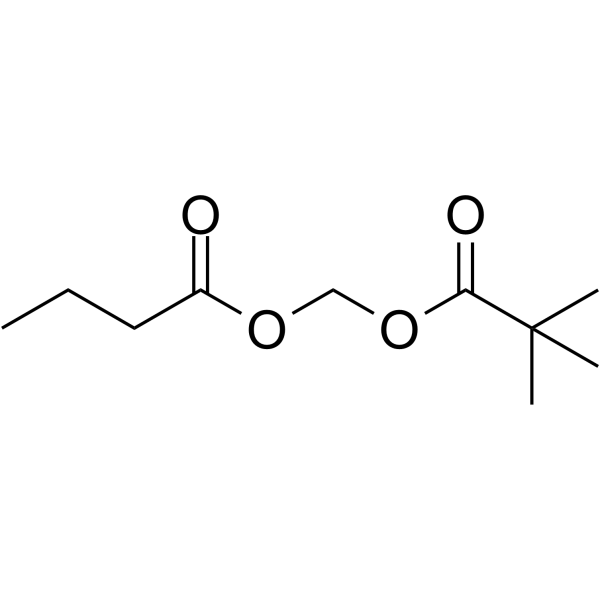

-
PROTAC HDAC4 Degrader-2
 0 ImagesCat. No.: HY-184524CAS No.: 3035189-46-6PROTAC HDAC4 Degrader-2 is a class IIa selective negative control for HDAC4 PROTAC degraders, with an IC50 of 0.15 μM against HDAC4 and a cellular IC50 of 0.18 μM. PROTAC HDAC4 Degrader-2 fails to effectively recruit the VHL E3 ligase, and thus does not induce significant degradation of HDAC4 protein.
-
Sodium 4-phenylbutyrate (Standard)
 0 ImagesSynonyms: 4-PBA sodium (Standard); 4-Phenylbutyric acid sodium (Standard); Benzenebutyric acid sodium (Standard)
-
TM-2-51
 0 ImagesTM-2-51 is a HDAC8 activator with a Kd value of 0.28 μM. TM-2-51 inhibits α-glucosidase with an IC50 of 171.21 μM. TM-2-51 upregulates HDAC8 expression, modulates the TP53, STAT3/ERK and PI3K-AKT pathways, alleviates LeTx-induced cell cycle arrest, downregulates JMJD3 and increases H3K27me3 levels. TM-2-51 selectively induces apoptosis in tumor cell and upregulates p53/p21 expression. TM-2-51 inhibits tumor cell proliferation, migration and invasion, induces G1-phase arrest and suppresses tumor growth in vivo. TM-2-51 can be used in research on osteosarcoma, anthrax, type 2 diabetes and neuroblastoma.

-
Homobutein
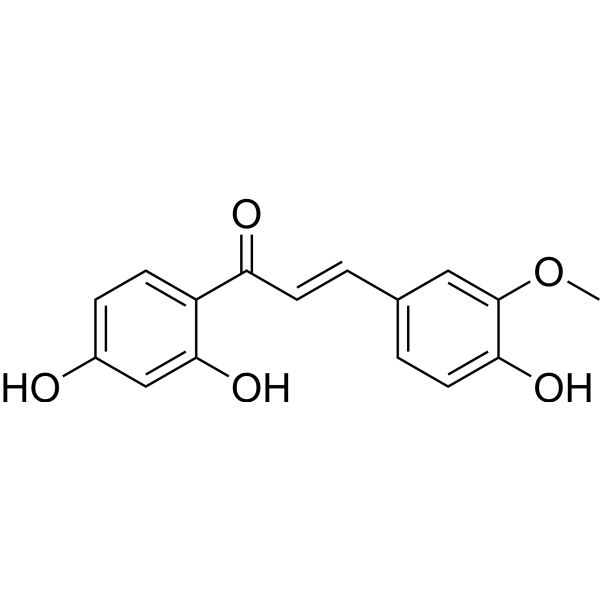 0 ImagesHomobutein a natural chalcones (can be found in many medicinal plants, fruits, vegetables, spices and nuts), is a potent HDACs/NF-κB dual inhibitor with IC50s of 190 and 38 μM, respectively. Homobutein also a chelator of iron (II and III) cations, shows various activities, including anticancer, anti-inflammatory, antiparasite and antioxidation.
-
NI-Pano
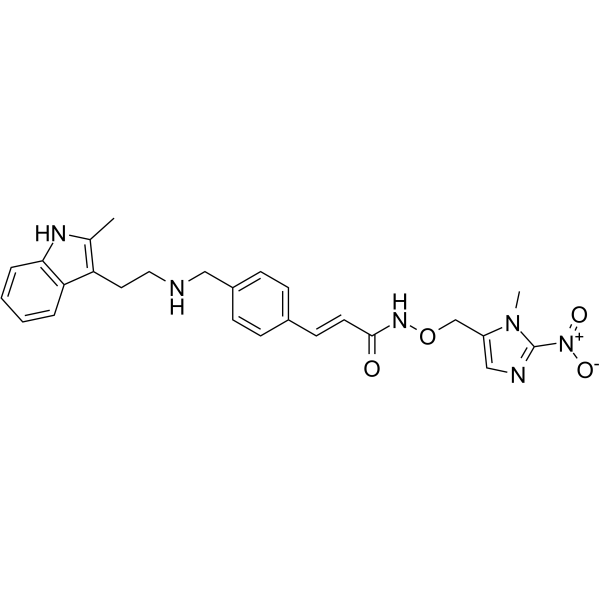 0 ImagesCat. No.: HY-139701CAS No.: 2733559-66-3NI-Pano (CH-03) is a novel hypoxia-activated KDAC inhibitor. NI-Pano (CH-03) is reduced in an O2-dependent manner to release panobinostat.




