



HDAC
Histone deacetylases
HDAC (Histone deacetylases) are a class of enzymes that remove acetyl groups (O=C-CH3) from an ε-N-acetyl lysine amino acid on ahistone, allowing the histones to wrap the DNA more tightly. This is important because DNA is wrapped around histones, and DNA expression is regulated by acetylation and de-acetylation. Its action is opposite to that of histone acetyltransferase. HDAC proteins are now also called lysine deacetylases (KDAC), to describe their function rather than their target, which also includes non-histone proteins. Together with the acetylpolyamine amidohydrolases and the acetoin utilization proteins, the histone deacetylases form an ancient protein superfamily known as the histone deacetylase superfamily.
HDAC Isoform Specific Products
-
HDAC
(388)
View all products
-
HDAC1
(312)
View all products
-
HDAC2
(207)
View all products
-
HDAC3
(200)
View all products
-
HDAC4
(71)
View all products
-
HDAC5
(56)
View all products
-
HDAC6
(326)
View all products
-
HDAC7
(53)
View all products
-
HDAC8
(185)
View all products
-
HDAC9
(41)
View all products
-
HDAC10
(64)
View all products
-
HDAC11
(70)
View all products
-
HD1
(3)
View all products
-
HD2
(4)
View all products
All Product Categories
-
HDAC Inhibitors
(769)
View all products
-
HDAC Antagonists
(3)
View all products
-
HDAC Activators
(14)
View all products
-
HDAC Modulators
(4)
View all products
-
HDAC MDM2 Inhibitor
(1)
View all products
-
HDAC Degraders
(41)
View all products
-
HDAC Controls
(3)
View all products
-
HDAC Substrates
(3)
View all products
-
HDAC Ligands
(10)
View all products
-
HDAC Related Products (898)
Related Products (898)

-
Antibodies (16)
-
HDAC Signaling Pathway
-
HDAC Isoform Comparison
-
PDE5/HDAC-IN-1
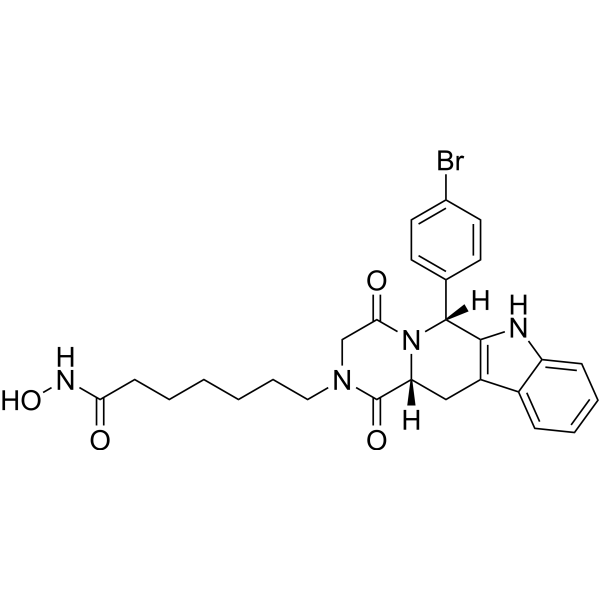 0 ImagesCat. No.: HY-147991CAS No.: 2414921-48-3PDE5/HDAC-IN-1 (Compound 26) is a potent phosphodiesterase 5 (PDE5) and HDAC inhibitor with IC50 values of 46.3 nM and 14.5 nM, respectively. PDE5/HDAC-IN-1 induces cell apoptosis and shows anticancer activities.
-
PROTAC HDAC6 degrader 12
 0 ImagesCat. No.: HY-123971CAS No.: 2235382-05-3
-
HDAC3-IN-6
 0 ImagesCat. No.: HY-172133CAS No.: 3070532-72-5
-
HDAC6-IN-73
 0 ImagesCat. No.: HY-181577HDAC6-IN-73 is a highly potent and selective HDAC6 inhibitor with an IC50 of 0.007 μM ± 0.001, ~1771-fold selectivity over HDAC1, ~131-fold selectivity over HDAC8, and antiproliferative activity in hematological cancer cell lines.HDAC6-IN-73 can be used for the research of hematological malignancies.
-
EGFR/HDAC-IN-1
 0 ImagesCat. No.: HY-173520EGFR/HDAC-IN-1 (Compound 22c2) is a potent dual inhibitor of epidermal growth factor receptor (EGFR) and histone deacetylase (HDAC) with IC50 values of 4.81 nM, 119.4 nM and 354.8 nM for EGFR, HDAC1 and HDAC3, respectively. EGFR/HDAC-IN-1 blocks the EGFR signaling pathway and affects the histone acetylation status, thereby inhibiting tumor cell proliferation. EGFR/HDAC-IN-1 is promising for research of non-small cell lung cancer (NSCLC).
-
HDAC-IN-38
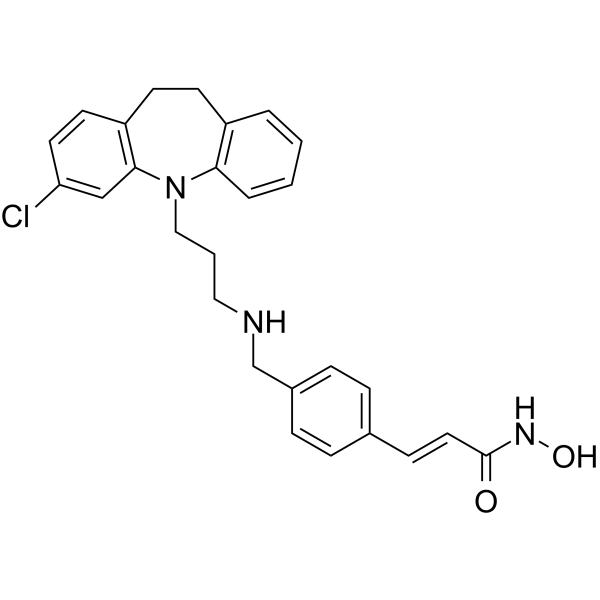 0 ImagesCat. No.: HY-146351CAS No.: 2408123-36-2HDAC-IN-38 (compound 13) is a potent HDAC inhibitor. HDAC-IN-38 shows similar micro-molar inhibitory activity toward HDAC1, 2, 3, 5, 6, and 8. HDAC-IN-38 increases cerebral blood flow (CBF), attenuates cognitive impairment, and improves hippocampal atrophy. HDAC-IN-38 also increases the level of histone acetylation (H3K14 or H4K5).
-
HDAC6-IN-35
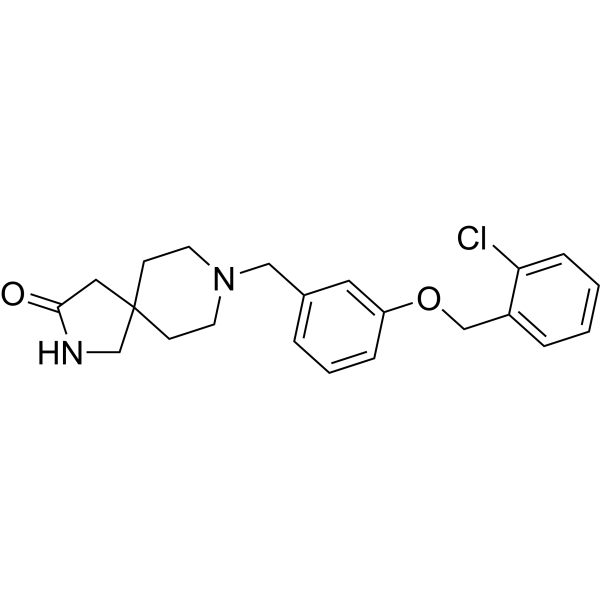 0 ImagesCat. No.: HY-163369CAS No.: 1394615-06-5HDAC6-IN-35 (compound C4 (ZINC000077541942)) is a potent and BBB-penetrated HDAC6 inhibitor with the IC50 of 4.7 μM. HDAC6-IN-35 shows cell toxicity against MDA-MB-231 with EC50 of 40.6 μM.
-
ALK/HDAC-IN-2
 0 ImagesCat. No.: HY-180811ALK/HDAC-IN-2 (Compound 19b) is an ALK/HDAC inhibitor with IC₅₀ values for ALK WT and total HDACs of 8 nM and 1.18 μM, respectively. ALK/HDAC-IN-2 exhibits inhibitory activity against ALK mutants G1202R, F1174L, and L1196M, with IC₅₀ values of 2.74, 9.23, and 34.28 nM, respectively. ALK/HDAC-IN-2 shows potent and selective inhibition against HDAC1 (IC₅₀ = 0.24 μM), while its inhibitory activity against HDAC7, HDAC6, and HDAC11 is weak (IC₅₀ > 10 μM). ALK/HDAC-IN-2 has broad-spectrum anti-proliferative activity against various cancer cells, inducing cell cycle arrest and apoptosis. ALK/HDAC-IN-2 can be used for the study of neuroblastoma.
-
HDAC-IN-100
 0 ImagesCat. No.: HY-P11678CAS No.: 2390474-88-9HDAC-IN-100 is a histone deacetylase inhibitor with an IC50 of 0.038 μM against HDAC1, 0.283 μM against HDAC2, and 0.586 μM against HDAC3. HDAC-IN-100 acts as a chemosensitizer and apoptosis inducer, activates caspase 3/7, and reverses Cisplatin (HY-17394) resistance. HDAC-IN-100 exerts antiproliferative effects in ovarian cancer cells and squamous cancer cells. HDAC-IN-100 is applicable for research related to ovarian cancer, squamous cell carcinoma, and Cisplatin (HY-17394)-resistant squamous cell carcinoma.

-
CG-1521
 0 ImagesCat. No.: HY-108919CAS No.: 674767-29-4CG-1521 is a histone deacetylase (HDAC) inhibitor that stabilizes Ac-Lys373 P53, increases P21 levels and HDAC2 degradation. CG-1521 can inhibit proliferation, induce cell cycle arrest and apoptosis. CG-1521 promotes Bax translocation to the mitochondria and cleavage. CG-1521 downregulates KIF4, Aurora B and Nek2 protein expression and DNA synthesis. CG-1521 can be used for the research of prostate cancer and inflammatory breast cancer.
-
GK444
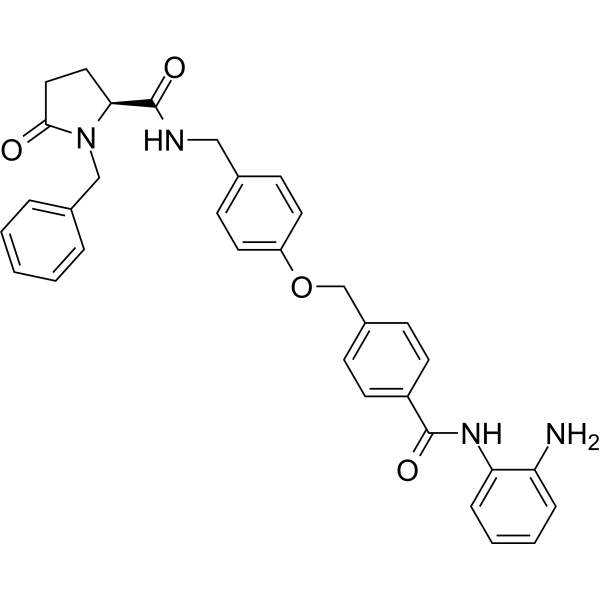 0 ImagesCat. No.: HY-155328CAS No.: 3032392-39-2GK444 (Compound 15a) is a HDAC1/2 inhibitor (IC50: 100 and 92 nM for HDAC1/2 respectively). GK444 inhibits Caco-2 cells with IC50 of 4.1 μM. GK444 also reduces TGF-β1 induced COL1A1 mRNA levels in primary normal human lung fibroblasts. GK444 inhibits Bleomycin (HY-108345)-induced lung fibrosis in mice.
-
HDAC-IN-43
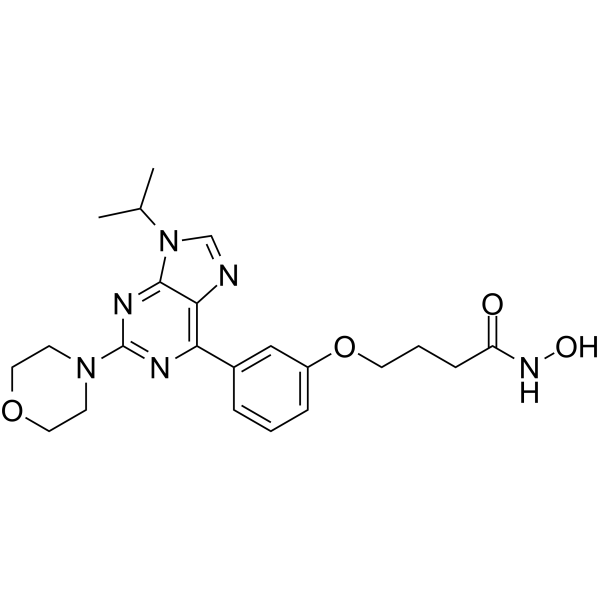 0 ImagesCat. No.: HY-147966CAS No.: 1809163-24-3HDAC-IN-43 is a potent HDAC 1/3/6 inhibitor with IC50 values of 82, 45, and 24 nM, respectively. HDAC-IN-43 is a weak PI3K/mTOR inhibitors with IC50 values of 3.6 and 3.7 μM, respectively. HDAC-IN-43 shows broad anti-proliferative activity .
-
HDAC-IN-97
 0 ImagesCat. No.: HY-177776CAS No.: 149647-86-9
-
HDSI-18
 0 ImagesCat. No.: HY-172873HDSI-18 is an orally active HDAC6 selective inhibitor (IC50: 1.6 nM). HDSI-18 is cytotoxic to K562, MV4-11, MOLM-13, THP-1, and Jurkat cells (IC50: 0.48, 0.58, 0.91, 1.79, and 4.31 μM, respectively). HDSI-18 activates Caspase-3, induces mitochondrial depolarization and apoptosis, and has antitumor activity.
-
HDAC-IN-44
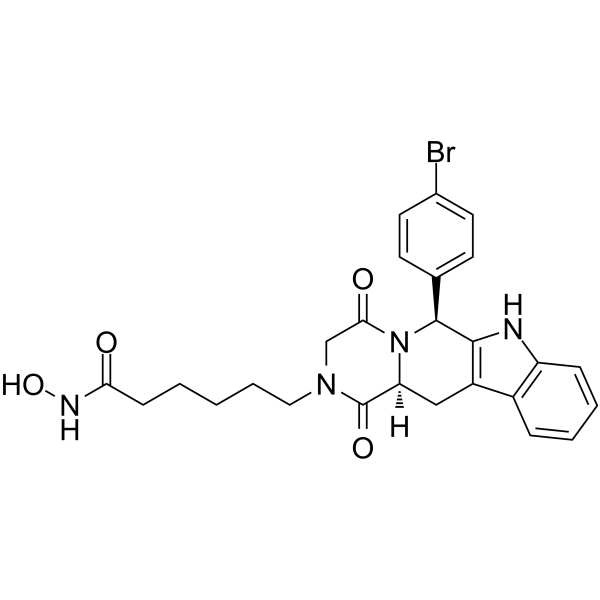 0 ImagesCat. No.: HY-150500CAS No.: 2414921-46-1HDAC-IN-44 is a HDAC inhibitor with the IC50 value of 61.2 nM. HDAC-IN-44 shows high anticancer activity towards multiple cancer cell lines.

-
Sodium butyrate-d5
 0 ImagesCat. No.: HY-W723834CAS No.: 204244-79-1Synonyms: Butanoic acid-d5 sodium; Butyric acid-d5 sodiumSodium butyrate-d5 (Butanoic acid-d5 sodium) is the deuterium labeled Sodium butyrate (HY-B0350A). Sodium Butyrate (sodium butanoate) is an inhibitor of HDAC, possessing anti-tumor activity.




