



PKC
Protein kinase C
PKC (Protein kinase C) is a family of protein kinase enzymes that are involved in controlling the function of otherproteins through the phosphorylation of hydroxyl groups of serine and threonine amino acid residues on these proteins. PKC enzymes in turn are activated by signals such as increases in the concentration of diacylglycerol (DAG) or calcium ions (Ca2+). Hence PKC enzymes play important roles in several signal transduction cascades. The PKC family consists of 15 isozymes in humans: PKC-α (PRKCA), PKC-β1 (PRKCB), PKC-β2 (PRKCB), PKC-γ (PRKCG), PKC-δ (PRKCD), PKC-δ1 (PRKD1), PKC-δ2 (PRKD2), PKC-δ3 (PRKD3), PKC-ε (PRKCE), PKC-η (PRKCH), PKC-θ (PRKCQ), PKC-ι (PRKCI), PKC-ζ (PRKCZ), PK-N1 (PKN1), PK-N2 (PKN2), PK-N3 (PKN3). PKC is involved in receptor desensitization, in modulating membrane structure events, in regulating transcription, in mediating immune responses, in regulating cell growth, and in learning and memory. These functions are achieved by PKC-mediated phosphorylation of other proteins.
PKC Isoform Specific Products
-
PKC
(384)
View all products
-
PKCα
(48)
View all products
-
PKCβ
(40)
View all products
-
PKCγ
(26)
View all products
-
PKCδ
(26)
View all products
-
PKCε
(30)
View all products
-
PKCη
(15)
View all products
-
PKCζ
(14)
View all products
-
PKCθ
(21)
View all products
-
PKCμ
(4)
View all products
-
PKC-ι ℩
(2)
View all products
-
PKCι
(7)
View all products
All Product Categories
-
PKC Related Products (503)
Related Products (503)

-
Antibodies (21)
-
PKC Isoform Comparison
-
PKCiota-IN-2
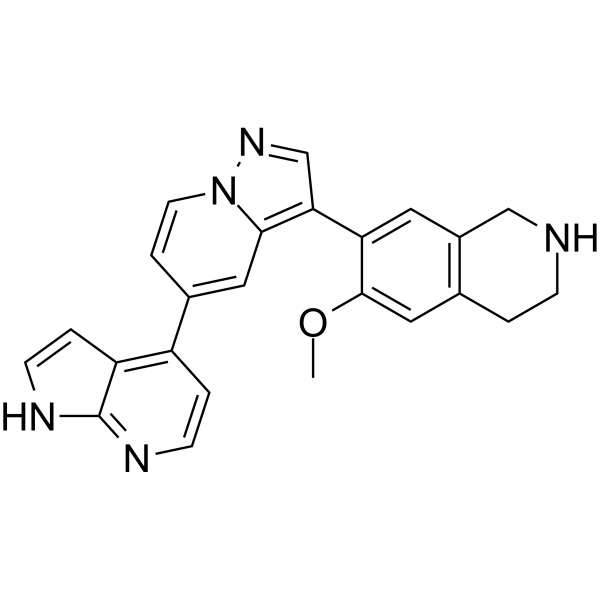 0 ImagesCat. No.: HY-122858CAS No.: 2230055-52-2PKCiota-IN-2 (Compound 49) is a potent PKCiota (PKC-ι) inhibitor with an IC50 of 2.8 nM. PKCiota-IN-2 also inhibits PKC-α and PKC-ε with IC50s of 71 nM and 350 nM, respectively.
-
NA 0345
 0 ImagesCat. No.: HY-165397CAS No.: 120925-60-2
-
Ionomycin calcium (Standard)
 0 ImagesCat. No.: HY-13434ARCAS No.: 56092-82-1Synonyms: SQ23377 calcium (Standard)2-(1-Piperazinyl)pyrimidine (Standard) is the analytical standard of 2-(1-Piperazinyl)pyrimidine. This product is intended for research and analytical applications. 2-(1-Piperazinyl)pyrimidine is the major metabolite of Tandospirone (HY-14558).
-
PKCα Recombinant Human Active Protein Kinase
 0 ImagesCat. No.: HY-E70852PKC is a family of serine/threonine kinases involved in several processes including proliferation, differentiation, apoptosis, and migration. PKCα is a classical PKC isoform that contains a C1 domain that binds to diacylglycerol (DAG). PKCα Recombinant Human Active Protein Kinase is a recombinant PKCα protein that can be used to study PKCα-related functions.
-
ICA-1S
 0 ImagesCat. No.: HY-183252CAS No.: 90597-15-2
-
TX-1123
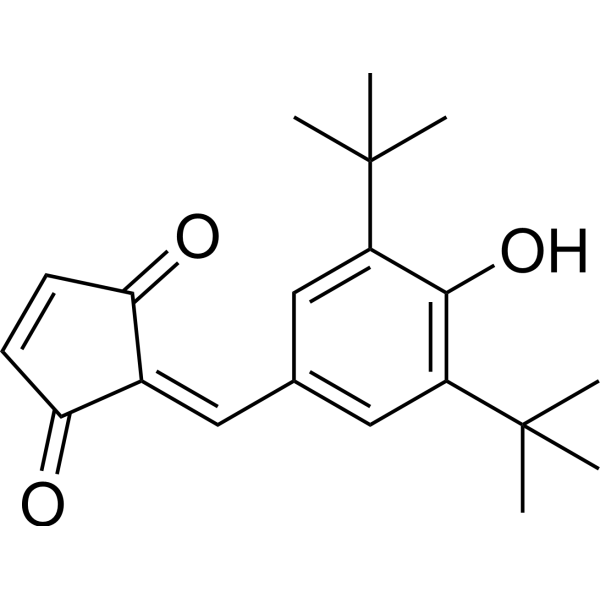 0 ImagesCat. No.: HY-121828CAS No.: 157397-06-3TX-1123 is a potent protein tyrosine kinase (PTK) inhibitor for Src, eEF2-K, and PKA, and EGFR-K/PKC. TX-1123 is a cyclo-oxygenase (COX) inhibitor with IC50 values of 1.16 μM and 15.7 μM for COX2 and COX1, respectively. TX-1123 has low mitochondrial toxicity. TX-1123 can be used in research of cancer.
-
GSK-938890A
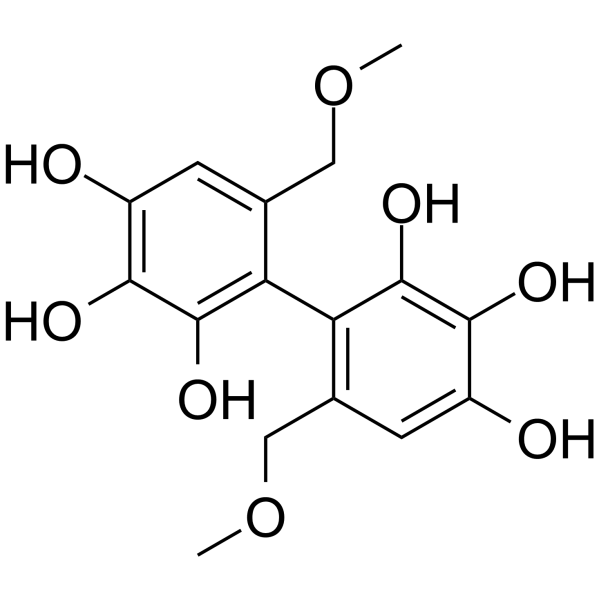
 0 ImagesCat. No.: HY-130305CAS No.: 913640-57-0GSK-938890A is a PRK1 inhibitor with an IC50 of 3600 nM. GSK-938890A is applicable to research related to prostate cancer.

-
[Glu27]-PKC (19-36)
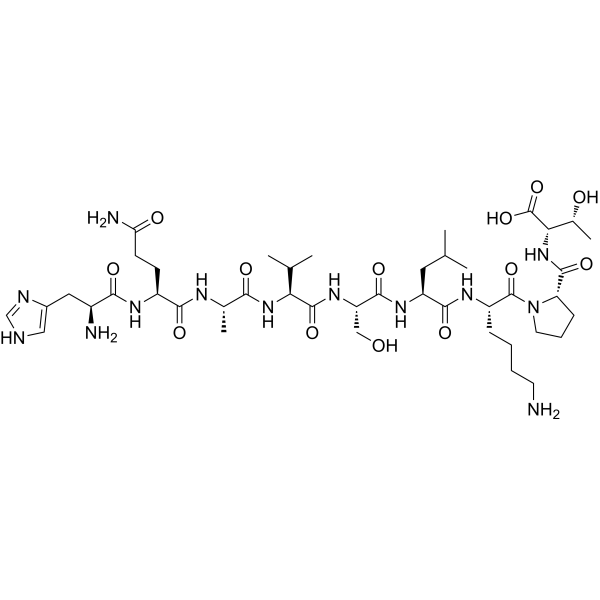
![[Glu27]-PKC (19-36)](https://file.medchemexpress.com/product_pic/hy-p1402.gif "Click to View [Glu27]-PKC (19-36) Product Detail") 0 ImagesCat. No.: HY-P1402CAS No.: 309247-49-2[Glu27]-PKC (19-36) is an inactive control for protein kinase C (PKC) (19-36). PKC (19-36) is a pseudosubstrate peptide inhibitor of protein kinase C, it may be responsible for maintaining the enzyme in the inactive form in the absence of allosteric activators such as phospholipids.
0 ImagesCat. No.: HY-P1402CAS No.: 309247-49-2[Glu27]-PKC (19-36) is an inactive control for protein kinase C (PKC) (19-36). PKC (19-36) is a pseudosubstrate peptide inhibitor of protein kinase C, it may be responsible for maintaining the enzyme in the inactive form in the absence of allosteric activators such as phospholipids.
-
Niazirin
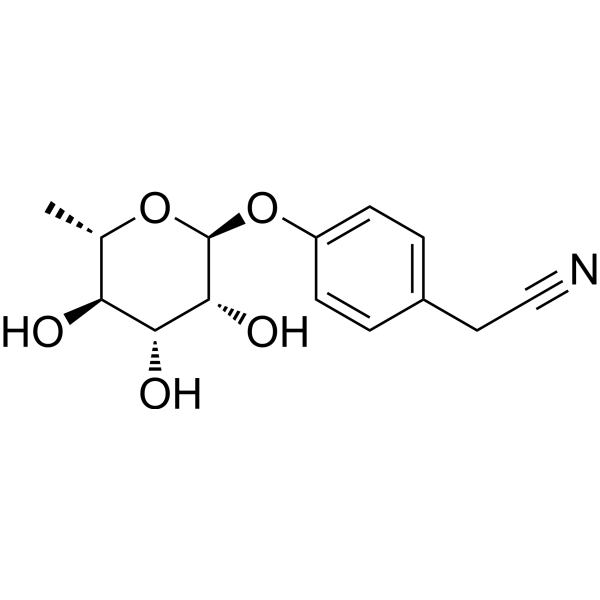 0 ImagesNiazirin is an orally active antioxidant. Niazirin can be isolated from Moringa oleifera Lam. Niazirin reduces the production levels of ROS and MDA, while increasing the levels of superoxide dismutase SOD and glutathione peroxidase GPx. Niazirin also abolishes high glucose-induced PKCζ activation and inhibits Nox4 protein expression. Niazirin exhibits excellent free radical scavenging activity. Niazirin significantly inhibits high glucose-induced proliferation of vascular smooth muscle cells. Niazirin can be used in the research of diabetic atherosclerosis.
-
AJH-836
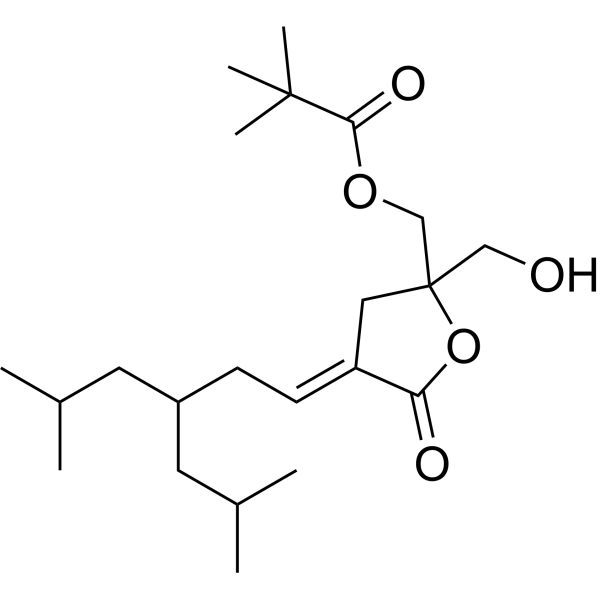 0 ImagesCat. No.: HY-149490CAS No.: 388621-67-8
-
Prkcq Rat Pre-designed siRNA Set A
 0 ImagesCat. No.: HY-RS11139
Prkcq Rat Pre-designed siRNA Set A contains three designed siRNAs for Prkcq gene (Rat), as well as a negative control, a positive control, and a FAM-labeled negative control.
-
GSK-943949A
 0 ImagesCat. No.: HY-130305ACAS No.: 913640-58-1GSK-943949A is a PRK1 inhibitor with an IC50 of 40.0 nM. GSK-943949A is applicable to research related to prostate cancer.
-
N-Desmethyltamoxifen hydrochloride (Standard)
 0 ImagesN-Desmethyltamoxifen (hydrochloride) (Standard) is the analytical standard of N-Desmethyltamoxifen (hydrochloride). This product is intended for research and analytical applications. N-Desmethyltamoxifen hydrochloride is the major metabolite of tamoxifen in humans. N-Desmethyltamoxifen, a poor antiestrogen, is a ten-fold more potent protein kinase C (PKC) inhibitor than Tamoxifen. N-Desmethyltamoxifen hydrochloride is also a potent regulator of ceramide metabolism in human AML cells, limiting ceramide glycosylation, hydrolysis, and sphingosine phosphorylation[1][2][3].
-
Prkce Rat Pre-designed siRNA Set A
 0 ImagesCat. No.: HY-RS11127
Prkce Rat Pre-designed siRNA Set A contains three designed siRNAs for Prkce gene (Rat), as well as a negative control, a positive control, and a FAM-labeled negative control.
-
Prkcd Mouse Pre-designed siRNA Set A
 0 ImagesCat. No.: HY-RS11123
Prkcd Mouse Pre-designed siRNA Set A contains three designed siRNAs for Prkcd gene (Mouse), as well as a negative control, a positive control, and a FAM-labeled negative control.
-
Chrysosplenol C
 0 ImagesCat. No.: HY-N13747CAS No.: 23370-16-3Chrysosplenol C is a type of flavonoid compound. Chrysosplenol C selectively activates cardiac myosin ATPase, with its EC50 being 45 µM. Chrysosplenol C enhances the release of intracellular calcium ions by activating protein kinase C (PKC), thereby increasing the contractility of rat ventricular muscle cells. Chrysosplenol C can be used in the research of heart failure.




