



PKC
Protein kinase C
PKC Isoform Specific Products
-
PKC
(384)
View all products
-
PKCα
(48)
View all products
-
PKCβ
(40)
View all products
-
PKCγ
(26)
View all products
-
PKCδ
(26)
View all products
-
PKCε
(30)
View all products
-
PKCη
(15)
View all products
-
PKCζ
(14)
View all products
-
PKCθ
(21)
View all products
-
PKCμ
(4)
View all products
-
PKC-ι ℩
(2)
View all products
-
PKCι
(7)
View all products
All Product Categories
-
PKC Related Products (504)
Related Products (504)

-
Antibodies (21)
-
PKC Isoform Comparison
-
Chrysosplenol C
 0 ImagesCat. No.: HY-N13747CAS No.: 23370-16-3Chrysosplenol C is a type of flavonoid compound. Chrysosplenol C selectively activates cardiac myosin ATPase, with its EC50 being 45 µM. Chrysosplenol C enhances the release of intracellular calcium ions by activating protein kinase C (PKC), thereby increasing the contractility of rat ventricular muscle cells. Chrysosplenol C can be used in the research of heart failure.
-
Protein Kinase C β Peptide
 0 ImagesCat. No.: HY-P3841CAS No.: 309247-50-5Protein Kinase C (beta) Peptide is a peptide fragment of Protein Kinase Cβ. Protein Kinase Cβ is related with hyperglycemia decreases endothelium-derived nitric oxide. Inhibition of Protein kinase Cβ prevents the reduction in endothelium-dependent vasodilation induced by acute hyperglycemia.
-
PKCζ-IN-2
 0 ImagesCat. No.: HY-208740CAS No.: 2488951-93-3PKCζ-IN-2 is an orally active, selective PKCζ inhibitor with an IC50 of 0.1 nM. As an anti-inflammatory agent, PKCζ-IN-2 reduces joint swelling and ameliorates disease progression in a mouse collagen-induced arthritis model. PKCζ-IN-2 can be used for the research of rheumatoid arthritis.
-
(S)-Ro 32-0432 free base
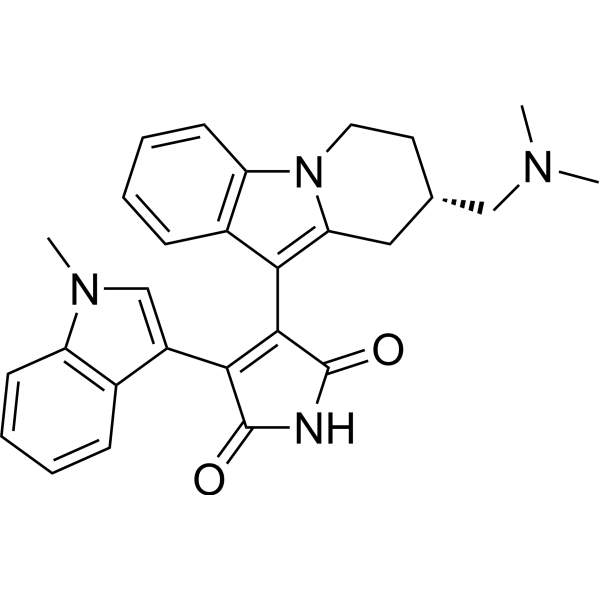 0 ImagesCat. No.: HY-108601CAS No.: 151342-35-7(S)-Ro 32-0432 free base is a potent, selective, ATP-competitive and orally active PKC inhibitor. The IC50 values of (S)-Ro 32-0432 free base for PKCα, PKCβI, PKCβII, PKCγ and PKCε are 9.3 nM, 28 nM, 30 nM, 36.5 nM and 108.3 nM, respectively. (S)-Ro 32-0432 free base is also a selective G protein-coupled receptor kinase 5 (GRK5) inhibitor. (S)-Ro 32-0432 free base prevents T-cell activation and has the potential for chronic inflammatory and autoimmune diseases research.
-
PRKCQ Human Pre-designed siRNA Set A
 0 ImagesCat. No.: HY-RS11137
PRKCQ Human Pre-designed siRNA Set A contains three designed siRNAs for PRKCQ gene (Human), as well as a negative control, a positive control, and a FAM-labeled negative control.
-
1,2-Didecanoylglycerol
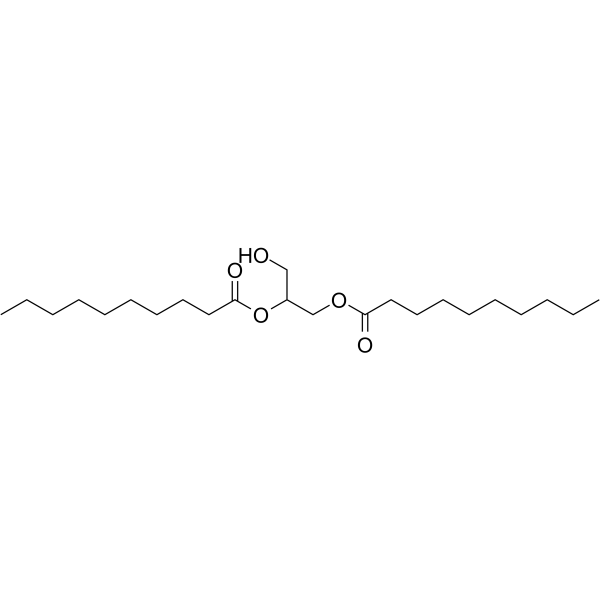 0 ImagesCat. No.: HY-115769CAS No.: 17863-69-31,2-Didecanoylglycerol, a synthetic diacylglycerol, is metabolized by platelets to 1,2-didecanoylphosphatidic acid (PA10) and activates protein kinase C (PKC).
-
PKCδ Peptide Substrate acetate
 0 ImagesCat. No.: HY-P3818APurity: 98.30%PKCδ Peptide Substrate acetate is a highly selective peptide substrate targeting PKCδ. PKCδ Peptide Substrate acetate can only be efficiently catalyzed for phosphorylation modification by PKCδ, and Thr431 is the sole phosphorylation site. PKCδ Peptide Substrate acetate binds to the catalytic pocket of PKC in a competitive manner, but exhibits no PKC agonistic or inhibitory activity. PKCδ Peptide Substrate acetate is a dedicated biochemical probe for the quantitative detection of PKCδ in vitro, and can be used for studies on PKCδ-related pathways.
-
Junicedric acid
 0 ImagesCat. No.: HY-W720917CAS No.: 41787-69-3Junicedric acid is a diterpenoid compound that can be isolated from the resin of the Araucaria araucana tree. Junicedric acid exerts neuroprotective activity by increasing intracellular calcium levels in hippocampal neurons, activating PKC and calcium/calmodulin-dependent protein kinase (CaMKII), and preventing Amyloid-β oligomer-induced synaptic protein loss, apoptosis, and long-term potentiation (LTP) inhibition. Junicedric acid can be used in the study of the pathological mechanisms of neurodegenerative diseases such as Alzheimer's disease.
-
ɛPKC(85–92),Myristoylated
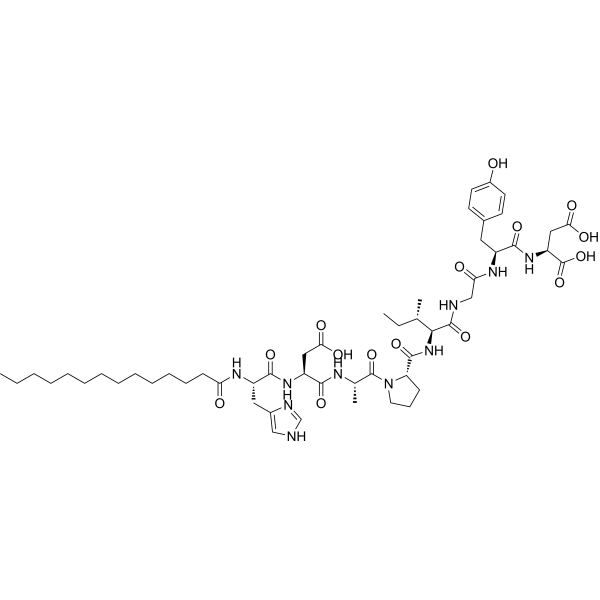 0 ImagesCat. No.: HY-P5877CAS No.: 1072301-79-1
-
Prkci Mouse Pre-designed siRNA Set A
 0 ImagesCat. No.: HY-RS11135
Prkci Mouse Pre-designed siRNA Set A contains three designed siRNAs for Prkci gene (Mouse), as well as a negative control, a positive control, and a FAM-labeled negative control.
-
Pam2CSK4
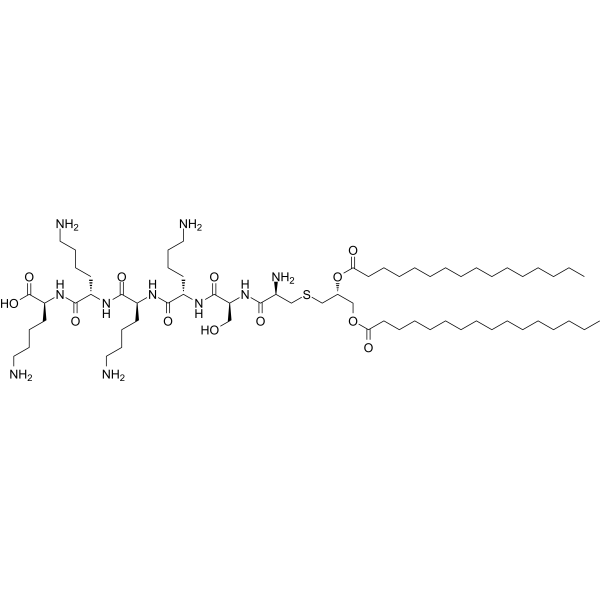 0 ImagesCat. No.: HY-P1181CAS No.: 868247-72-7Pam2CSK4 is a TLR2 agonist. Pam2CSK4 induces the expression of iNOS and NO in macrophage cell lines via TBK1 and MyD88 molecules. Pam2CSK4 activates the NF-κB and Bruton's tyrosine kinase signaling pathways in platelets, and promotes platelet-endothelial cell interactions. TLR2 activation triggered by Pam2CSK4 expands myeloid-derived suppressor cells (MDSCs) and suppresses anti-tumor immune responses in the tumor microenvironment. Pam2CSK4 acts as a Th2-polarizing adjuvant in mouse vaccine models against Leishmania major and Brugia malayi. Pam2CSK4 can be used in the research of various diseases, including thromboinflammatory diseases, sepsis, atherosclerosis, heart failure, influenza, lymphoma, melanoma, cutaneous leishmaniasis and lymphatic filariasis.
-
Sangivamycin (Standard)
 0 ImagesCat. No.: HY-118384RCAS No.: 18417-89-5Synonyms: NSC 65346 (Standard); BA-90912 (Standard)Sangivamycin (Standard) is the analytical standard of Sangivamycin. This product is intended for research and analytical applications. Sangivamycin (NSC 65346), a nucleoside analog, is a potent inhibitor of protein kinase C (PKC) with an Ki of 10 μM. Sangivamycin has potent antiproliferative activity against a variety of human cancers[1][2].
-
MDL 27032
 0 ImagesCat. No.: HY-105517CAS No.: 110124-55-5
-
Prkca Mouse Pre-designed siRNA Set A
 0 ImagesCat. No.: HY-RS11117
Prkca Mouse Pre-designed siRNA Set A contains three designed siRNAs for Prkca gene (Mouse), as well as a negative control, a positive control, and a FAM-labeled negative control.
-
Myricitrin (Standard)
 0 ImagesMyricitrin (Standard) is the analytical standard of Myricitrin. This product is intended for research and analytical applications. Myricitrin, a naturally occurring flavonoid, is an orally active nitric oxide (NO) and PKC inhibitor. Myricitrin has central nervous system activity, including anxiolytic-like action. Myricitrin possesses antioxidant, anti-inflammatory, antifibrotic and anti-malarial effects.
-
Chelerythrine hydroxide
 0 ImagesChelerythrine hydroxide is an alkaloid, acts as a potent and selective Ca2+/phospholopid-dependent PKC antagonist, with an IC50 of 0.7 μM. Chelerythrine hydroxide inhibits the BclXL-Bak BH3 peptide binding with IC50 of 1.5 μM. Chelerythrine hydroxide triggers Apoptosis and Autophagy. Chelerythrine hydroxide has antitumor, antidiabetic and anti-inflammatory activity. Chelerythrine hydroxide shows antibacterial activities against Gram-positive bacteria, Staphylococcus aureus (SA), MRSA.
-
O-Desmethyl midostaurin-13C6
 0 ImagesCat. No.: HY-W751181Synonyms: CGP62221-13C6; O-Desmethyl PKC412-13C6O-Desmethyl midostaurin-13C6 (CGP62221-13C6; O-Desmethyl PKC412-13C6) is the 13C-labeled O-Desmethyl Midostaurin (HY-129491). O-Desmethyl Midostaurin (CGP62221; O-Desmethyl PKC412) is the active metabolite of Midostaurin (HY-10230) via cytochrome P450 liver enzyme metabolism. O-Desmethyl Midostaurin can be used as an indicator for Midostaurin metabolism in vivo. Midostaurin is a multi-targeted protein kinase inhibitor?with?IC50?ranging from 22-500 nM.

-
MRS2768
 0 ImagesCat. No.: HY-108649CAS No.: 1047980-83-5MRS2768 is a potent, selective, and metabolically stable P2Y2 receptor agonist with an EC50 of 1.89 μM for the human P2Y2 receptor. MRS2768 activates Gq/PLC/PKC signaling, leading to downstream phosphorylation of Akt, eNOS, and ERK, with effects varying by cell type. MRS2768 inhibits ENaC via Gq/PKC/Src/Akt to promote natriuresis and lower blood pressure in the kidney. MRS2768 activates eNOS to increase NO secretion in endothelial cells. MRS2768 drives proliferation via PI3K/Akt in fibroblasts and cancer cells. MRS2768 exerts anti-apoptotic effects through PKC/Src/Akt in cardiomyocytes. MRS2768 can be applied to investigate P2Y2-dependent pathological processes, including acute kidney injury, chronic kidney disease and renal fibrosis, DOCA-salt induced hypertension, myocardial infarction, pulmonary arterial hypertension, pancreatic cancer, cardiac fibrosis, dry eye disease, as well as shear stress-mediated vascular remodeling and atherosclerosis.
-
BTK-IN-50
 0 ImagesCat. No.: HY-184940BTK-IN-50 is a covalent BTK inhibitor with an IC50 of 6 nM. BTK-IN-50 blocks collagen-induced platelet aggregation by inhibiting the GPVI-mediated BTK-PLCγ2-PKC signaling cascade, and attenuates CRP-XL-induced phosphorylation of BTK, PLCγ2 and PKC substrates in platelets. BTK-IN-50 can be used for research related to thrombosis.




