



PKC
Protein kinase C
PKC (Protein kinase C) is a family of protein kinase enzymes that are involved in controlling the function of otherproteins through the phosphorylation of hydroxyl groups of serine and threonine amino acid residues on these proteins. PKC enzymes in turn are activated by signals such as increases in the concentration of diacylglycerol (DAG) or calcium ions (Ca2+). Hence PKC enzymes play important roles in several signal transduction cascades. The PKC family consists of 15 isozymes in humans: PKC-α (PRKCA), PKC-β1 (PRKCB), PKC-β2 (PRKCB), PKC-γ (PRKCG), PKC-δ (PRKCD), PKC-δ1 (PRKD1), PKC-δ2 (PRKD2), PKC-δ3 (PRKD3), PKC-ε (PRKCE), PKC-η (PRKCH), PKC-θ (PRKCQ), PKC-ι (PRKCI), PKC-ζ (PRKCZ), PK-N1 (PKN1), PK-N2 (PKN2), PK-N3 (PKN3). PKC is involved in receptor desensitization, in modulating membrane structure events, in regulating transcription, in mediating immune responses, in regulating cell growth, and in learning and memory. These functions are achieved by PKC-mediated phosphorylation of other proteins.
PKC Isoform Specific Products
-
PKC
(384)
View all products
-
PKCα
(48)
View all products
-
PKCβ
(40)
View all products
-
PKCγ
(26)
View all products
-
PKCδ
(26)
View all products
-
PKCε
(30)
View all products
-
PKCη
(15)
View all products
-
PKCζ
(14)
View all products
-
PKCθ
(21)
View all products
-
PKCμ
(4)
View all products
-
PKC-ι ℩
(2)
View all products
-
PKCι
(7)
View all products
All Product Categories
-
PKC Related Products (504)
Related Products (504)

-
Antibodies (21)
-
PKC Isoform Comparison
-
Myr-Tat-PKCβII
 0 ImagesCat. No.: HY-P10821Myr-Tat-PKCβII is a cell permeable protein kinase C β II peptide inhibitor. Myr-Tat-PKCβII mitigates the generation of reactive oxygen species in rat ex-vivo and porcine in-vivo ischemia-reperfusion injury.
-
H-Arg-Gly-Tyr-Ala-Leu-Gly-OH
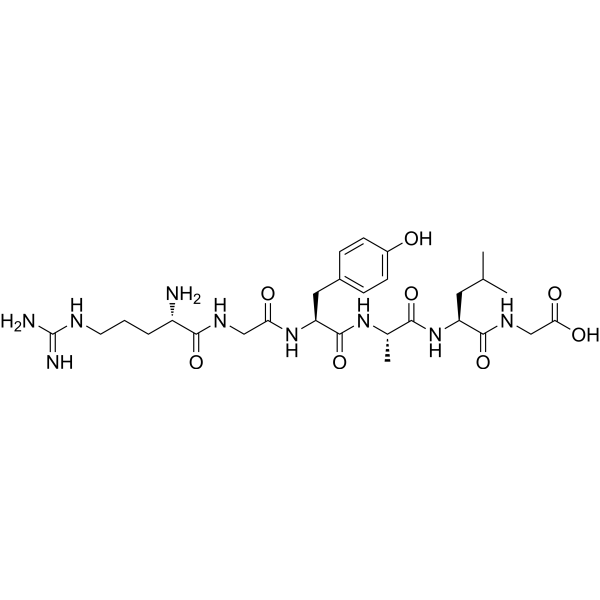 0 ImagesCat. No.: HY-P3786CAS No.: 59587-24-5H-Arg-Gly-Tyr-Ala-Leu-Gly-OH is a competitive and CAMP dependent protein kinase inhibitor.
-
Evo312
 0 ImagesCat. No.: HY-169006CAS No.: 2820245-53-0Evo312 is a dose-dependent inhibitor of protein kinase CβⅠ (PKCβⅠ) (IC50 is 117.34 nM). Evo312 induces PANC-GR (acquired gemcitabine-resistant PC cells) cell cycle arrest and apoptosis by inhibiting PKCβ1 protein expression. Evo312 has antiproliferative effects in pancreatic cancer cells PANC-1 and PANC-GR cells with IC50 of 0.08 μM and 0.07 μM, and in human normal pancreatic ductal epithelial cells HPDE6-c7 with IC50 of 2.95 μM. Evo312 exhibits antitumor activity in a PANC-GR cell transplantation mouse model.
-
GLI-IN-1
 0 ImagesCat. No.: HY-184494GLI-IN-1 is a potent, PKC-dependent Gli inhibitor. GLI-IN-1 binds to the C1 domain of PKC, forms hydrogen-bonding interactions with the M239 residue, and mediates the inhibition of downstream Gli via a PKC-mediated, Smoothened-independent mechanism. GLI-IN-1 can be used in studies of Gli-driven cancers and osteogenic differentiation.
-
Chelerythrine-d6 chloride
 0 ImagesCat. No.: HY-N2359SChelerythrine-d6 is the deuterium labeled Chelerythrine (HY-N2359). Chelerythrine is a natural alkaloid, acts as a potent and selective Ca2+/phospholopid-dependent PKC antagonist, with an IC50 of 0.7 μM. Chelerythrine has antitumor, antidiabetic and anti-inflammatory activity. Chelerythrine inhibits the BclXL-Bak BH3 peptide binding with an IC50 of 1.5 μM and displaces Bax from Bcl-XL. Chelerythrine triggers apoptosis and autophagy.
-
Gnidimacrin
 0 ImagesCat. No.: HY-N9382CAS No.: 60796-70-5Gnidimacrin is a protein kinase C (PKC) activator. Gnidimacrin inhibits cell growth of human leukemias, stomach cancers and non-small cell lung cancers in vitro, and shows activity against murine leukemias and solid tumors in vivo. Gnidimacrin can be used for leukemias, stomach cancers and non-small cell lung cancers research.
-
Epsilon-V1-2, Cys-conjugated
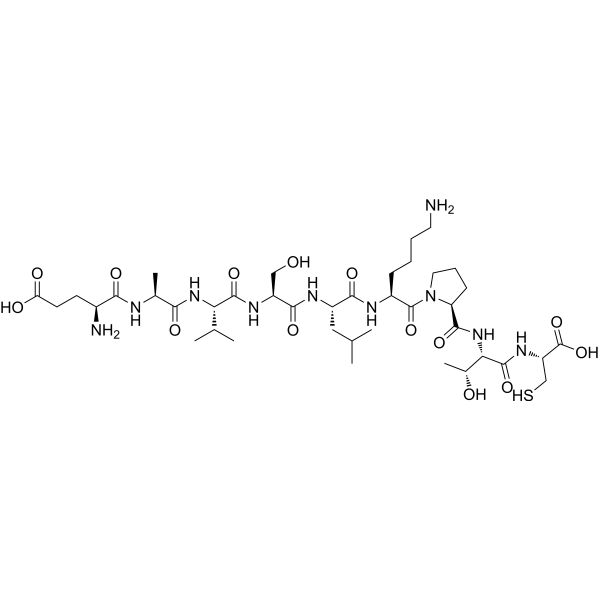 0 ImagesCat. No.: HY-P5439Epsilon-V1-2, Cys-conjugated is a biological active peptide. (This peptide is the εPKC specific inhibitor. Its inhibitory activity is based on εPKC translocation and MARCKS phosphorylation. This peptide interferes with εPKC interaction with the anchoring protein εRACK. This peptide contains a cysteine residue added to the C-terminus for potential S-S bond formation with a carrier protein.Pyroglutamyl (pGlu) peptides may spontaneously form when either Glutamine (Q) or Glutamic acid (E) is located at the sequence N-terminus. The conversion of Q or E to pGlu is a natural occurrence and in general it is believed that the hydrophobic γ-lactam ring of pGlu may play a role in peptide stability against gastrointestinal proteases. Pyroglutamyl peptides are therefore considered a normal subset of such peptides and are included as part of the peptide purity during HPLC analysis.)
-
PKCη pseudosubstrate inhibitor,myristoylated
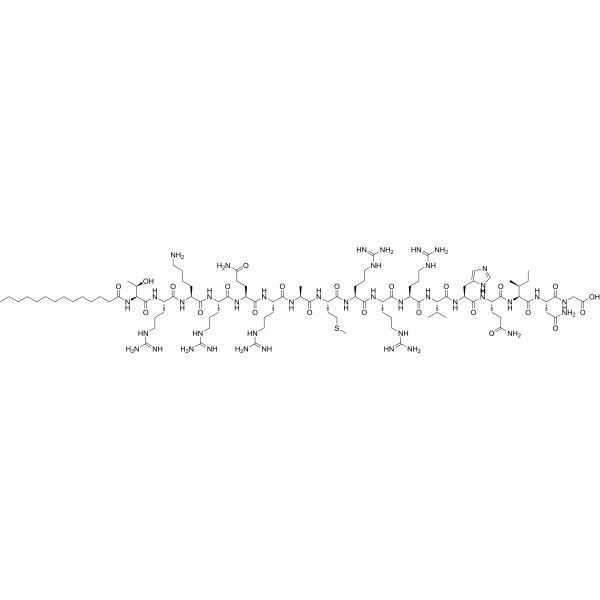 0 ImagesCat. No.: HY-P5885CAS No.: 908012-19-1

-
Decursin (Standard)
 0 ImagesDecursin (Standard) is the analytical standard of Decursin. This product is intended for research and analytical applications. Decursin ((+)-Decursin) is a potent anti-tumor agent. Decursin also is a cytotoxic agent and a potent protein kinase C activator. Decursin induces apoptosis and cell cycle arrest at G1 phase. Decursin decreases the expression of CDK2, CDK4, CDK6, cyclin D1 protein at 48 h. Decursin inhibits cell proliferation and migration. Decursin shows anti-tumor, anti-inflammatory and analgesic activities[4].
-
KRPpSQRHGSKY-NH2
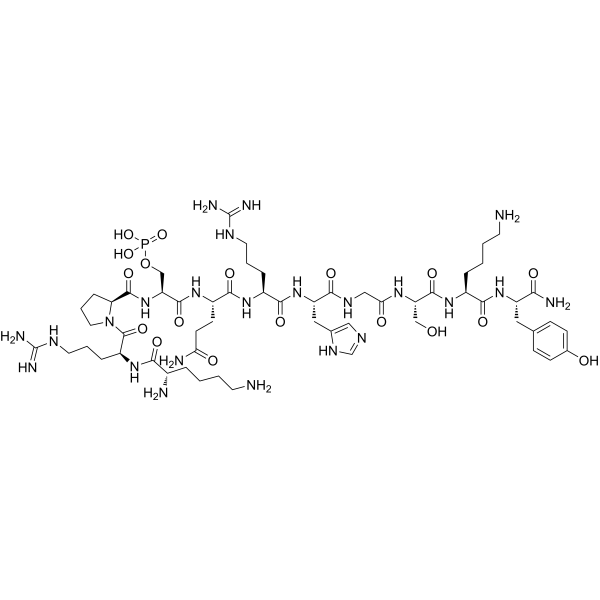 0 ImagesCat. No.: HY-P5456CAS No.: 338949-46-5KRPpSQRHGSKY-NH2 is a biological active peptide. (This is a phosphorylated PKC substrate peptide)
-
PLSRTLSVAAK
 0 ImagesCat. No.: HY-P11877CAS No.: 105802-83-3
-
ST1072
 0 ImagesCat. No.: HY-133488CAS No.: 1402703-50-7ST1072 is an inhibitor of CerS4 and CerS6. ST1072 preferentially inhibits CerS6 over CerS4, and reduces the production of C16 ceramide. ST1072 impairs TCR-mediated N-RAS activation, ERK signaling pathway, and the colocalization of CD3/PKCθ. ST1072 decreases the production of IFN-γ as well as the migration of donor cells to target organs. ST1072 regulates immune cell populations and the expression of co-stimulatory molecules. ST1072 can be used in research related to colon cancer, cervical cancer, graft-versus-host disease, and hematologic malignancies.
-
CP-46665 dihydrochloride
 0 ImagesCat. No.: HY-135254CAS No.: 72618-10-1Synonyms: CP-46665-1CP-46665 dihydrochloride is an anticancer agent that inhibits the incorporation of tritiated thymidine into leukemia cells and human solid tumor cells in vitro. It can lead to the loss of surface characteristics in tumor cells and disrupt cell membranes, inhibiting cell proliferation.
-
Prkcb Mouse Pre-designed siRNA Set A
 0 ImagesCat. No.: HY-RS11120
Prkcb Mouse Pre-designed siRNA Set A contains three designed siRNAs for Prkcb gene (Mouse), as well as a negative control, a positive control, and a FAM-labeled negative control.
-
Phorbol 12,13-dibutyrate (GMP)
 0 ImagesCat. No.: HY-18985GCAS No.: 37558-16-0Synonyms: Phorbol dibutyrate (GMP); PDBu (GMP)Phorbol 12,13-dibutyrate (Phorbol dibutyrate) (GMP) is Phorbol 12,13-dibutyrate (HY-18985) produced by using GMP guidelines. GMP small molecules works appropriately as an auxiliary reagent for cell therapy manufacture. Phorbol 12,13-dibutyrate is a PKC activator and a potent skin tumor promoter.
![[Ala107]MBP(104-118) acetate](https://file.medchemexpress.com/product_pic/hy-p1289d.gif "Click to View [Ala107]MBP(104-118) acetate Product Detail")

-
Calphostin I
 0 ImagesCat. No.: HY-N19701CAS No.: 124857-59-6Calphostin I is a selective protein kinase C (PKC) inhibitor with an IC50 of 0.14 μM in rats. Calphostin I interacts with the regulatory domain of PKC, and the aromatic groups at its C-14 and C-17 positions contribute to enhanced potency and selectivity, with no inhibition of cyclic adenosine monophosphate-dependent protein kinase (PKA) at high concentrations. Calphostin I can be used in research related to cervical cancer and breast cancer.
-
RIM-1
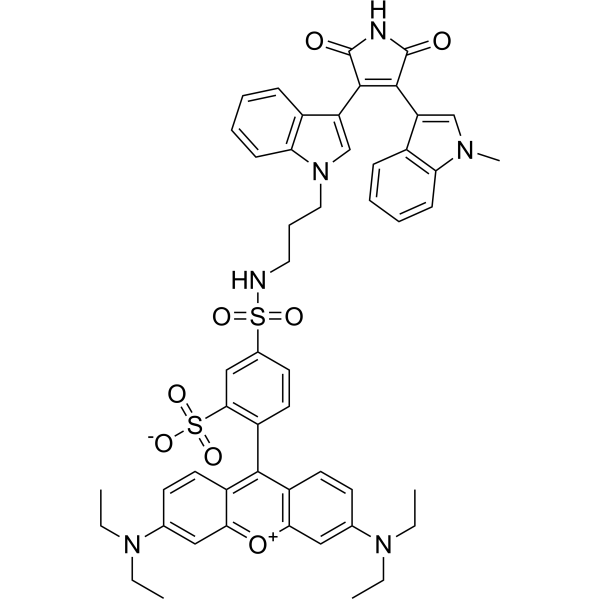 0 ImagesCat. No.: HY-D1751CAS No.: 150206-04-5




