



PKC
Protein kinase C
PKC (Protein kinase C) is a family of protein kinase enzymes that are involved in controlling the function of otherproteins through the phosphorylation of hydroxyl groups of serine and threonine amino acid residues on these proteins. PKC enzymes in turn are activated by signals such as increases in the concentration of diacylglycerol (DAG) or calcium ions (Ca2+). Hence PKC enzymes play important roles in several signal transduction cascades. The PKC family consists of 15 isozymes in humans: PKC-α (PRKCA), PKC-β1 (PRKCB), PKC-β2 (PRKCB), PKC-γ (PRKCG), PKC-δ (PRKCD), PKC-δ1 (PRKD1), PKC-δ2 (PRKD2), PKC-δ3 (PRKD3), PKC-ε (PRKCE), PKC-η (PRKCH), PKC-θ (PRKCQ), PKC-ι (PRKCI), PKC-ζ (PRKCZ), PK-N1 (PKN1), PK-N2 (PKN2), PK-N3 (PKN3). PKC is involved in receptor desensitization, in modulating membrane structure events, in regulating transcription, in mediating immune responses, in regulating cell growth, and in learning and memory. These functions are achieved by PKC-mediated phosphorylation of other proteins.
PKC Isoform Specific Products
-
PKC
(384)
View all products
-
PKCα
(48)
View all products
-
PKCβ
(40)
View all products
-
PKCγ
(26)
View all products
-
PKCδ
(26)
View all products
-
PKCε
(30)
View all products
-
PKCη
(15)
View all products
-
PKCζ
(14)
View all products
-
PKCθ
(21)
View all products
-
PKCμ
(4)
View all products
-
PKC-ι ℩
(2)
View all products
-
PKCι
(7)
View all products
All Product Categories
-
PKC Related Products (504)
Related Products (504)

-
Antibodies (21)
-
PKC Isoform Comparison
-
PS315
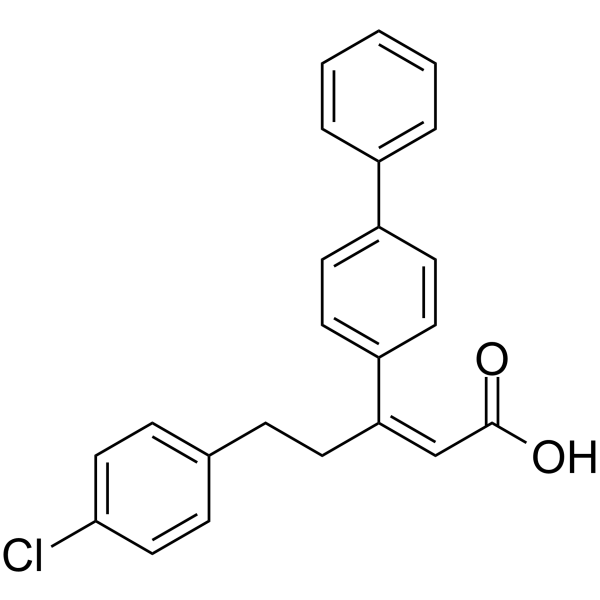 0 ImagesCat. No.: HY-124308CAS No.: 1221964-50-6PS315, a derivative of PS48 (HY-15967), is an allosteric PKC inhibitor by binding to the PIF-pocket of aPKC and inducing a displacement of the active site residue Lys111. PS315 inhibits the full-length and catalytic domain constructs of PKCζ (IC50=10 μM) and PKCη (IC50=30 μM). PS315 has anti-cancer activity.
-
DCP-LA (Standard)
 0 ImagesCat. No.: HY-108599RCAS No.: 28399-31-7Synonyms: FR236924 (Standard)DCP-LA (Standard) is the analytical standard of DCP-LA. This product is intended for research and analytical applications. DCP-LA (FR236924), a linoleic acid derivative, selectively and directly activates PKCε. DCP-LA activates Ca(2+)/calmodulin-dependent protein kinase II (CaMKII) and inhibits protein phosphatase-1 (PP-1) to stimulate AMPA receptor exocytosis. DCP-LA inhibits activation of caspase-3/-9 and protects neurons at least in part from oxidative stress-induced apoptosis[1][2][3].
-
PKCTheta-IN-1
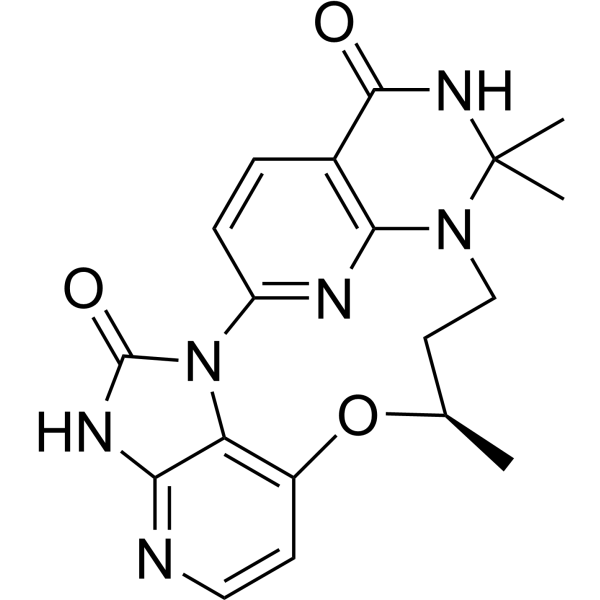 0 ImagesCat. No.: HY-162234CAS No.: 2948289-20-9PKCTheta-IN-1 (Compound 19) is a selective macrocyclic PKCTheta inhibitor with IC50 value of 0.1 nM.
-
L-α-Phosphatidylinositol-4,5-bisphosphate ammonium
 0 ImagesCat. No.: HY-167548CAS No.: 383907-42-4L-α-Phosphatidylinositol-4,5-bisphosphate ammonium is a key signaling lipid. L-α-Phosphatidylinositol-4,5-bisphosphate ammonium is an activator of PKC in the presence of calcium ions and phospholipid serine. L-α-Phosphatidylinositol-4,5-bisphosphate ammonium is also an antagonist of the KIR3.4 (ATP-sensitive potassium, KATP) channel. L-α-Phosphatidylinositol-4,5-bisphosphate ammonium can be used in research related to signal transduction, ion channel regulation, and membrane transport.
-
Protein Kinase C (660-673)
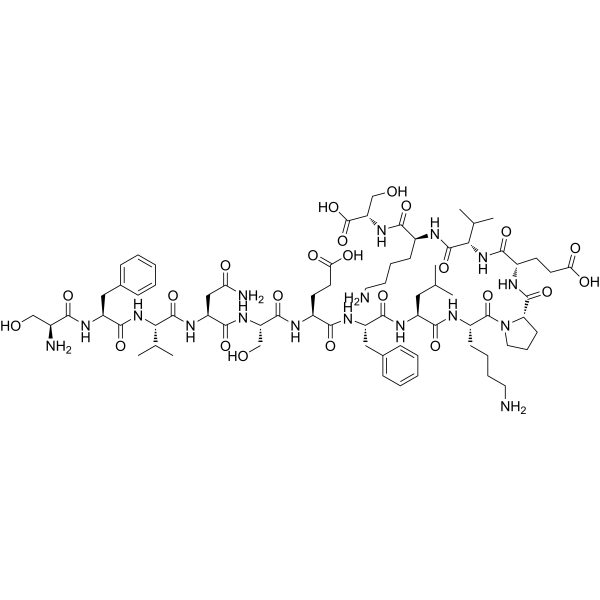 0 ImagesCat. No.: HY-P3879CAS No.: 149839-94-1Synonyms: PKC βII (660-673)
-
MPSD control peptide
 0 ImagesCat. No.: HY-P10471DCAS No.: 190711-66-1Synonyms: MARCKS-ED control peptideMPSD control peptide (MARCKS-ED control peptide) is a control peptide for MPSD peptide (HY-P10471). MPSD (MARCKS-ED) is a 25-amino acid peptide based on the effector domain sequence of the intracellular membrane protein myristoylated alanine-rich C-kinase substrate (MARCKS). MPSD can sense membrane curvature and recognize phosphatidylserine. MPSD can be utilized as biological probe to study membrane shape and lipid composition.
-
PKC-IN-7
 0 ImagesCat. No.: HY-177283CAS No.: 611234-91-4
-
MGF24
 0 ImagesCat. No.: HY-P11124CAS No.: 1611488-66-4MGF24 is a modified protease-resistant MGF derivative. MGF24 protects dopaminergic neurons from 6-Hydroxydopamine (6-OHDA) (HY-113028)-induced apoptosis by inducing Heme oxygenase-1 (HO-1). MGF24 activates PKC-ε, which in turn activates Nrf2, up-regulating HO-1. MGF24 has neuroprotective activity and reduces myocardial infarct size in sheep models of myocardial ischemia. MGF24 can be used for neurological diseases like stroke, nerve injury and amyotrophic lateral sclerosis research.
-
6-Deoxyisojacareubin
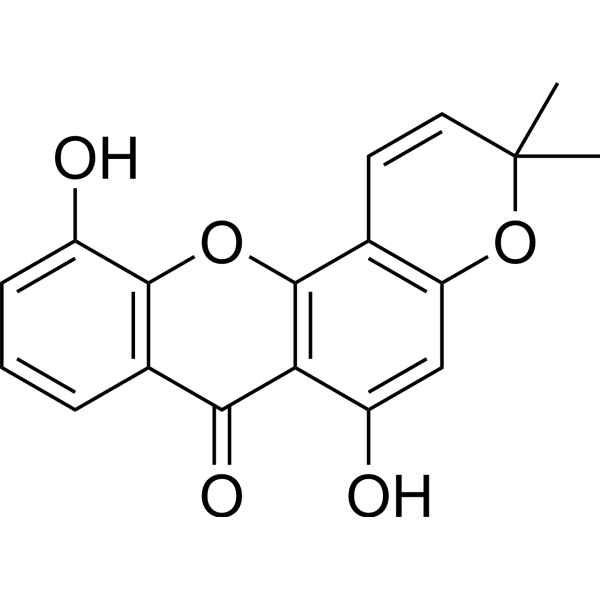 0 ImagesCat. No.: HY-N8475CAS No.: 26486-92-0
-
Prkce Mouse Pre-designed siRNA Set A
 0 ImagesCat. No.: HY-RS11126
Prkce Mouse Pre-designed siRNA Set A contains three designed siRNAs for Prkce gene (Mouse), as well as a negative control, a positive control, and a FAM-labeled negative control.
-
Decursinol angelate (Standard)
 0 ImagesCat. No.: HY-N4322RCAS No.: 130848-06-5Decursinol angelate (Standard) is the analytical standard of Decursinol angelate. This product is intended for research and analytical applications. Decursinol angelate, a cytotoxic and protein kinase C (PKC) activating agent from the root of Angelica gigas, possesses anti-tumor and anti-inflammatory activities.
-
[Ala113]MBP(104-118)
![[Ala113]MBP(104-118)](https://file.medchemexpress.com/product_pic/hy-p1289.gif "Click to View [Ala113]MBP(104-118) Product Detail") 0 ImagesCat. No.: HY-P1289CAS No.: 99026-78-5[Ala113]MBP(104-118) is an noncompetitive peptide inhibitors of protein kinase C (PKC), with IC50s ranging from 28-62 μM.
0 ImagesCat. No.: HY-P1289CAS No.: 99026-78-5[Ala113]MBP(104-118) is an noncompetitive peptide inhibitors of protein kinase C (PKC), with IC50s ranging from 28-62 μM.
-
pTH-Related Protein (1-40) (human, mouse, rat)
 0 ImagesCat. No.: HY-P4856CAS No.: 120298-73-9pTH-Related Protein (1-40) (human, mouse, rat) stimulates calcium uptake in rat intestinal cells through PTHR1 receptor and PKCα/β signaling pathways. pTH-Related Protein (1-40) up-regulates parathyroid hormone 1 receptor (PTHR1) protein, four transcellular calcium transporters, potential vanillin member 6 (TRPV6), calcium-binding protein-D9K (CaBP-D9k), sodium-calcium Exchanger 1 (NCX1) and plasma membrane calcium ATPase 1 (PMCA1).
-
Staurosporine-Boc
 0 ImagesCat. No.: HY-164041CAS No.: 120685-17-8Staurosporine-Boc, a natural product isolated from the actinomyces Streptomyces staurosporeus, is a potent non-selective inhibitor of protein kinase. Staurosporine-Boc inhibits a variety of protein kinases, including protein kinase C (PKC), tyrosine kinase, and serine/threonine kinase. Because of its broad inhibition profile, Staurosporine-Boc is widely used as a tool compound in biological research, especially when studying cell signaling pathways.

-
PRKCE Human Pre-designed siRNA Set A
 0 ImagesCat. No.: HY-RS11125
PRKCE Human Pre-designed siRNA Set A contains three designed siRNAs for PRKCE gene (Human), as well as a negative control, a positive control, and a FAM-labeled negative control.
-
Protein Kinase C (661-671)
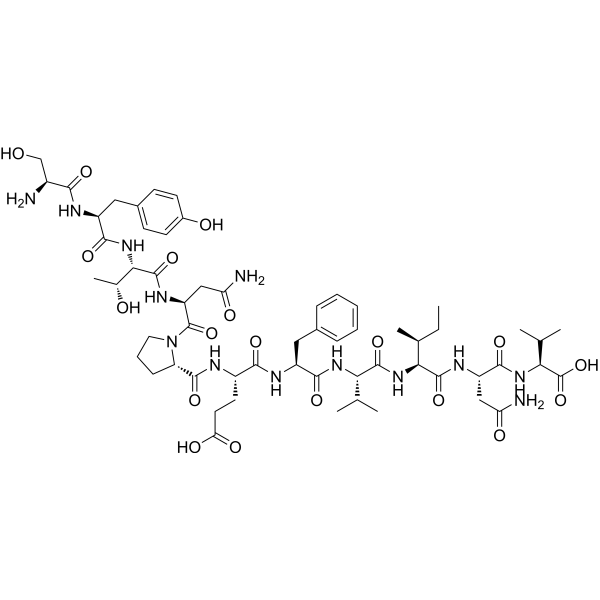 0 ImagesCat. No.: HY-P3842CAS No.: 149839-93-0
-
Midostaurin-13C6
 0 ImagesCat. No.: HY-W751179Synonyms: PKC412-13C6; CGP 41251-13C6Midostaurin-13C6 (PKC412-13C6) is the 13C-labeled Midostaurin (HY-10230). Midostaurin (PKC412; CGP 41251) is an orally active, reversible multi-targeted protein kinase inhibitor. Midostaurin inhibits PKCα/β/γ, Syk, Flk-1, Akt, PKA, c-Kit, c-Fgr, c-Src, FLT3, PDFRβ and VEGFR1/2 with IC50s ranging from 22-500 nM. Midostaurin also upregulates endothelial nitric oxide synthase (eNOS) gene expression. Midostaurin shows powerful anticancer effects.
-
Raxofelast
 0 ImagesCat. No.: HY-120485CAS No.: 128232-14-4Synonyms: IRFI-016Raxofelast (IRFI-016) is an antioxidant agent in various models of ischemia-reperfusion injury. Raxofelast has antiproliferative activity in H2O2-stimulated rat aortic smooth muscle cells. Raxofelast attenuates the activation of mitogen-activating protein kinase (MAPK), ERK kinase 1, 2 (MEK1,2) and protein kinase C (PKC) without affecting Ras expression.
-
Phellodendrine chloride (Standard)
 0 ImagesCat. No.: HY-N0735RCAS No.: 104112-82-5Phellodendrine chloride (Standard) is the analytical standard of Phellodendrine chloride (HY-N0735). Phellodendrine chloride is an orally active plant alkaloid. Phellodendrine chloride inhibits the proliferation of KRAS-mutated pancreatic cancer cells by suppressing macropinocytosis and glutamine metabolism, inducing ROS accumulation and mitochondrial apoptosis. Phellodendrine chloride promotes autophagy by activating the AMPK/mTOR pathway, alleviating intestinal damage in ulcerative colitis. Phellodendrine chloride can alleviate gouty arthritis by inhibiting the IL-6/STAT3 signaling pathway. Phellodendrine chloride suppresses allergic reactions by altering the conformation of MRGPRB3/MRGPRX2 protein, thereby inhibiting the activation of PKC and subsequent downstream MAPK and NF-κB signaling. Phellodendrine chloride inhibits the AKT/NF-κB pathway and down-regulates the expression of COX-2, thereby protecting zebrafish embryos from oxidative stress. Phellodendrine chloride has an anti-major depressive disorder (MDD) effect by down-regulating CHRM1, HTR1A, and the PI3K/Akt signaling pathway.




