



Toll-like Receptor (TLR) Antagonist
- 1
- 2
-
Afimetoran
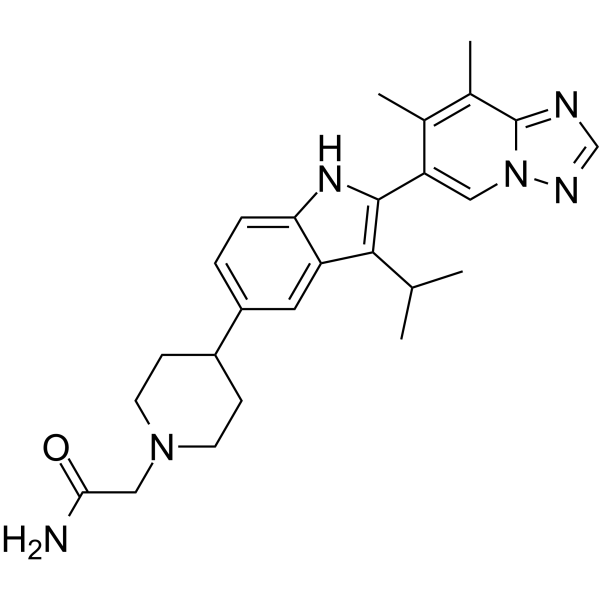 0 ImagesSynonyms: BMS-986256
Afimetoran (BMS-986256) is an orally active, selective, and highly bioavailable TLR7/8 antagonist. Afimetoran (BMS-986256) can inhibit TLR7/8 activation of the NF-κB pathway and reverse TLR7 mediated resistance to steroid induced apoptosis in plasma cell like dendritic cells (pDCs). Afimetoran (BMS-986256) can be used for research on inflammation and autoimmune diseases (systemic lupus erythematosus).
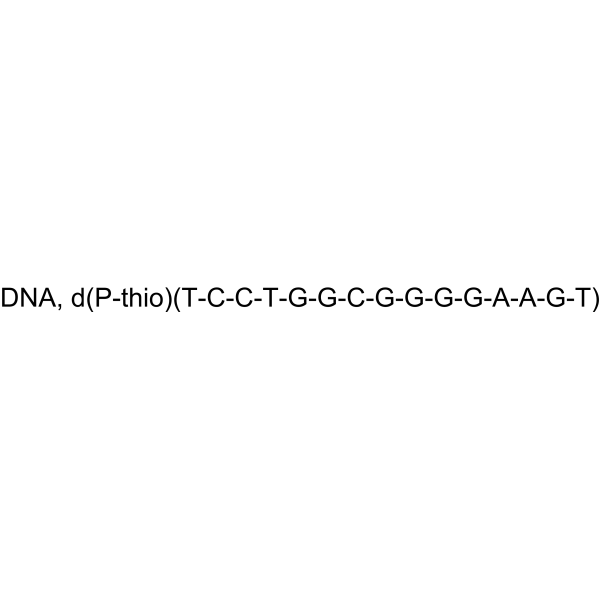
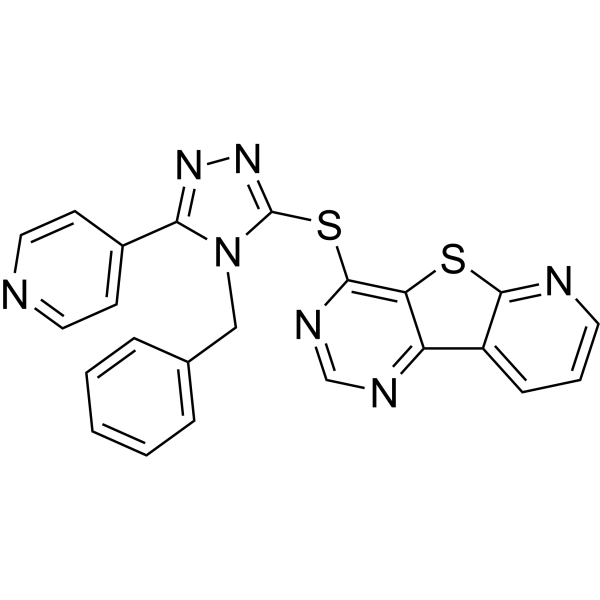
-
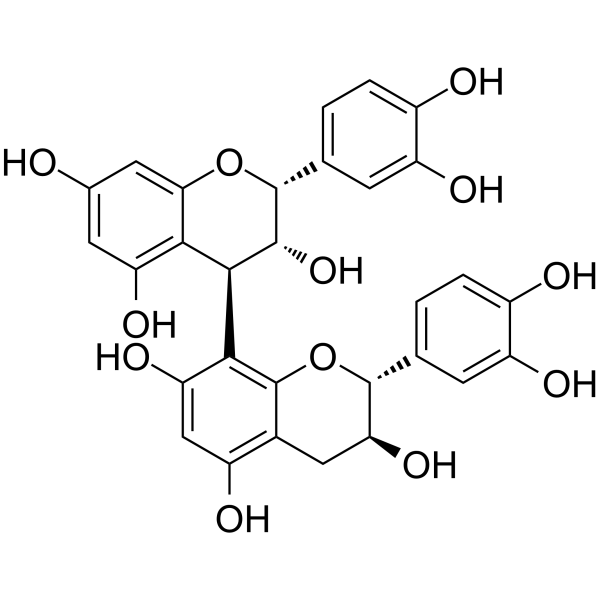
Procyanidin B1
 0 Images
Procyanidin B1 is a polyphenolic flavonoid isolated from commonly eaten fruits, binds to TLR4/MD-2 complex, and has anti-inflammatory activity.
-
ODN TTAGGG sodium
 0 ImagesCat. No.: HY-150751CSynonyms: ODN A151 sodium
ODN TTAGGG sodium, inhibitory oligonucleotide (ODN), is a TLR9, AIM2 and cGAS antagonist. ODN TTAGGG sodium is immunosuppressive and inhibits AIM2 inflammasome activation, as well as cGAS activation, by competing with DNA. ODN TTAGGG sodium can be used in the study of lupus erythematosus and other related autoimmune diseases. ODN TTAGGG sequence: 5'-T-T-A-G-G-G-T-T-A-G-G-G-T-T-A-G-G-G-T-T-A-G-G-G-3'.
-
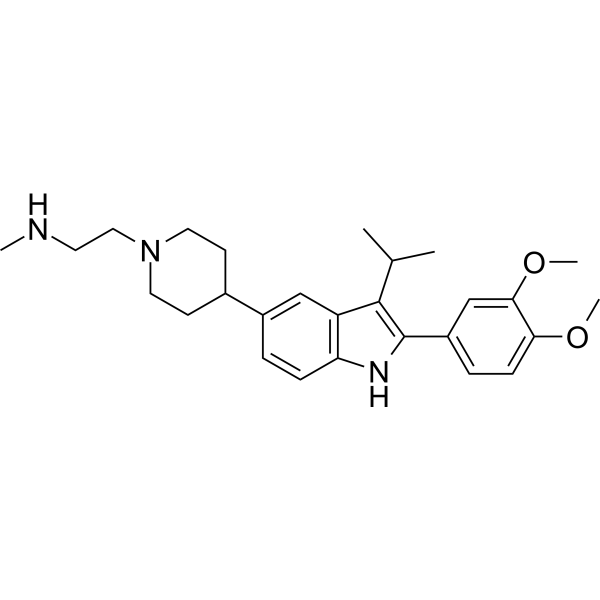
TLR7/8/9-IN-1
 0 Images
TLR7/8/9-IN-1 is a potent and orally bioavailable small molecule antagonist (IC50 = 43 nM) of Toll-like receptors 7/8/9 (TLR7/8/9).
-
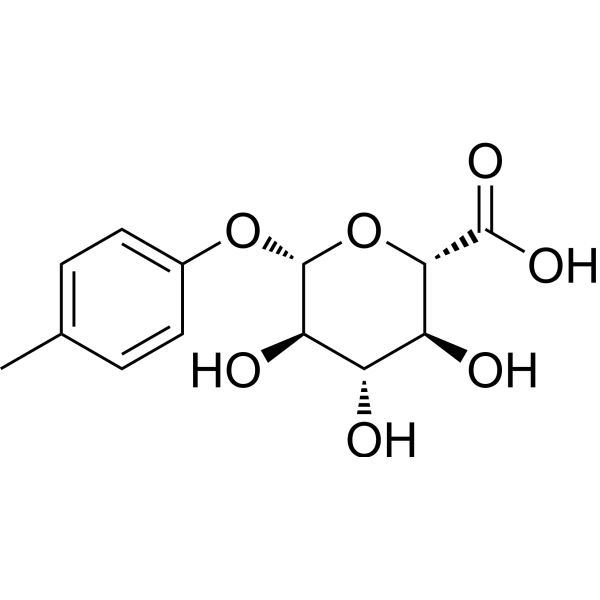
p-Cresol glucuronide
 0 Images
p-Cresol glucuronide is a metabolite of p-Cresol (HY-Y0506). p-Cresol glucuronide acts as a TLR4-antagonizing blood-brain barrier protective agent in brain microvascular endothelial cells, and serves as a non-invasive urinary biomarker metabolite in renal cell carcinoma. p-Cresol glucuronide inhibits LPS (HY-D1056)-induced increase in blood-brain barrier permeability and signal response, impairs mitochondrial function, induces oxidative stress and enhances inflammatory responses, depletes intracellular glutathione, and increases cell necrosis. p-Cresol glucuronide can be used in studies related to renal cell carcinoma, chronic kidney disease and heart disease.
-
CPG-52364
 0 Images
CPG-52364 (compound 2) is a TLR9 antagonist. CPG-52364 inhibits the HEK293-hTLR9 cell with an IC50 value of 4.6 nM.
-
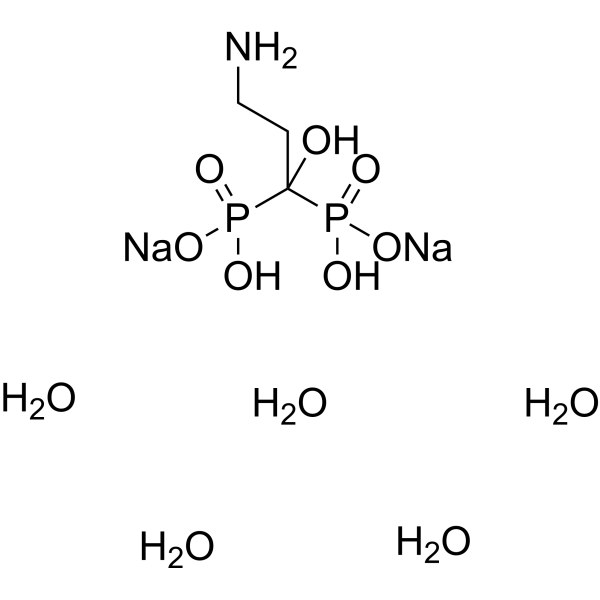
Pamidronate disodium pentahydrate
 0 Images
Pamidronate disodium pentahydrate, the second-generation nitrogen-containing bisphosphonate, is an inhibitor of bone loss. Pamidronate disodium pentahydrate significantly inhibits subchondral bone loss in early osteoarthritis by upregulating the expression of osteoprotegerin in cartilage and subchondral bone, and inhibiting the expression of RANKL and MMP-9 in both tissues, as well as TLR-4 in cartilage, thereby alleviating cartilage degeneration. Additionally, Pamidronate disodium pentahydrate can inhibit the signaling of Wnt and β-catenin, and is applicable for research on osteoporosis and osteosarcoma.
-
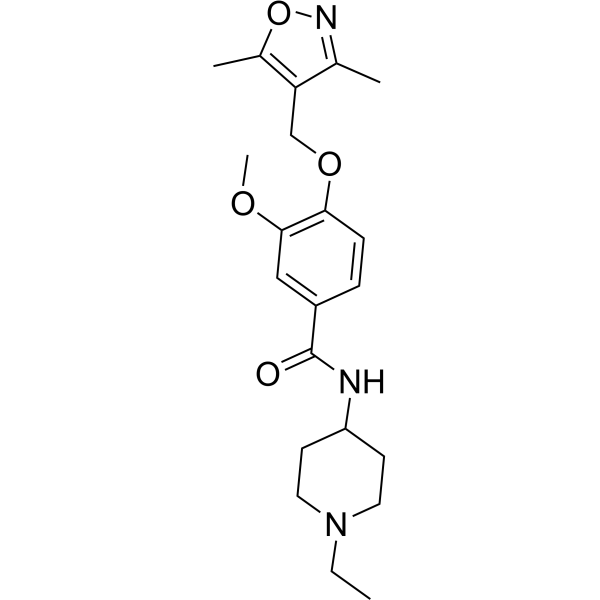
TLR9 antagonist 1 diformate
 0 ImagesCat. No.: HY-178037A
TLR9 antagonist 1 diformate is a selective hTLR9 antagonist with an IC50 of 0.1 nM against hTLR9. TLR9 antagonist 1 diformate exhibits favorable pharmacokinetic and pharmacodynamic properties. TLR9 antagonist 1 diformate can be used in the research of systemic lupus erythematosus.
-
TLR7/8 antagonist 2
 0 Images
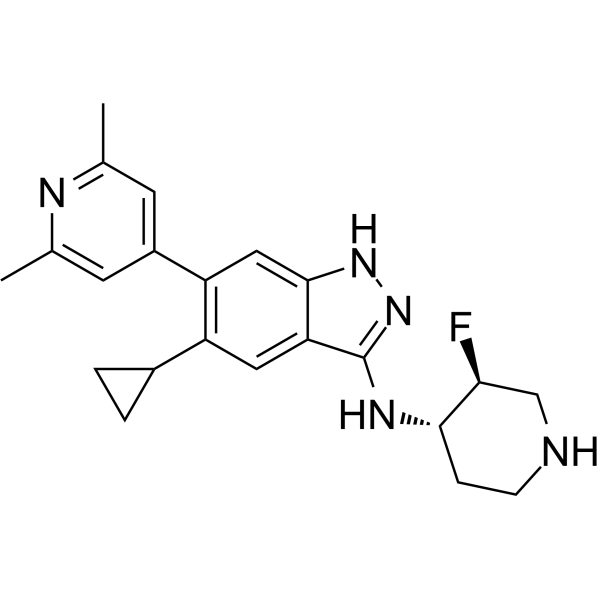
TLR7/8 antagonist 2 (Compound 15) is a potent and orally active agonist of TLR7/8 with IC50s of 4.9 and 0.6 nM, respectively. Inappropriate activation of TLR7 and TLR8 is linked to several autoimmune diseases, such as lupus erythematosus. TLR7/8 antagonist 2 has the potential for the research of autoimmune diseases.
-
TLR7/8/9 antagonist 2
 0 Images
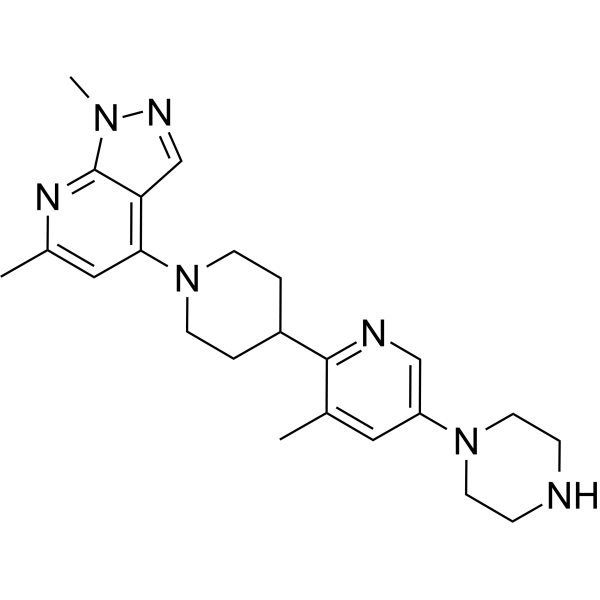
TLR7/8/9 antagonist 2 is an orally active TLR7/8/9 antagonist. TLR7/8/9 antagonist 2 has inhibitory activities for HEK/hTLR7, HEK/hTLR8 and HEK/hTLR9 with IC50 values of 0.011 μM, 0.029 μM and 0,052 μM, respectively.TLR7/8/9 antagonist 2 has high bioavailability in vivo.TLR7/8/9 antagonist 2 can be used for the research of auto-inflammatory diseases such as systemic lupus erythematosus or lupus nephritis.
-
T5342126
 0 Images
T-5342126 is a toll-like receptor 4 (TLR4) antagonist. It reduces LPS-induced production of nitric oxide (NO) in RAW 264.7 cells (IC50=27.8 μM), as well as decreases LPS-induced IL-8, TNF-α, and IL-6 production in isolated human whole blood (IC50s=110.5, 315.6, and 318.4 μM, respectively). T-5342126 (82 mg/kg) reduces ethanol intake and the abundance of ionized calcium-binding adapter molecule 1 (Iba1), a marker of microglial activation, in the central nucleus of the amygdala in ethanol-dependent mice.
-
Atractylenolide I (Standard)
 0 Images
Atractylenolide I (Standard) is the analytical standard of Atractylenolide I. This product is intended for research and analytical applications. Atractylenolide I is a sesquiterpene derived from the rhizome of Atractylodes macrocephala, possesses diverse bioactivities, such as neuroprotective, anti-allergic, anti-inflammatory and anticancer properties. Atractylenolide I reduces protein levels of phosphorylated JAK2 and STAT3 in A375 cells, and acts as a TLR4-antagonizing agent.
-
FITC-labeled ODN TTAGGG sodium
 0 ImagesCat. No.: HY-150751B
-
TLR2 antagonist-3
 0 ImagesCat. No.: HY-184714CAS No.: 380160-63-4
TLR2 antagonist-3 is a Toll-like receptor 2 (TLR2) antagonist with an IC50 of 13.32 μM. TLR2 antagonist-3 exhibits predicted metabolic stability and is applicable to the research of inflammatory and immune-related diseases.
-
Pamidronate disodium pentahydrate (Standard)
 0 ImagesCat. No.: HY-B0730RCAS No.: 109552-15-0
Pamidronate (disodium pentahydrate) (Standard) is the analytical standard of Pamidronate (disodium pentahydrate). This product is intended for research and analytical applications. Pamidronate disodium pentahydrate, the second-generation nitrogen-containing bisphosphonate, is an inhibitor of bone loss. Pamidronate disodium pentahydrate significantly inhibits subchondral bone loss in early osteoarthritis by upregulating the expression of osteoprotegerin in cartilage and subchondral bone, and inhibiting the expression of RANKL and MMP-9 in both tissues, as well as TLR-4 in cartilage, thereby alleviating cartilage degeneration. Additionally, Pamidronate disodium pentahydrate can inhibit the signaling of Wnt and β-catenin, and is applicable for research on osteoporosis and osteosarcoma.
- 1
- 2



