



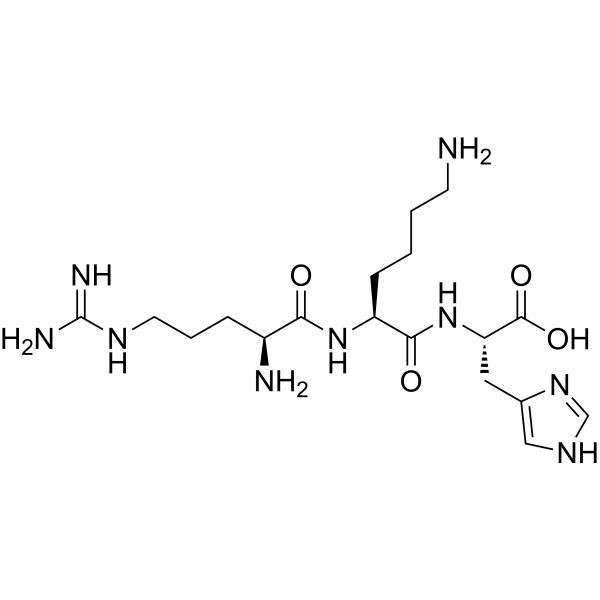
RKH
Based on 1 publication(s) in Google Scholar
PKH is a TLR4 antagonist. PKH is a novel tripeptide and can be isolated from Akkermansia muciniphila. RKH reduces sepsis-induced inflammatory cell activation and proinflammatory factor overproduction.
For research use only. We do not sell to patients.
- Formula: C18H33N9O4
- Molecular Weight:439.51
-
Storage:
Please store the product under the recommended conditions in the Certificate of Analysis.

To place orders, for customer services and technical support, please contact: MedChemExpress USA
Tel: 609-228-6898 E-mail: [email protected] [email protected]


-
 Biological Activity
-
Chemical Information
- Protocols
- Purity & Documentation
- References
-
 Help & FAQs


Publications Citing Use of MedChemExpress (MCE) RKH
More

Biological Activity
Description


Chemical Information
-
Molecular Weight 439.51
-
Formula C18H33N9O4
-
Sequence
Arg-Lys-His
-
Sequence Shortening
RKH
-
Shipping
Room temperature in continental US; may vary elsewhere.
-
Storage
Please store the product under the recommended conditions in the Certificate of Analysis.


Publications (1)
-
Journal Impact Factor
-
Most Recent
-
JCI Insight
CD4+ T helper 2 cell-macrophage crosstalk induces IL-24-mediated breast cancer suppression. [Abstract]2025 Jan 9;10(1):e180962. PMID: 39782693


Purity & Documentation
References

Calculators
Concentration (start) × Volume (start) = Concentration (final) × Volume (final)


RKH Related Classifications
HY-P10208 Related Classifications
 Powered by Bioz