



NMDA Receptor Agonist
-
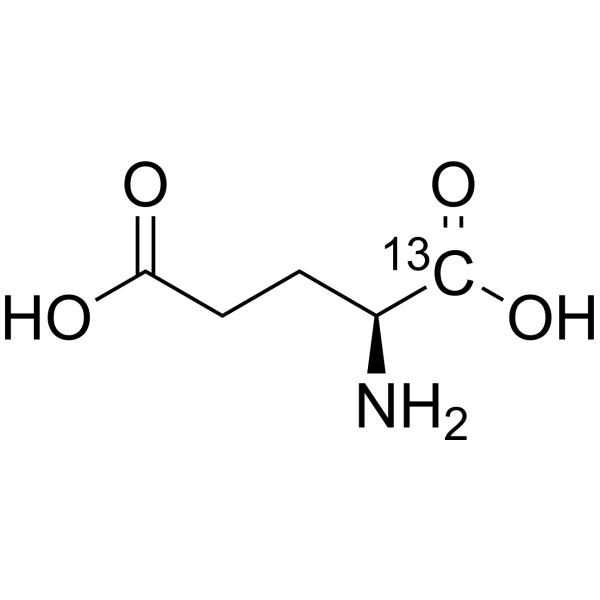
L-Glutamic acid-1-13C
 0 Images
L-Glutamic acid-1-13C is the 13C-labeled L-Glutamic acid. L-Glutamic acid acts as an excitatory transmitter and an agonist at all subtypes of glutamate receptors (metabotropic, kainate, NMDA, and AMPA). L-Glutamic acid shows a direct activating effect on the release of DA from dopaminergic terminals.
-
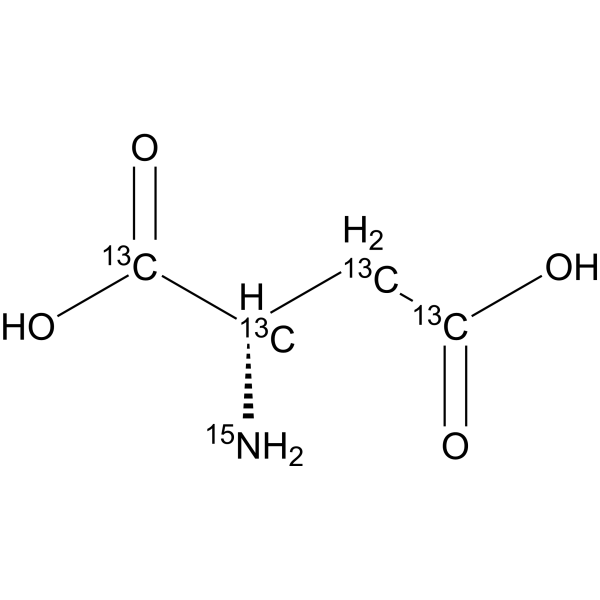
L-Aspartic acid-13C4,15N
 0 Images
L-Aspartic acid-13C4,15N is the 15N, 13C-labeled L-Aspartic acid (HY-N0666). L-Aspartic acid is a NMDA receptor agonist and acidic amino acid. L-Aspartic acid has no independent analgesic activity. L-Aspartic acid can antagonize the analgesic effects of D-Aspartic acid and Morphine. L-Aspartic acid regulates polymorph transformation, crystal growth/aggregation and nucleation processes of calcium carbonate, and can serve as a biomineralization template. L-Aspartic acid promotes burst firing of central neurons. L-Aspartic acid can be used in studies related to cerebral ischemia and epilepsy.
-
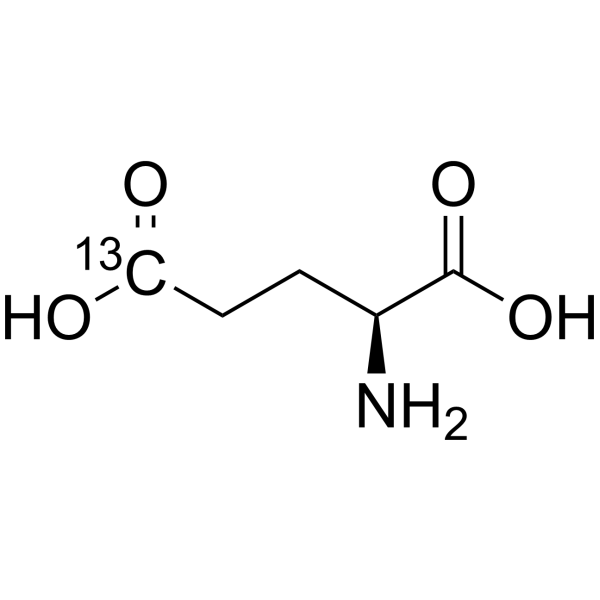
L-Glutamic acid-5-13C
 0 Images
L-Glutamic acid-5-13C is the 13C-labeled L-Glutamic acid. L-Glutamic acid acts as an excitatory transmitter and an agonist at all subtypes of glutamate receptors (metabotropic, kainate, NMDA, and AMPA). L-Glutamic acid shows a direct activating effect on the release of DA from dopaminergic terminals.
-
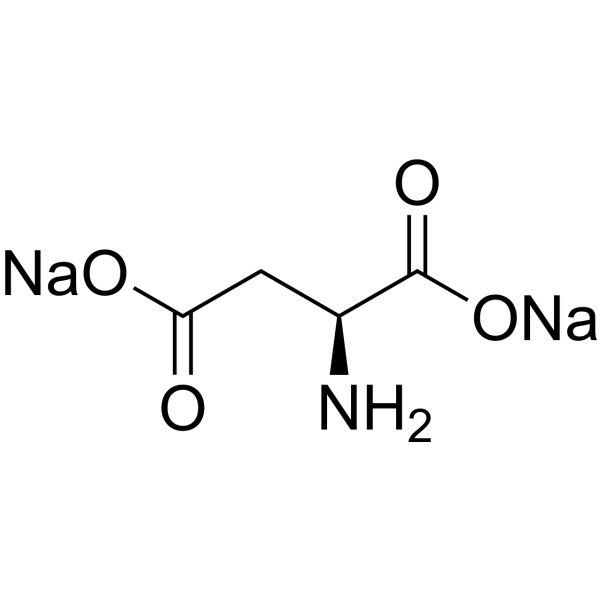
L-Aspartic aicd disodium
 0 Images
L-Aspartic acid disodium (disodium L-aspartate) is a NMDA receptor agonist and acidic amino acid. L-Aspartic acid disodium has no independent analgesic activity. L-Aspartic acid disodium can antagonize the analgesic effects of D-Aspartic acid and Morphine. L-Aspartic acid disodium regulates polymorph transformation, crystal growth/aggregation and nucleation processes of calcium carbonate, and can serve as a biomineralization template. L-Aspartic acid disodium promotes burst firing of central neurons. L-Aspartic acid disodium can be used in studies related to cerebral ischemia and epilepsy.
-
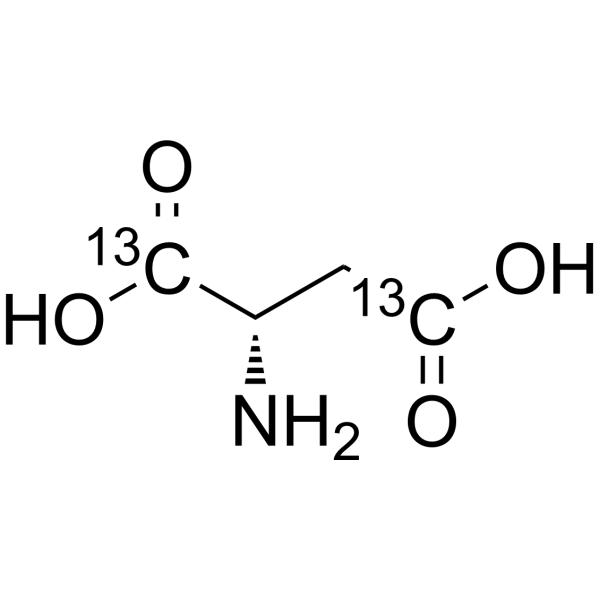
L-Aspartic acid-1,4-13C2
 0 Images
L-Aspartic acid-1,4-13C2 is the 13C-labeled L-Aspartic acid (HY-N0666). L-Aspartic acid is a NMDA receptor agonist and acidic amino acid. L-Aspartic acid has no independent analgesic activity. L-Aspartic acid can antagonize the analgesic effects of D-Aspartic acid and Morphine. L-Aspartic acid regulates polymorph transformation, crystal growth/aggregation and nucleation processes of calcium carbonate, and can serve as a biomineralization template. L-Aspartic acid promotes burst firing of central neurons. L-Aspartic acid can be used in studies related to cerebral ischemia and epilepsy.
-
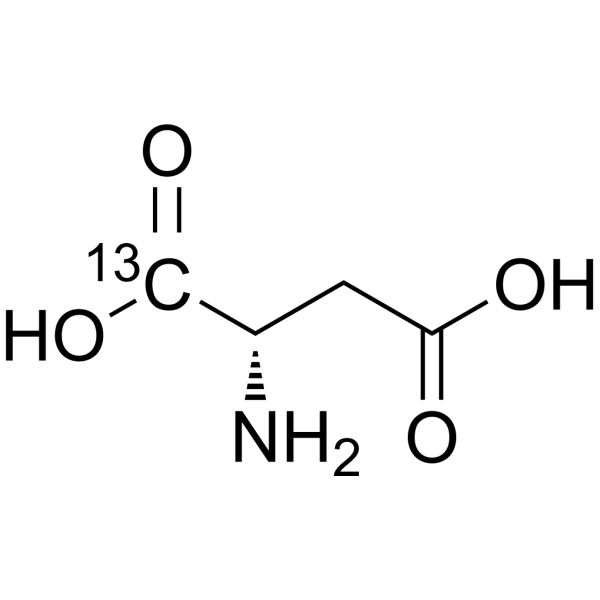
L-Aspartic acid-13C
 0 Images
L-Aspartic acid-13C is the 13C-labeled L-Aspartic acid (HY-N0666). L-Aspartic acid is a NMDA receptor agonist and acidic amino acid. L-Aspartic acid has no independent analgesic activity. L-Aspartic acid can antagonize the analgesic effects of D-Aspartic acid and Morphine. L-Aspartic acid regulates polymorph transformation, crystal growth/aggregation and nucleation processes of calcium carbonate, and can serve as a biomineralization template. L-Aspartic acid promotes burst firing of central neurons. L-Aspartic acid can be used in studies related to cerebral ischemia and epilepsy.
-
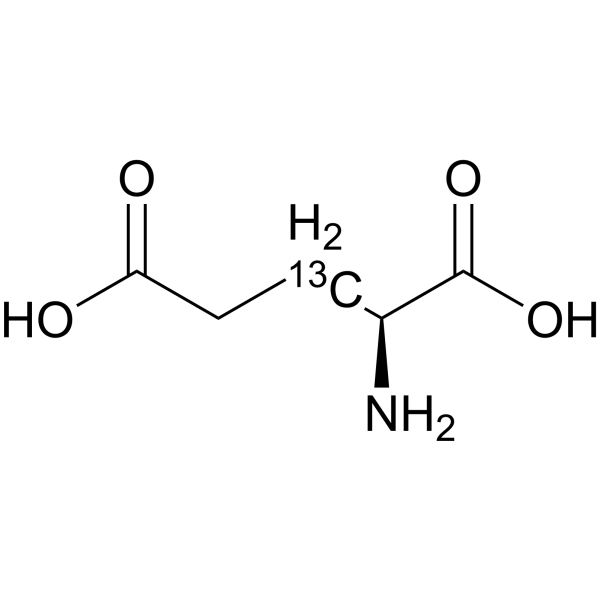
L-Glutamic acid-13C
 0 Images
L-Glutamic acid-13C is the 13C-labeled L-Glutamic acid. L-Glutamic acid acts as an excitatory transmitter and an agonist at all subtypes of glutamate receptors (metabotropic, kainate, NMDA, and AMPA). L-Glutamic acid shows a direct activating effect on the release of DA from dopaminergic terminals.
-
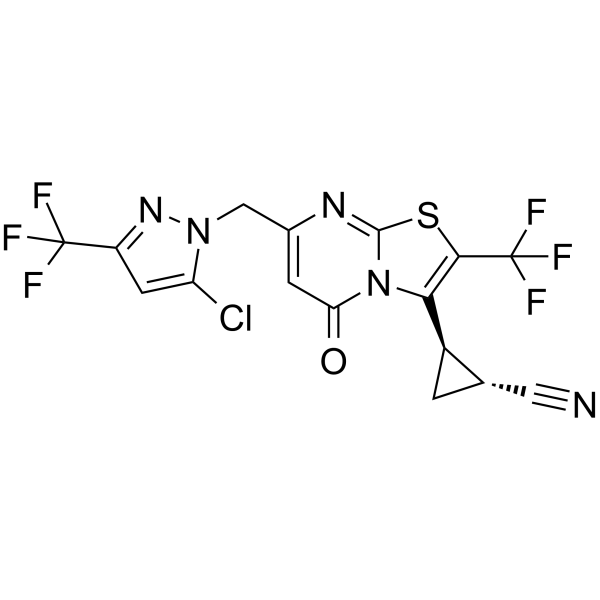
GNE-0723
 0 Images
GNE-0723 is a brain permeable positive allosteric modulator of NMDAR, with an EC50 of 21 nM for GluN2A, 7.4 and 6.2 μM for GluN2C and GluN2D, respectively.
-
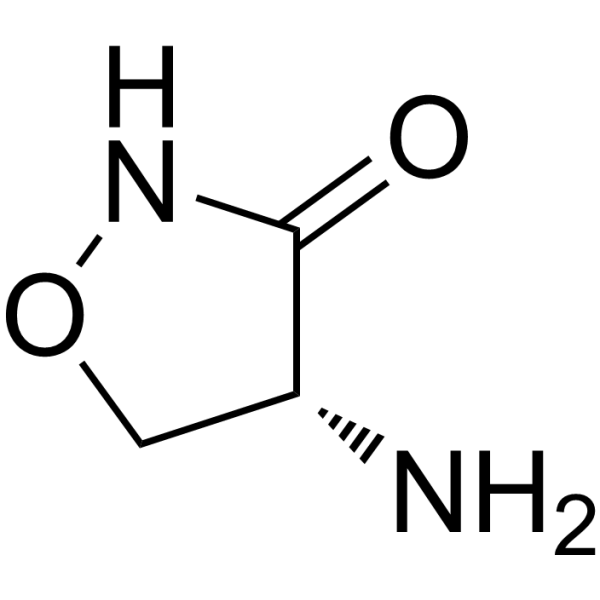
D-Cycloserine (Standard)
 0 Images
D-Cycloserine (Standard) is the analytical standard of D-Cycloserine. This product is intended for research and analytical applications. D-Cycloserine is an antibiotic which targets sequential bacterial cell wall peptidoglycan biosynthesis enzymes. D-Cycloserine is a partial NMDA agonist that can improve cognitive functions. D-Cycloserine can be used for multidrug-resistant tuberculosis research.
-
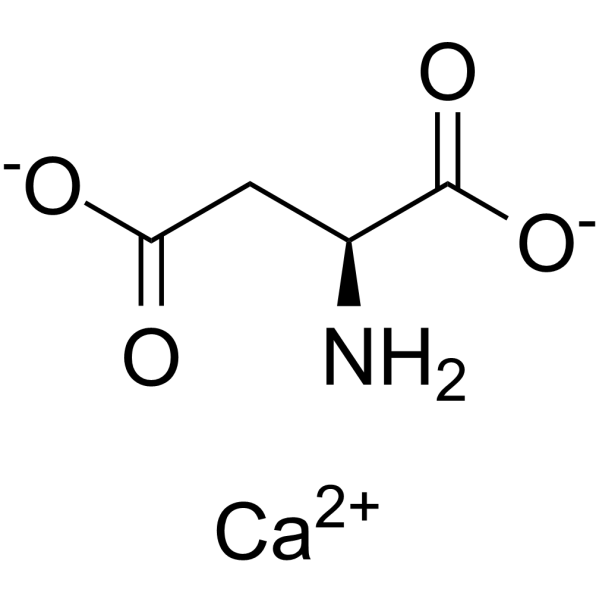
Aspartic acid calcium
 0 ImagesSynonyms: Calcium L-aspartate
Aspartic acid calcium (calcium L-aspartate) is a NMDA receptor agonist and acidic amino acid. Aspartic acid calcium has no independent analgesic activity. Aspartic acid calcium can antagonize the analgesic effects of D-Aspartic acid and Morphine. Aspartic acid calcium regulates polymorph transformation, crystal growth/aggregation and nucleation processes of calcium carbonate, and can serve as a biomineralization template. Aspartic acid calcium promotes burst firing of central neurons. Aspartic acid calcium can be used in studies related to cerebral ischemia and epilepsy.
-
L-Aspartic acid monocesium
 0 ImagesCat. No.: HY-N0666ECAS No.: 845744-47-0
L-Aspartic acid monocesium (monocesium L-aspartate) is a NMDA receptor agonist and acidic amino acid. L-Aspartic acid monocesium has no independent analgesic activity. L-Aspartic acid monocesium can antagonize the analgesic effects of D-Aspartic acid and Morphine. L-Aspartic acid monocesium regulates polymorph transformation, crystal growth/aggregation and nucleation processes of calcium carbonate, and can serve as a biomineralization template. L-Aspartic acid monocesium promotes burst firing of central neurons. L-Aspartic acid monocesium can be used in studies related to cerebral ischemia and epilepsy.
-
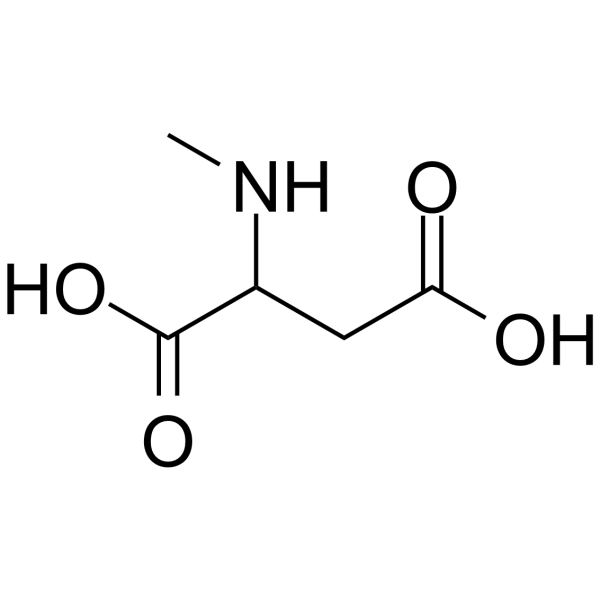
N-Methyl-DL-aspartic acid
 0 Images
N-Methyl-DL-aspartic acid acts as an agonist for N-methyl-D-aspartic acid receptors and D-isomer-specific aspartate receptors. N-Methyl-DL-aspartic acid activates hypothalamic neurons that regulate gonadotropin-releasing hormone secretion, and stimulates prepubertal male rhesus monkeys to produce sustained intermittent gonadotropin-releasing hormone secretion and pulsatile luteinizing hormone secretion. N-Methyl-DL-aspartic acid activates excitatory effects mediated by N-methyl-D-aspartic acid receptors. N-Methyl-DL-aspartic acid exhibits convulsant effects, inducing clonic convulsions with loss of righting reflex, generalized tonic-clonic seizures or persistent clonic seizures. N-Methyl-DL-aspartic acid causes precocious puberty. N-Methyl-DL-aspartic acid can be used in studies related to convulsions and seizures.
-
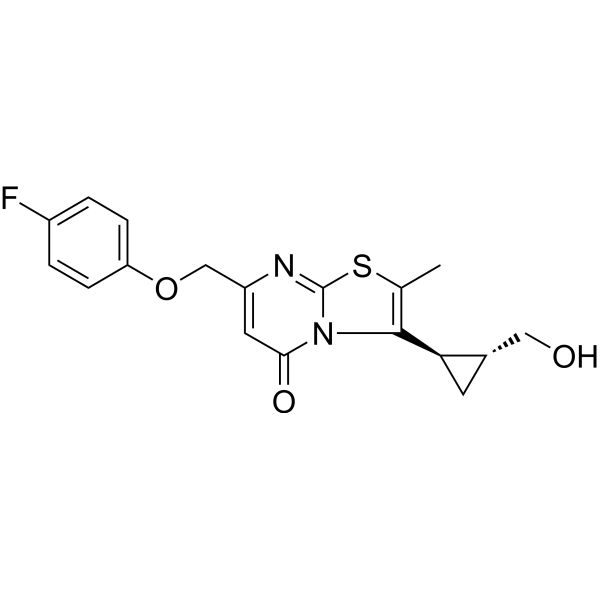
GNE 6901
 0 Images
GNE 6901 (compound 40) is a potent GluN2A-selective NMDAR positive allosteric modulator (PAM) with an EC50 of 382 nM.
-
(RS)-(Tetrazol-5-yl)glycine
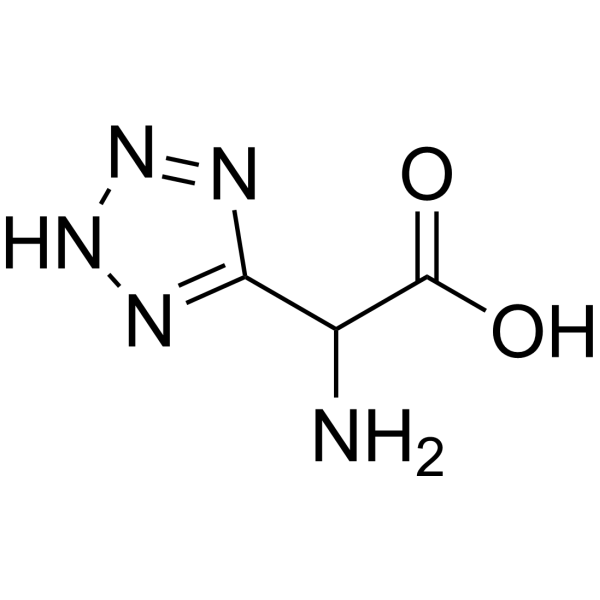 0 ImagesCat. No.: HY-100839CAS No.: 138199-51-6Synonyms: D,L-(tetrazol-5-yl)glycine; LY 285265
(RS)-(Tetrazol-5-yl)glycine (D,L-(tetrazol-5-yl)glycine) is a highly potent and selective N-methyl-D-aspartate (NMDA) receptor agonist. (RS)-(Tetrazol-5-yl)glycine has EC50s of 99 nM, 1.7 μM for GluN1/GluN2D and GluN1/GluN2A, respectively. (RS)-(Tetrazol-5-yl)glycine induces seizure responses and Fos in mice.
-
L-Aspartic acid-13C4,15N,d3
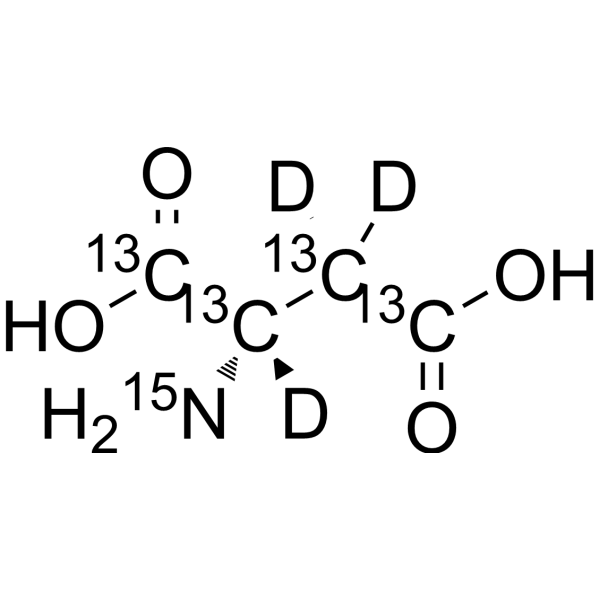 0 ImagesCat. No.: HY-N0666S5CAS No.: 1217475-13-2
L-Aspartic acid-13C4,15N,d3 is the 15N, deuterated, 13C-labeled L-Aspartic acid (HY-N0666). L-Aspartic acid is a NMDA receptor agonist and acidic amino acid. L-Aspartic acid has no independent analgesic activity. L-Aspartic acid can antagonize the analgesic effects of D-Aspartic acid and Morphine. L-Aspartic acid regulates polymorph transformation, crystal growth/aggregation and nucleation processes of calcium carbonate, and can serve as a biomineralization template. L-Aspartic acid promotes burst firing of central neurons. L-Aspartic acid can be used in studies related to cerebral ischemia and epilepsy.
-
N-Phthaloylglutamic acid
 0 ImagesCat. No.: HY-W736861CAS No.: 3227-01-8
N-Phthaloylglutamic acid is a partial agonist NMDA receptor with a Ki of 13 μM targeting Glu binding-site.
-
L-Aspartic acid-15N,d3
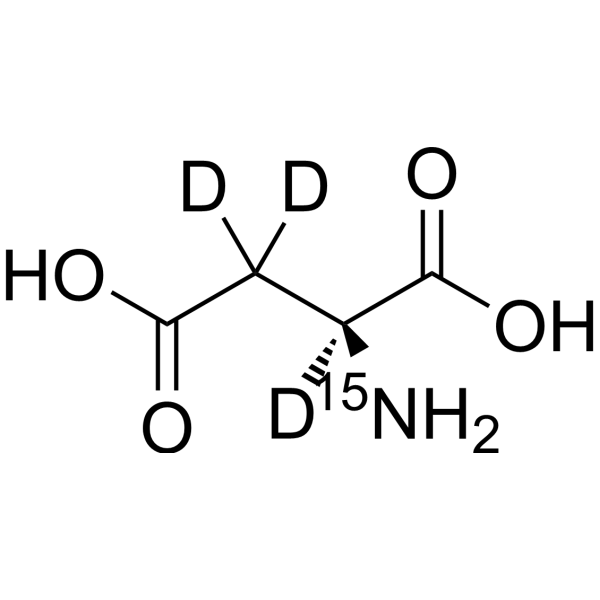 0 ImagesCat. No.: HY-N0666S9CAS No.: 1308264-52-9
L-Aspartic acid-15N,d3 is the 15N, deuterated-labeled L-Aspartic acid (HY-N0666). L-Aspartic acid is a NMDA receptor agonist and acidic amino acid. L-Aspartic acid has no independent analgesic activity. L-Aspartic acid can antagonize the analgesic effects of D-Aspartic acid and Morphine. L-Aspartic acid regulates polymorph transformation, crystal growth/aggregation and nucleation processes of calcium carbonate, and can serve as a biomineralization template. L-Aspartic acid promotes burst firing of central neurons. L-Aspartic acid can be used in studies related to cerebral ischemia and epilepsy.
-
NMDA agonist 2
 0 ImagesCat. No.: HY-172121
NMDA agonist 2 (compound 8d) is a potent agonist of NMDA receptor, with the EC50 of 0.034 μM for GluN1/2C. NMDA agonist 2 plays an important role in neurological and psychiatric disorders.
-
L-Aspartic acid potassium (Standard)
 0 ImagesCat. No.: HY-N0666ARCAS No.: 1115-63-5
L-Aspartic acid potassium (Standard) is the analytical standard of L-Aspartic acid potassium (HY-N0666A). This product is intended for research and analytical applications. L-Aspartic acid potassium (potassium L-aspartate) is a NMDA receptor agonist and acidic amino acid. L-Aspartic acid potassium has no independent analgesic activity. L-Aspartic acid potassium can antagonize the analgesic effects of D-Aspartic acid and Morphine. L-Aspartic acid potassium regulates polymorph transformation, crystal growth/aggregation and nucleation processes of calcium carbonate, and can serve as a biomineralization template. L-Aspartic acid potassium promotes burst firing of central neurons. L-Aspartic acid potassium can be used in studies related to cerebral ischemia and epilepsy.
-
L-Aspartic acid-13C-1
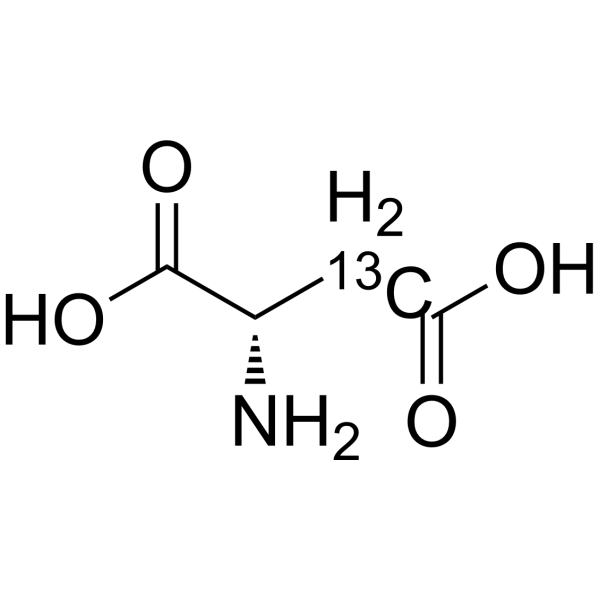 0 ImagesCat. No.: HY-N0666S10CAS No.: 68261-19-8Synonyms: [3-13C]Aspartic acid
L-Aspartic acid-13C-1 ([3-13C]Aspartic acid) is the 13C-labeled L-Aspartic acid (HY-N0666). L-Aspartic acid is a NMDA receptor agonist and acidic amino acid. L-Aspartic acid has no independent analgesic activity. L-Aspartic acid can antagonize the analgesic effects of D-Aspartic acid and Morphine. L-Aspartic acid regulates polymorph transformation, crystal growth/aggregation and nucleation processes of calcium carbonate, and can serve as a biomineralization template. L-Aspartic acid promotes burst firing of central neurons. L-Aspartic acid can be used in studies related to cerebral ischemia and epilepsy.



