



Acyline

Based on 1 Customer Validation
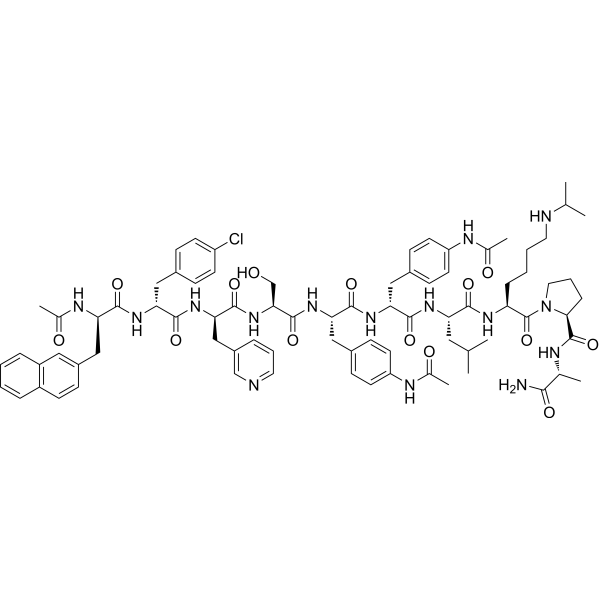
Acyline, a GnRH peptide analogue, is a GnRH antagonist that inhibits gonadotropin and testosterone (T) levels.
For research use only. We do not sell to patients.
- Purity : 99.52%
- CAS No.: 170157-13-8
- Formula: C80H102ClN15O14
- Molecular Weight:1533.21
-
Storage:
Sealed storage, away from moisture.
Powder -80°C, 2 years , -20°C, 1 year* In solvent : -80°C, 6 months; -20°C, 1 month (sealed storage, away from moisture)

To place orders, for customer services and technical support, please contact: MedChemExpress USA
Tel: 609-228-6898 E-mail: [email protected] [email protected]


-
 Biological Activity
-
Chemical Information
-
Solvent & Solubility
- Purity & Documentation
- References
-
 Help & FAQs


-
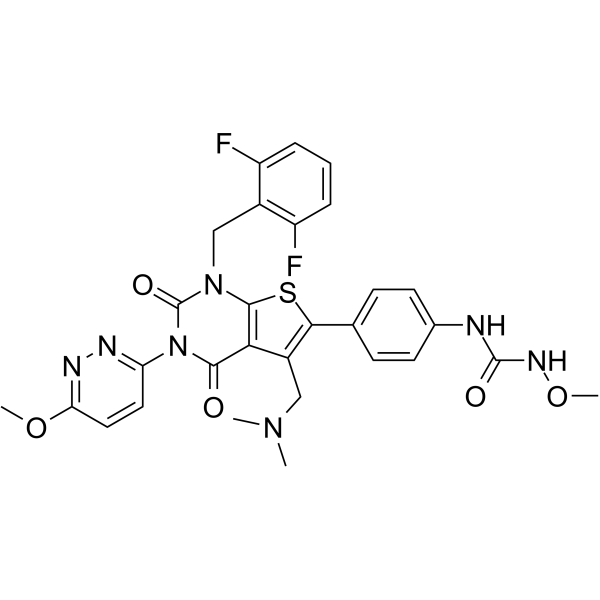
HY-16474
RelugolixGnRH Antagonist -
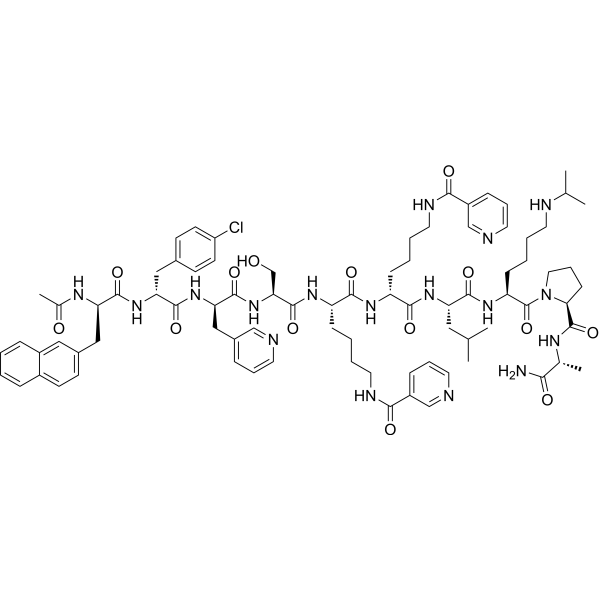
HY-P0013
AntideLHRH Antagonist -
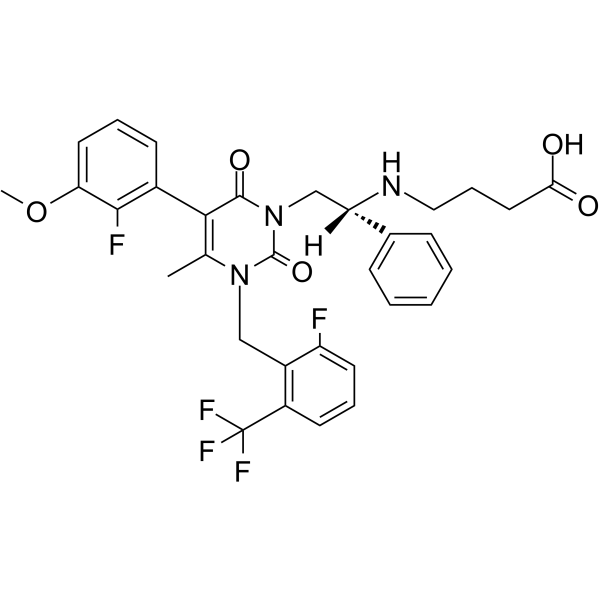
HY-14789
(R)-ElagolixGnRH Receptor Antagonist -
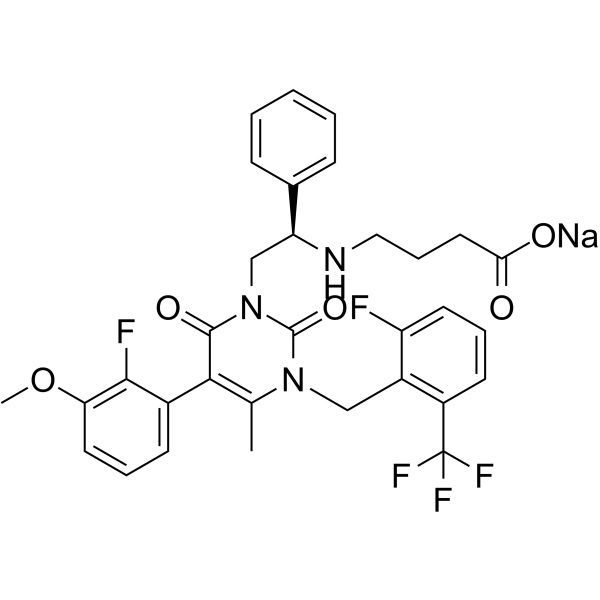
HY-14369
Elagolix sodiumGnRH Receptor Antagonist -
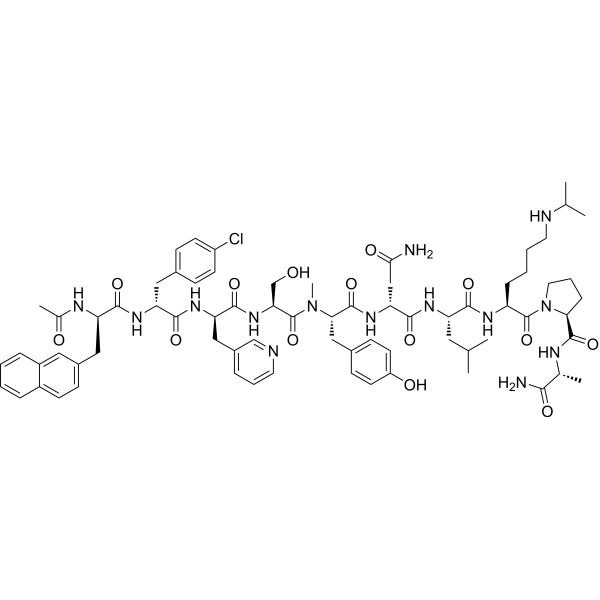
HY-13534
AbarelixGnRH Antagonist -

HY-16168
Degarelix acetateGnRH Anagonist -
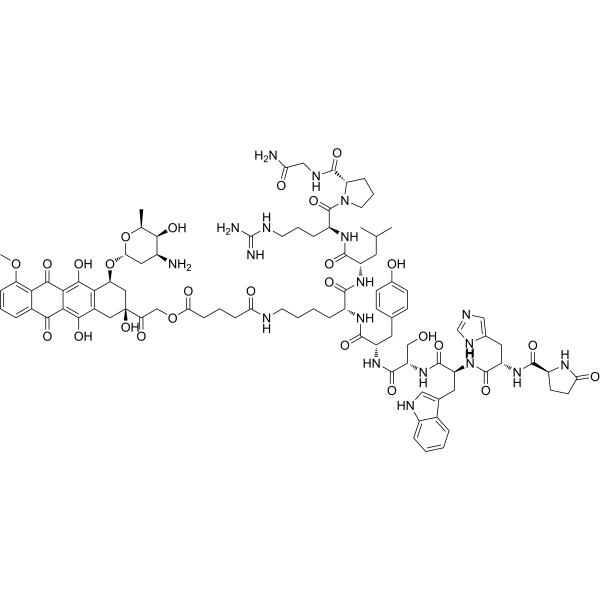
HY-16532
Zoptarelin doxorubicinHybrid Anticancer Agent -
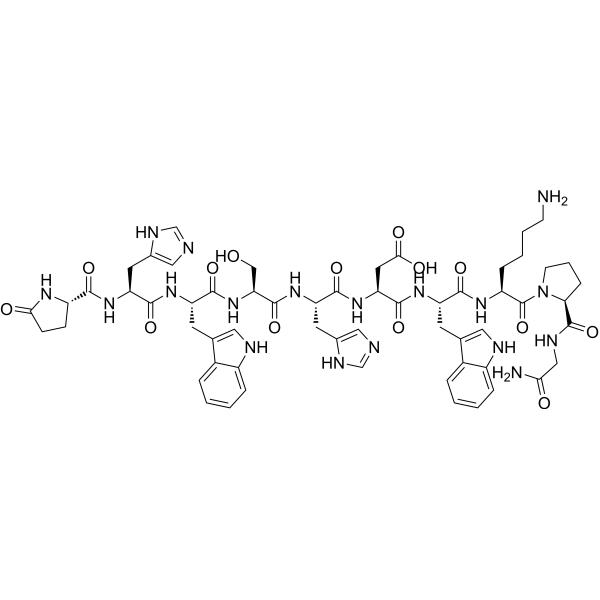
HY-P1808
LGnRH-III, lampreyGnRH Agonist -
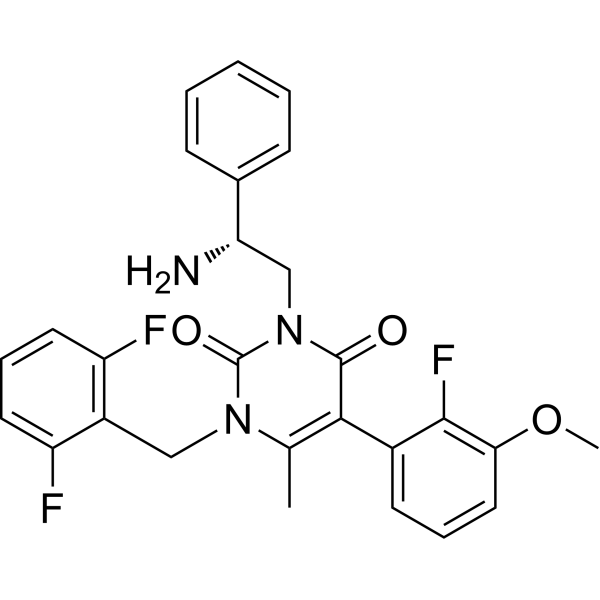
HY-13699
NBI-42902GnRH receptor Antagonist -
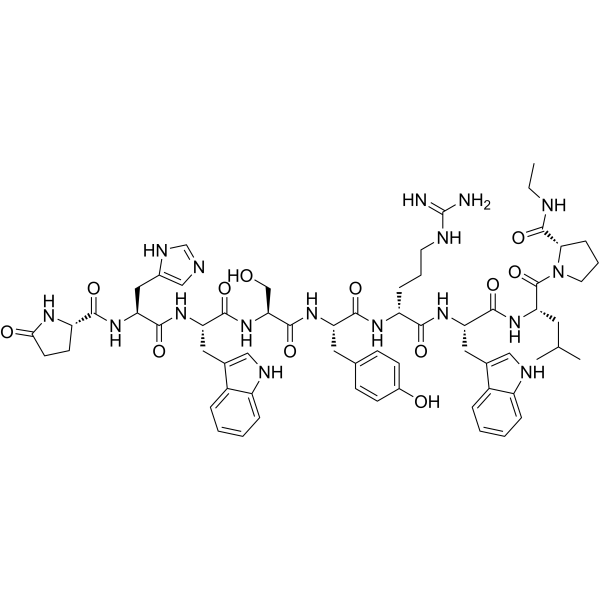
HY-P3582
sGnRH-AGnRH Analogue -
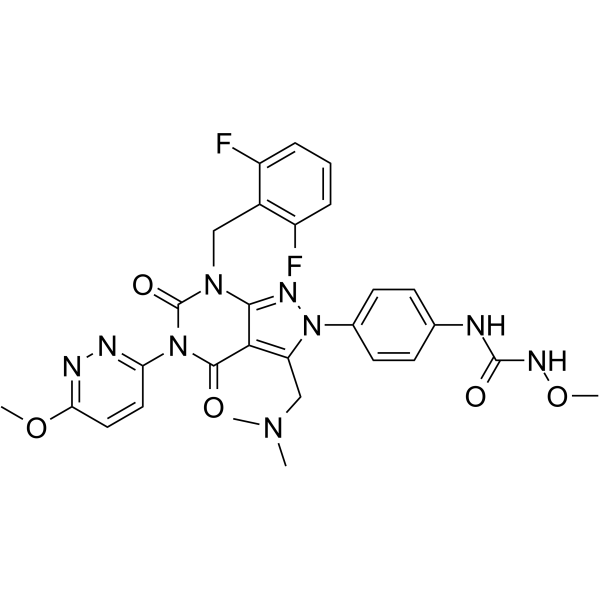
HY-134864
LumigolixGnRH Receptor Antagonist -

HY-16474R
Relugolix (Standard)GnRH Antagonist


Biological Activity
Description
Cellular Effect
|
Cell Line

|
Type | Value | Description | References |
|---|---|---|---|---|
| HEK293 | IC50 |
0.52 nM
Compound: 8
|
Antagonist activity at human GnRHR expressed in HEK293 cells assessed as inhibition of GnRH-induced luciferase response by reporter gene assay
Antagonist activity at human GnRHR expressed in HEK293 cells assessed as inhibition of GnRH-induced luciferase response by reporter gene assay
|
[PMID: 17402723] |
| HEK293 | IC50 |
0.69 nM
Compound: 2
|
Antagonist activity at human GnRH receptor expressed in HEK293 cells as inhibition of GnRH-induced LH secretion by reporter gene assay
Antagonist activity at human GnRH receptor expressed in HEK293 cells as inhibition of GnRH-induced LH secretion by reporter gene assay
|
[PMID: 16759096] |
| HEK293 | IC50 |
1.5 nM
Compound: 8
|
Antagonist activity at rat GnRHR expressed in HEK293 cells assessed as inhibition of GnRH-induced luciferase response by reporter gene assay
Antagonist activity at rat GnRHR expressed in HEK293 cells assessed as inhibition of GnRH-induced luciferase response by reporter gene assay
|
[PMID: 17402723] |
| HEK293 | IC50 |
6.8 nM
Compound: 6 (Acyline)
|
Antagonism of human GnHR receptor, determined in a reporter gene assay in HEK293 cells
Antagonism of human GnHR receptor, determined in a reporter gene assay in HEK293 cells
|
[PMID: 11462984] |
| Mast cell | EC50 |
461.4 μg/mL
Compound: 2
|
Histamine release in mast cells by ELISA
Histamine release in mast cells by ELISA
|
[PMID: 16759096] |
In Vivo
Acyline (50 μg, s.c., once) can reduce FSH concentrations from pre-acyline 1.51 ng/mL to post-acyline 1.27 ng/mL in male Kiss1−/− mice and from pre-acyline 2.87 ng/mL to post-acyline 1.95 ng/mL in male Gpr54−/− mice[1].
MedChemExpress (MCE) has not independently confirmed the accuracy of these methods. They are for reference only.
-
Animal Model:Female Kiss1−/−and Gpr54−/− mice[1]
-
Dosage:50 μg (1 mg/mL in PBS)
-
Administration:Subcutaneous injection; twice daily; 5 days
-
Result:12 Kiss1−/− mice left oestrus within 4 days of 13 mice received acyline while only 2 of 17 mice received vehicle left oestrus. Also, 7 of 8 Gpr54−/− mice received acyline left oestrus compared to 1 of 7 received vehicle.
Reduced uterine weights of Kiss1−/−and Gpr54−/− mice in treated group compared to the vehicle group, and reduced serum LH concentrations in Kiss1−/− mice.
Clinical Trial
| NCT Number | Sponsor | Condition | Start Date |
Phase
|
|---|---|---|---|---|
| NCT01329991 | Plexxikon| | 2011-05 | PHASE1 |


Chemical Information
-
CAS No. 170157-13-8
-
Appearance Solid
-
Molecular Weight 1533.21
-
Formula C80H102ClN15O14
-
Color White to off-white
-
Shipping
Room temperature in continental US; may vary elsewhere.
-
Storage
Sealed storage, away from moisture
Powder -80°C 2 years -20°C 1 year * In solvent : -80°C, 6 months; -20°C, 1 month (sealed storage, away from moisture)


Solvent & Solubility
In Vitro:
H2O : 3.33 mg/mL (2.17 mM; Need ultrasonic)
Please refer to the solubility information to select the appropriate solvent. Once prepared, please aliquot and store the solution to prevent product inactivation from repeated freeze-thaw cycles.
Storage method and period of stock solution: -80°C, 6 months; -20°C, 1 month (sealed storage, away from moisture). When stored at -80°C, please use it within 6 months. When stored at -20°C, please use it within 1 month.
* Note: If you choose water as the stock solution, please dilute it to the working solution, then filter and sterilize it with a 0.22 μm filter before use.
Please refer to the solubility information to select the appropriate solvent. Once prepared, please aliquot and store the solution to prevent product inactivation from repeated freeze-thaw cycles.
Storage method and period of stock solution: -80°C, 6 months; -20°C, 1 month (sealed storage, away from moisture). When stored at -80°C, please use it within 6 months. When stored at -20°C, please use it within 1 month.
* Note: If you choose water as the stock solution, please dilute it to the working solution, then filter and sterilize it with a 0.22 μm filter before use.
Concentration (start) × Volume (start) = Concentration (final) × Volume (final)


Purity & Documentation
-
Data Sheet (274 KB)
-
SDS (252 KB)
- English - EN (252 KB)
- Français - FR (252 KB)
- Deutsch - DE (252 KB)
- Norwegian - NO (252 KB)
- Español - ES (252 KB)
- Swedish - SV (252 KB)
- Italian - IT (252 KB)
- Korean - KR (252 KB)
- Portuguese - PT (252 KB)
-
Handling Instructions (2659 KB)
References


Complete Stock Solution Preparation Table
Please refer to the solubility information to select the appropriate solvent. Once prepared, please aliquot and store the solution to prevent product inactivation from repeated freeze-thaw cycles.
Storage method and period of stock solution: -80°C, 6 months; -20°C, 1 month (sealed storage, away from moisture). When stored at -80°C, please use it within 6 months. When stored at -20°C, please use it within 1 month.
| Optional Solvent | Concentration Solvent Mass | 1 mg | 5 mg | 10 mg | 25 mg |
|---|---|---|---|---|---|
| H2O | 1 mM | 0.6522 mL | 3.2611 mL | 6.5223 mL | 16.3057 mL |
* Note: If you choose water as the stock solution, please dilute it to the working solution, then filter and sterilize it with a 0.22 μm filter before use.


Acyline Related Classifications
HY-16027 Related Classifications
 Powered by Bioz