



AM-5308

Based on 1 Customer Validation
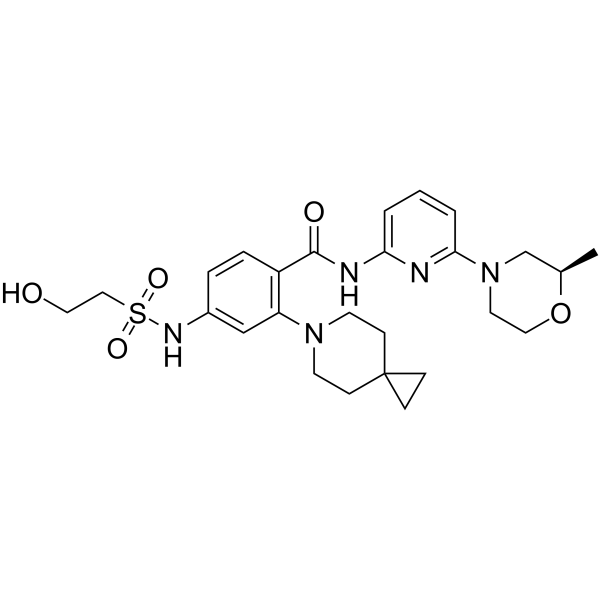
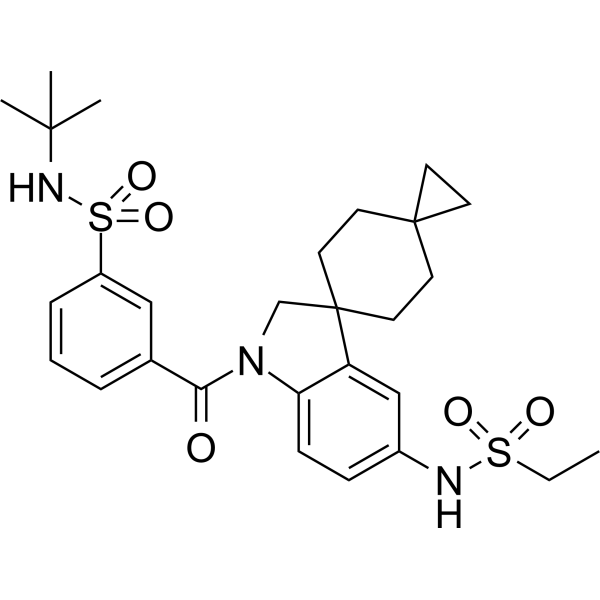
AM-5308 is the inhibitor for KIF18A (IC50=47 nM) that inhibits KIF18A-mediated microtubule ATPase activity. AM-5308 activates mitotic checkpoints, regulates cell division processes, including chromosome segregation and spindle assembly. AM-5308 exhibits antitumor activity.
For research use only. We do not sell to patients.
- Purity : 99.15%
- CAS No.: 2410796-89-1
- Formula: C26H35N5O5S
- Molecular Weight:529.65
-
Storage:Powder -20°C, 3 years , 4°C, 2 years ; In solvent -80°C, 6 months , -20°C, 1 month

To place orders, for customer services and technical support, please contact: MedChemExpress USA
Tel: 609-228-6898 E-mail: [email protected] [email protected]


-
 Biological Activity
-
Chemical Information
-
Solvent & Solubility
- Protocols
- Purity & Documentation
- References
-
 Help & FAQs


-
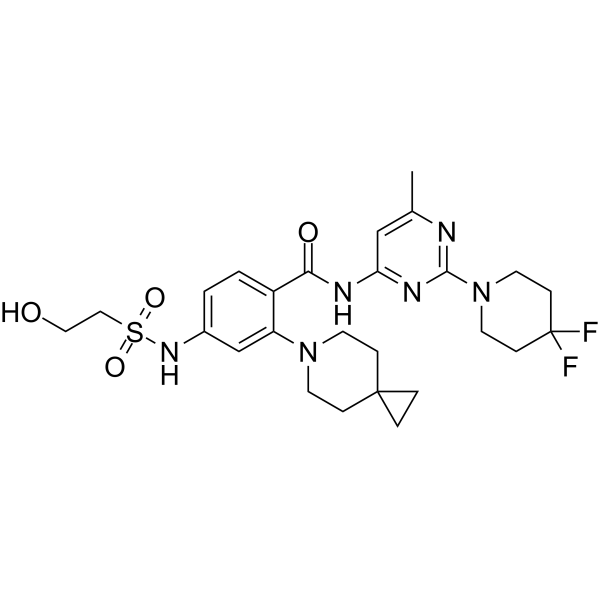
HY-132840
SovilnesibKIF18A Inhibitor -
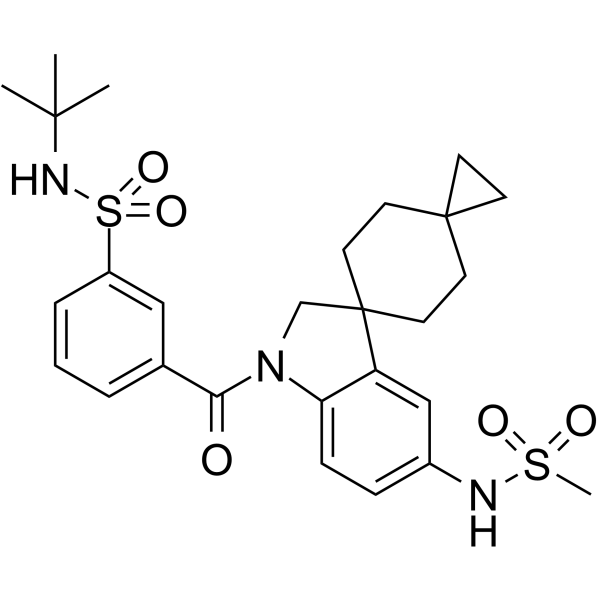
HY-153066
VLS-1272KIF18A Inhibitor -
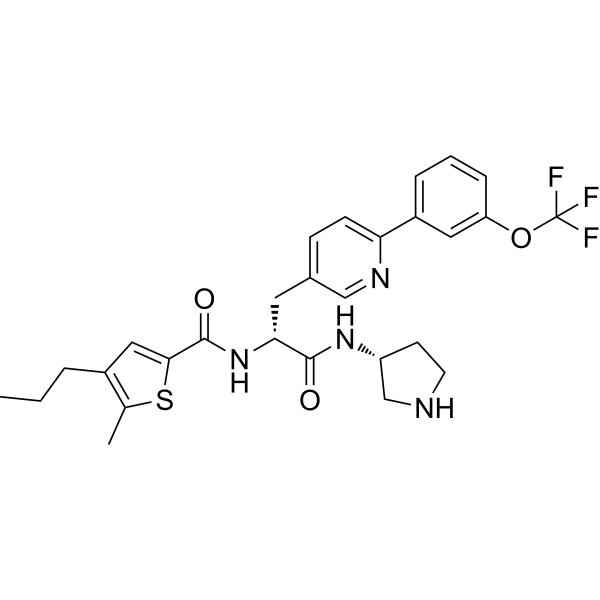
HY-12241
AZ82KIFC1 Inhibitor -
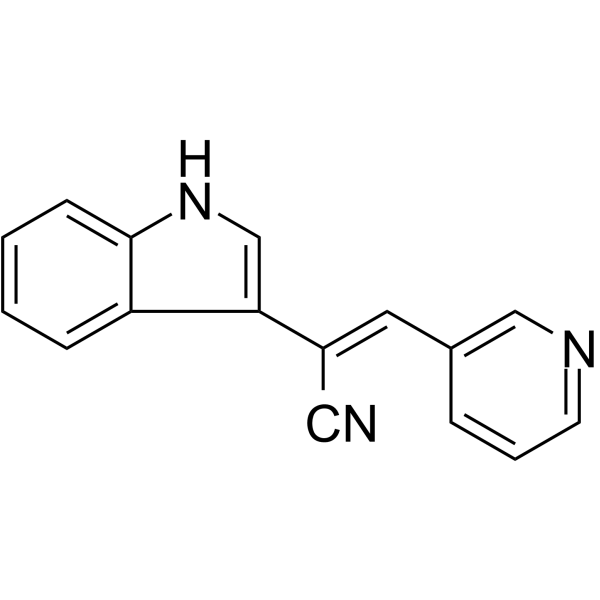
HY-101298
PaprotrainMKLP-2 Inhibitor -
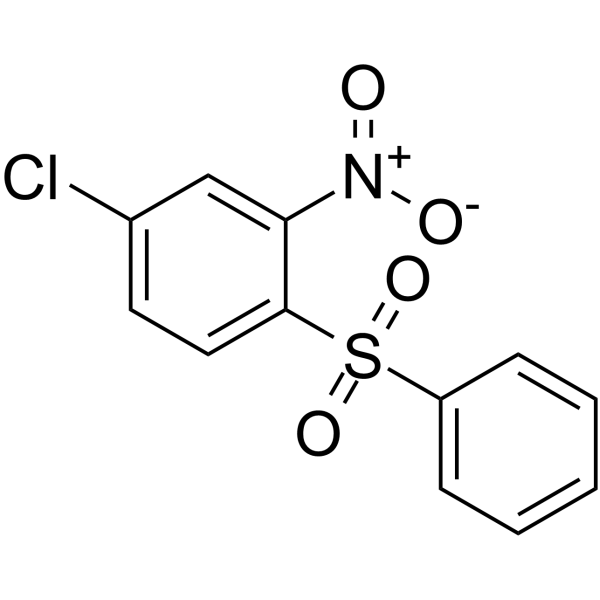
HY-101770
BTB-1Kif18A Inhibitor -
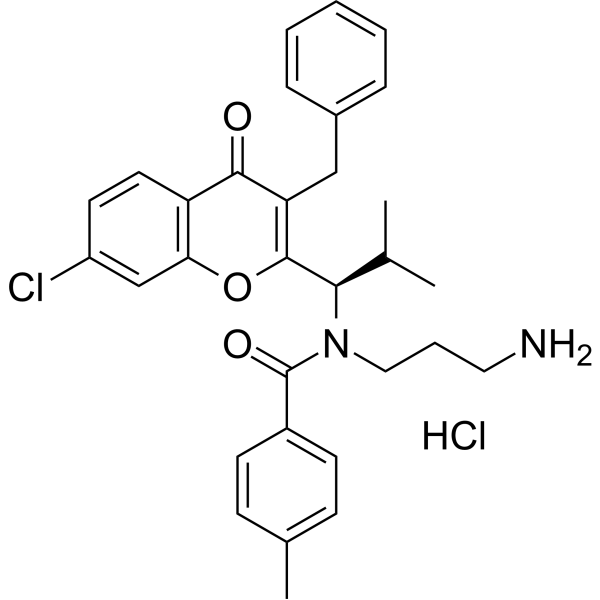
HY-12069
SB-743921 hydrochlorideEg5 Inhibitor -
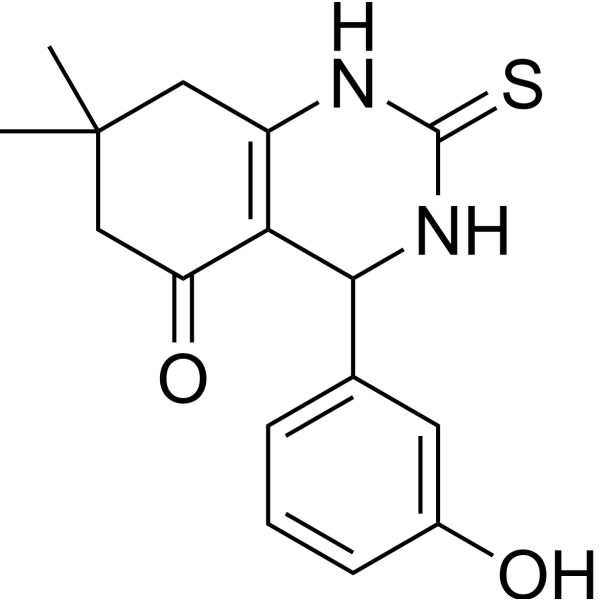
HY-19944
DimethylenastronKinesin Inhibitor -
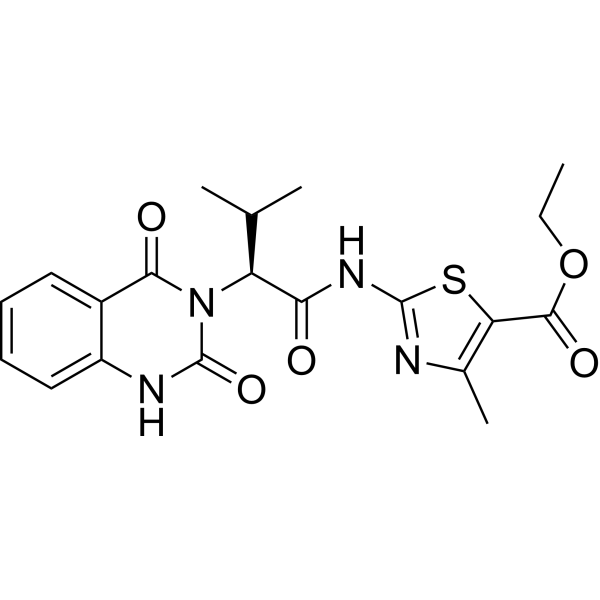
HY-15948
Kif15-IN-1Kinesin Inhibitor -
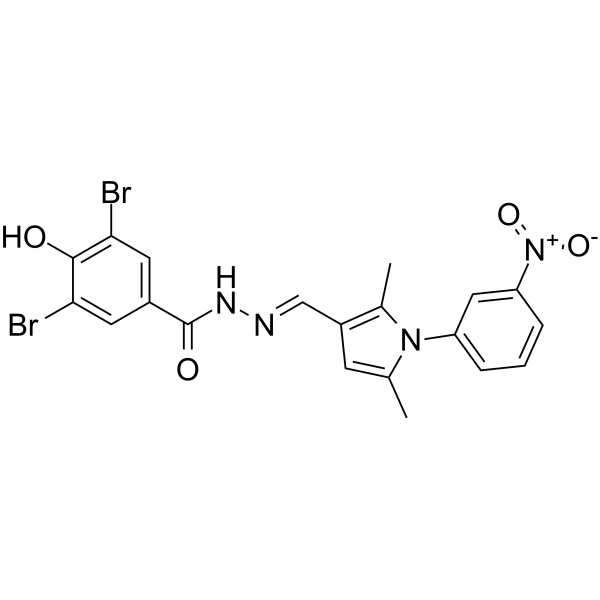
HY-112777
KinesoreKLC2-SKIP Interaction Inhibitor -
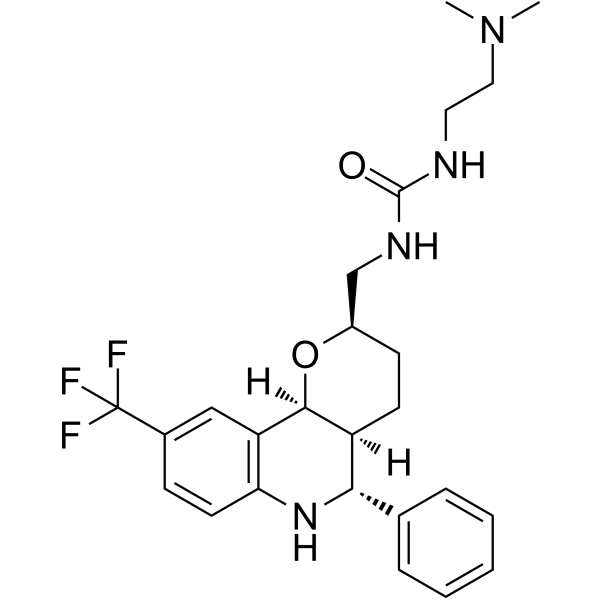
HY-15000
EMD534085Kinesin Inhibitor -
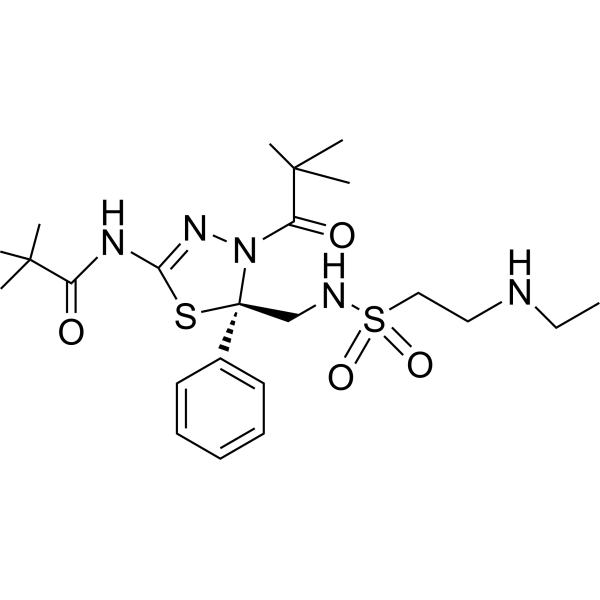
HY-14846
LitronesibKinesin Inhibitor -
HY-153065
KIF18A-IN-6KIF18A Inhibitor
All Kinesin Isoforms
More

Biological Activity
Description
IC50 & Target
IC50: 0.047 µM (KIF18A motor); 0.224 µM (KIF19A motor); 17.73 µM (KIF18B motor)[2]
In Vitro
AM-5308 (0-10 μM, 24 h) exhibits cytotoxicity in human bone marrow cell, arrests the cell cycle of MDA-MB-157 and human bone marrow cell in mitosis phase (EC50 for MDA-MB-157 is 0.041 μM)[2].
MedChemExpress (MCE) has not independently confirmed the accuracy of these methods. They are for reference only. Further protocols information, click here.
-
Cell Line:human bone marrow cells
-
Concentration:1 μM
-
Incubation Time:24 h
-
Result:Arrested the cell cycle at mitosis phase.
In Vivo
MedChemExpress (MCE) has not independently confirmed the accuracy of these methods. They are for reference only.
-
Animal Model:mouse OVCAR-3 xenograft models[2]
-
Dosage:25 mg/kg
-
Administration:ip, once daily for 2 days
-
Result:Inhibited the tumor growth.


Chemical Information
-
CAS No. 2410796-89-1
-
Appearance Solid
-
Molecular Weight 529.65
-
Formula C26H35N5O5S
-
Color White to light yellow
-
SMILES
C[C@@H](OCC1)CN1C2=NC(NC(C3=C(C=C(C=C3)NS(CCO)(=O)=O)N4CCC5(CC4)CC5)=O)=CC=C2
-
Shipping
Room temperature in continental US; may vary elsewhere.
-
Storage
Powder -20°C 3 years 4°C 2 years In solvent -80°C 6 months -20°C 1 month


Solvent & Solubility
In Vitro:
DMSO : 50 mg/mL (94.40 mM; Need ultrasonic; Hygroscopic DMSO has a significant impact on the solubility of product, please use newly opened DMSO)
Please refer to the solubility information to select the appropriate solvent. Once prepared, please aliquot and store the solution to prevent product inactivation from repeated freeze-thaw cycles.
Storage method and period of stock solution: -80°C, 6 months; -20°C, 1 month. When stored at -80°C, please use it within 6 months. When stored at -20°C, please use it within 1 month.
Please refer to the solubility information to select the appropriate solvent. Once prepared, please aliquot and store the solution to prevent product inactivation from repeated freeze-thaw cycles.
Storage method and period of stock solution: -80°C, 6 months; -20°C, 1 month. When stored at -80°C, please use it within 6 months. When stored at -20°C, please use it within 1 month.
Concentration (start) × Volume (start) = Concentration (final) × Volume (final)
In Vivo:
Select the appropriate dissolution method based on your experimental animal and administration route.
- For the following dissolution methods, please ensure to first prepare a clear stock solution using an In Vitro approach and then sequentially add co-solvents:
- To ensure reliable experimental results, the clarified stock solution can be appropriately stored based on storage conditions. As for the working solution for In Vivo experiments, it is recommended to prepare freshly and use it on the same day.
- The percentages shown for the solvents indicate their volumetric ratio in the final prepared solution. If precipitation or phase separation occurs during preparation, heat and/or sonication can be used to aid dissolution.
Add each solvent one by one: 10% DMSO 90% (20% SBE-β-CD in Saline)
Solubility: 2 mg/mL (3.78 mM); Suspended solution; Need ultrasonic
This protocol yields a suspended solution of 2 mg/mL. Suspended solution can be used for oral and intraperitoneal injection.
Taking 1 mL working solution as an example, add 100 μL DMSO stock solution (20.0 mg/mL) to 900 μL 20% SBE-β-CD in Saline, and mix evenly.
Preparation of 20% SBE-β-CD in Saline (4°C, storage for one week): 2 g SBE-β-CD powder is dissolved in 10 mL Saline, completely dissolve until clear.
In Vivo Dissolution Calculator
Please enter the basic information of animal experiments:
-
-
-
-
Recommended: Prepare an additional quantity of animals to account for potential losses during experiments.
Please enter your animal formula composition:
-
%DMSO +
Recommended: Keep the proportion of DMSO in working solution below 2% if your animal is weak.
-
%+
-
+%Tween-80 + +
-
%Saline +
The co-solvents required include: DMSO, . All of co-solvents are available by MedChemExpress (MCE). , Tween 80. All of co-solvents are available by MedChemExpress (MCE).
Working solution concentration: 0.22 mg/mL
Method for preparing stock solution: mg drug dissolved in μL DMSO. Stock solution concentration: mg/mL.
1. Take μL DMSO stock solution;
2. Add μL .
μL , mix evenly;
3. Then add μL Tween 80, mix evenly;
4. Then add μL
Please ensure that the stock solution in the first step is dissolved to a clear state, and add co-solvents in sequence. You can use ultrasonic heating (ultrasonic cleaner, recommended frequency 20-40 kHz), vortexing, etc. to assist dissolution.

Protocols
-
Cell Cytotoxicity Assay
Cytotoxicity assays are usually based on the assessment of cell membrane damage, which can also be indirectly detected by measuring cell viability. Detection methods include MTT assay, CKK-8 assay, LDH assay and ATP assay, etc.
-
CFSE Dye Dilution Proliferation Assay
The CFSE (carboxyfluorescein diacetate succinimidyl ester) dye dilution proliferation assay is based on the covalent labeling of intracellular proteins by a cell-permeant fluorescent dye that becomes fluorescent upon intracellular ester cleavage and then is stably retained within cells. As labeled cells divide, the dye is partitioned equally between daughter cells, resulting in a stepwise halving of fluorescence intensity that can be quantified by flow cytometry to determine the number of cell divisions undergone by each cell population. This fluorescence dilution approach enables quantitative tracking of lymphocyte proliferation at the single-cell level over multiple rounds of division. CFSE-based proliferation analysis has been widely applied to measure antigen-driven lymphocyte expansion in vitro, where discrete fluorescence peaks correspond to successive cell divisions and allow reconstruction of proliferative history within heterogeneous populations.
-
Dye-dilution cell tracking and proliferation staining
Dye-dilution cell tracking assays quantify cell proliferation by covalently labeling intracellular proteins with a stable fluorescent dye that is equally partitioned between daughter cells during mitosis, resulting in stepwise halving of fluorescence intensity with each cell division as measured by flow cytometry histograms. Carboxyfluorescein diacetate succinimidyl ester (CFSE) is a prototypical dye that diffuses into cells, is enzymatically converted into a fluorescent compound, and then covalently binds intracellular amine groups, producing long-lived fluorescence suitable for tracking multiple rounds of division in vitro and in vivo. Successive generations of dividing cells form discrete peaks of decreasing fluorescence intensity, enabling estimation of proliferation history, precursor frequency, and division index within heterogeneous populations. Alternative dyes such as CellTrace Violet (CTV) and far-red membrane dyes (e. g. , PKH26) follow the same dilution principle but differ
-
Subcutaneous Cell-Line-Derived Xenograft
Subcutaneous cell-line-derived xenograft (CDX) models are established by implanting cultured human cancer cell lines into immunodeficient mice, where the injected cells form localized tumors that can be monitored in vivo as a measure of tumorigenic potential, growth kinetics, and treatment response. These models are widely used in oncology research because they allow reproducible tumor formation and enable comparative assessment of tumor growth between different cell lines or genetic manipulations in a controlled in vivo microenvironment. Subcutaneous implantation of cancer cells in immunodeficient mice is a standard approach for evaluating tumor growth behavior and therapeutic response across multiple cancer types, including prostate, esophageal, pancreatic, and colon cancer models.


Purity & Documentation
-
Data Sheet (272 KB)
-
SDS (251 KB)
- English - EN (251 KB)
- Français - FR (251 KB)
- Deutsch - DE (251 KB)
- Norwegian - NO (251 KB)
- Español - ES (251 KB)
- Swedish - SV (251 KB)
- Italian - IT (251 KB)
- Korean - KR (251 KB)
- Portuguese - PT (251 KB)
-
Handling Instructions (2659 KB)
References


Complete Stock Solution Preparation Table
Please refer to the solubility information to select the appropriate solvent. Once prepared, please aliquot and store the solution to prevent product inactivation from repeated freeze-thaw cycles.
Storage method and period of stock solution: -80°C, 6 months; -20°C, 1 month. When stored at -80°C, please use it within 6 months. When stored at -20°C, please use it within 1 month.
| Optional Solvent | Concentration Solvent Mass | 1 mg | 5 mg | 10 mg | 25 mg |
|---|---|---|---|---|---|
| DMSO | 1 mM | 1.8880 mL | 9.4402 mL | 18.8804 mL | 47.2010 mL |
| 5 mM | 0.3776 mL | 1.8880 mL | 3.7761 mL | 9.4402 mL | |
| 10 mM | 0.1888 mL | 0.9440 mL | 1.8880 mL | 4.7201 mL | |
| 15 mM | 0.1259 mL | 0.6293 mL | 1.2587 mL | 3.1467 mL | |
| 20 mM | 0.0944 mL | 0.4720 mL | 0.9440 mL | 2.3600 mL | |
| 25 mM | 0.0755 mL | 0.3776 mL | 0.7552 mL | 1.8880 mL | |
| 30 mM | 0.0629 mL | 0.3147 mL | 0.6293 mL | 1.5734 mL | |
| 40 mM | 0.0472 mL | 0.2360 mL | 0.4720 mL | 1.1800 mL | |
| 50 mM | 0.0378 mL | 0.1888 mL | 0.3776 mL | 0.9440 mL | |
| 60 mM | 0.0315 mL | 0.1573 mL | 0.3147 mL | 0.7867 mL | |
| 80 mM | 0.0236 mL | 0.1180 mL | 0.2360 mL | 0.5900 mL |


AM-5308 Related Classifications
HY-144894 Related Classifications
 Powered by Bioz