



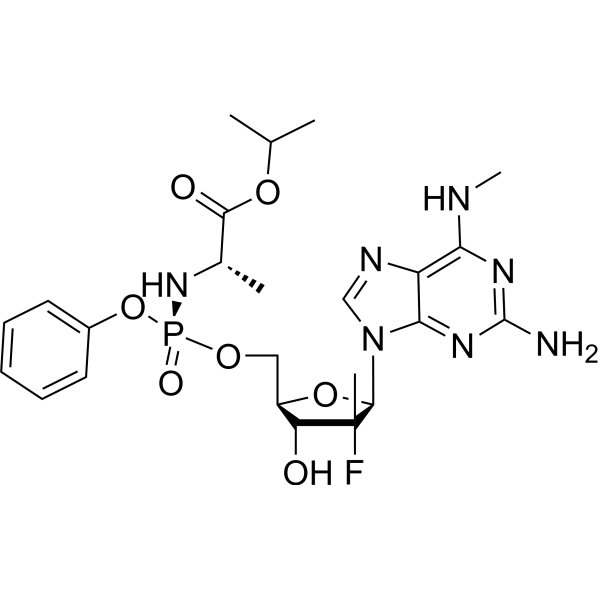
Bemnifosbuvir
Based on 4 publication(s) in Google Scholar
Bemnifosbuvir (AT-511) is a potent and orally active HCV viral replication inhibitor. Bemnifosbuvir is highly effective in the control of SARS-CoV-2 (COVID-19) infection in vitro (EC90=0.47 μM). Bemnifosbuvir has pangenotypic antiviral activity.
For research use only. We do not sell to patients.
- Purity : 99.00%
- CAS No.: 1998705-64-8
- Formula: C24H33FN7O7P
- Molecular Weight:581.53
-
Storage:
4°C, protect from light
* In solvent : -80°C, 6 months; -20°C, 1 month (protect from light)

To place orders, for customer services and technical support, please contact: MedChemExpress USA
Tel: 609-228-6898 E-mail: [email protected] [email protected]


-
 Biological Activity
-
Chemical Information
-
Solvent & Solubility
- Protocols
- Purity & Documentation
- References
-
 Help & FAQs


-
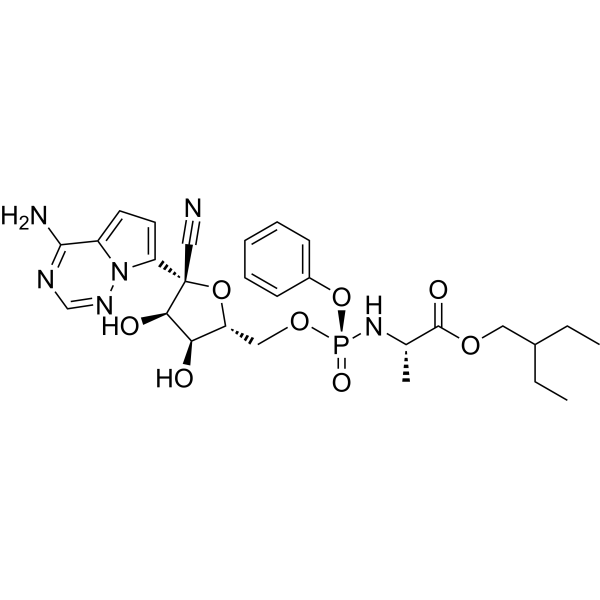
HY-104077
RemdesivirAntiviral Agent -
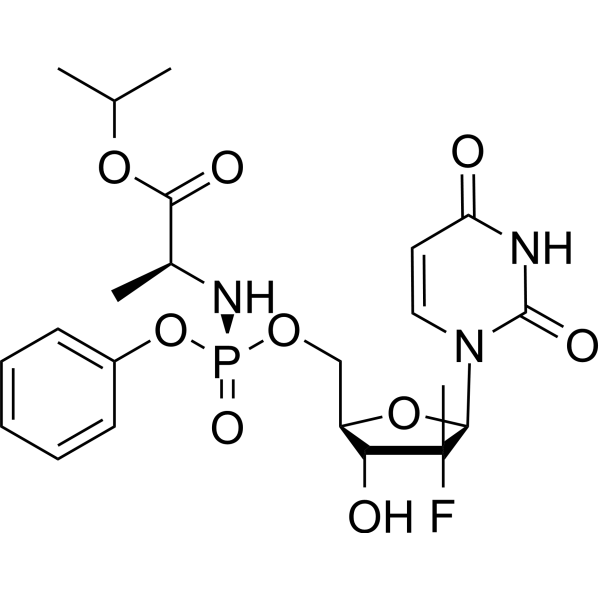
HY-15005
Sofosbuvir -
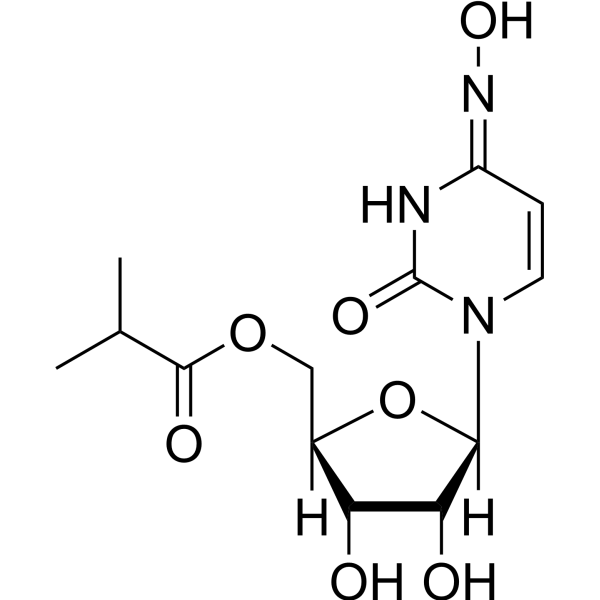
HY-135853
MolnupiravirCoronaviruses Inhibitor -
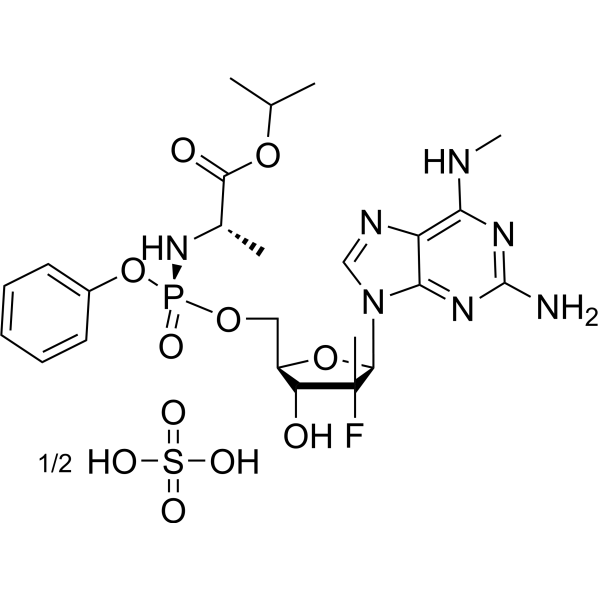
HY-137958
Bemnifosbuvir hemisulfateHCV/SARS-CoV-2 Inhibitor -
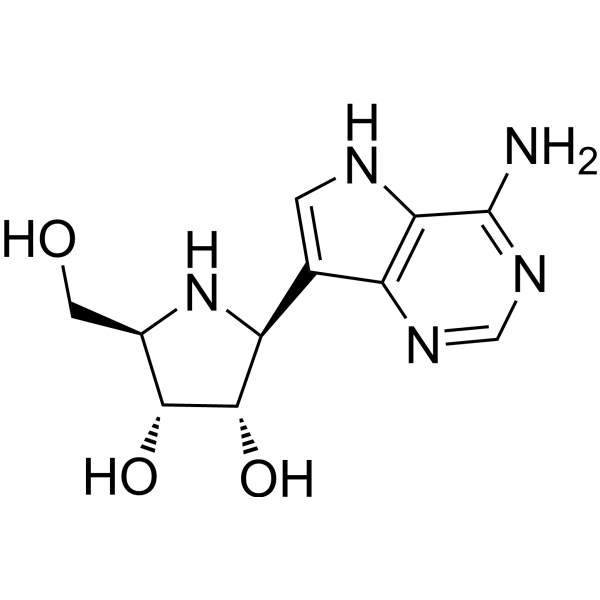
HY-18649A
GalidesivirRdRp Inhibitor -
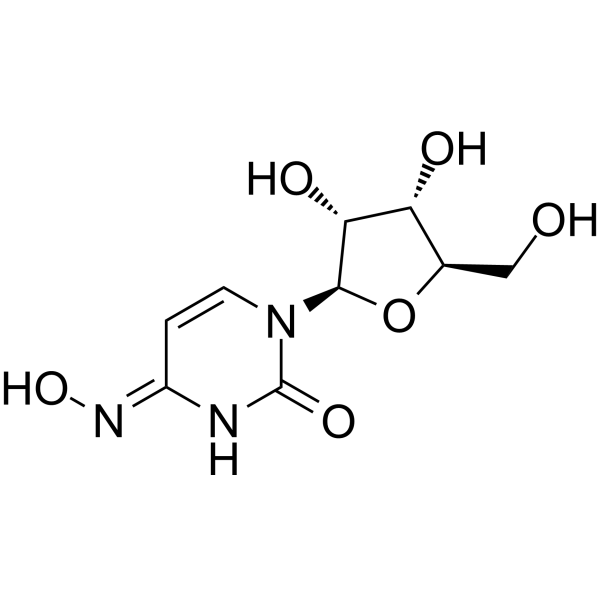
HY-125033
EIDD-1931Anti-Virus Agent -
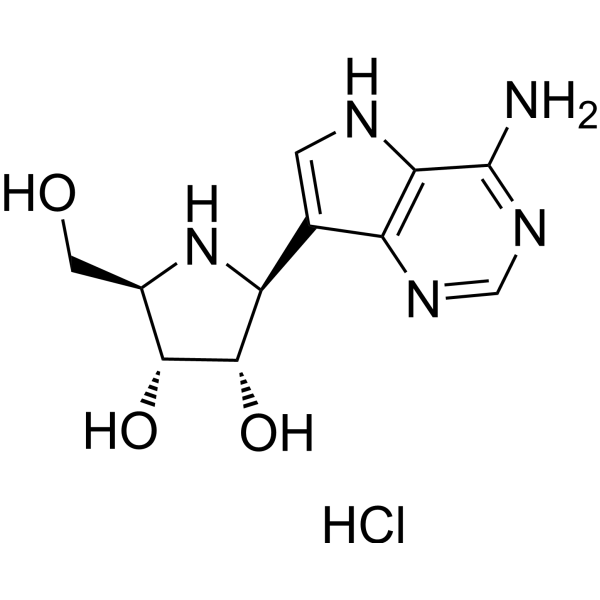
HY-18649
Galidesivir hydrochlorideRdRp Inhibitor -
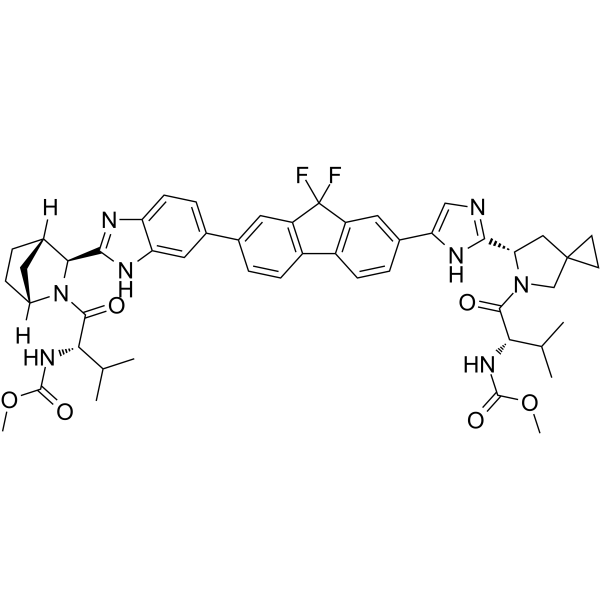
HY-15602
LedipasvirHCV NS5A Inhibitor -
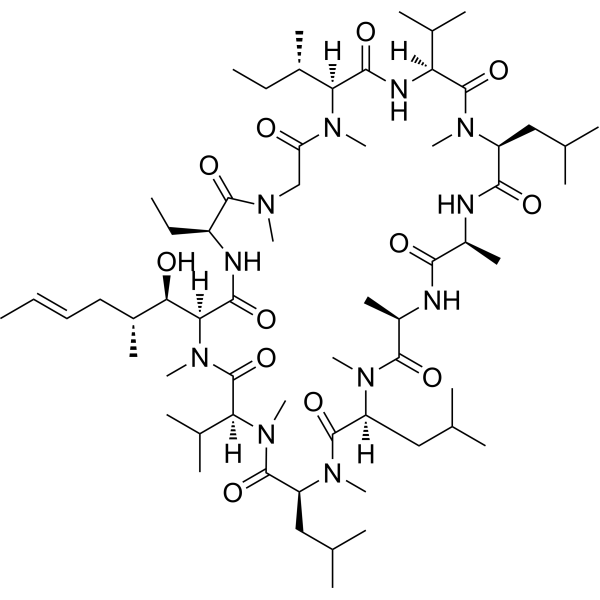
HY-P0025
NIM811Mitochondrial Permeability Transition Inhibitor -
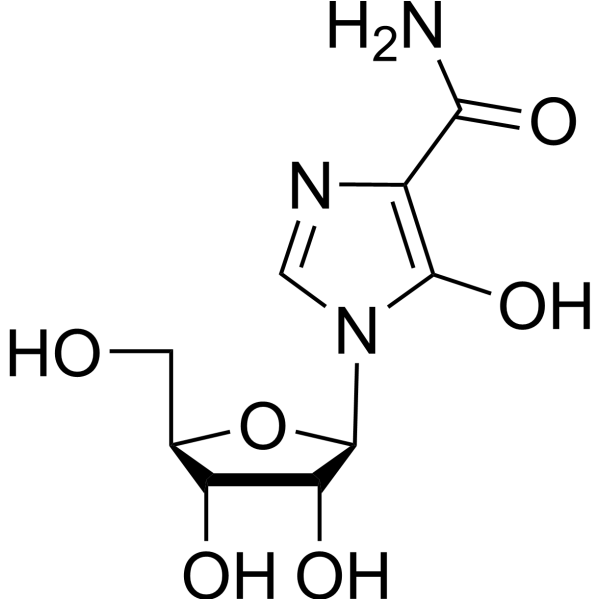
HY-17470
MizoribineIMPDH Inhibitor -

HY-15005R
Sofosbuvir (Standard) -
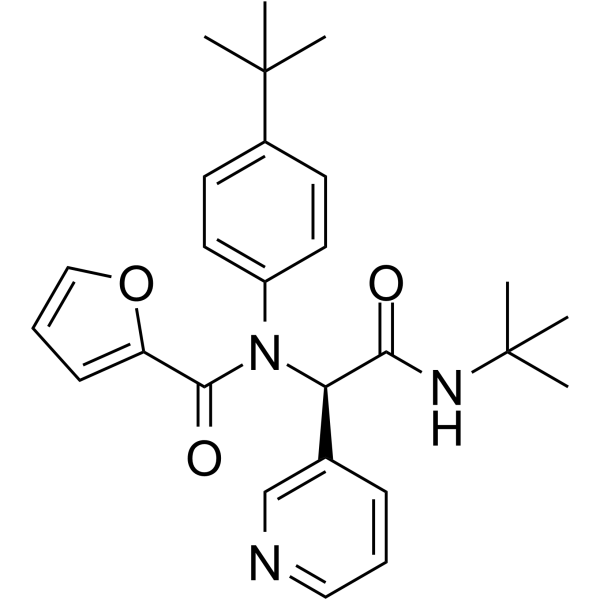
HY-136259
ML1883CLpro Inhibitor
Publications Citing Use of MedChemExpress (MCE) Bemnifosbuvir
More

Biological Activity
Description
IC50 & Target
In Vitro
Bemnifosbuvir has pan-genotypic antiviral activities that inhibits HCV genotype 1a (HCV GT1a), HCV GT1b, HCV GT2a, HCV GT3a, HCV GT4a, and HCV GT5a replication with EC50 values of 12.8 nM, 12.5 nM, 9.2 nM, 10.3 nM, 14.7 nM, and 28.5 nM, respectively[1].
In normal human airway epithelial cells, the concentration of Bemnifosbuvir required to inhibit replication of SARS-CoV-2 by EC90 is 0.47 μM, very similar to its EC90 against HCoV-229E, HCoV-OC43 and SARS-CoV in Huh-7 cells[2].
MedChemExpress (MCE) has not independently confirmed the accuracy of these methods. They are for reference only.
In Vivo
MedChemExpress (MCE) has not independently confirmed the accuracy of these methods. They are for reference only.
Clinical Trial
| NCT Number | Sponsor | Condition | Start Date |
Phase

|
|---|---|---|---|---|
| NCT01329991 | Plexxikon| | 2011-05 | PHASE1 |


Chemical Information
-
CAS No. 1998705-64-8
-
Appearance Solid
-
Molecular Weight 581.53
-
Formula C24H33FN7O7P
-
Color Off-white to light yellow
-
SMILES
O[C@H]1[C@](F)(C)[C@H](N2C3=NC(N)=NC(NC)=C3N=C2)O[C@@H]1CO[P@](OC4=CC=CC=C4)(N[C@@H](C)C(OC(C)C)=O)=O
-
Synonyms
AT-511
-
Shipping
Room temperature in continental US; may vary elsewhere.
-
Storage
4°C, protect from light
* In solvent : -80°C, 6 months; -20°C, 1 month (protect from light)


Publications (4)
-
Journal Impact Factor
-
Most Recent
-
Cell Rep Med
Human liver-derived organoids recapitulate Oropouche virus infection and manifestation, enabling antiviral drug discovery. [Abstract]2026 Mar 9:102646. PMID: 41806841 -
PLoS Pathog
2026 Feb 17;22(2):e1013970. PMID: 41701758 -
-


Solvent & Solubility
In Vitro:
DMSO : 200 mg/mL (343.92 mM; Need ultrasonic; Hygroscopic DMSO has a significant impact on the solubility of product, please use newly opened DMSO)
Please refer to the solubility information to select the appropriate solvent. Once prepared, please aliquot and store the solution to prevent product inactivation from repeated freeze-thaw cycles.
Storage method and period of stock solution: -80°C, 6 months; -20°C, 1 month (protect from light). When stored at -80°C, please use it within 6 months. When stored at -20°C, please use it within 1 month.
Please refer to the solubility information to select the appropriate solvent. Once prepared, please aliquot and store the solution to prevent product inactivation from repeated freeze-thaw cycles.
Storage method and period of stock solution: -80°C, 6 months; -20°C, 1 month (protect from light). When stored at -80°C, please use it within 6 months. When stored at -20°C, please use it within 1 month.
Concentration (start) × Volume (start) = Concentration (final) × Volume (final)
In Vivo:
Select the appropriate dissolution method based on your experimental animal and administration route.
- For the following dissolution methods, please ensure to first prepare a clear stock solution using an In Vitro approach and then sequentially add co-solvents:
- To ensure reliable experimental results, the clarified stock solution can be appropriately stored based on storage conditions. As for the working solution for In Vivo experiments, it is recommended to prepare freshly and use it on the same day.
- The percentages shown for the solvents indicate their volumetric ratio in the final prepared solution. If precipitation or phase separation occurs during preparation, heat and/or sonication can be used to aid dissolution.
Add each solvent one by one: 10% DMSO 40% PEG300 5% Tween-80 45% Saline
Solubility: ≥ 2.5 mg/mL (4.30 mM); Clear solution
This protocol yields a clear solution of ≥ 2.5 mg/mL (saturation unknown).
Taking 1 mL working solution as an example, add 100 μL DMSO stock solution (25.0 mg/mL) to 400 μL PEG300, and mix evenly; then add 50 μL Tween-80 and mix evenly; then add 450 μL Saline to adjust the volume to 1 mL.
Preparation of Saline: Dissolve 0.9 g sodium chloride in ddH₂O and dilute to 100 mL to obtain a clear Saline solution.
Add each solvent one by one: 10% DMSO 90% (20% SBE-β-CD in Saline)
Solubility: ≥ 2.5 mg/mL (4.30 mM); Clear solution
This protocol yields a clear solution of ≥ 2.5 mg/mL (saturation unknown).
Taking 1 mL working solution as an example, add 100 μL DMSO stock solution (25.0 mg/mL) to 900 μL 20% SBE-β-CD in Saline, and mix evenly.
Preparation of 20% SBE-β-CD in Saline (4°C, storage for one week): 2 g SBE-β-CD powder is dissolved in 10 mL Saline, completely dissolve until clear.
In Vivo Dissolution Calculator
Please enter the basic information of animal experiments:
-
-
-
-
Recommended: Prepare an additional quantity of animals to account for potential losses during experiments.
Please enter your animal formula composition:
-
%DMSO +
Recommended: Keep the proportion of DMSO in working solution below 2% if your animal is weak.
-
%+
-
+%Tween-80 + +
-
%Saline +
The co-solvents required include: DMSO, . All of co-solvents are available by MedChemExpress (MCE). , Tween 80. All of co-solvents are available by MedChemExpress (MCE).
Working solution concentration: 0.22 mg/mL
Method for preparing stock solution: mg drug dissolved in μL DMSO. Stock solution concentration: mg/mL. * In solvent : -80°C, 6 months; -20°C, 1 month (protect from light)
1. Take μL DMSO stock solution;
2. Add μL .
μL , mix evenly;
3. Then add μL Tween 80, mix evenly;
4. Then add μL
Please ensure that the stock solution in the first step is dissolved to a clear state, and add co-solvents in sequence. You can use ultrasonic heating (ultrasonic cleaner, recommended frequency 20-40 kHz), vortexing, etc. to assist dissolution.


Purity & Documentation
-
Data Sheet (278 KB)
-
SDS (419 KB)
- English - EN (419 KB)
- Français - FR (419 KB)
- Deutsch - DE (419 KB)
- Norwegian - NO (419 KB)
- Español - ES (419 KB)
- Swedish - SV (419 KB)
- Italian - IT (419 KB)
- Korean - KR (419 KB)
- Portuguese - PT (419 KB)
-
Handling Instructions (2659 KB)
References
[1]. Steven S Good, et al. Preclinical evaluation of AT-527, a novel guanosine nucleotide prodrug with potent, pan-genotypic activity against hepatitis C virus. PLoS One. 2020 Jan 8;15(1):e0227104. [Content Brief]
[2]. Steven S Good, et al. AT-527, a double prodrug of a guanosine nucleotide analog, is a potent inhibitor of SARS-CoV-2 in vitro and a promising oral antiviral for treatment of COVID-19. Antimicrob Agents Chemother. 2021 Feb 8;AAC.02479-20. [Content Brief]
[3]. Elina Berliba, et al. Safety, pharmacokinetics and antiviral activity of AT-527, a novel purine nucleotide prodrug, in HCV-infected subjects with and without cirrhosis. Antimicrob Agents Chemother. 2019 Sep 30;63(12):e01201-19. [Content Brief]


Complete Stock Solution Preparation Table
Please refer to the solubility information to select the appropriate solvent. Once prepared, please aliquot and store the solution to prevent product inactivation from repeated freeze-thaw cycles.
Storage method and period of stock solution: -80°C, 6 months; -20°C, 1 month (protect from light). When stored at -80°C, please use it within 6 months. When stored at -20°C, please use it within 1 month.
| Optional Solvent | Concentration Solvent Mass | 1 mg | 5 mg | 10 mg | 25 mg |
|---|---|---|---|---|---|
| DMSO | 1 mM | 1.7196 mL | 8.5980 mL | 17.1960 mL | 42.9900 mL |
| 5 mM | 0.3439 mL | 1.7196 mL | 3.4392 mL | 8.5980 mL | |
| 10 mM | 0.1720 mL | 0.8598 mL | 1.7196 mL | 4.2990 mL | |
| 15 mM | 0.1146 mL | 0.5732 mL | 1.1464 mL | 2.8660 mL | |
| 20 mM | 0.0860 mL | 0.4299 mL | 0.8598 mL | 2.1495 mL | |
| 25 mM | 0.0688 mL | 0.3439 mL | 0.6878 mL | 1.7196 mL | |
| 30 mM | 0.0573 mL | 0.2866 mL | 0.5732 mL | 1.4330 mL | |
| 40 mM | 0.0430 mL | 0.2150 mL | 0.4299 mL | 1.0748 mL | |
| 50 mM | 0.0344 mL | 0.1720 mL | 0.3439 mL | 0.8598 mL | |
| 60 mM | 0.0287 mL | 0.1433 mL | 0.2866 mL | 0.7165 mL | |
| 80 mM | 0.0215 mL | 0.1075 mL | 0.2150 mL | 0.5374 mL | |
| 100 mM | 0.0172 mL | 0.0860 mL | 0.1720 mL | 0.4299 mL |


Bemnifosbuvir Related Classifications
HY-137958A Related Classifications
 Powered by Bioz