



A81988
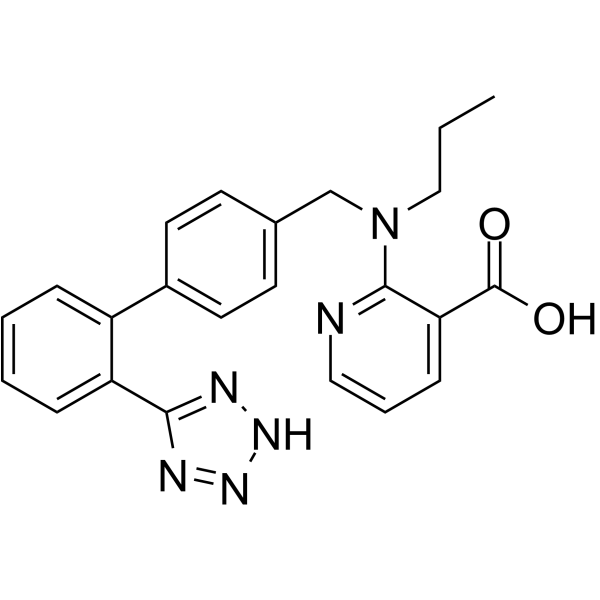
A81988 is a potent, competitive, non-peptidic antagonist of angiotensin AT1 receptors.
Nur für Forschungszwecke. Wir verkaufen nicht an Patienten.
- CAS. Nr.: 141887-34-5
- Formel: C23H22N6O2
- Molecular Weight:414.46
-
Speicherung:
Please store the product under the recommended conditions in the Certificate of Analysis.

To place orders, for customer services and technical support, please contact: MedChemExpress USA
Tel: 609-228-6898 E-mail: [email protected] [email protected]


-
 Biologische Aktivität
-
Chemical Information
- Reinheit & Dokumentation
- Verweise
-
 Help & FAQs


-
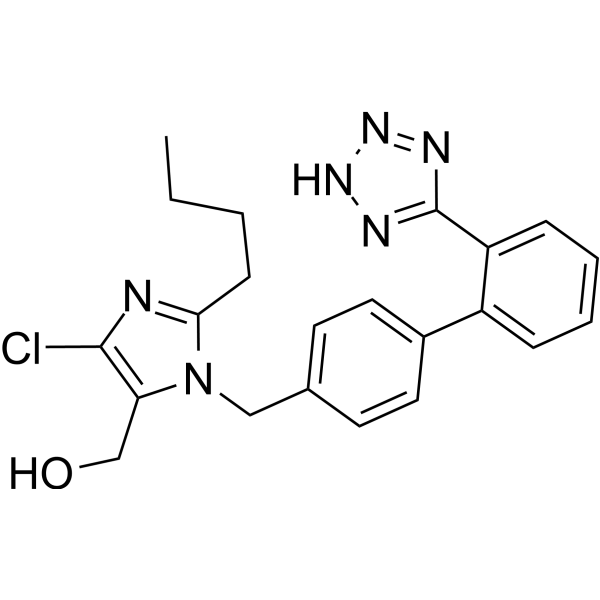
HY-17512
LosartanAngiotensin II Receptor Antagonist -
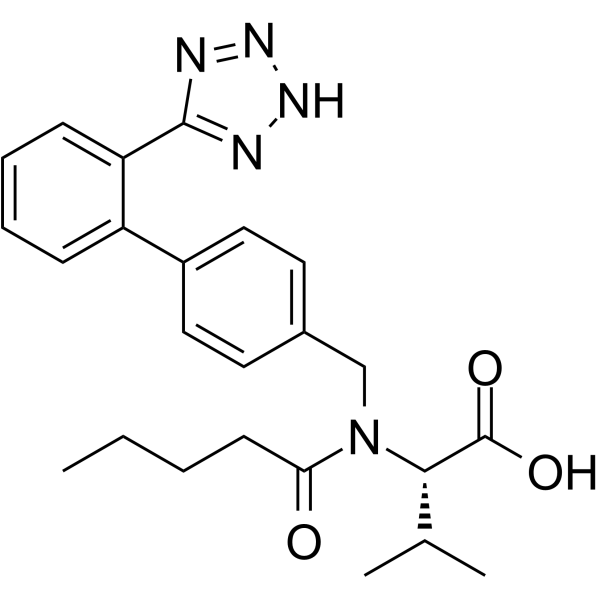
HY-18204
ValsartanAngiotensin II Receptor Antagonist -
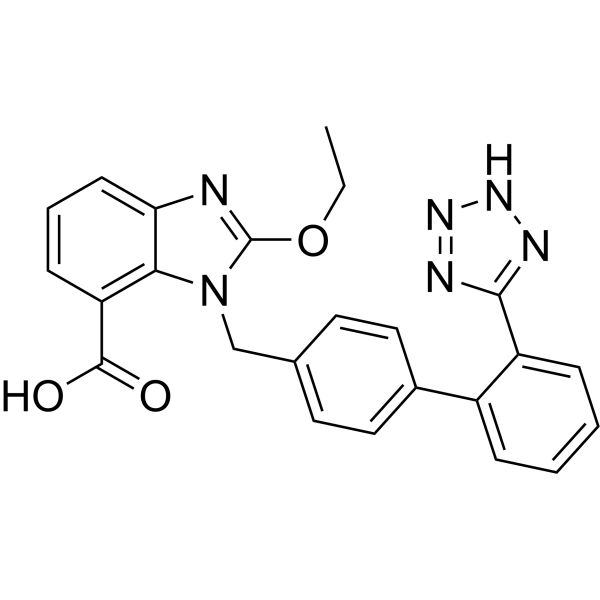
HY-B0205
CandesartanAngiotensin II AT1-Receptor Blocker -
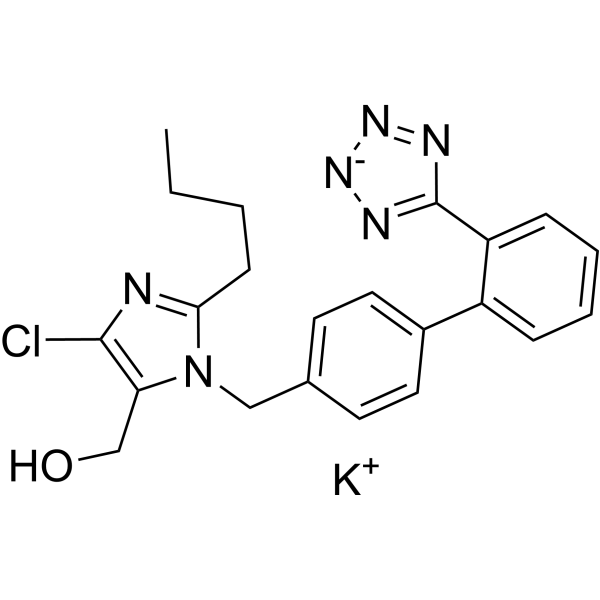
HY-17512A
Losartan potassiumAT1 Antagonist -
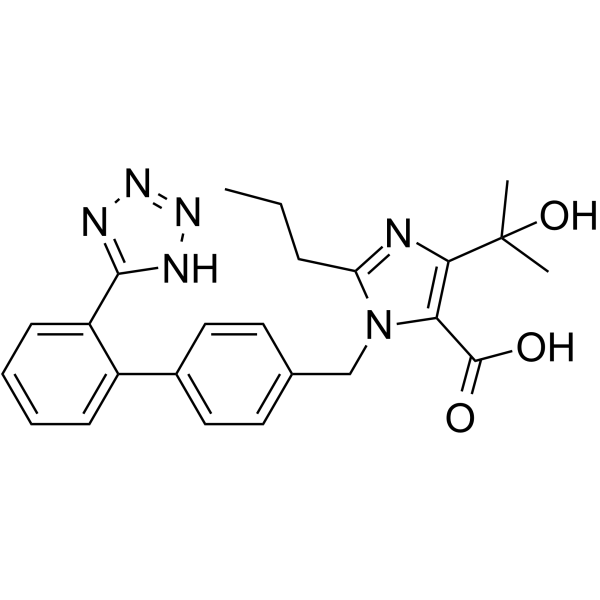
HY-17004
OlmesartanAT1R Antagonist -
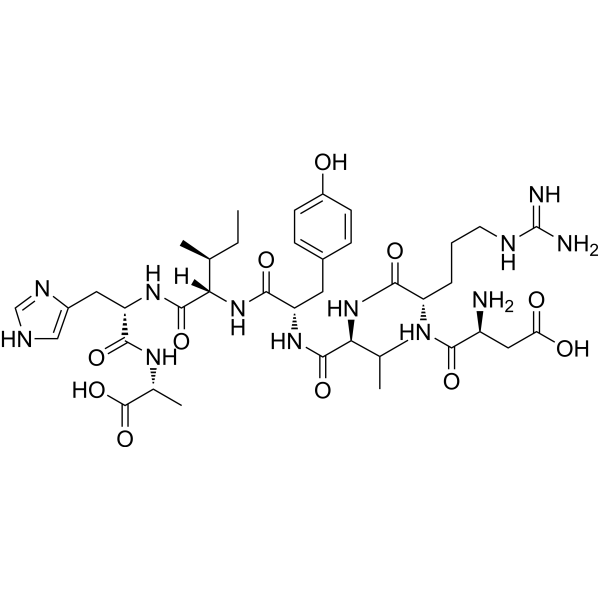
HY-P0216
A 779Mas Receptor Antagonist -
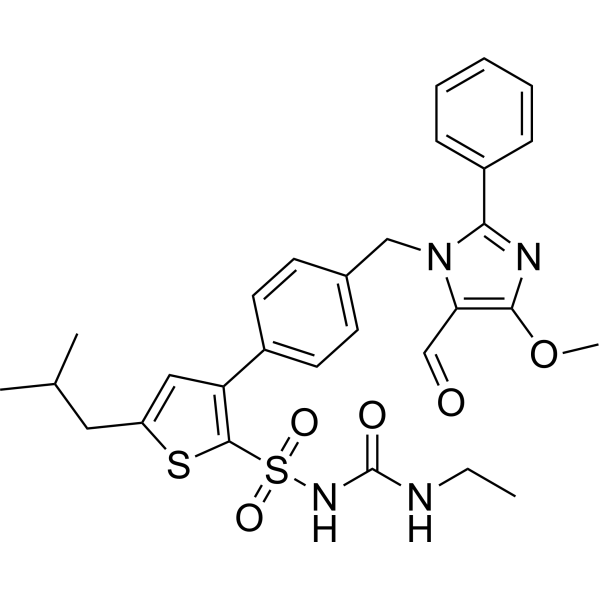
HY-15778
AVE 0991Ang-(1-7) Receptor Agonist -
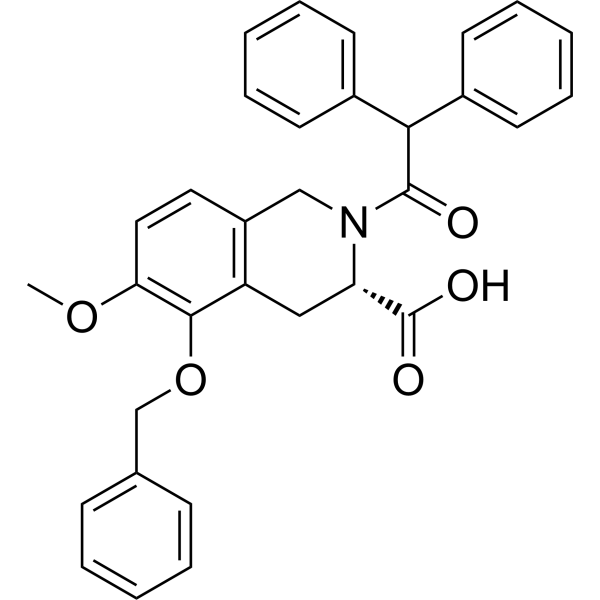
HY-13106
OlodanriganAT2R Antagonist -
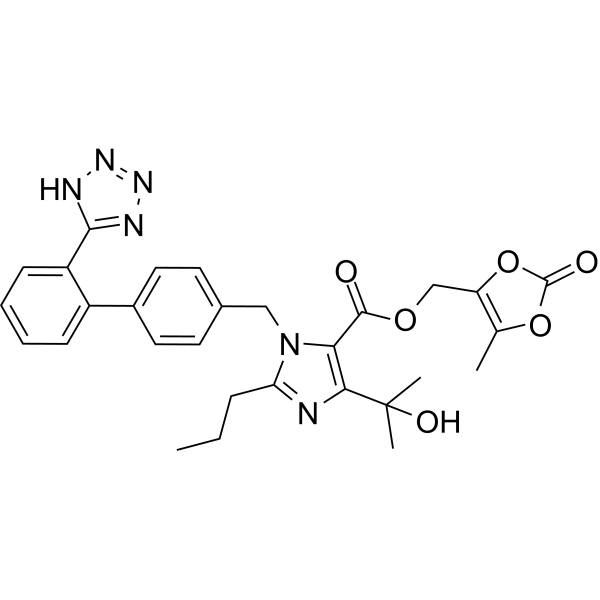
HY-17005
Olmesartan medoxomil -
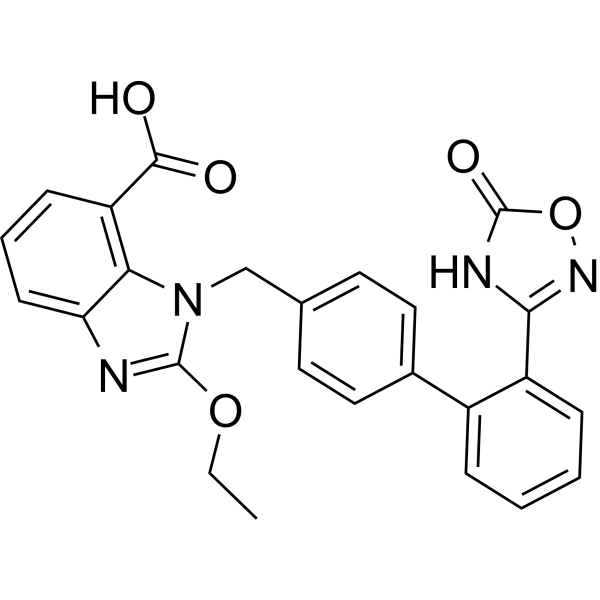
HY-14914
AzilsartanAT1 Antagonist -
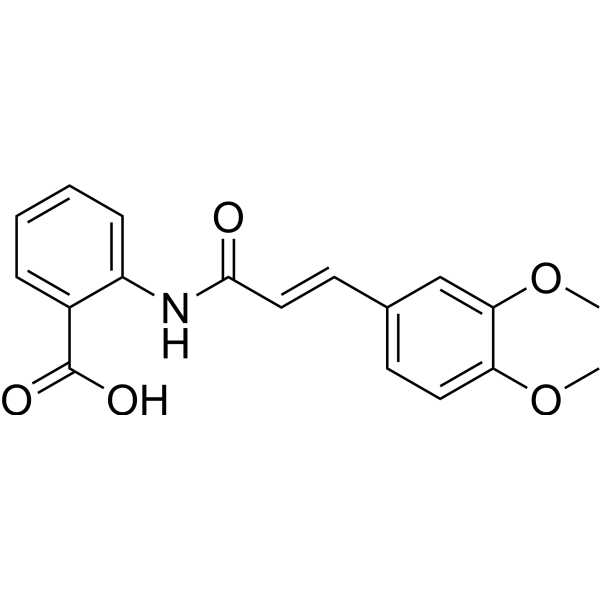
HY-B0195
TranilastAnti-allergic Agent -
HY-12405
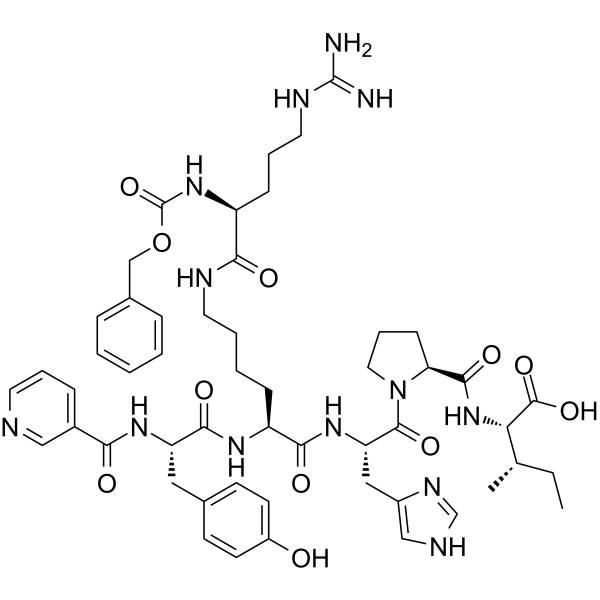
CGP-42112AT2 Agonist
Alle Angiotensin Receptor Isoform-spezifische Produkte anzeigen
More

Biologische Aktivität
Beschreibung
IC50 & Target
Angiotensin AT1 receptor[1]
In Vitro
A81988 (A-81988) is labeled with tritium to high specific activity (16 Ci/mmol) and radioligand binding assays performed in rat liver membranes. [3H]A81988 binds with high affinity (KD=0.57 nM) and the KD determined from kinetics assays is similar. Non-specific binding (defined with 1 μM angiotensin-II) is very low (< 6% at the KD). The binding of [3H]A81988 is competitive and exhibits appropriate pharmacological specificity for compounds acting at angiotensin AT1 receptors[1].
MedChemExpress (MCE) has not independently confirmed the accuracy of these methods. They are for reference only.
In Vivo
MedChemExpress (MCE) has not independently confirmed the accuracy of these methods. They are for reference only.


Chemical Information
-
CAS. Nr. 141887-34-5
-
Molecular Weight 414.46
-
Formel C23H22N6O2
-
SMILES
O=C(C1=CC=CN=C1N(CCC)CC2=CC=C(C3=CC=CC=C3C4=NNN=N4)C=C2)O
-
Synonyms
Abbott81988
-
Versand
Room temperature in continental US; may vary elsewhere.
-
Speicherung
Please store the product under the recommended conditions in the Certificate of Analysis.


Reinheit & Dokumentation
Verweise
[1]. Hancock AA, et al. [3H]A-81988, a potent, selective, competitive antagonist radioligand for angiotensin AT1 receptors. Eur J Pharmacol. 1994 Mar 15;267(1):49-54. [Content Brief]
[2]. Madeddu P, et al. Angiotensin II type 1 receptor blockade prevents cardiac remodeling in bradykinin B(2) receptor knockout mice. Hypertension. 2000 Jan;35(1 Pt 2):391-6. [Content Brief]
[3]. Madeddu P, et al. Circulation. 1997 Nov 18;96(10):3570-8. [Content Brief]

Calculators
Konzentration (Stammlösung) × Volumen (Stammlösung) = Konzentration (Ziellösung) × Volumen (Ziellösung)


A81988 Related Classifications
HY-U00188 Related Classifications
 Powered by Bioz