



Adomeglivant
Based on 4 publication(s) in Google Scholar
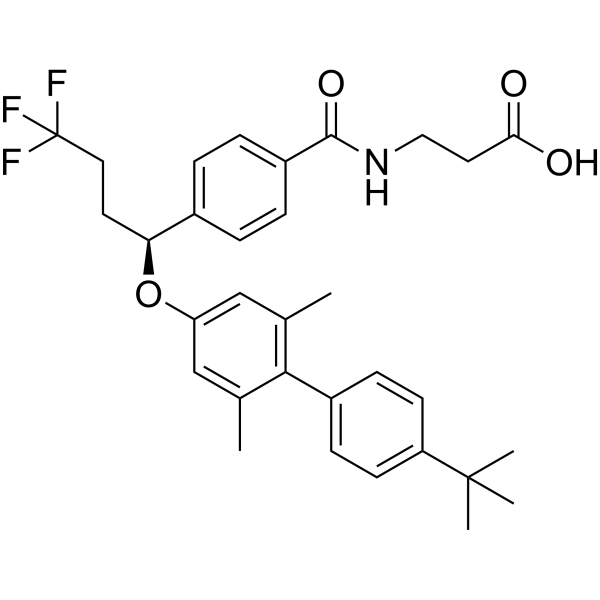
Adomeglivant (LY2409021) is a potent, selective glucagon receptor (GluR) allosteric antagonist. Adomeglivant is widely used in the research for type 2 diabetes mellitus.
Nur für Forschungszwecke. Wir verkaufen nicht an Patienten.
- Reinheit : 99.63%
- CAS. Nr.: 1488363-78-5
- Formel: C32H36F3NO4
- Molecular Weight:555.63
-
Speicherung:Powder -20°C, 3 years , 4°C, 2 years ; In solvent -80°C, 2 years , -20°C, 1 year

To place orders, for customer services and technical support, please contact: MedChemExpress USA
Tel: 609-228-6898 E-mail: [email protected] [email protected]


-
 Biologische Aktivität
-
Chemical Information
-
Lösungsmittel & Löslichkeit
- Protokoll
- Reinheit & Dokumentation
- Verweise
-
 Help & FAQs


-
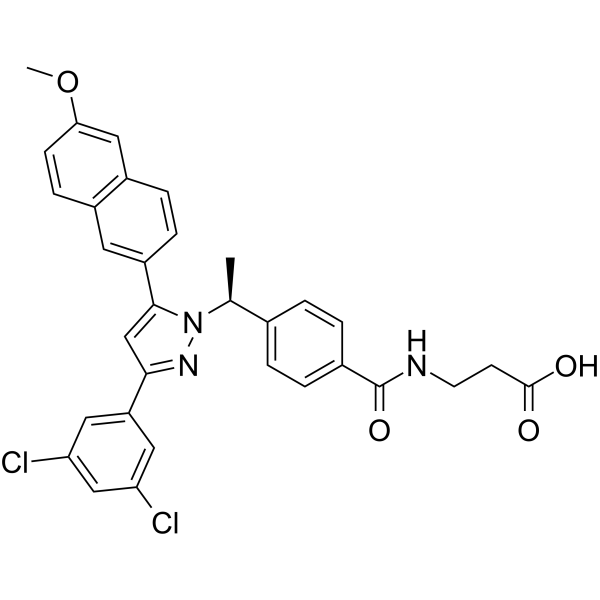
HY-50663
MK 0893GCGR Antagonist -
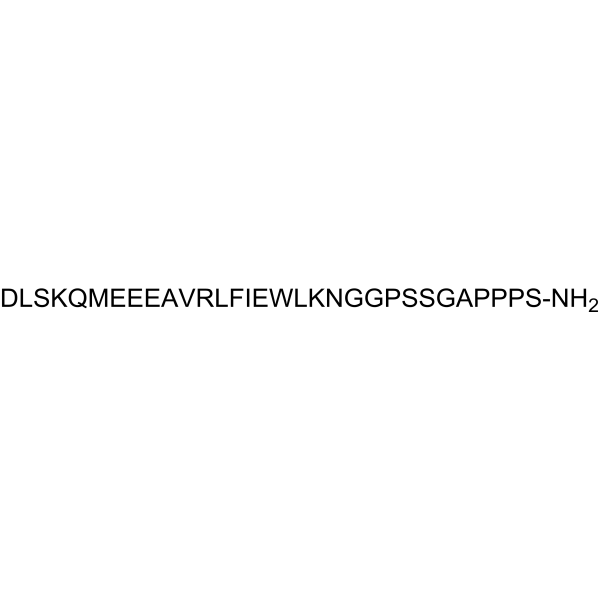
HY-P0264
Exendin(9-39) amideGLP-1R Antagonist -
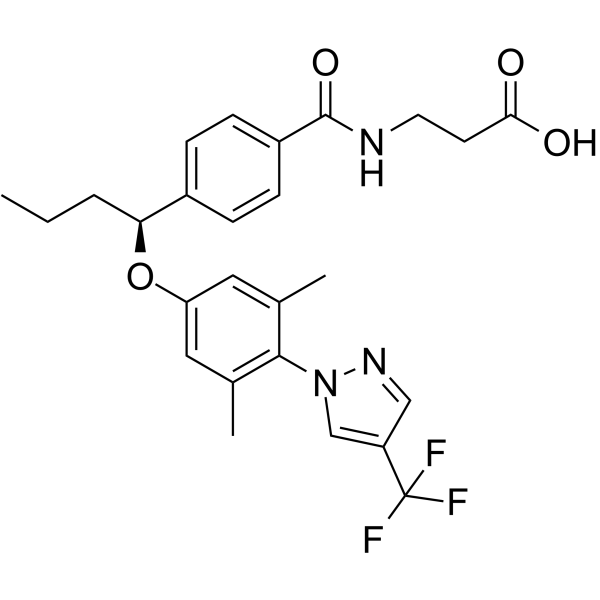
HY-19947
PF-06291874Glucagon Receptor Antagonist -
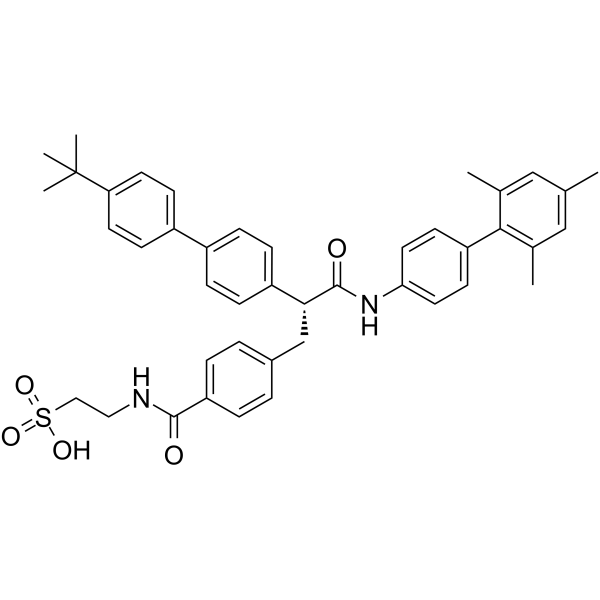
HY-12525
LGD-6972 -

HY-13443
Exendin-4GLP-1 Receptor Agonist -
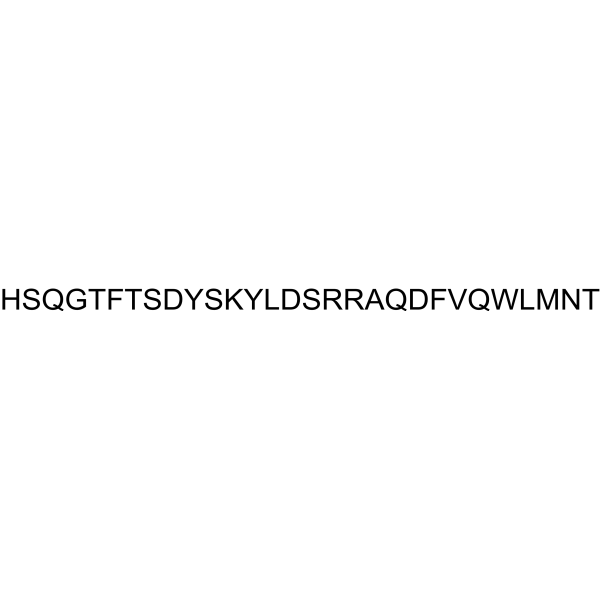
HY-P0082
Glucagon (1-29), bovine, humanPeptide Hormone -

HY-P3375
MazdutideGLP-1R/GCGR Agonist -

HY-P3506
RetatrutideGCGR/GIPR/GLP-1R Agonist -

HY-114118
SemaglutideGLP-1R Agonist -
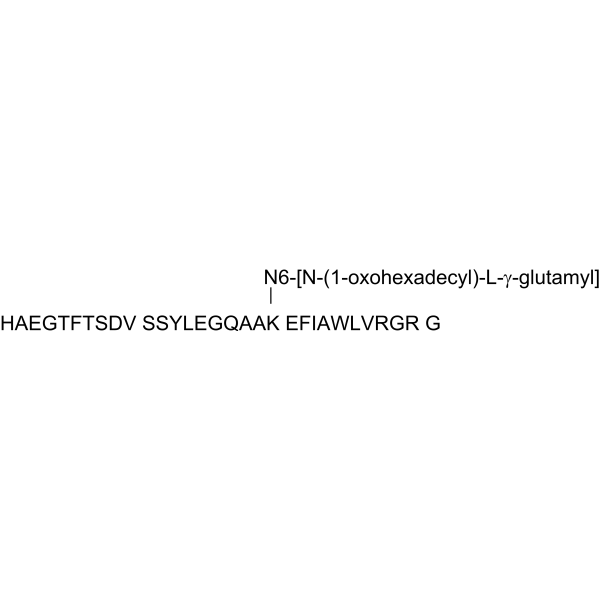
HY-P0014
LiraglutideGLP-1R Agonist -
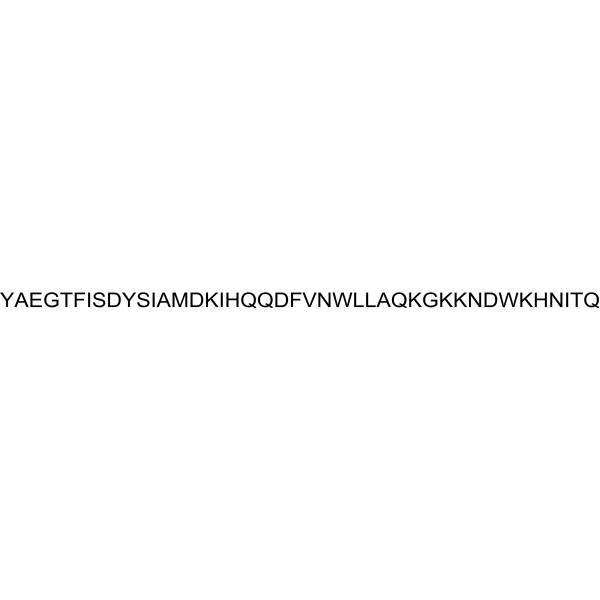
HY-P0276
GIP, humanInsulin Secretion Stimulator -
HY-P2273
Calcitonin (human)Hypocalcemic Hormone
Publications Citing Use of MedChemExpress (MCE) Adomeglivant
More Customer Validation & Images

-
WB


Biologische Aktivität
Beschreibung
IC50 & Target
In Vitro
Adomeglivant dose-dependently blocks glucagon-induced the raise levels of cAMP in HEK293-GluR cells[2].
Adomeglivant fails to block cAMP-elevating actions of adenosine[2].
Adomeglivant exhibits high selectivity for family B GPCRs, and specifically interacts with a conserved binding motif within the GluR, GLP-1R, and GIP-R[2].
MedChemExpress (MCE) has not independently confirmed the accuracy of these methods. They are for reference only. Further protocols information, click here.
In Vivo
MedChemExpress (MCE) has not independently confirmed the accuracy of these methods. They are for reference only.
-
Animal Model:Avpires-Cre+ mice[3]
-
Dosage:5 mg/kg
-
Administration:Intraperitoneal injection, 30 minutes prior to CNO
-
Result:Completely abolished the hyperglycaemic action of CNO.
Clinical Trial
| NCT Number | Sponsor | Condition | Start Date |
Phase

|
|---|---|---|---|---|
| NCT01329991 | Plexxikon| | 2011-05 | PHASE1 |


Chemical Information
-
CAS. Nr. 1488363-78-5
-
Appearance Solid
-
Molecular Weight 555.63
-
Formel C32H36F3NO4
-
Color White to off-white
-
SMILES
O=C(O)CCNC(C1=CC=C([C@@H](OC2=CC(C)=C(C3=CC=C(C(C)(C)C)C=C3)C(C)=C2)CCC(F)(F)F)C=C1)=O
-
Synonyms
LY2409021
-
Versand
Room temperature in continental US; may vary elsewhere.
-
Speicherung
Powder -20°C 3 years 4°C 2 years In solvent -80°C 2 years -20°C 1 year


Publications (4)
-
Journal Impact Factor
-
Most Recent
-
Eur J Med Chem
Design of novel Xenopus GLP-1-based dual glucagon-like peptide 1 (GLP-1)/glucagon receptor agonists. [Abstract]2021 Feb 15:212:113118. PMID: 33422984 -
Cells
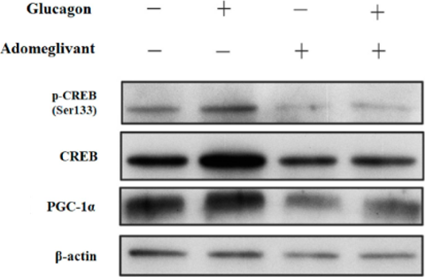
Glucagon Promotes Gluconeogenesis through the GCGR/PKA/CREB/PGC-1α Pathway in Hepatocytes of the Japanese Flounder Paralichthys olivaceus. [Abstract]2023 Apr 6;12(7):1098. PMID: 37048171
Adomeglivant purchased from MedChemExpress. Usage Cited in: Cells. 2023 Apr 6;12(7):1098. [Abstract]
Adomeglivant (50 μM; 24 h) significantly reduces the expression of PGC-1α in hepatocytes.
-
Cell Signal
2021 Aug:84:110010. PMID: 33872697 -
J Biol Chem
Nonconventional glucagon and GLP-1 receptor agonist and antagonist interplay at the GLP-1 receptor revealed in high-throughput FRET assays for cAMP. [Abstract]2019 Mar 8;294(10):3514-3531. PMID: 30622136


Lösungsmittel & Löslichkeit
In Vitro:
DMSO : ≥ 100 mg/mL (179.98 mM; Hygroscopic DMSO has a significant impact on the solubility of product, please use newly opened DMSO)
* "≥" means soluble, but saturation unknown.
Please refer to the solubility information to select the appropriate solvent. Once prepared, please aliquot and store the solution to prevent product inactivation from repeated freeze-thaw cycles.
Storage method and period of stock solution: -80°C, 2 years; -20°C, 1 year. When stored at -80°C, please use it within 2 years. When stored at -20°C, please use it within 1 year.
Please refer to the solubility information to select the appropriate solvent. Once prepared, please aliquot and store the solution to prevent product inactivation from repeated freeze-thaw cycles.
Storage method and period of stock solution: -80°C, 2 years; -20°C, 1 year. When stored at -80°C, please use it within 2 years. When stored at -20°C, please use it within 1 year.
Konzentration (Stammlösung) × Volumen (Stammlösung) = Konzentration (Ziellösung) × Volumen (Ziellösung)
In Vivo:
Select the appropriate dissolution method based on your experimental animal and administration route.
- For the following dissolution methods, please ensure to first prepare a clear stock solution using an In Vitro approach and then sequentially add co-solvents:
- To ensure reliable experimental results, the clarified stock solution can be appropriately stored based on storage conditions. As for the working solution for In Vivo experiments, it is recommended to prepare freshly and use it on the same day.
- The percentages shown for the solvents indicate their volumetric ratio in the final prepared solution. If precipitation or phase separation occurs during preparation, heat and/or sonication can be used to aid dissolution.
Add each solvent one by one: 10% DMSO 40% PEG300 5% Tween-80 45% Saline
Solubility: ≥ 2.5 mg/mL (4.50 mM); Clear solution
This protocol yields a clear solution of ≥ 2.5 mg/mL (saturation unknown).
Taking 1 mL working solution as an example, add 100 μL DMSO stock solution (25.0 mg/mL) to 400 μL PEG300, and mix evenly; then add 50 μL Tween-80 and mix evenly; then add 450 μL Saline to adjust the volume to 1 mL.
Preparation of Saline: Dissolve 0.9 g sodium chloride in ddH₂O and dilute to 100 mL to obtain a clear Saline solution.
Add each solvent one by one: 10% DMSO 90% (20% SBE-β-CD in Saline)
Solubility: 2.5 mg/mL (4.50 mM); Suspended solution; Need ultrasonic
This protocol yields a suspended solution of 2.5 mg/mL. Suspended solution can be used for oral and intraperitoneal injection.
Taking 1 mL working solution as an example, add 100 μL DMSO stock solution (25.0 mg/mL) to 900 μL 20% SBE-β-CD in Saline, and mix evenly.
Preparation of 20% SBE-β-CD in Saline (4°C, storage for one week): 2 g SBE-β-CD powder is dissolved in 10 mL Saline, completely dissolve until clear.
In Vivo Dissolution Calculator
Please enter the basic information of animal experiments:
-
-
-
-
Recommended: Prepare an additional quantity of animals to account for potential losses during experiments.
Please enter your animal formula composition:
-
%DMSO +
Recommended: Keep the proportion of DMSO in working solution below 2% if your animal is weak.
-
%+
-
+%Tween-80 + +
-
%Saline +
The co-solvents required include: DMSO, . All of co-solvents are available by MedChemExpress (MCE). , Tween 80. All of co-solvents are available by MedChemExpress (MCE).
Working solution concentration: 0.22 mg/mL
Method for preparing stock solution: mg drug dissolved in μL DMSO. Stock solution concentration: mg/mL.
1. Take μL DMSO stock solution;
2. Add μL .
μL , mix evenly;
3. Then add μL Tween 80, mix evenly;
4. Then add μL
Please ensure that the stock solution in the first step is dissolved to a clear state, and add co-solvents in sequence. You can use ultrasonic heating (ultrasonic cleaner, recommended frequency 20-40 kHz), vortexing, etc. to assist dissolution.

Protokoll
-
Research Protocol for Metabolic Diseases
AMP-activated protein kinase, AMPK, is a conserved cellular energy sensor that responds to reduced cellular energy status and coordinates metabolism by increasing ATP-generating catabolic pathways while suppressing ATP-consuming anabolic processes. In metabolic disease research, the AMPK pathway is experimentally relevant because it regulates hepatic lipid synthesis, fatty acid oxidation, glucose production, skeletal-muscle glucose disposal, mTORC1-linked biosynthesis, autophagy, mitochondrial homeostasis, and whole-body energy balance. The central pathway logic is that energy stress, metformin, exercise-like stimulation, or direct AMPK activators increase AMPKα Thr172 phosphorylation and downstream substrate phosphorylation, including ACC and RAPTOR. Phosphorylation of ACC suppresses lipogenesis and supports fatty acid oxidation, whereas phosphorylation of RAPTOR suppresses mTORC1 signaling and links cellular energy status to growth and protein synthesis control. The pathway is linked


Reinheit & Dokumentation
-
Data Sheet (277 KB)
-
SDS (557 KB)
- English - EN (557 KB)
- Français - FR (557 KB)
- Deutsch - DE (557 KB)
- Norwegian - NO (557 KB)
- Español - ES (557 KB)
- Swedish - SV (557 KB)
- Italian - IT (557 KB)
- Korean - KR (557 KB)
- Portuguese - PT (557 KB)
-
Handling Instructions (2659 KB)
Verweise
[1]. Sonam Grover, et al. Computational identification of novel natural inhibitors of glucagon receptor for checking type II diabetes mellitus. BMC Bioinformatics. 2014; 15(Suppl 16): S13. [Content Brief]
[2]. Oleg G Chepurny, et al. Non-conventional glucagon and GLP-1 receptor agonist and antagonist interplay at the GLP-1 receptor revealed in high-throughput FRET assays for cAMP. J Biol Chem. 2019 Mar 8;294(10):3514-3531. [Content Brief]


Complete Stock Solution Preparation Table
Please refer to the solubility information to select the appropriate solvent. Once prepared, please aliquot and store the solution to prevent product inactivation from repeated freeze-thaw cycles.
Storage method and period of stock solution: -80°C, 2 years; -20°C, 1 year. When stored at -80°C, please use it within 2 years. When stored at -20°C, please use it within 1 year.
| Optional Solvent | Concentration Solvent Mass | 1 mg | 5 mg | 10 mg | 25 mg |
|---|---|---|---|---|---|
| DMSO | 1 mM | 1.7998 mL | 8.9988 mL | 17.9976 mL | 44.9940 mL |
| 5 mM | 0.3600 mL | 1.7998 mL | 3.5995 mL | 8.9988 mL | |
| 10 mM | 0.1800 mL | 0.8999 mL | 1.7998 mL | 4.4994 mL | |
| 15 mM | 0.1200 mL | 0.5999 mL | 1.1998 mL | 2.9996 mL | |
| 20 mM | 0.0900 mL | 0.4499 mL | 0.8999 mL | 2.2497 mL | |
| 25 mM | 0.0720 mL | 0.3600 mL | 0.7199 mL | 1.7998 mL | |
| 30 mM | 0.0600 mL | 0.3000 mL | 0.5999 mL | 1.4998 mL | |
| 40 mM | 0.0450 mL | 0.2250 mL | 0.4499 mL | 1.1248 mL | |
| 50 mM | 0.0360 mL | 0.1800 mL | 0.3600 mL | 0.8999 mL | |
| 60 mM | 0.0300 mL | 0.1500 mL | 0.3000 mL | 0.7499 mL | |
| 80 mM | 0.0225 mL | 0.1125 mL | 0.2250 mL | 0.5624 mL | |
| 100 mM | 0.0180 mL | 0.0900 mL | 0.1800 mL | 0.4499 mL |


Adomeglivant Related Classifications
HY-19904 Related Classifications
 Powered by Bioz