



Danburstotug

Based on 1 Customer Validation
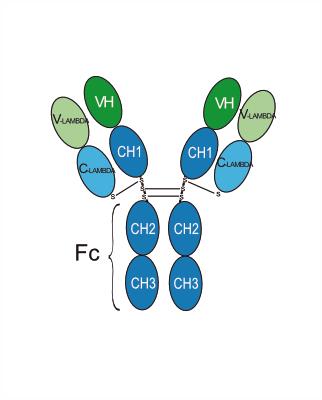
Danburstotug (IMC-001) is an IgG1-lambda anti-CD274 (PDL1, B7 homologue 1, B7H1) human monoclonal antibody. Danburstotug also is immunostimulant and antineoplastic.
Nur für Forschungszwecke. Wir verkaufen nicht an Patienten.
- Reinheit : 98.76%
- CAS. Nr.: 2307144-65-4
- Molecular Weight:143.619 kDa
-
Speicherung:Shipping with dry ice
Please store the product under the recommended conditions in the Certificate of Analysis.


To place orders, for customer services and technical support, please contact: MedChemExpress USA
Tel: 609-228-6898 E-mail: [email protected] [email protected]


-
 Biologische Aktivität
-
Chemical Information
- Reinheit & Dokumentation
- Verweise
-
 Help & FAQs




Biologische Aktivität
Beschreibung
IC50 & Target
B7-H1/PD-L1/CD274
Clinical Trial
| NCT Number | Sponsor | Condition | Start Date |
Phase

|
|---|---|---|---|---|
| NCT01329991 | 2011-05 | PHASE1 |
Anwendung
ELISA, FACS, Functional assay
Verified Bioactivity
-
 Immobilized PD-L1 Protein, Human (HEK293, HY-P73361) can bind Danburstotug. The EC50 for this effect is 3.74 ng/mL.
-
 Flow cytometric analysis of 1X10⁶ Jurkat cells with Danburstotug (HY-P990014, red). Cells were fixed with 4% paraformaldehyde. Then stained with the primary antibody at 1/200 dilution for an hour at 4℃. Alexa Fluor 488-conjugated AffiniPure Goat Anti-Human IgG H&L (HY-P83776) was used as the secondary antibody at 1/1,000 dilution for 30 minutes at 4℃. Human IgG1 lambda2 (HY-P990096, blue) was used as the isotype control, cells without incubation with primary antibody were used as the unlabeled control (black).


Product Details
-
CAS. Nr. 2307144-65-4
-
Accession Q9NZQ7
-
Synonyms IMC-001; STI-3031
-
Molecular Weight 143.619 kDa
-
Species Reactivity
Human
-
Conjugated
Unconjugated
-
Isotype
Human IgG1 lambda2
-
Recommend Isotype Controls
-
Format
-
Human IgG1 lambda2
-
Product Properties
-
Appearance
Liquid
-
Formulation
Please refer to the lot-specific COA for specific buffer information.
-
Reinheit
98.76%
-
Reconstitution
The product can be reconstituted/diluted with sterile PBS or saline.
-
Storage & Stability
Please store the product under the recommended conditions in the Certificate of Analysis.
-
Versand
Shipping with dry ice.
Reinheit & Dokumentation


Verweise

Calculators
Konzentration (Stammlösung) × Volumen (Stammlösung) = Konzentration (Ziellösung) × Volumen (Ziellösung)


Danburstotug Related Classifications
HY-P990014 Related Classifications
 Powered by Bioz