



Penicinoline
Penicinoline (Marinamide) (Compound 1), a pyrrolyl 4-quinolinone alkaloid, is a microbial secondary metabolite. Penicinoline can be isolated from endophytic fungus Penicillium sp. Penicinoline has antimalarial activity against Chloroquine (HY-17589A) sensitive strain (pf3d7) and against Chloroquine resistant strain (pfDd2) of plasmodium falciparum. Penicinoline also has strong insecticidal activity against Aphis gossypii and selective anticancer effect with significant cytotoxicity for 95-D and HepG2 cells.
Nur für Forschungszwecke. Wir verkaufen nicht an Patienten.
- CAS. Nr.: 1214268-60-6
- Formel: C14H10N2O3
- Molecular Weight:254.24
-
Speicherung:
Please store the product under the recommended conditions in the Certificate of Analysis.


To place orders, for customer services and technical support, please contact: MedChemExpress USA
Tel: 609-228-6898 E-mail: [email protected] [email protected]


-
 Biologische Aktivität
-
Chemical Information
- Protokoll
- Reinheit & Dokumentation
- Verweise
-
 Help & FAQs


-

HY-W009194
(R)-(+)-Trityl glycidyl etherHeterocyclic Compound -
HY-N1581
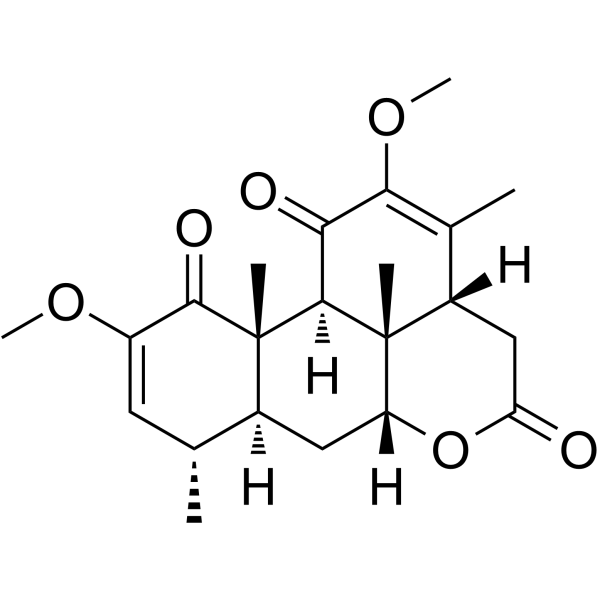
QuassinAnti-plasmodial Agent -
HY-119809
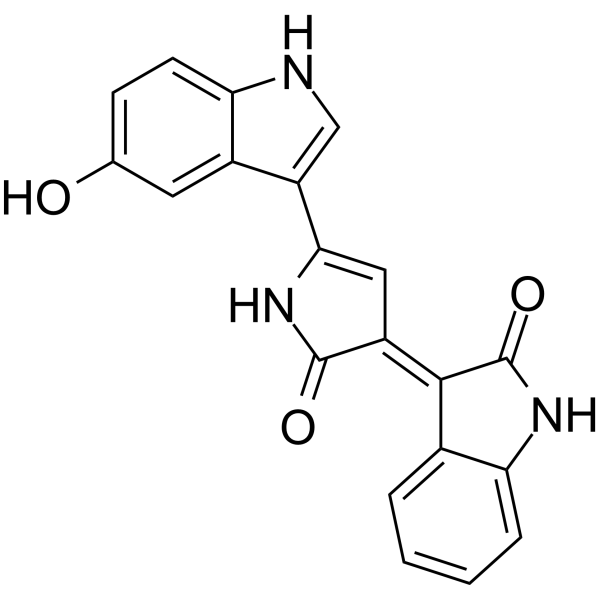
ViolaceinAnti-cancer Agent -
HY-128026
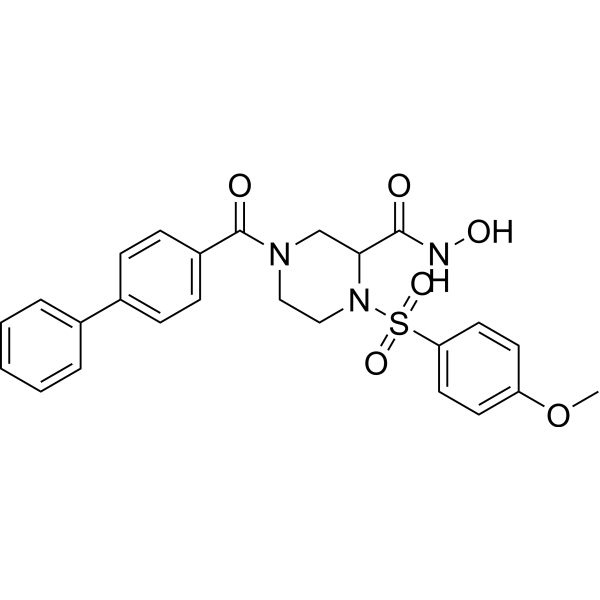
MMP-9/MMP-13 Inhibitor IMMP-9/MMP-13 Inhibitor -
HY-N0402S
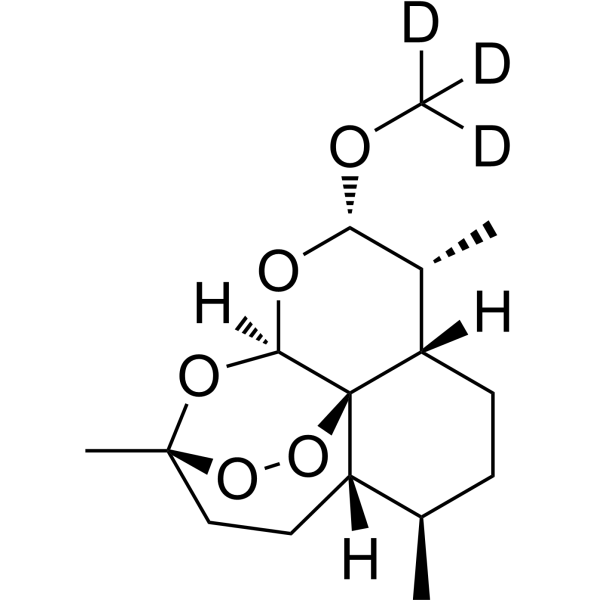
Artemether-d3Stable Isotope -
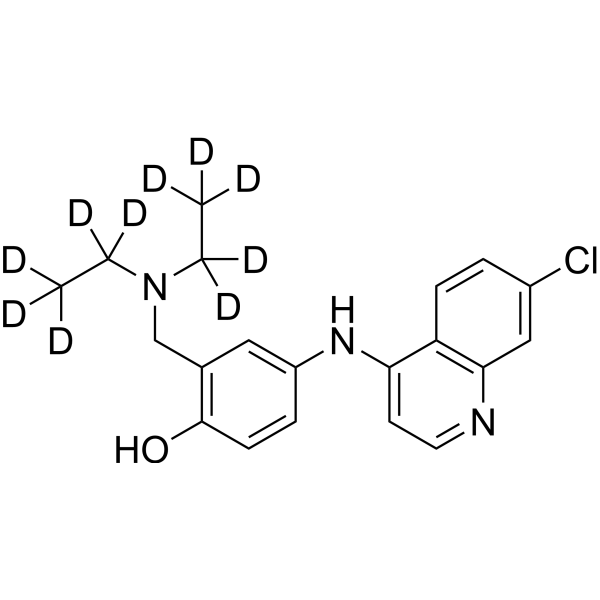
HY-B1322AS
Amodiaquine-d10Stable Isotope -
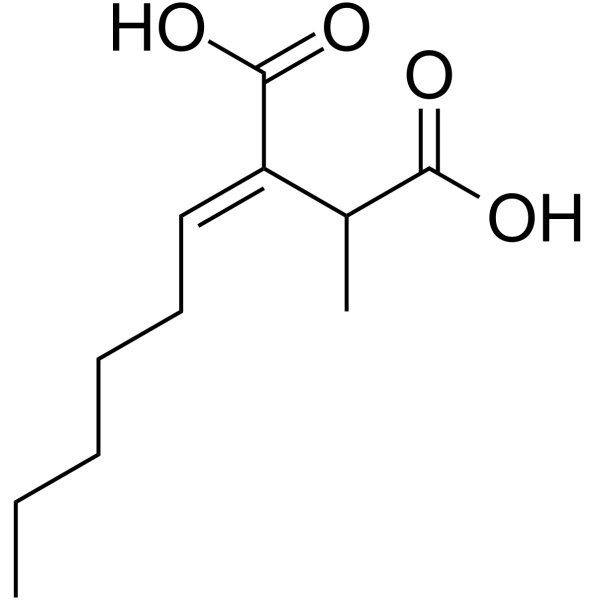
HY-N10262
Piliformic acidFungal Metabolite -

HY-N1581R
Quassin (Standard)Anti-plasmodial Agent -
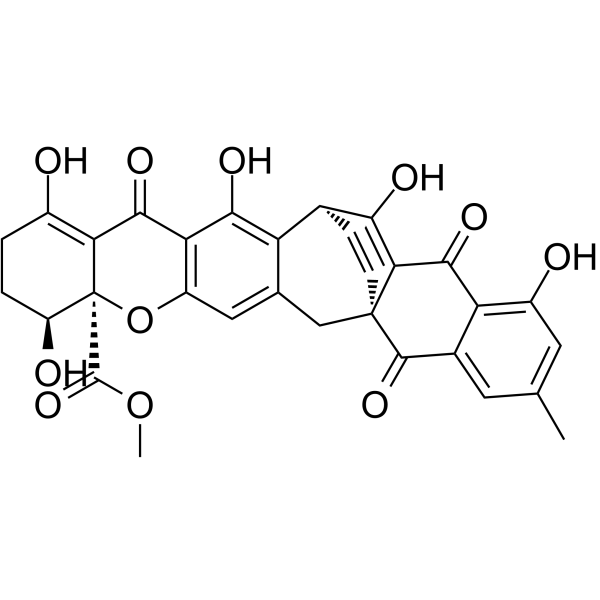
HY-N8252
Xanthoquinodin A1Anticoccidial Antibiotic -

HY-139090
3-Oxobetulin acetateAntancer -

HY-138223
6-PrenylindoleAntifungal Agent
Alle Endogenous Metabolite Isoform-spezifische Produkte anzeigen
MoreAlle Parasite Isoform-spezifische Produkte anzeigen
More

Biologische Aktivität
Beschreibung
Cellular Effect
|
Cell Line

|
Type | Value | Description | References |
|---|---|---|---|---|
| HeLa | IC50 |
>100 μg/mL
Compound: 1
|
Cytotoxicity against human HeLa cells
Cytotoxicity against human HeLa cells
|
[PMID: 20452770] |
| HEp-2 | IC50 |
>100 μg/mL
Compound: 1
|
Cytotoxicity against human Hep2 cells
Cytotoxicity against human Hep2 cells
|
[PMID: 20452770] |
| HepG2 | IC50 |
6.5 μg/mL
Compound: 1
|
Cytotoxicity against human HepG2 cells
Cytotoxicity against human HepG2 cells
|
[PMID: 20452770] |
| HepG2 | IC50 |
7 nM
Compound: 68a
|
Cytotoxicity against human HepG2 cells assessed as reduction in cell viability after 48 hrs by MTT assay
Cytotoxicity against human HepG2 cells assessed as reduction in cell viability after 48 hrs by MTT assay
|
[PMID: 30660827] |
| KB | IC50 |
>100 μg/mL
Compound: 1
|
Cytotoxicity against human KB cells
Cytotoxicity against human KB cells
|
[PMID: 20452770] |


Chemical Information
-
CAS. Nr. 1214268-60-6
-
Molecular Weight 254.24
-
Formel C14H10N2O3
-
SMILES
O=C(C1=C(C2=CC=CN2)NC3=C(C=CC=C3)C1=O)O
-
Synonyms
Marinamide
-
Structure Classification
-
Initial Source
Penicillium sp.
-
Versand
Room temperature in continental US; may vary elsewhere.
-
Speicherung
Please store the product under the recommended conditions in the Certificate of Analysis.


Reinheit & Dokumentation
Verweise

Calculators
Konzentration (Stammlösung) × Volumen (Stammlösung) = Konzentration (Ziellösung) × Volumen (Ziellösung)


Penicinoline Related Classifications
HY-158721 Related Classifications
 Powered by Bioz