2438 Results for "

decrease

" in MedChemExpress (MCE) Product Catalog:
Products (2438)

2438 Results for "decrease" in MCE Product Catalog:

Cat. No.: HY-105488
CAS No.: 142130-73-2
Target:  

TNF Receptor MHC

Research Areas:  

Inflammation/Immunology

MDL 201112 is a carbocyclic nucleoside. MDL 201112 can decrease TNF-α production and inhibit MHC class II Ia+ antigen expression. MDL 201112 can be used for the research of inflammation and immunology .
loading...
    loading...
Cat. No.: HY-106299
CAS No.: 97747-88-1
Synonyms: ZK98734
Target:  

Progesterone Receptor

Research Areas:  

Metabolic Disease

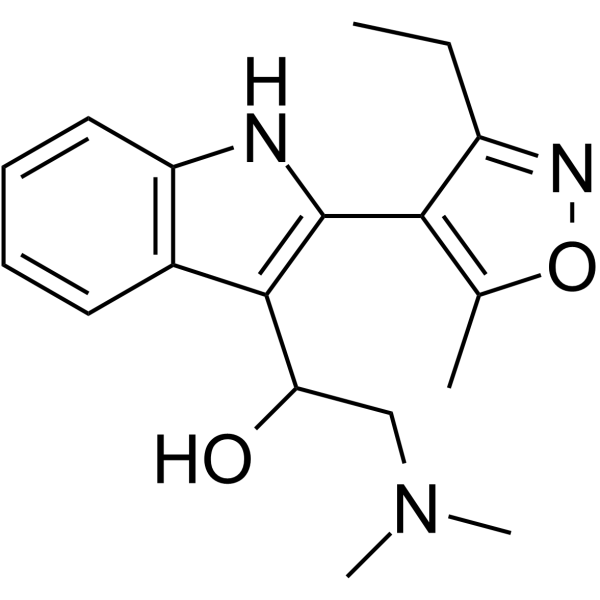
Lilopristone (ZK98734) is a progesterone antagonist with a potential to induce menstruation, inhibit nidation, and terminate pregnancy. Lilopristone blocks progesterone action at the endometrium as well as decreases progesterone bioavailability, and can be utilized in antifertility research .
loading...
    loading...
Cat. No.: HY-111130
CAS No.: 91-80-5
Purity:  99.66%
Research Areas:  

Neurological Disease Cancer

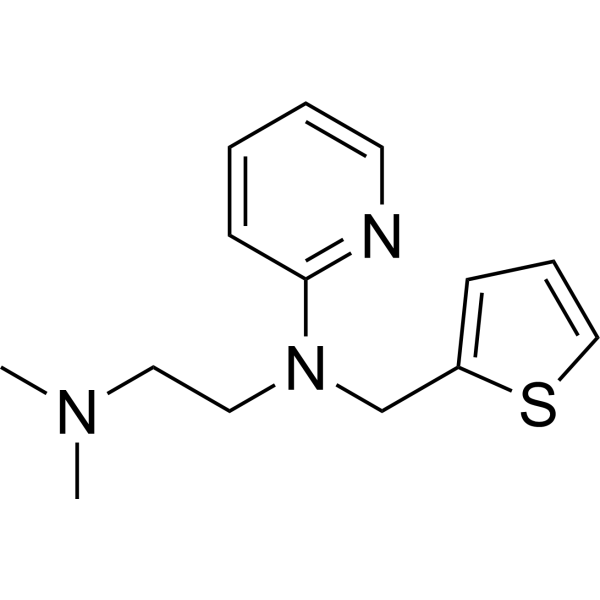
Methapyrilene is a histamine antagonist, a pyridine chemical with anticholinergic activity. Methapyrilene can cause target organ-specific epigenetic alterations, such as a decrease in DNA methylation levels. Methapyrilene induces hepatocellular carcinoma in rats .
loading...
    loading...
Cat. No.: HY-114834
CAS No.: 158234-40-3
Target:  

Drug Derivative

Research Areas:  

Metabolic Disease

AHL-157 is a fibrate hypolipidemic agent. AHL-157 can decrease triglyceride, cholesterol, and blood sugar. AHL-157 can be used for the research of metabolic disease, such as hyperlipidemia and diabete .
loading...
    loading...
Cat. No.: HY-121565
CAS No.: 80565-58-8
Target:  

Insulin Receptor

Research Areas:  

Metabolic Disease Endocrinology

SaRI 59-801 is an orally effective hypoglycemic compound with stimulation activity of insulin secretion. SaRI 59-801 decreases blood glucose in several species and to elevate plasma insulin in rats and mice .
loading...
    loading...
Cat. No.: HY-129782
CAS No.: 179464-49-4
Target:  

SOD

Research Areas:  

Cardiovascular Disease

SC-55858 is an effective superoxide dismutase simulator. SC-55858 increased heart rate and decreased mean arterial pressure and left ventricular systolic and end-diastolic pressures in conscious dogs .
loading...
    loading...
Cat. No.: HY-132221
CAS No.: 2400954-16-5
Purity:  98.8%
Research Areas:  

Inflammation/Immunology

CU-32 is a potent cGAS inhibitor with an IC50 of 0.45 µM. CU-32 decreases IFN-stimulatory DNA-induced production of IFN-β in THP-1 cells .
loading...
    loading...
Cat. No.: HY-135373
CAS No.: 433289-84-0
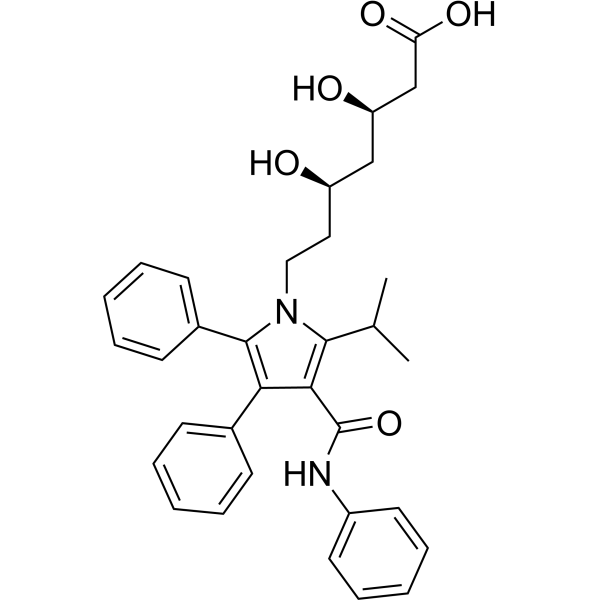
Desfluoro-atorvastatin is an impurity of Atorvastatin . Atorvastatin is an orally active 3-hydroxy-3-methylglutaryl coenzyme A (HMG-CoA) reductase inhibitor, has the ability to effectively decrease blood lipids .
loading...
    loading...
Cat. No.: HY-161950
CAS No.: 137058-21-0
Target:  

Tyrosinase

Research Areas:  

Metabolic Disease

Tyrosinase-IN-33 (compound 5) a Pyridine-based compound, is a potent inhibitor of mushroom tyrosinase diphenolase activity. Tyrosinase-IN-33 significantly decreases the enzyme activity, with an IC50 of 9.0 μM .
loading...
    loading...
Cat. No.: HY-163636
CAS No.: 2767277-64-3
Synonyms: A-442b
Research Areas:  

Cancer

Deltaflexin3 is a potent PDE6D inhibitor. Deltaflexin3 reduces the signaling of Ras and selectively decreases the KRAS mutant and PDE6D-dependent cancer cells growth .
loading...
    loading...
Cat. No.: HY-19445
CAS No.: 862583-15-1
Synonyms: JB95008
Research Areas:  

Cancer

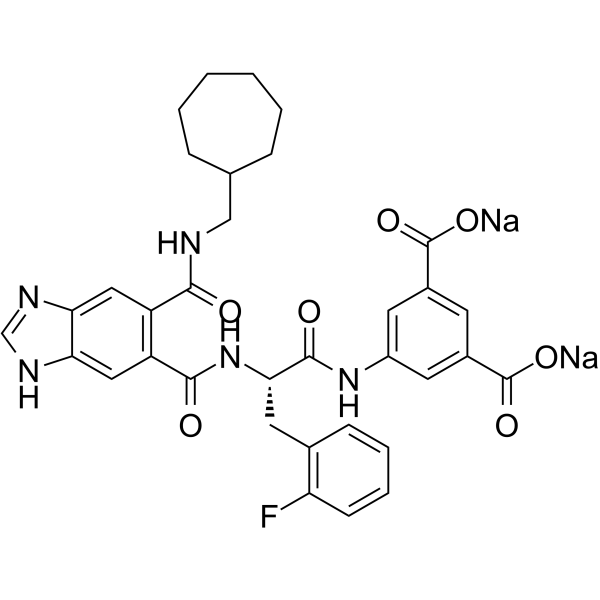
Gastrazole (JB95008) is potent and selective CCK2/gastrin receptor antagonist. Gastrazole can decrease the level of gastric acid. Gastrazole inhibits the Gastrin-stimulated growth of pancreatic cancer .
loading...
    loading...
Cat. No.: HY-N6990
CAS No.: 29388-33-8
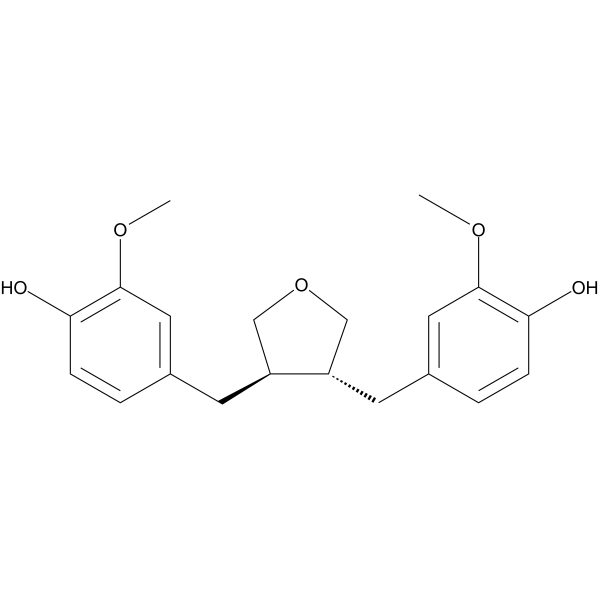
Anhydrosecoisolariciresinol is from the flower of Wedelia biflora, has anti-tumor activities . Anhydrosecoisolariciresinol decreases the growth of human breast cancer MCF-7 and MDA-MB-231 cell lines .
loading...
    loading...
Cat. No.: HY-P5074
CAS No.: 1132745-52-8
Target:  

GCGR

Research Areas:  

Metabolic Disease

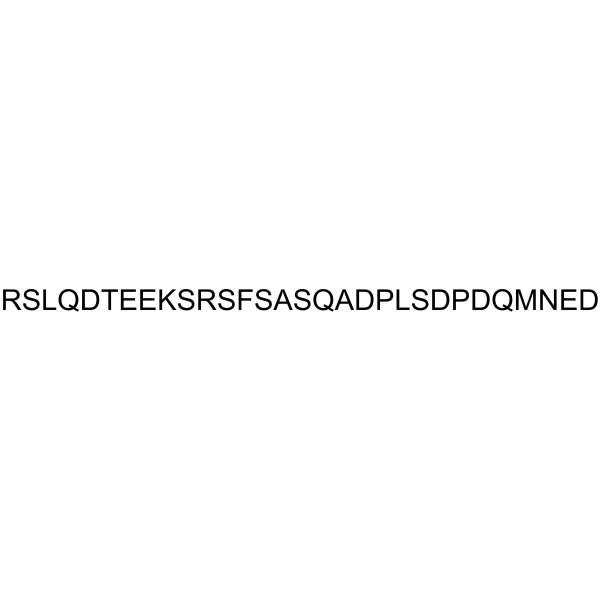
GRPP (human) is a 30 amino acid Gcg-derived peptide. GRPP (human) causes slight increases in plasma insulin and decreases in plasma glucagon. GRPP (human) does not affect insulin secretion in rat islets .
loading...
    loading...
Cat. No.: HY-W008907
CAS No.: 7791-71-1
Synonyms: 5-OTT
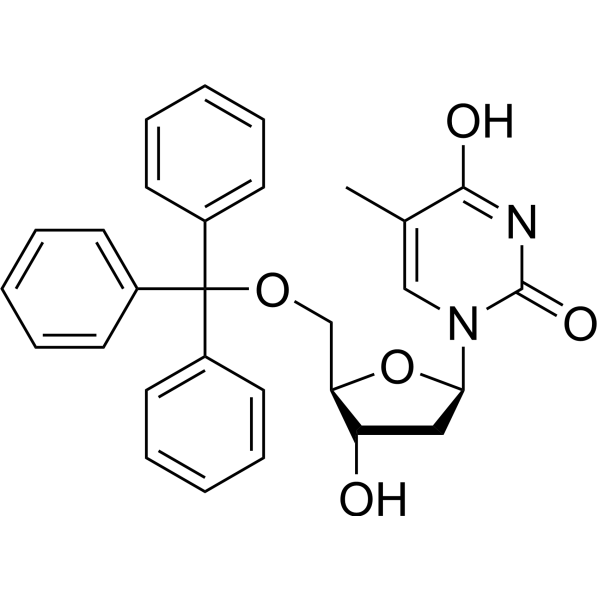
5'-O-Tritylthymidine is an inhibitor of TK-2 and inhibits angiogenesis . 5'-O-Tritylthymidine targets FAK-Mdm-2 interactions, decreasing cell viability and increasing apoptosis.
loading...
    loading...
Cat. No.: HY-W653723
CAS No.: 947-92-2
Synonyms: NDCHA
Target:  

Androgen Receptor

Research Areas:  

Endocrinology

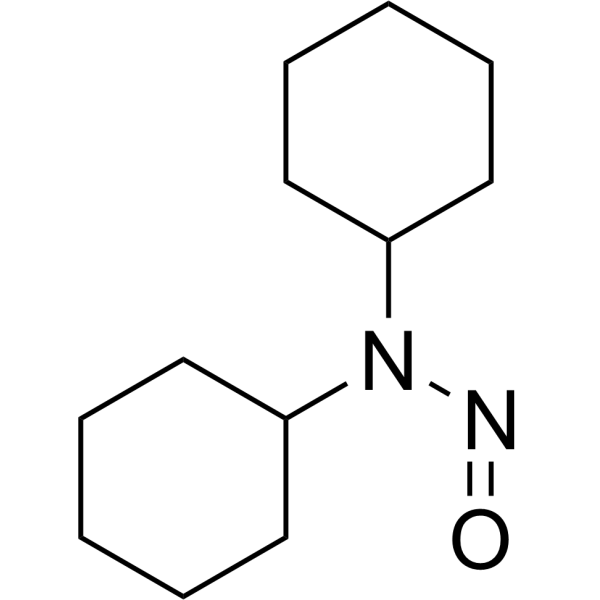
N-Nitrosodicyclohexylamine (NDCHA) is a N-nitrosocompound with anti-androgenic activities. N-Nitrosodicyclohexylamine shows the competitive binding to androgen receptor (AR) against 5α-dihydrotestosterone and decreased the level of AR protein .
loading...
    loading...
Cat. No.: HY-106981
CAS No.: 137109-78-5
Synonyms: OR 1384
Orazipone (OR 1384) is a small molecule immunomodulator with strong anti-inflammatory properties. Orazipone exerts its immunomodulatory effect by forming reversible thiol complexes, which bind to intracellular signaling proteins and the thiol groups of glutathione. Orazipone exhibits potent anti-eosinophilic activity by inducing apoptosis. Orazipone inhibits activation of inflammatory transcription factors NF-kB and STAT 1 and decreases inducible iNOS expression and NO production in response to inflammatory stimuli. Orazipone reduces NADPH oxidase activity and thereby decreases ROS production. Orazipone has a protective effect in intestinal radiation injury .
loading...
    loading...
Cat. No.: HY-133002
CAS No.: 3220-60-8
Synonyms: Sterculic acid methyl ester; Methyl Sterculate
Target:  

Bacterial

Research Areas:  

Infection

Sterculic acid methyl ester is an ester form of sterculic acid, which is an inhibitor of Δ9 desaturase. Sterculic acid methyl ester (0.75 mM) inhibits the growth of, and is toxic to, the bacteria R. opacus. It decreases the fatty acid content, increases the ratio of palmitate to other fatty acids, and decreases the levels of stearate and oleate in R. opacus when used at concentrations of 0.25 or 0.5 mM. Sterculic acid methyl ester (50 ppm) has a synergistic effect on increased tumor growth induced by aflatoxin Q1 in rainbow trout.
The product specifications provided below refer solely to the active content of Methyl sterculate.
loading...
    loading...
Cat. No.: HY-146223
Purity:  99.52%
Target:  

Ras p38 MAPK PI3K Apoptosis

Research Areas:  

Cancer

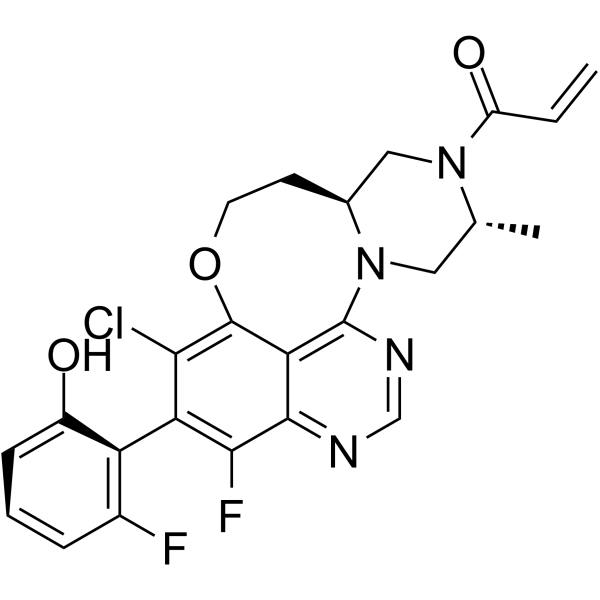
AZD4625 is an orally active, selective irreversible, covalent allosteric GTPase KRASG12C inhibitor with an IC50 of 3 nM. AZD4625 can inhibit the MAPK pathway (with decreased pCRAF, pMEK, and pERK) and the PI3K pathway (with decreased pAKT and pS6), and induce cell apoptosis. AZD4625 has no binding and inhibition of wild-type RAS or isoforms carrying non-KRASG12C mutations. AZD4625 can be used for the study of KRASG12C mutant non-small cell lung cancer .
loading...
    loading...
Cat. No.: HY-N0936R
CAS No.: 532-91-2
Synonyms: 6-Methoxy-2-benzoxazolinone (Standard); 6-MBOA (Standard)
Coixol (Standard) (6-Methoxy-2-benzoxazolinone (Standard)) is the analytical standard of Coixol (HY-N0936). This product is intended for research and analytical applications. Coixol (6-Methoxy-2-benzoxazolinone; 6-MBOA) is a potent and orally active anti-inflammatory agent. Coixol decreases the iNOS protein expression. Coixol inhibits the production of TNF-α, IL-6, and IL-1β. Coixol improves glucose tolerance and plasma insulin. Coixol decreases the blood glucose level .
loading...
    loading...
Cat. No.: HY-W014684
CAS No.: 80-54-6
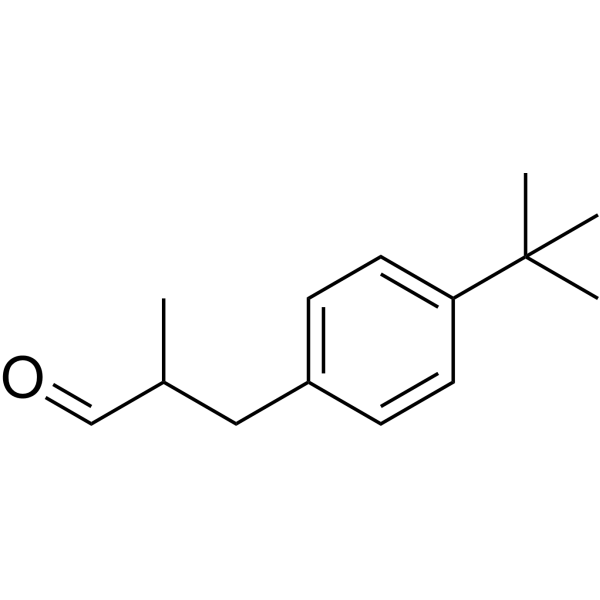
Lilial is a widely used synthetic fragrance and ester in consumer products. Lilial possesses estrogenic activity in vitro. Lilial can induce a toxic effect on mitochondria that causes a decrease in the viability of HaCaT cells. Lilial can increase NRF2 protein level in vitro. Lilial is able to target respiratory chain complexes, inhibit complexes I and II of the electron transport chain, increase the generation of reactive oxygen species, and decrease the level of intracellular ATP. Lilial can induce systemic toxicity in vivo. Lilial induces significant DNA strand breaks .
loading...
    loading...

