



Baimaside
Based on 5 publication(s) in Google Scholar
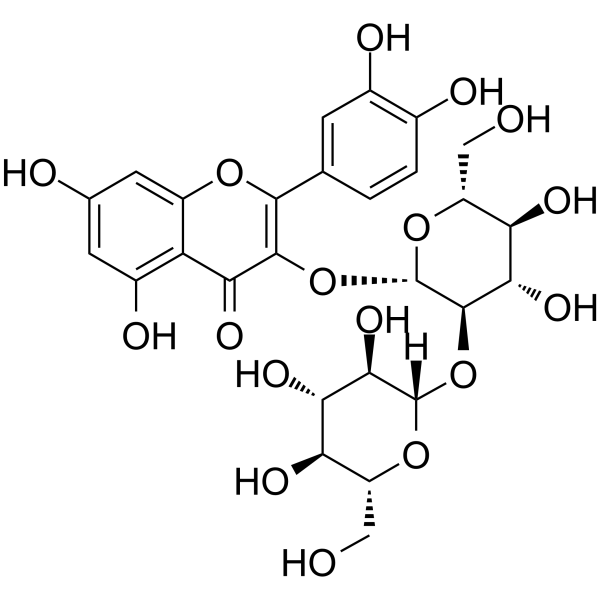
Baimaside (Quercetin 3-O-sophoroside) is a flavonoid cholinergic function modulator that binds to SARS-CoV-2-related targets. Baimaside regulates the expression of cholinergic system-related proteins and acetylcholine levels, improves scopolamine-induced learning and memory impairment, protects hippocampal neurons, inhibits pollen protein fluorescence, and protects pollen DNA. Its biosynthesis is regulated by multiple enzymes. Baimaside is completely absorbed in rats, undergoes phase Ⅱ metabolism and gut microbiota decomposition, and inhibits the invasion and proliferation of SARS-CoV-2 and its variants, making it suitable for research related to Alzheimer's disease and COVID-19.
For research use only. We do not sell to patients.
- Purity : 99.57%
- CAS No.: 18609-17-1
- Formula: C27H30O17
- Molecular Weight:626.52
-
Storage:
4°C, protect from light
* In solvent : -80°C, 6 months; -20°C, 1 month (protect from light)

To place orders, for customer services and technical support, please contact: MedChemExpress USA
Tel: 609-228-6898 E-mail: [email protected] [email protected]


-
 Biological Activity
-
Chemical Information
-
Solvent & Solubility
- Protocols
- Purity & Documentation
- References
-
 Help & FAQs


-
HY-N0153
NaringinCytochrome P450 Inhibitor -
HY-N1445
IsoquercitrinNO Synthase Inhibitor -
HY-N0418
QuercitrinAnti-inflammatory Agent -
HY-N0057
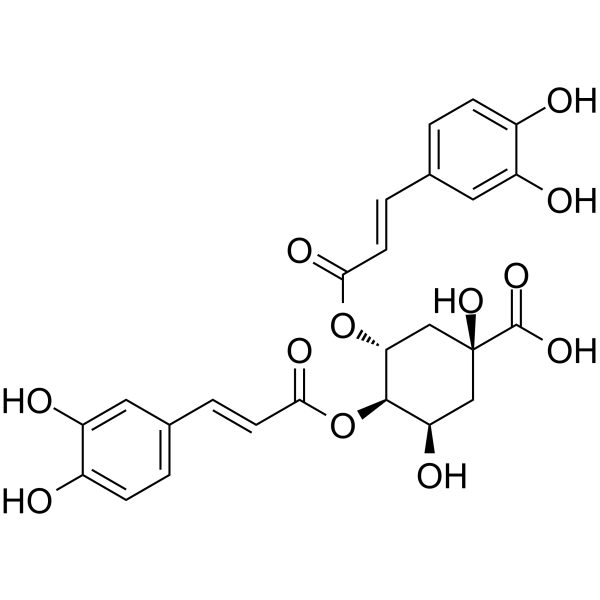
3,4-Dicaffeoylquinic acidAntioxidant -
HY-121471
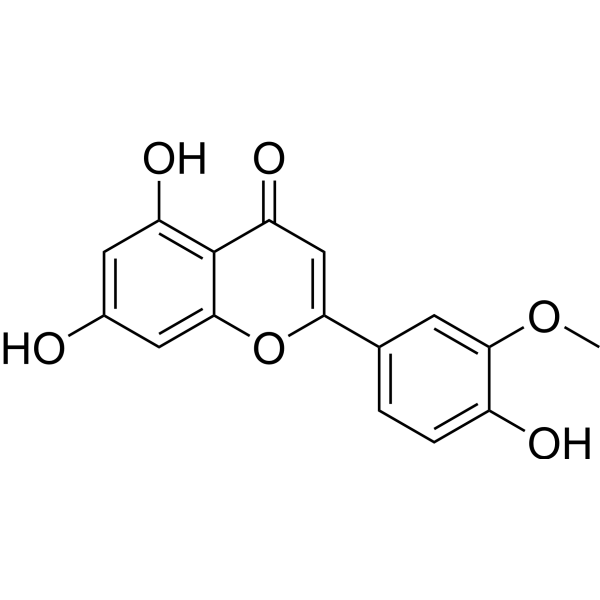
ChrysoeriolAntioxidant Agent -
HY-N2165
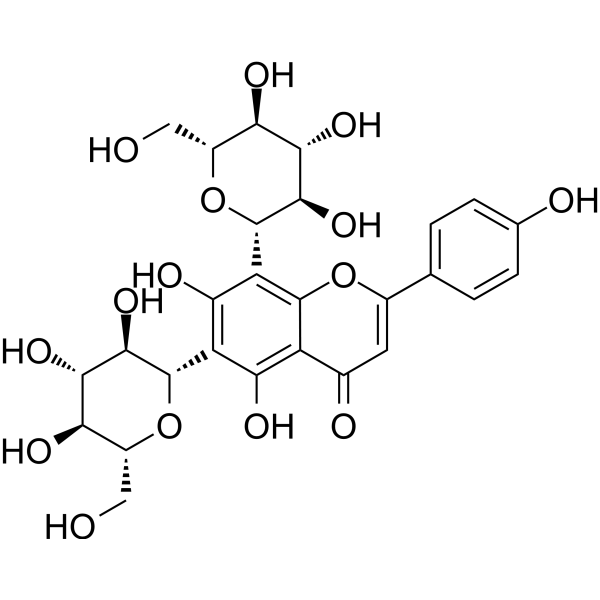
Vicenin 2ACE Inhibitor -
HY-N2055
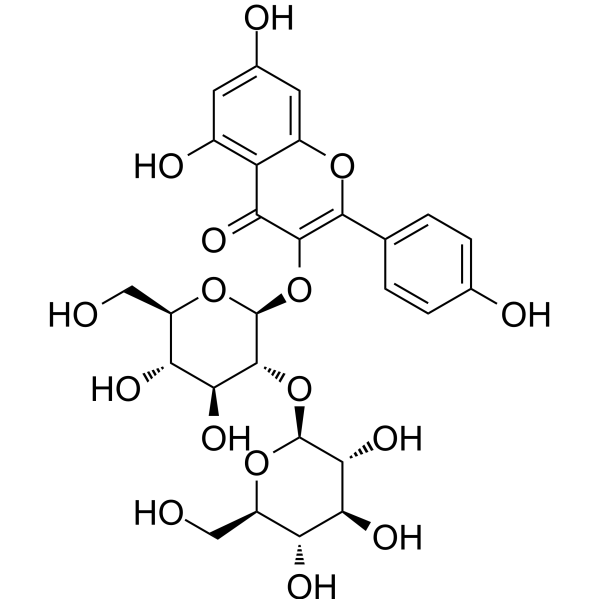
Kaempferol 3-O-sophorosideAnti-Inflammatory Agent
Publications Citing Use of MedChemExpress (MCE) Baimaside
More

Biological Activity
Description
Cellular Effect
|
Cell Line

|
Type | Value | Description | References |
|---|---|---|---|---|
| BV-2 | IC50 |
>100 μM
Compound: 9
|
Antineuroinflammatory activity in human BV2 cells assessed as inhibition of LPS-induced NO production after 24 hrs in presence of LPS by Griess reaction
Antineuroinflammatory activity in human BV2 cells assessed as inhibition of LPS-induced NO production after 24 hrs in presence of LPS by Griess reaction
|
[PMID: 27623545] |
In Vitro
Baimaside (Q3OS) (8-320 μM) suppresses the fluorescence of Betv1a and birch pollen proteins (BPP) in solution, with complete elimination of fluorescence at 320 μM[1].
Baimaside (320 μM) eliminates the characteristic protein fluorescence maximum of Betv1a and birch pollen proteins (BPP) when present at 320 μM[1].
MedChemExpress (MCE) has not independently confirmed the accuracy of these methods. They are for reference only.
In Vivo
MedChemExpress (MCE) has not independently confirmed the accuracy of these methods. They are for reference only.
-
Animal Model:Alzheimer’s disease model in Kunming mice (male, 8-10 weeks old, 25-30 g, scopolamine-induced memory impairment)[2]
-
Dosage:5 mg/kg; 10 mg/kg; 20 mg/kg
-
Administration:i.p.; daily; 13 days
-
Result:Reduced escape latency and increased platform crossings in the Morris water maze test. Blocked neuronal loss in the hippocampal CA1 region.
Reversed scopolamine-induced decreases in ChAT expression and ACh levels.
Reversed scopolamine-induced increases in AChE expression.


Chemical Information
-
CAS No. 18609-17-1
-
Appearance Solid
-
Molecular Weight 626.52
-
Formula C27H30O17
-
Color Light yellow to yellow
-
SMILES
O=C1C(O[C@H](O[C@H](CO)[C@@H](O)[C@@H]2O)[C@@H]2O[C@]([C@@H]([C@@H](O)[C@@H]3O)O)([H])O[C@@H]3CO)=C(C4=CC(O)=C(O)C=C4)OC5=CC(O)=CC(O)=C15
-
Synonyms
Quercetin 3-O-sophoroside
-
Structure Classification
-
Initial Source
-
Shipping
Room temperature in continental US; may vary elsewhere.
-
Storage
4°C, protect from light
* In solvent : -80°C, 6 months; -20°C, 1 month (protect from light)


Publications (5)
-
Journal Impact Factor
-
Most Recent
-
Food Chem
Effects of sun drying combined with baking processes on the flavor quality of Chongqing Tuocha raw tea. [Abstract]2025 Dec 30:497:146992. PMID: 41285060 -
Food Chem
Flavonoid-mediated metabolic underpinning quality variation in red bud-sport pear mutants. [Abstract]2025 Oct 15:489:144992. PMID: 40466530 -
Cancer Immunol Res
Elevated CHAF1A suppresses type I interferon production and causes immunotherapy resistance in esophageal squamous cell carcinoma. [Abstract]2026 Jul 16. PMID: 42462139 -
-


Solvent & Solubility
In Vitro:
DMSO : 250 mg/mL (399.03 mM; Need ultrasonic; Hygroscopic DMSO has a significant impact on the solubility of product, please use newly opened DMSO)
Please refer to the solubility information to select the appropriate solvent. Once prepared, please aliquot and store the solution to prevent product inactivation from repeated freeze-thaw cycles.
Storage method and period of stock solution: -80°C, 6 months; -20°C, 1 month (protect from light). When stored at -80°C, please use it within 6 months. When stored at -20°C, please use it within 1 month.
Please refer to the solubility information to select the appropriate solvent. Once prepared, please aliquot and store the solution to prevent product inactivation from repeated freeze-thaw cycles.
Storage method and period of stock solution: -80°C, 6 months; -20°C, 1 month (protect from light). When stored at -80°C, please use it within 6 months. When stored at -20°C, please use it within 1 month.
Concentration (start) × Volume (start) = Concentration (final) × Volume (final)
In Vivo:
Select the appropriate dissolution method based on your experimental animal and administration route.
- For the following dissolution methods, please ensure to first prepare a clear stock solution using an In Vitro approach and then sequentially add co-solvents:
- To ensure reliable experimental results, the clarified stock solution can be appropriately stored based on storage conditions. As for the working solution for In Vivo experiments, it is recommended to prepare freshly and use it on the same day.
- The percentages shown for the solvents indicate their volumetric ratio in the final prepared solution. If precipitation or phase separation occurs during preparation, heat and/or sonication can be used to aid dissolution.
Add each solvent one by one: 10% DMSO 40% PEG300 5% Tween-80 45% Saline
Solubility: ≥ 2.08 mg/mL (3.32 mM); Clear solution
This protocol yields a clear solution of ≥ 2.08 mg/mL (saturation unknown).
Taking 1 mL working solution as an example, add 100 μL DMSO stock solution (20.8 mg/mL) to 400 μL PEG300, and mix evenly; then add 50 μL Tween-80 and mix evenly; then add 450 μL Saline to adjust the volume to 1 mL.
Preparation of Saline: Dissolve 0.9 g sodium chloride in ddH₂O and dilute to 100 mL to obtain a clear Saline solution.
Add each solvent one by one: 10% DMSO 90% (20% SBE-β-CD in Saline)
Solubility: ≥ 2.08 mg/mL (3.32 mM); Clear solution
This protocol yields a clear solution of ≥ 2.08 mg/mL (saturation unknown).
Taking 1 mL working solution as an example, add 100 μL DMSO stock solution (20.8 mg/mL) to 900 μL 20% SBE-β-CD in Saline, and mix evenly.
Preparation of 20% SBE-β-CD in Saline (4°C, storage for one week): 2 g SBE-β-CD powder is dissolved in 10 mL Saline, completely dissolve until clear.
In Vivo Dissolution Calculator
Please enter the basic information of animal experiments:
-
-
-
-
Recommended: Prepare an additional quantity of animals to account for potential losses during experiments.
Please enter your animal formula composition:
-
%DMSO +
Recommended: Keep the proportion of DMSO in working solution below 2% if your animal is weak.
-
%+
-
+%Tween-80 + +
-
%Saline +
The co-solvents required include: DMSO, . All of co-solvents are available by MedChemExpress (MCE). , Tween 80. All of co-solvents are available by MedChemExpress (MCE).
Working solution concentration: 0.22 mg/mL
Method for preparing stock solution: mg drug dissolved in μL DMSO. Stock solution concentration: mg/mL. * In solvent : -80°C, 6 months; -20°C, 1 month (protect from light)
1. Take μL DMSO stock solution;
2. Add μL .
μL , mix evenly;
3. Then add μL Tween 80, mix evenly;
4. Then add μL
Please ensure that the stock solution in the first step is dissolved to a clear state, and add co-solvents in sequence. You can use ultrasonic heating (ultrasonic cleaner, recommended frequency 20-40 kHz), vortexing, etc. to assist dissolution.


Purity & Documentation
-
Data Sheet (284 KB)
-
SDS (393 KB)
- English - EN (393 KB)
- Français - FR (393 KB)
- Deutsch - DE (393 KB)
- Norwegian - NO (393 KB)
- Español - ES (393 KB)
- Swedish - SV (393 KB)
- Italian - IT (393 KB)
- Korean - KR (393 KB)
- Portuguese - PT (393 KB)
-
Handling Instructions (2659 KB)
References


Complete Stock Solution Preparation Table
Please refer to the solubility information to select the appropriate solvent. Once prepared, please aliquot and store the solution to prevent product inactivation from repeated freeze-thaw cycles.
Storage method and period of stock solution: -80°C, 6 months; -20°C, 1 month (protect from light). When stored at -80°C, please use it within 6 months. When stored at -20°C, please use it within 1 month.
| Optional Solvent | Concentration Solvent Mass | 1 mg | 5 mg | 10 mg | 25 mg |
|---|---|---|---|---|---|
| DMSO | 1 mM | 1.5961 mL | 7.9806 mL | 15.9612 mL | 39.9030 mL |
| 5 mM | 0.3192 mL | 1.5961 mL | 3.1922 mL | 7.9806 mL | |
| 10 mM | 0.1596 mL | 0.7981 mL | 1.5961 mL | 3.9903 mL | |
| 15 mM | 0.1064 mL | 0.5320 mL | 1.0641 mL | 2.6602 mL | |
| 20 mM | 0.0798 mL | 0.3990 mL | 0.7981 mL | 1.9951 mL | |
| 25 mM | 0.0638 mL | 0.3192 mL | 0.6384 mL | 1.5961 mL | |
| 30 mM | 0.0532 mL | 0.2660 mL | 0.5320 mL | 1.3301 mL | |
| 40 mM | 0.0399 mL | 0.1995 mL | 0.3990 mL | 0.9976 mL | |
| 50 mM | 0.0319 mL | 0.1596 mL | 0.3192 mL | 0.7981 mL | |
| 60 mM | 0.0266 mL | 0.1330 mL | 0.2660 mL | 0.6650 mL | |
| 80 mM | 0.0200 mL | 0.0998 mL | 0.1995 mL | 0.4988 mL | |
| 100 mM | 0.0160 mL | 0.0798 mL | 0.1596 mL | 0.3990 mL |


Baimaside Related Classifications
HY-N2183 Related Classifications
 Powered by Bioz