



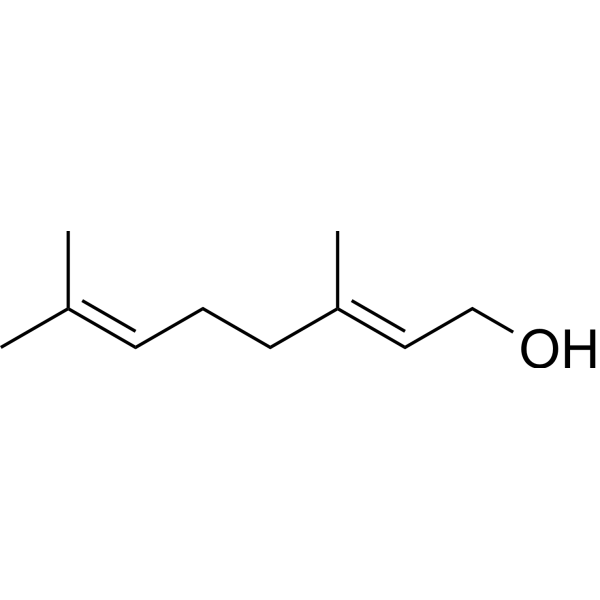
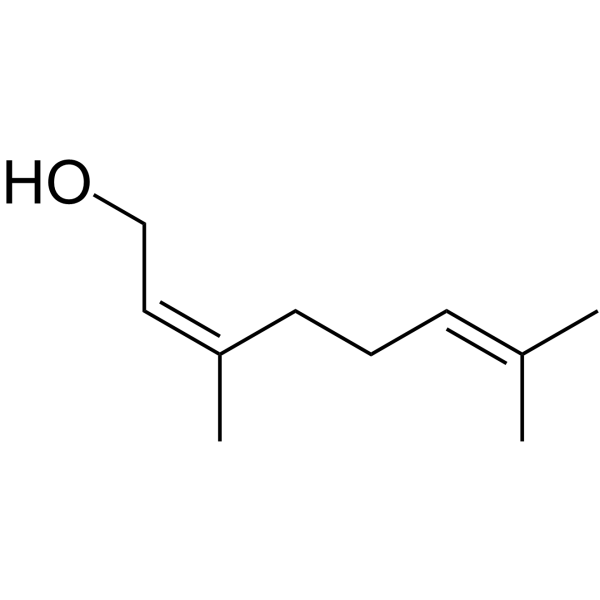
Geraniol
Based on 2 publication(s) in Google Scholar
Geraniol is an olefin terpene with oral activity. Geraniol inhibits cell proliferation and promotes apoptosis. Geraniol has antibacterial, antifungal, antioxidant, anti-inflammatory and antitumor activities. Geraniol can be used to study diabetes.
For research use only. We do not sell to patients.
- Purity : 98.62%
- CAS No.: 106-24-1
- Formula: C10H18O
- Molecular Weight:154.25
-
Storage:
4°C, protect from light
* In solvent : -80°C, 6 months; -20°C, 1 month (protect from light)

To place orders, for customer services and technical support, please contact: MedChemExpress USA
Tel: 609-228-6898 E-mail: [email protected] [email protected]


-
 Biological Activity
-
Chemical Information
-
Solvent & Solubility
- Protocols
- Purity & Documentation
- References
-
 Help & FAQs


-
HY-N0368
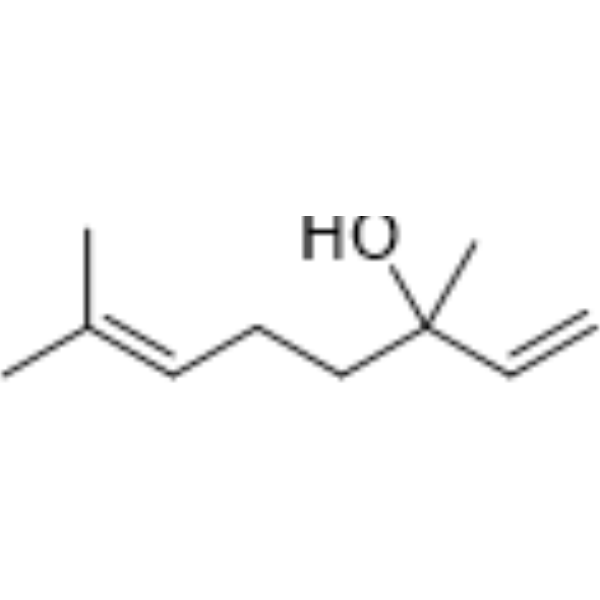
Linalool,98% (stabilized with MEHQ)Antibiotic -
HY-N0803
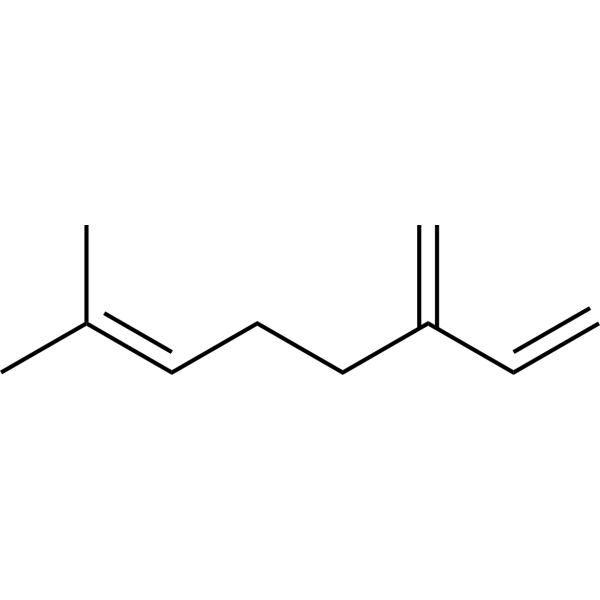
Myrcene,75% (stabilized with BHT)NF-κB Inhibitor -
HY-W010201
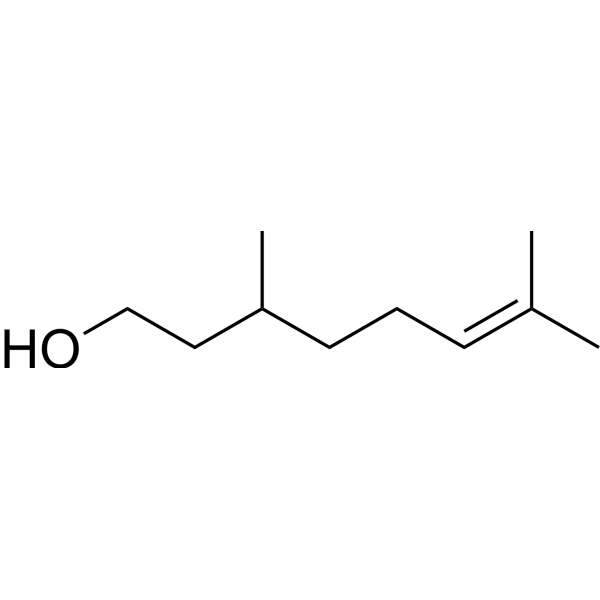
CitronellolApoptosis Inducer -
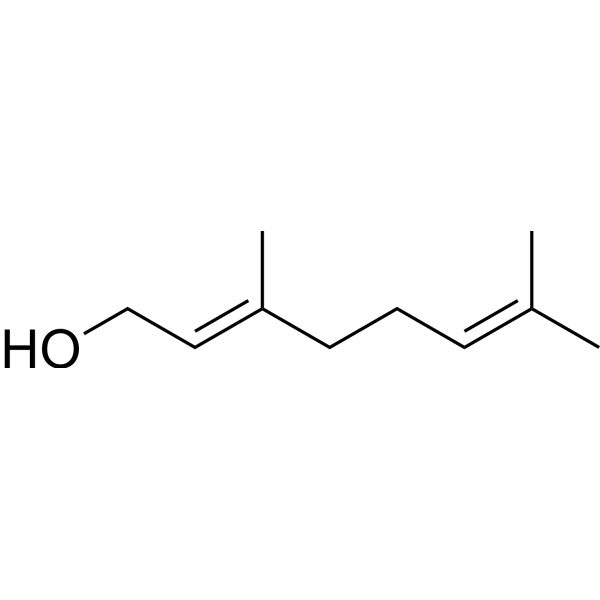
HY-N6952R
Geraniol (Standard) -
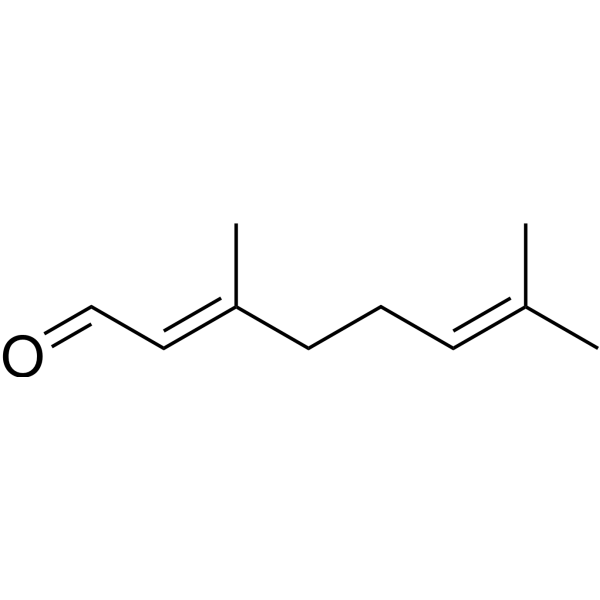
HY-N7083
CitralAnti-inflammatory Agent -
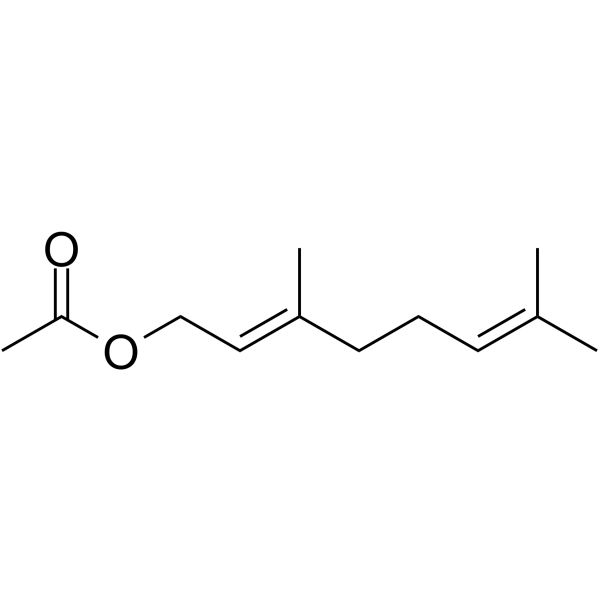
HY-N7070
Geranyl acetateAcyclic Monoterpene Ester -
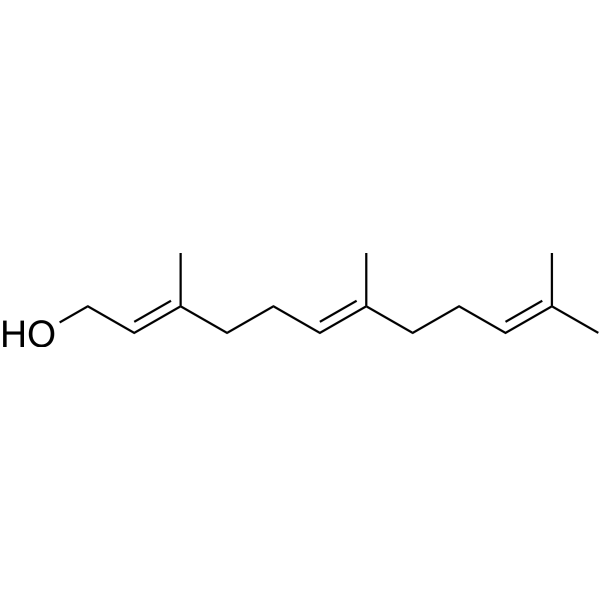
HY-Y0248A
Farnesol -
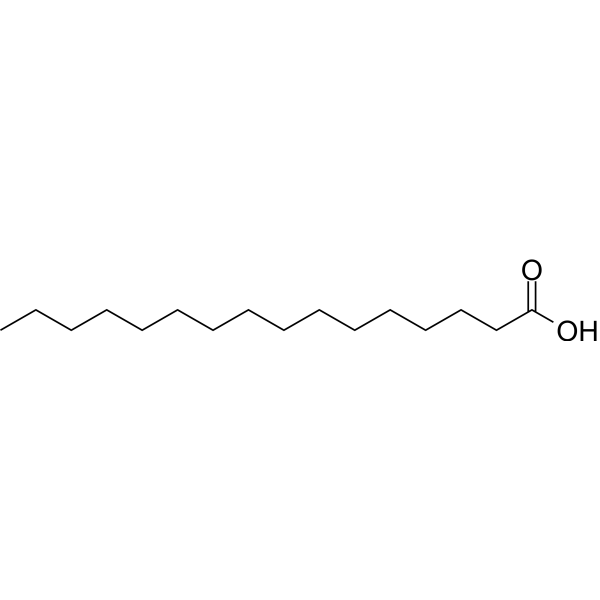
HY-N0830
Palmitic acidEndogenous Metabolite -
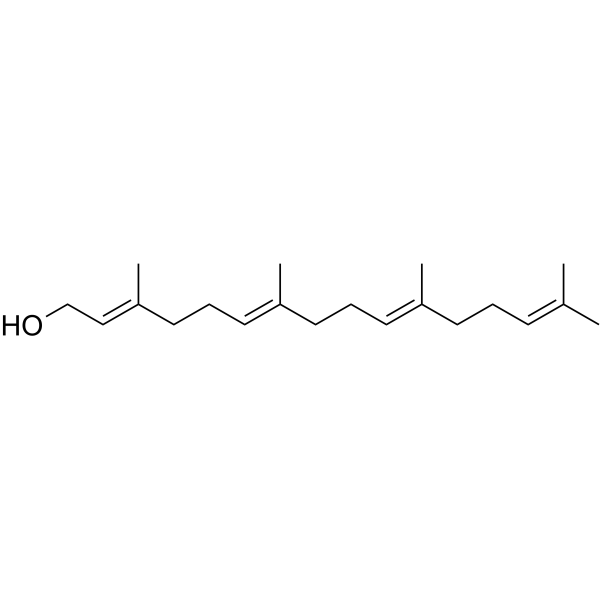
HY-W011474
GeranylgeraniolVitamin K2 -
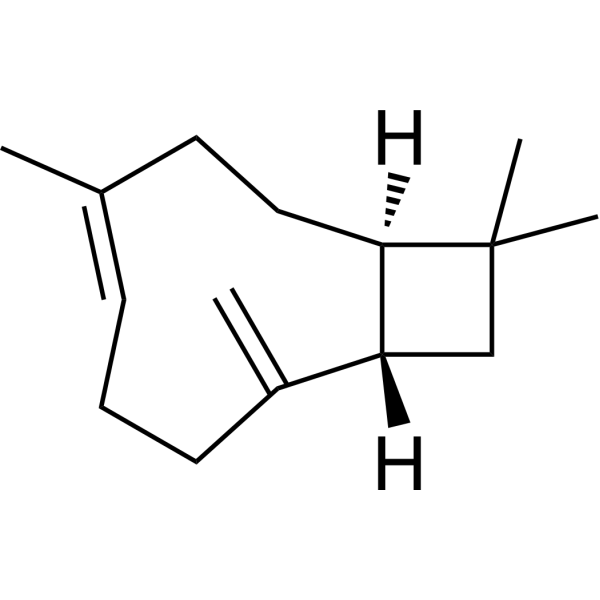
HY-N1415
β-CaryophylleneCannabinoid Receptor Agonist -
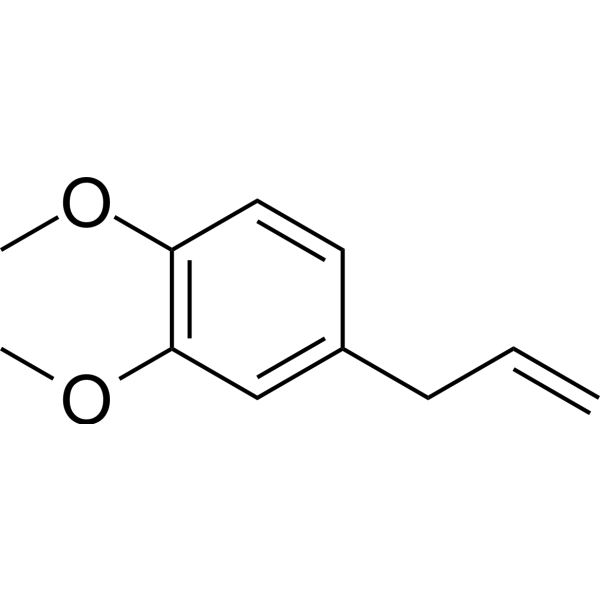
HY-N6996
Methyl EugenolAnti-Insect Agent -
HY-N7063
NerolROS Activator
Publications Citing Use of MedChemExpress (MCE) Geraniol
MoreAll Endogenous Metabolite Isoforms
More

Biological Activity
Description
Cellular Effect
|
Cell Line

|
Type | Value | Description | References |
|---|---|---|---|---|
| HEK293 | IC50 |
>100 μM
Compound: Geraniol
|
Antagonist activity against human TRPV1 expressed in HEK293 cells assessed as inhibition of capsaicin-induced increase in intracellular Ca2+ concentration by Fluo-4-AM dye based spectrofluorimetry
Antagonist activity against human TRPV1 expressed in HEK293 cells assessed as inhibition of capsaicin-induced increase in intracellular Ca2+ concentration by Fluo-4-AM dye based spectrofluorimetry
|
[PMID: 25455494] |
| HEK293 | IC50 |
>100 μM
Compound: Geraniol
|
Antagonist activity against rat TRPA1 expressed in HEK293 cells assessed as inhibition of AITC-induced increase in intracellular Ca2+ concentration by Fluo-4-AM dye based spectrofluorimetry
Antagonist activity against rat TRPA1 expressed in HEK293 cells assessed as inhibition of AITC-induced increase in intracellular Ca2+ concentration by Fluo-4-AM dye based spectrofluorimetry
|
[PMID: 25455494] |
| HEK293 | IC50 |
>100 μM
Compound: Geraniol
|
Antagonist activity against rat TRPM8 expressed in HEK293 cells assessed as inhibition of icilin-induced increase in intracellular Ca2+ concentration by Fluo-4-AM dye based spectrofluorimetry
Antagonist activity against rat TRPM8 expressed in HEK293 cells assessed as inhibition of icilin-induced increase in intracellular Ca2+ concentration by Fluo-4-AM dye based spectrofluorimetry
|
[PMID: 25455494] |
In Vitro
Geraniol (0.25-1 mM, 24, 48, 72 h) blocks the cell cycle and induces apoptosis in PC-3 cells[2].
MedChemExpress (MCE) has not independently confirmed the accuracy of these methods. They are for reference only.
-
Cell Line:PC-3
-
Concentration:0.068, 0.125, 0.25, 0.5, 1 mM
-
Incubation Time:72 h
-
Result:Decreased cell growth in a concentration-dependment manner.
-
Cell Line:PC-3
-
Concentration:0.25, 0.5, 1 mM
-
Incubation Time:24 h
-
Result:Increased the percentage of G1 and/or sub-G1 phase cells.
-
Cell Line:PC-3
-
Concentration:0.25, 0.5, 1 mM
-
Incubation Time:24 h
-
Result:Increased the activity of caspase-3. Reduced the expressions of four cyclin isotypes (cyclin A, B, D, and E), two of CDK family (CDK1 and CDK4), and two anti-apoptotic Bcl-2 family members (Bcl-2 and Bcl-w). Elevated the expressions of two CDK inhibitory proteins (p21 and p27) and two pro-apoptotic Bcl-2 family members (Bax and BNIP3).
In Vivo
Geraniol (200 mg/kg, orally, for 45 consecutive days) improves hyperglycemia by reducing a key enzyme in carbohydrate metabolism induced by streptomycin (HY-13753) in diabetic rats[3].
Geraniol (100 mg/kg/day, orally, for 4 weeks) alleviates oxidative stress, bioaccumulation, serological and histopathological changes during aluminum chloride hepatopancreas poisoning in male Wistar rats[4].
MedChemExpress (MCE) has not independently confirmed the accuracy of these methods. They are for reference only.
-
Animal Model:PC-3 cell xenograft in nude mice[2]
-
Dosage:60, 300 mg/kg
-
Administration:s.c.
-
Result:Reduced the tumor volume and weight. Increased the percentage of apoptotic cells and reduced the expression level of Ki-67.
-
Animal Model:Streptozotocin-induced diabetic rats [3]
-
Dosage:200 mg/kg
-
Administration:p.o.
-
Result:Decreased the body weight in diabetes rats and decreased blood glucose and increased plasma insulin to near normal. Reverted the levels of Hb and HbA1C towards near normal and reversed the activities of these enzymes to near normal.
-
Animal Model:Aluminum chloride-hepatopancreatic toxicity rats[4]
-
Dosage:100 mg/kg
-
Administration:p.o.
-
Result:Reduced AST, ALT, ALP, LDH, pancreatic enzymes and FBS levels. Reduced the MDA and Increased the TAC levels.
- Research Protocol for Infectious Diseases
- Annexin V plus membrane-impermeant dye apoptosis staining
- BrdU Incorporation Assay
- Somatic Cell Culture
- CFSE Dye Dilution Proliferation Assay
- Dye-dilution cell tracking and proliferation staining
- CCK-8/WST-8 Cell Proliferation Assay
- Protocol for Cell Cycle
- Cell Counting-Based Growth Curve Assay
- Research Protocol for Inflammation-related Diseases
- Colony Formation (Clonogenic) Assay
- Research Protocol for Metabolic Diseases
- Cell Viability Determination by MTT Colorimetric Assay
- EdU Incorporation Assay (Click Chemistry-Based DNA Synthesis Measurement)
- Ki-67 Immunostaining Proliferation Assay
- Detection of Apoptosis
- TUNEL staining for apoptotic DNA fragmentation
- PCNA Immunodetection Proliferation Assay
- Protocol for Cell Counting and Cell Density Analysis
- Apoptosis Solutions
- MTT Cell Proliferation Assay


Chemical Information
-
CAS No. 106-24-1
-
Appearance Liquid (Density: 0.879 g/cm3)
-
Molecular Weight 154.25
-
Formula C10H18O
-
Color Colorless to light yellow
-
SMILES
C/C(C)=C\CC/C(C)=C/CO
-
Structure Classification
-
Initial Source
-
Shipping
Room temperature in continental US; may vary elsewhere.
-
Storage
4°C, protect from light
* In solvent : -80°C, 6 months; -20°C, 1 month (protect from light)


Publications (2)
-
Journal Impact Factor
-
Most Recent
-
Pestic Biochem Physiol
Mechanistic insights into chlorogenic acid and caffeic acid as novel juvenile hormone antagonists. [Abstract]2025 Dec:215:106655. PMID: 41162045 -
J Neuroimmunol
Geraniol (GER) attenuated chronic sleep restriction (CSR)-induced neuroinflammation in adolescent mice. [Abstract]2024 Aug 15:393:578400. PMID: 38991453


Solvent & Solubility
In Vitro:
H2O : 1 mg/mL (6.48 mM; ultrasonic and warming and heat to 80°C)
Please refer to the solubility information to select the appropriate solvent. Once prepared, please aliquot and store the solution to prevent product inactivation from repeated freeze-thaw cycles.
Storage method and period of stock solution: -80°C, 6 months; -20°C, 1 month (protect from light). When stored at -80°C, please use it within 6 months. When stored at -20°C, please use it within 1 month.
* Note: If you choose water as the stock solution, please dilute it to the working solution, then filter and sterilize it with a 0.22 μm filter before use.
Please refer to the solubility information to select the appropriate solvent. Once prepared, please aliquot and store the solution to prevent product inactivation from repeated freeze-thaw cycles.
Storage method and period of stock solution: -80°C, 6 months; -20°C, 1 month (protect from light). When stored at -80°C, please use it within 6 months. When stored at -20°C, please use it within 1 month.
* Note: If you choose water as the stock solution, please dilute it to the working solution, then filter and sterilize it with a 0.22 μm filter before use.
Concentration (start) × Volume (start) = Concentration (final) × Volume (final)
In Vivo:
For the following dissolution methods, please prepare the working solution directly:
It is recommended to prepare fresh solutions and use them promptly within a short period of time.
The percentages shown for the solvents indicate their volumetric ratio in the final prepared solution. If precipitation or phase separation occurs during preparation, heat and/or sonication can be used to aid dissolution.
Add each solvent one by one: PBS
Solubility: 100 mg/mL (648.30 mM); Clear solution; Need ultrasonic


Purity & Documentation
-
Data Sheet (275 KB)
-
SDS (615 KB)
- English - EN (615 KB)
- Français - FR (615 KB)
- Deutsch - DE (615 KB)
- Norwegian - NO (615 KB)
- Español - ES (615 KB)
- Swedish - SV (615 KB)
- Italian - IT (615 KB)
- Korean - KR (615 KB)
- Portuguese - PT (615 KB)
-
Handling Instructions (2659 KB)
References
[1]. Bard M, et al. Geraniol interferes with membrane functions in strains of Candida and Saccharomyces. Lipids. 1988 Jun;23(6):534-8. [Content Brief]
[2]. Kim SH, et al. Geraniol inhibits prostate cancer growth by targeting cell cycle and apoptosis pathways. Biochem Biophys Res Commun. 2011 Apr 1;407(1):129-34. [Content Brief]
[3]. Babukumar S, et al. Geraniol, a natural monoterpene, ameliorates hyperglycemia by attenuating the key enzymes of carbohydrate metabolism in streptozotocin-induced diabetic rats. Pharm Biol. 2017 Dec;55(1):1442-1449. [Content Brief]
[4]. Hosseini SM, et al. Geraniol attenuates oxidative stress, bioaccumulation, serological and histopathological changes during aluminum chloride-hepatopancreatic toxicity in male Wistar rats. Environ Sci Pollut Res Int. 2020 Jun;27(16):20076-20089. [Content Brief]
[5]. Pereira Fde O, et al. Antifungal activity of geraniol and citronellol, two monoterpenes alcohols, against Trichophyton rubrum involves inhibition of ergosterol biosynthesis. Pharm Biol. 2015 Feb;53(2):228-34. [Content Brief]


Complete Stock Solution Preparation Table
Please refer to the solubility information to select the appropriate solvent. Once prepared, please aliquot and store the solution to prevent product inactivation from repeated freeze-thaw cycles.
Storage method and period of stock solution: -80°C, 6 months; -20°C, 1 month (protect from light). When stored at -80°C, please use it within 6 months. When stored at -20°C, please use it within 1 month.
| Optional Solvent | Concentration Solvent Mass | 1 mg | 5 mg | 10 mg | 25 mg |
|---|---|---|---|---|---|
| H2O | 1 mM | 6.4830 mL | 32.4149 mL | 64.8298 mL | 162.0746 mL |
| 5 mM | 1.2966 mL | 6.4830 mL | 12.9660 mL | 32.4149 mL |
* Note: If you choose water as the stock solution, please dilute it to the working solution, then filter and sterilize it with a 0.22 μm filter before use.


Geraniol Related Classifications
HY-N6952 Related Classifications
 Powered by Bioz