



Betulonaldehyde
Betulonaldehyde is a pentacyclic triterpenoid that can be isolated from Diospyros filipendula. Betulonaldehyde has antiplasmodial activity (IC50: 3.36 µg/mL). Betulonaldehyde has cytotoxic to NCI H187 lung cancer cells and non-cancerous Vero cells (IC50s: 19.23 and 17.09 µg/mL, respectively). Betulonaldehyde inhibits Phorbol 12-myristate 13-acetate (HY-18739) induced inflammation in mice.
For research use only. We do not sell to patients.
- CAS No.: 4439-98-9
- Formula: C30H46O2
- Molecular Weight:438.69
-
Storage:
Please store the product under the recommended conditions in the Certificate of Analysis.


To place orders, for customer services and technical support, please contact: MedChemExpress USA
Tel: 609-228-6898 E-mail: [email protected] [email protected]


-
 Biological Activity
-
Chemical Information
- Protocols
- Purity & Documentation
- References
-
 Help & FAQs


-
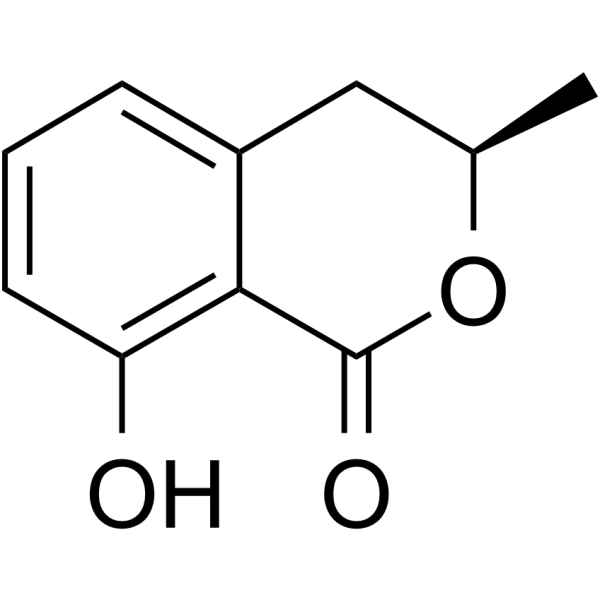
HY-N3300
MelleinNatural Product -
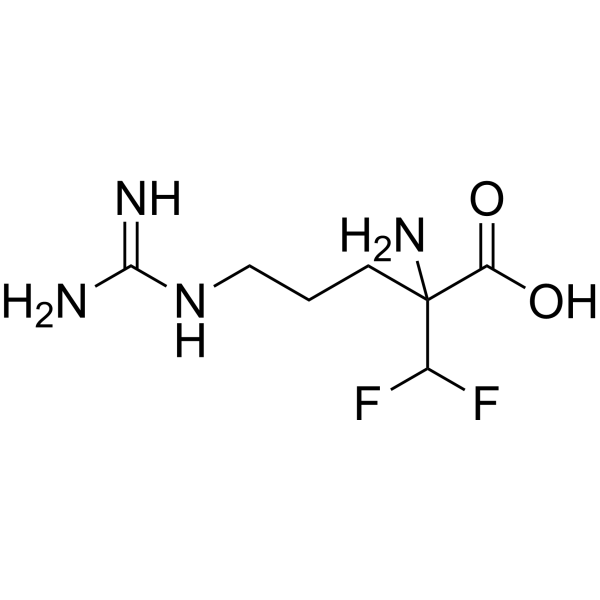
HY-134161
DL-α-(Difluoromethyl)arginineArginine Decarboxylases Inhibitor -
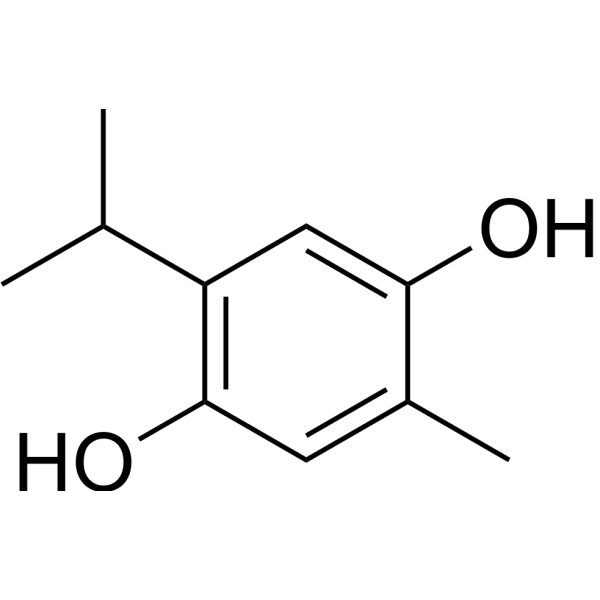
HY-W196368
ThymohydroquinoneCOX-2 Inhibitor -
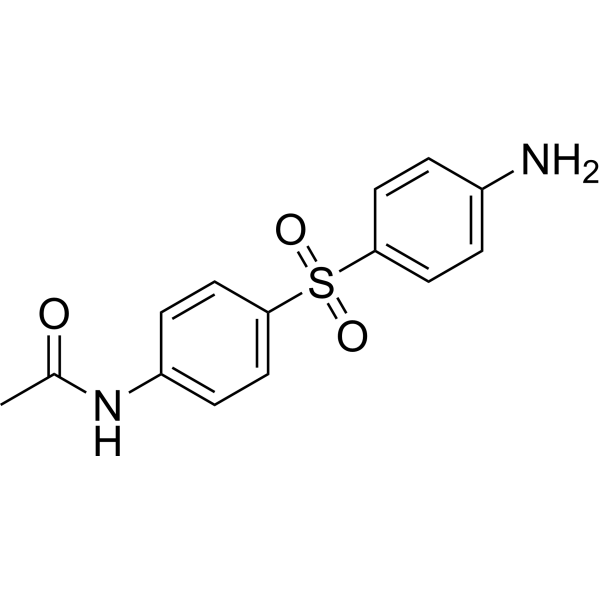
HY-G0016
N-Acetyl dapsoneDapsone Metabolite -
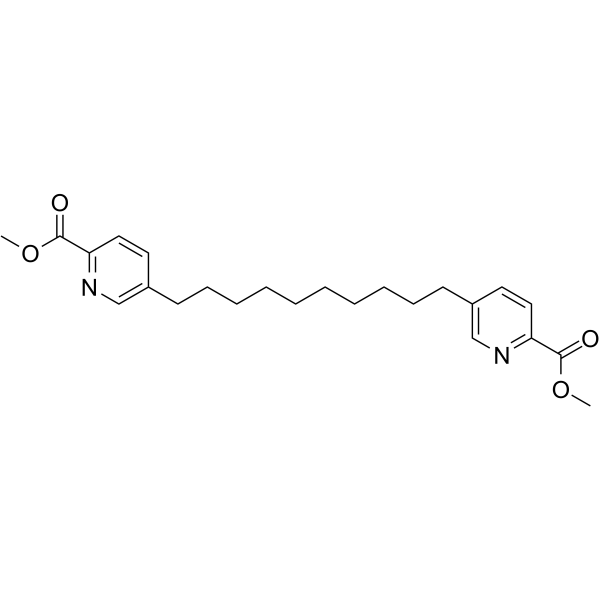
HY-124301
Penicolinate APicolinic Acid Derivative -
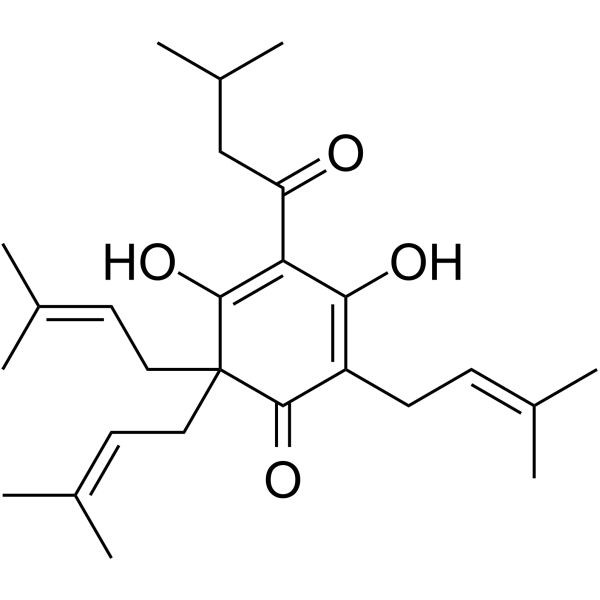
HY-124923
LupuloneBacterial Inhibitor -
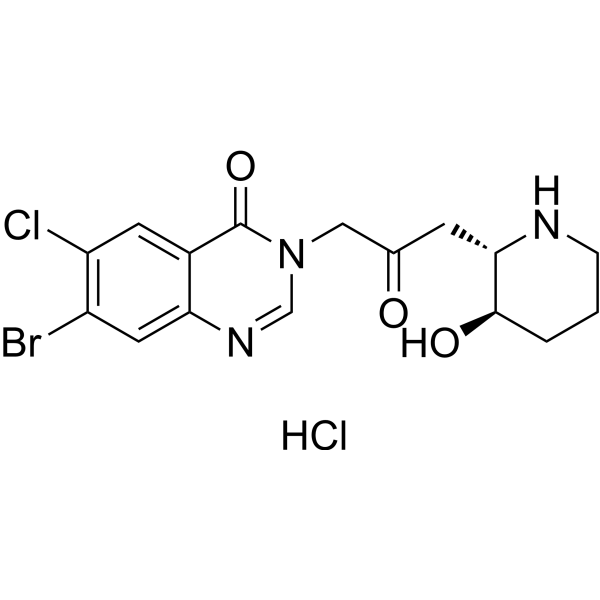
HY-N1584B
Halofuginone hydrochlorideNatural Product -

HY-N8280
IKD-8344Macrocyclic Dilactone -
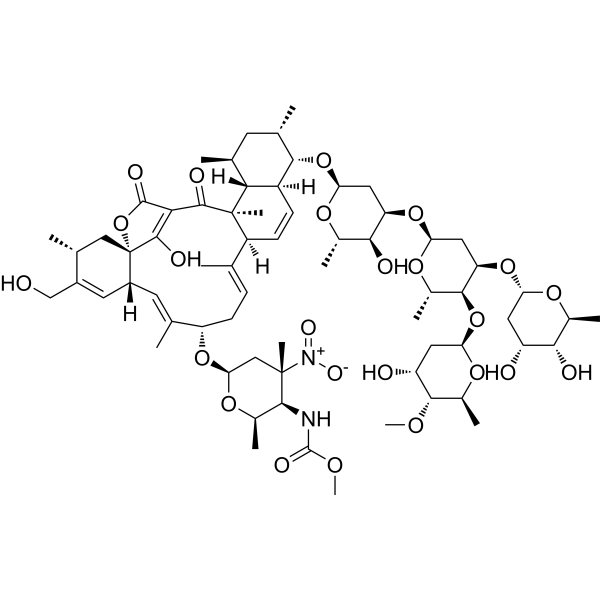
HY-125049
KijanimicinAntibiotic -

HY-N8373
Beauvericin AAntibacterial Agent -
HY-136943
K-41Antimalarial/Antibacterial Agent -

HY-N1584BR
Halofuginone hydrochloride (Standard)Reference Standard
All Parasite Isoforms
More

Biological Activity
Description
Cellular Effect
|
Cell Line

|
Type | Value | Description | References |
|---|---|---|---|---|
| B16 | ED50 |
0.35 μM
Compound: 10
|
Induction of melanogenesis in mouse B16 2F2 cells assessed as intracellular melanin content after 3 days
Induction of melanogenesis in mouse B16 2F2 cells assessed as intracellular melanin content after 3 days
|
[PMID: 12027734] |
| B16 | IC50 |
4.1 μM
Compound: 10
|
Growth inhibition of mouse B16 2F2 cells after 3 days
Growth inhibition of mouse B16 2F2 cells after 3 days
|
[PMID: 12027734] |
| H9 | EC50 |
45.6 μM
Compound: 30
|
Anti-HIV activity against acutely infected H9 lymphocytes. Activity expressed as concentration of compound able to suppress HIV replication by 50%.
Anti-HIV activity against acutely infected H9 lymphocytes. Activity expressed as concentration of compound able to suppress HIV replication by 50%.
|
[PMID: 9804704] |
| H9 | IC50 |
49 μM
Compound: 30
|
Anti-HIV activity against acutely infected H9 lymphocytes. Activity expressed as concentration of compound toxic to 50% of mock-infected H9 cells.
Anti-HIV activity against acutely infected H9 lymphocytes. Activity expressed as concentration of compound toxic to 50% of mock-infected H9 cells.
|
[PMID: 9804704] |
| KB | ED50 |
12.9 μg/mL
Compound: 7
|
Cytotoxicity against human epidermoid carcinoma of the mouth (KB) cell line.
Cytotoxicity against human epidermoid carcinoma of the mouth (KB) cell line.
|
[PMID: 9873420] |
| MT2 | CC50 |
20 μM
Compound: 38
|
Cytotoxicity against mock-infected human MT2 cells assessed as reduction in cell viability incubated for 48 hrs by cell-titer Glo assay
Cytotoxicity against mock-infected human MT2 cells assessed as reduction in cell viability incubated for 48 hrs by cell-titer Glo assay
|
[PMID: 25927586] |
| MT2 | IC50 |
4.2 μM
Compound: 38
|
Antiviral activity against HIV1 NL4.3-Ren infected in human MT2 cells assessed as inhibition of viral growth measured 48 hrs post infection by luminometry
Antiviral activity against HIV1 NL4.3-Ren infected in human MT2 cells assessed as inhibition of viral growth measured 48 hrs post infection by luminometry
|
[PMID: 25927586] |
| SK-MEL-2 | ED50 |
7.4 μg/mL
Compound: 7
|
Cytotoxicity against cultured human melanoma (MEL-2) cell line.
Cytotoxicity against cultured human melanoma (MEL-2) cell line.
|
[PMID: 9873420] |


Chemical Information
-
CAS No. 4439-98-9
-
Molecular Weight 438.69
-
Formula C30H46O2
-
SMILES
O=C[C@]12[C@@]([C@@H](CC2)C(C)=C)([H])[C@]3([H])[C@]([C@]4([C@]([C@@]5([C@@](C(C)(C(CC5)=O)C)([H])CC4)C)([H])CC3)C)(CC1)C
-
Structure Classification
-
Initial Source
-
Shipping
Room temperature in continental US; may vary elsewhere.
-
Storage
Please store the product under the recommended conditions in the Certificate of Analysis.

Protocols
-
Cell Cytotoxicity Assay
Cytotoxicity assays are usually based on the assessment of cell membrane damage, which can also be indirectly detected by measuring cell viability. Detection methods include MTT assay, CKK-8 assay, LDH assay and ATP assay, etc.
-
Research Protocol for Inflammation-related Diseases
The NLRP3 inflammasome is a cytosolic innate immune signaling platform that integrates priming signals and danger-signal activation to promote caspase-1 activation, maturation of IL-1β and IL-18, and gasdermin D-mediated pyroptotic cell death. The core experimental logic is to determine whether inflammatory disease phenotypes are driven by increased NLRP3 expression, ASC-containing inflammasome assembly, caspase-1 cleavage, GSDMD cleavage, and extracellular release of IL-1β/IL-18 rather than by nonspecific cell injury alone. The pathway is strongly linked to inflammation-related disease phenotypes because monosodium urate crystals activate NALP3/NLRP3 inflammasome signaling in gout-like crystal inflammation, cholesterol crystals activate NLRP3 inflammasomes in atherogenesis models, and DSS-induced intestinal inflammation has been reported to involve NLRP3 inflammasome activity. However, experimental colitis studies also show context-dependent protective effects of NLRP3 inflammasome co
-
Cell Viability Determination by MTT Colorimetric Assay
The following protocol uses the MTT colorimetric assay as a classic literature-established method for assessing cell viability/metabolic activity in cultured mammalian cells. MTT[3-(4,5-dimethylthiazol-2-yl)-2,5-diphenyltetrazolium bromide] is reduced by metabolically active cells to a colored formazan product; the amount of formazan is quantified spectrophotometrically and provides an indirect measure of metabolically active viable cells. Importantly, MTT reduction reflects cellular oxidoreductase/metabolic activity rather than an absolute direct count of living cells, so changes in cellular metabolism can alter the signal independently of cell number.


Purity & Documentation
References
[1]. Wisetsai A, et al. Chemical constituents and their biological activities from the roots of diospyros filipendula. Nat Prod Res. 2021 Aug;35(16):2739-2743. [Content Brief]
[2]. Yasukawa K, et al. Some lupane-type triterpenes inhibit tumor promotion by 12-O-tetradecanoylphorbol-13-acetate in two-stage carcinogenesis in mouse skin. Phytomedicine. 1995 Apr;1(4):309-13. [Content Brief]

Calculators
Concentration (start) × Volume (start) = Concentration (final) × Volume (final)


Betulonaldehyde Related Classifications
HY-N9475 Related Classifications
 Powered by Bioz