



Bryonolic acid

Based on 1 Customer Validation
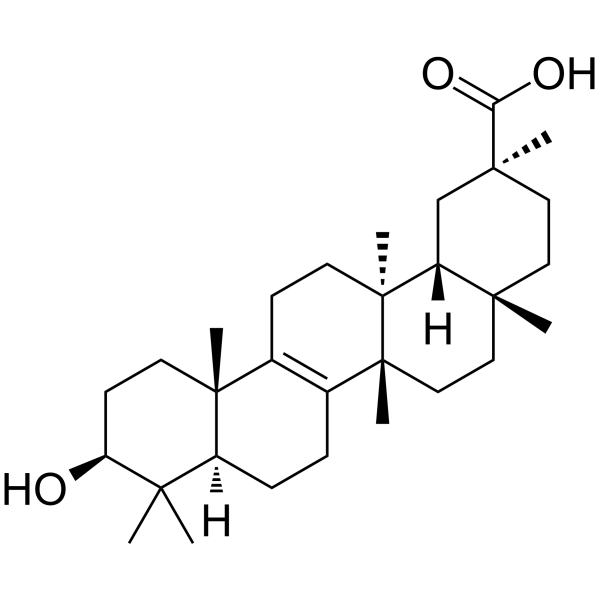
Bryonolic acid is an active triterpenoid compound with immunomodulatory, anti-inflammatory, antioxidant and anticancer activities.
For research use only. We do not sell to patients.
- Purity : 99.93%
- CAS No.: 24480-45-3
- Formula: C30H48O3
- Molecular Weight:456.70
-
Storage:
4°C, protect from light
* In solvent : -80°C, 6 months; -20°C, 1 month (protect from light)

To place orders, for customer services and technical support, please contact: MedChemExpress USA
Tel: 609-228-6898 E-mail: [email protected] [email protected]


-
 Biological Activity
-
Chemical Information
- Protocols
- Purity & Documentation
- References
-
 Help & FAQs


-
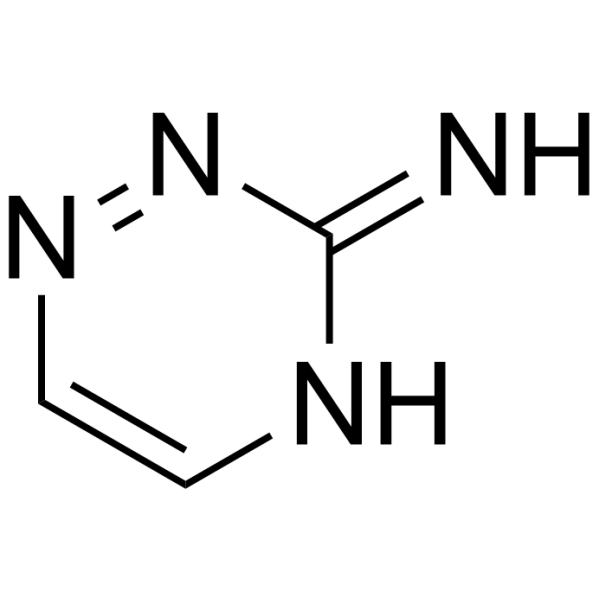
HY-W004843
3-Amino-1,2,4-triazineNO Synthase Inhibitor -
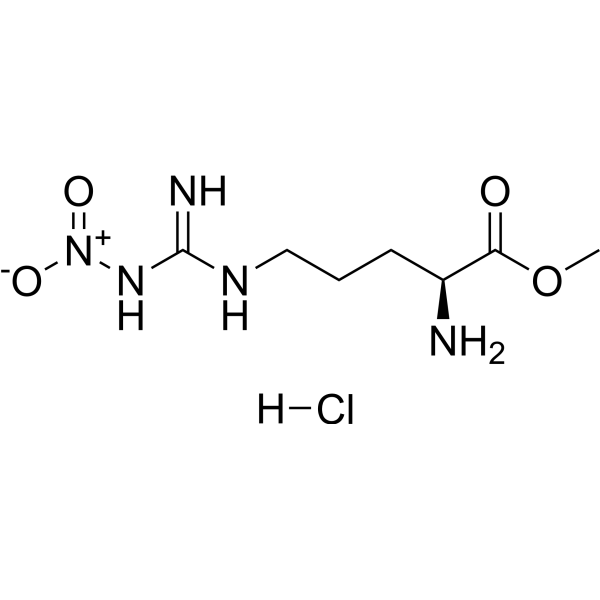
HY-18729A
L-NAME hydrochlorideNO Synthase Inhibitor -
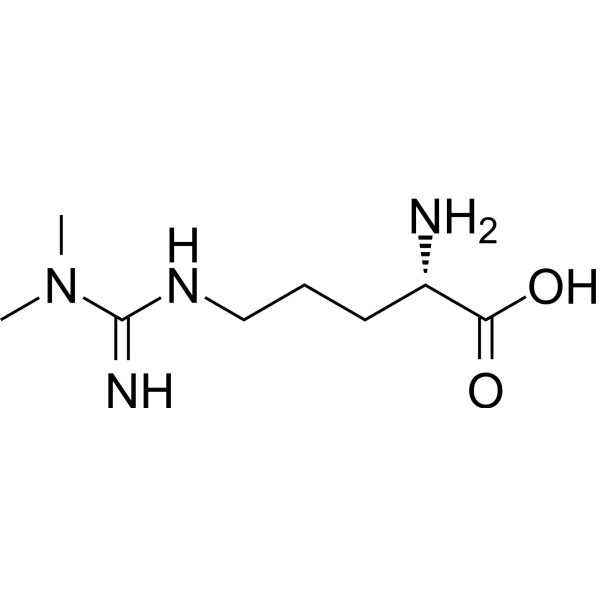
HY-113216
Asymmetric dimethylarginineEndogenous Metabolite -
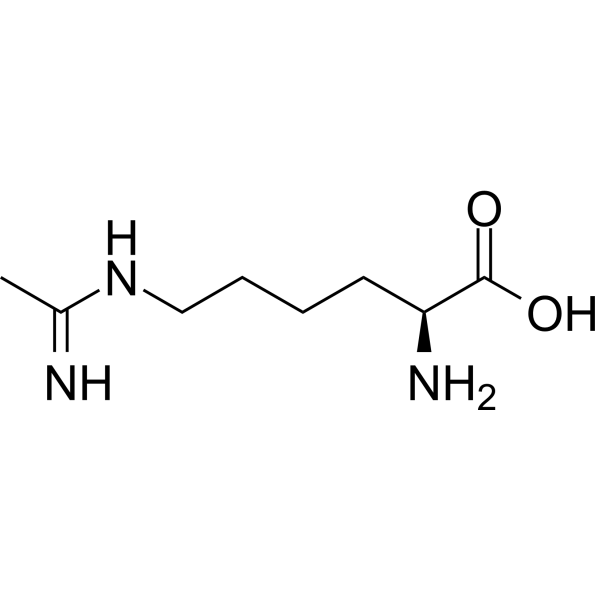
HY-12116
L-NILNO Synthase Inhibitor -
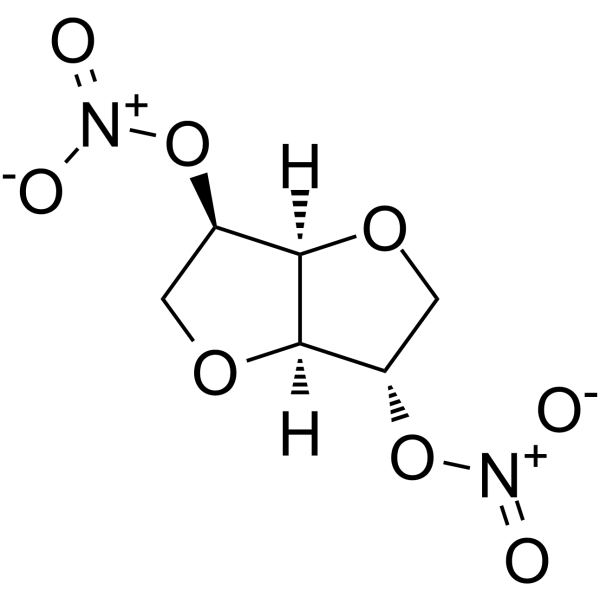
HY-B1409
Isosorbide dinitrateNO Donor -
HY-N1382
AsperulosideiNOS Inhibitor -

HY-113216R
Asymmetric dimethylarginine (Standard)Endogenous Metabolite -
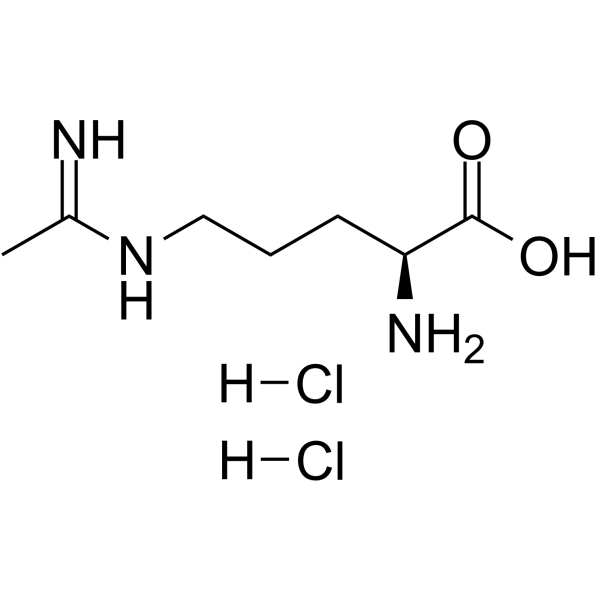
HY-100986
L-NIO dihydrochlorideNOS Inhibitor -
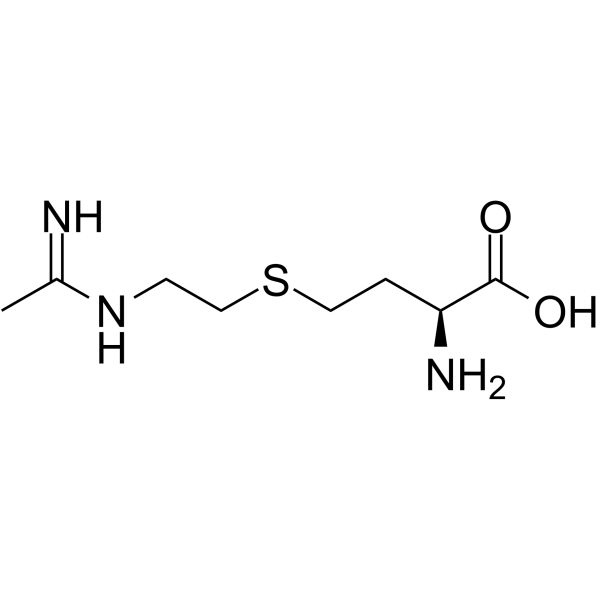
HY-12119
GW274150iNOS Inhibitor -
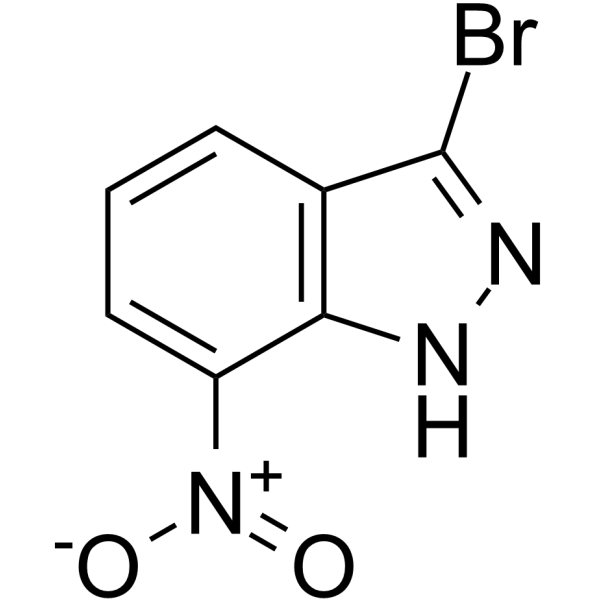
HY-101175
3-Bromo-7-nitroindazolenNOS Inhibitor -
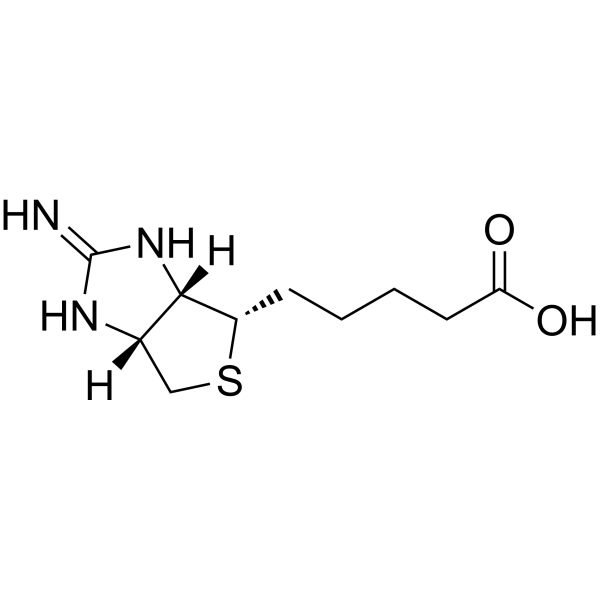
HY-118700
2-IminobiotinNitric Oxide Synthases Inhibitor -
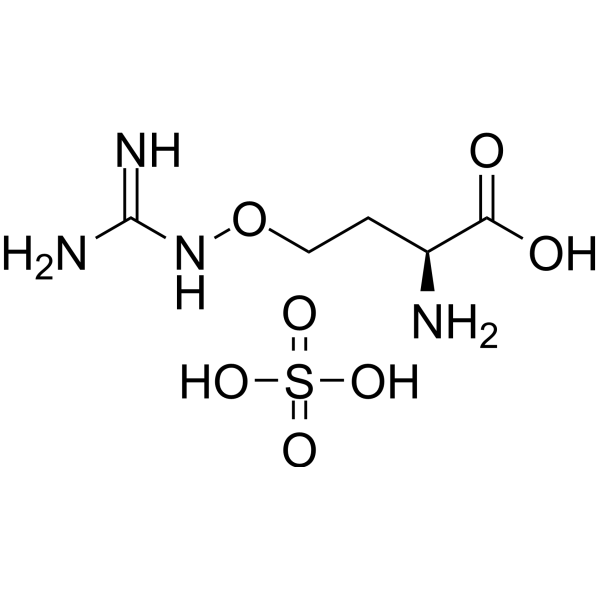
HY-B1581A
L-Canavanine sulfateNO Synthase Inhibitor


Biological Activity
Description
Cellular Effect
|
Cell Line

|
Type | Value | Description | References |
|---|---|---|---|---|
| RAW264.7 | IC50 |
53.3 μM
Compound: 1, BA
|
Antiinflammatory activity in mouse RAW264.7 cells assessed as inhibition of LPS-induced nitric oxide production after 24 hrs by Griess method
Antiinflammatory activity in mouse RAW264.7 cells assessed as inhibition of LPS-induced nitric oxide production after 24 hrs by Griess method
|
[PMID: 22339499] |
In Vitro
Bryonolic acid exerts anti-allergic activity by inhibiting homologous passive cutaneous anaphylaxis and delayed hypersensitivity. Bryonolic acid reduces nitric oxide by suppressing inducible nitric oxide synthase expression, indicating anti-inflammatory activity[1].
In rat adrenal pheochromocytoma (PC12) cells, Bryonolic acid against N-methyl-D-aspartate (NMDA)-induced neurotoxicity, indicating it as a candidate neuroprotective agent for cerebral ischemic treatment[1].
Bryonolic acid (1-200 μM) inhibits acyl-coA: cholesterol acyl transferase (ACAT) activity in rat liver microsomes in a concentration-dependent manner, blocking the biosynthesis of the cholesterol fatty acid ester tumour promoter. Bryonolic acid inhibits ACAT in intact cancer cells with an IC50 of 12.6 µM[2].
Bryonolic acid inhibits both clonogenicity and invasiveness in MCF-7 MB-231, U87 and 3T3-EA cells[2].
MedChemExpress (MCE) has not independently confirmed the accuracy of these methods. They are for reference only. Further protocols information, click here.
In Vivo
MedChemExpress (MCE) has not independently confirmed the accuracy of these methods. They are for reference only.
-
Animal Model:Wild-type and Nrf2-/- mice[3]
-
Dosage:500 mg/kg
-
Administration:i.p.; once
-
Result:Induced HO-1 in a manner dependent on the Nrf2-Keap1 pathway.


Chemical Information
-
CAS No. 24480-45-3
-
Appearance Solid
-
Molecular Weight 456.70
-
Formula C30H48O3
-
Color White to off-white
-
SMILES
C[C@@]12[C@]([C@@]3([H])[C@@](CC1)(CC[C@@](C)(C3)C(O)=O)C)(CCC4=C2CC[C@]5([H])[C@@]4(CC[C@@H](C5(C)C)O)C)C
-
Structure Classification
-
Initial Source
-
Shipping
Room temperature in continental US; may vary elsewhere.
-
Storage
4°C, protect from light
* In solvent : -80°C, 6 months; -20°C, 1 month (protect from light)

Protocols
-
Research Protocol for Inflammation-related Diseases
The NLRP3 inflammasome is a cytosolic innate immune signaling platform that integrates priming signals and danger-signal activation to promote caspase-1 activation, maturation of IL-1β and IL-18, and gasdermin D-mediated pyroptotic cell death. The core experimental logic is to determine whether inflammatory disease phenotypes are driven by increased NLRP3 expression, ASC-containing inflammasome assembly, caspase-1 cleavage, GSDMD cleavage, and extracellular release of IL-1β/IL-18 rather than by nonspecific cell injury alone. The pathway is strongly linked to inflammation-related disease phenotypes because monosodium urate crystals activate NALP3/NLRP3 inflammasome signaling in gout-like crystal inflammation, cholesterol crystals activate NLRP3 inflammasomes in atherogenesis models, and DSS-induced intestinal inflammation has been reported to involve NLRP3 inflammasome activity. However, experimental colitis studies also show context-dependent protective effects of NLRP3 inflammasome co


Purity & Documentation
-
Data Sheet (274 KB)
-
SDS (251 KB)
- English - EN (251 KB)
- Français - FR (251 KB)
- Deutsch - DE (251 KB)
- Norwegian - NO (251 KB)
- Español - ES (251 KB)
- Swedish - SV (251 KB)
- Italian - IT (251 KB)
- Korean - KR (251 KB)
- Portuguese - PT (251 KB)
-
Handling Instructions (2659 KB)
References
[1]. Pornpatsorn Lertphadungkit, et al. Enhanced Production of Bryonolic Acid in Trichosanthes cucumerina L. (Thai Cultivar) Cell Cultures by Elicitors and Their Biological Activities. Plants (Basel). 2020 Jun 2;9(6):709. [Content Brief]
[2]. Farid Khallouki, et al. Bryonolic Acid Blocks Cancer Cell Clonogenicity and Invasiveness through the Inhibition of Fatty Acid: Cholesteryl Ester Formation. Biomedicines. 2018 Feb 12;6(1):21. [Content Brief]
[3]. Tonibelle N Gatbonton-Schwager , et al. Bryonolic acid transcriptional control of anti-inflammatory and antioxidant genes in macrophages in vitro and in vivo. J Nat Prod. 2012 Apr 27;75(4):591-8. [Content Brief]

Calculators
Concentration (start) × Volume (start) = Concentration (final) × Volume (final)


Bryonolic acid Related Classifications
HY-N2965 Related Classifications
 Powered by Bioz