



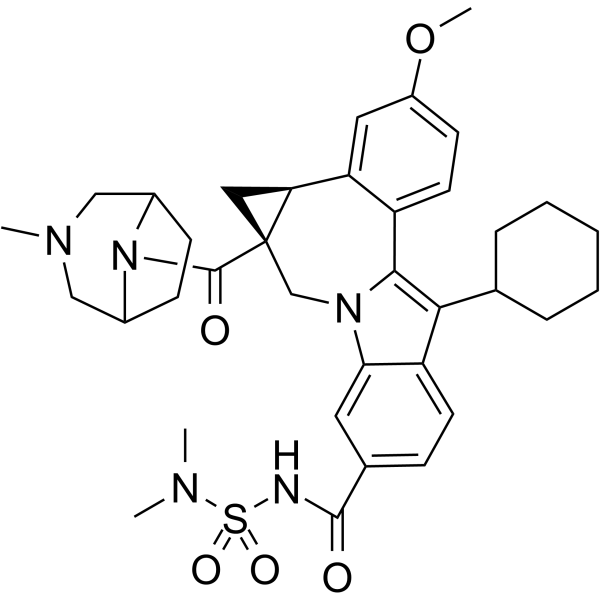
Beclabuvir
Based on 6 publication(s) in Google Scholar
Beclabuvir is an allosteric inhibitor that binds to thumb site 1 of the hepatitis C virus (HCV) NS5B RNA-dependent RNA polymerase, and inhibits recombinant NS5B proteins from HCV genotypes 1, 3, 4, and 5 with IC50 of < 28 nM.
Nos produits utilisent uniquement pour la recherche. Nous ne vendons pas aux patients.
- Pureté : 99.94%
- CAS No.: 958002-33-0
- Formule: C36H45N5O5S
- Masse moléculaire:659.84
-
Stockage:Powder -20°C, 3 years , 4°C, 2 years ; In solvent -80°C, 2 years , -20°C, 1 year

To place orders, for customer services and technical support, please contact: MedChemExpress USA
Tel: 609-228-6898 E-mail: [email protected] [email protected]


-
 Activité biologique
-
Chemical Information
-
Solvant et solubilité
- Pureté et documentation
- Références
-
 Help & FAQs


-
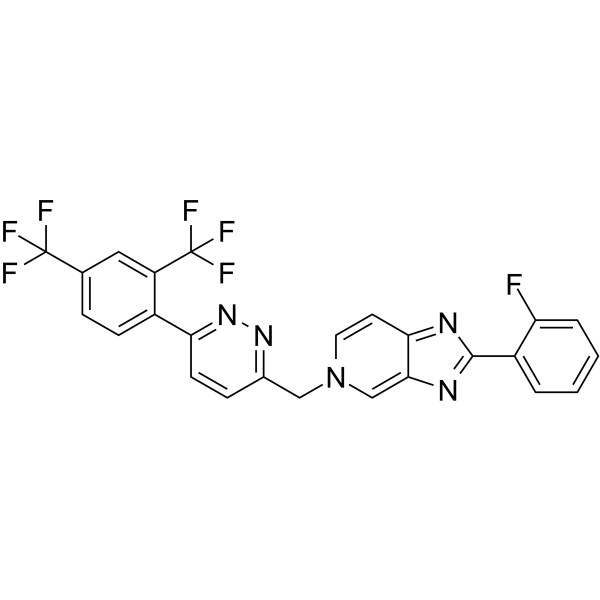
HY-10544
Tegobuvir -
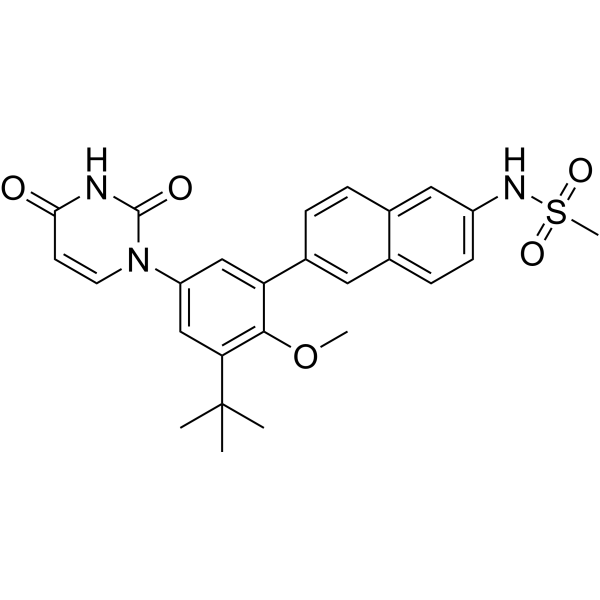
HY-13998
DasabuvirHCV Polymerase Inhibitor -
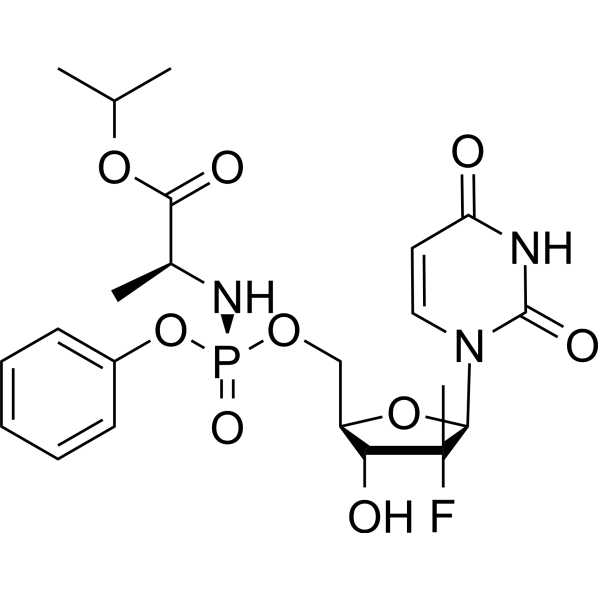
HY-15005
Sofosbuvir -
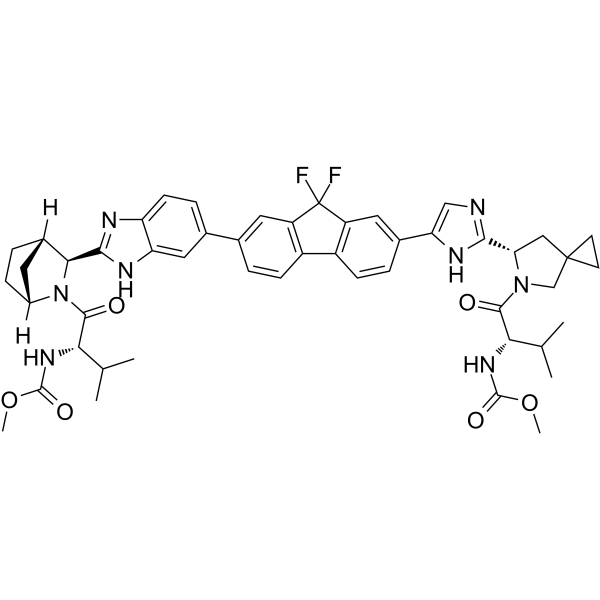
HY-15602
LedipasvirHCV NS5A Inhibitor -
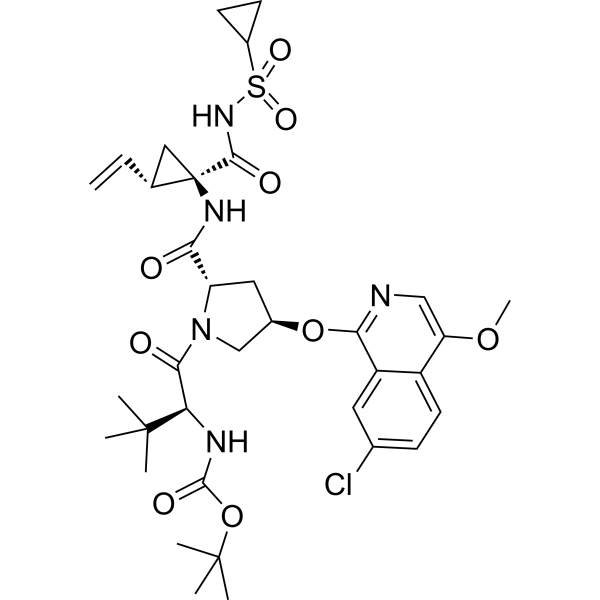
HY-14434
AsunaprevirHCV Protease Inhibitor -
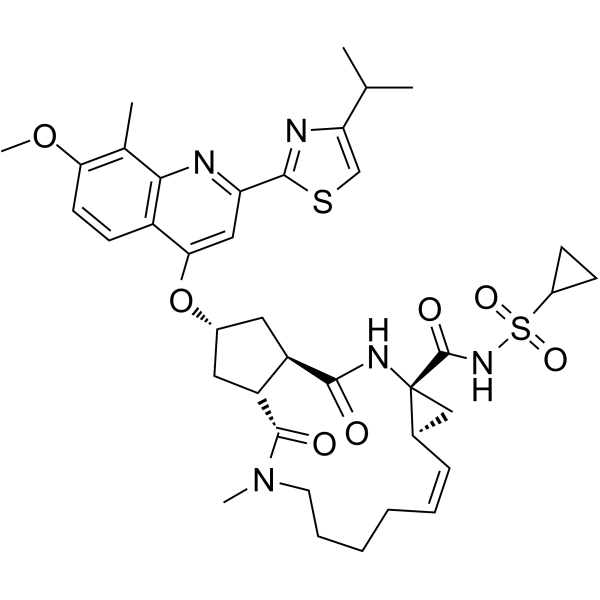
HY-10241
SimeprevirHCV NS3/4A Inhibitor -
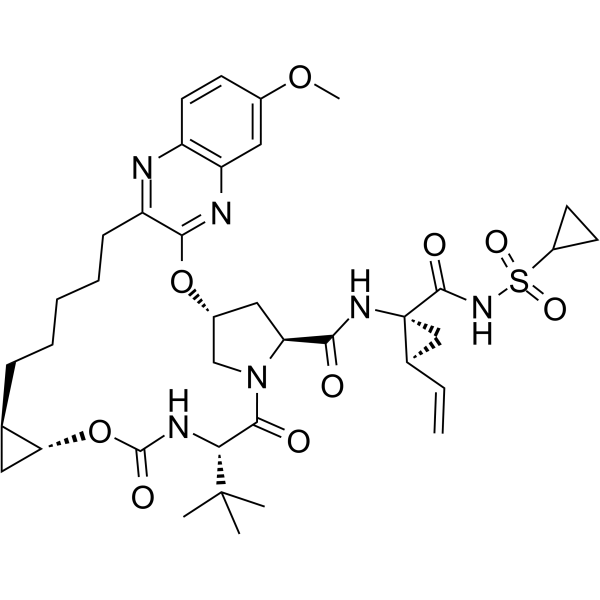
HY-15298
GrazoprevirHCV Protease Inhibitor -
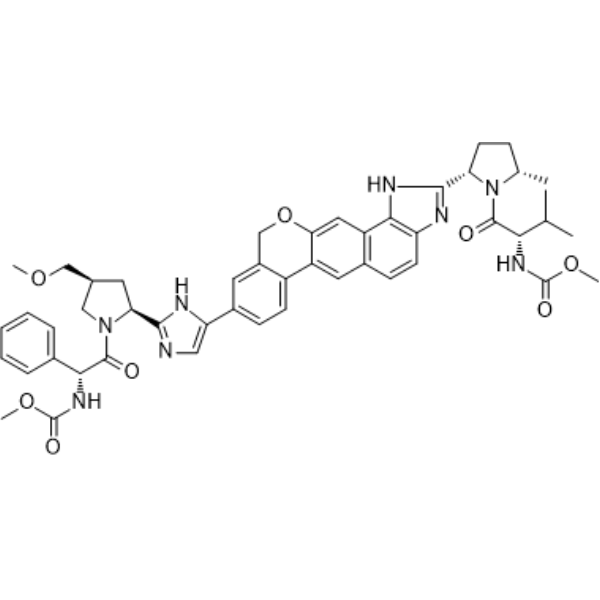
HY-12530
VelpatasvirHCV NS5A Inhibitor -
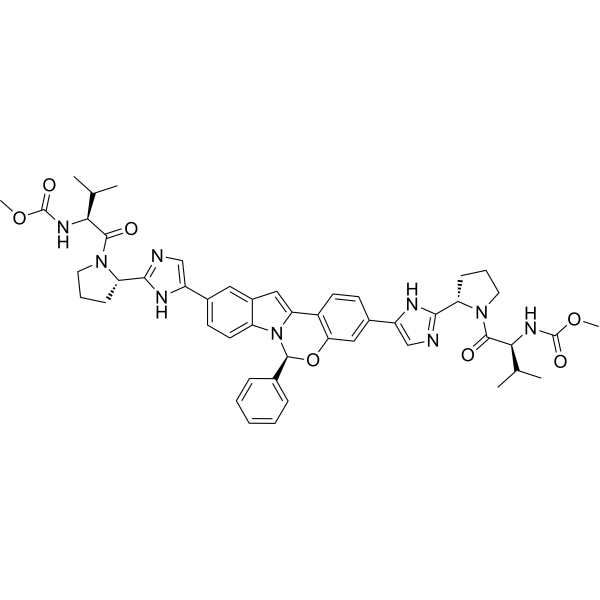
HY-15789
ElbasvirHCV NS5A Inhibitor -
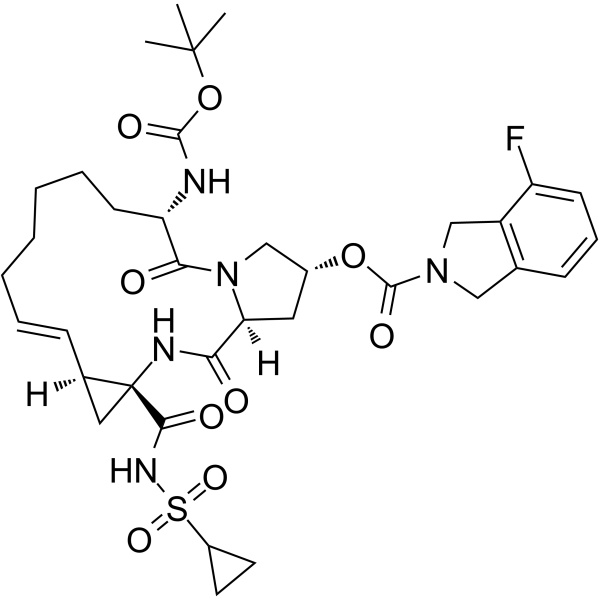
HY-10238
DanoprevirHCV NS3/4A Inhibitor -
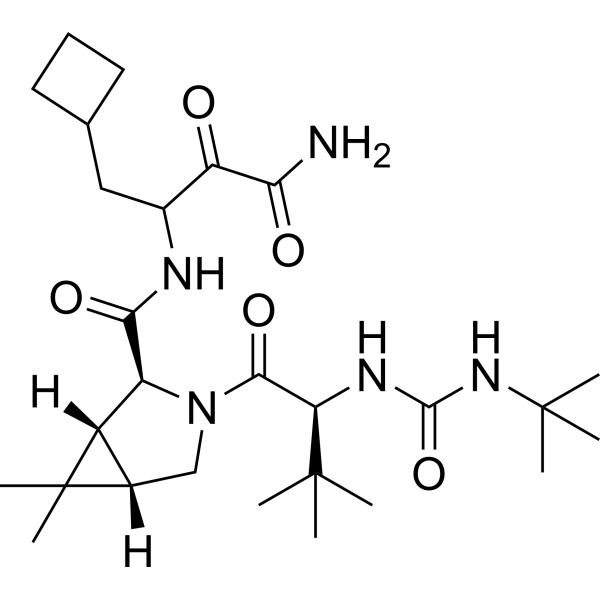
HY-10237
BoceprevirHCV NS3 Protease Inhibitor -
HY-17634
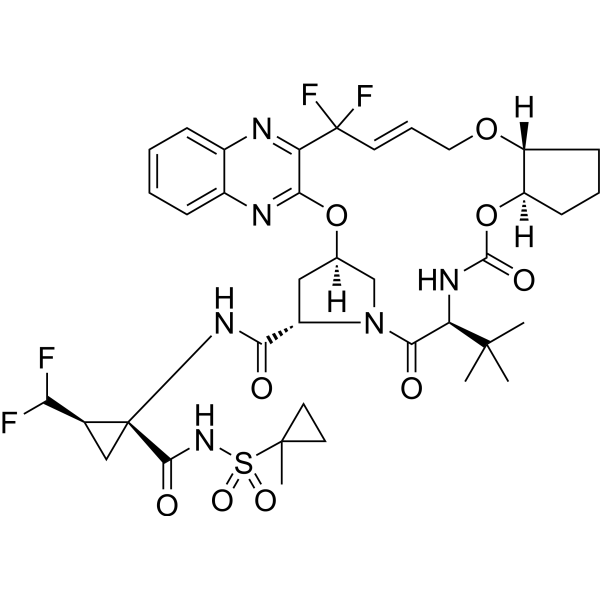
GlecaprevirHCV NS3/4A Protease Inhibitor
Publications Citing Use of MedChemExpress (MCE) Beclabuvir
More- Cell Rep Med. 2026 Mar 9:102646. [Abstract]
- Genomics Proteomics Bioinformatics. 2025 May 10;23(1):qzaf008. [Abstract]
- Commun Biol. 2021 Jan 20;4(1):93. [Abstract]
- J Gastroenterol. 2019 May;54(5):449-458. [Abstract]
- Antiviral Res. 2026 Jun 22:252:106470. [Abstract]
- J Hum Genet. 2020 Jan;65(2):143-153. [Abstract]
Voir tous les produits spécifiques à Isoform DNA/RNA Synthesis
More

Activité biologique
Description
IC50 & Target
|
RNA Polymerase |
Cellular Effect
|
Cell Line

|
Type | Value | Description | References |
|---|---|---|---|---|
| HepG2 | EC50 |
>50 μM
Compound: 2, BMS-791325
|
Transactivation of human PXR expressed in human HepG2 cells by luciferase reporter gene assay
Transactivation of human PXR expressed in human HepG2 cells by luciferase reporter gene assay
|
[PMID: 24397558] |
| Huh-7 | CC50 |
>10 μM
Compound: 2, BMS-791325
|
Cytotoxicity against human HuH7 cells by Alamar blue assay
Cytotoxicity against human HuH7 cells by Alamar blue assay
|
[PMID: 24397558] |
| Huh-7 | CC50 |
16 μM
Compound: 1
|
Cytotoxicity against human HuH7 cells after 4 hrs by CellTitre-Blue assay
Cytotoxicity against human HuH7 cells after 4 hrs by CellTitre-Blue assay
|
[PMID: 24656612] |
| Huh-7 | EC50 |
0.003 μM
Compound: 2, BMS-791325
|
Antiviral activity against Hepatitis C virus H77c genotype 1a infected in human HuH7 cells after 3 days by FRET assay
Antiviral activity against Hepatitis C virus H77c genotype 1a infected in human HuH7 cells after 3 days by FRET assay
|
[PMID: 24397558] |
| Huh-7 | EC50 |
0.006 μM
Compound: 2, BMS-791325
|
Antiviral activity against Hepatitis C virus Con1 genotype 1b infected in human HuH7 cells after 3 days by FRET assay
Antiviral activity against Hepatitis C virus Con1 genotype 1b infected in human HuH7 cells after 3 days by FRET assay
|
[PMID: 24397558] |
| Huh-7 | EC50 |
0.028 μM
Compound: 2, BMS-791325
|
Antiviral activity against Hepatitis C virus Con1 genotype 1b infected in human HuH7 cells after 3 days by FRET assay in presence of 40% human serum
Antiviral activity against Hepatitis C virus Con1 genotype 1b infected in human HuH7 cells after 3 days by FRET assay in presence of 40% human serum
|
[PMID: 24397558] |
| Huh-7 | EC50 |
2 nM
Compound: 1
|
Antiviral activity against HCV genotype 1a H77c infected in human HuH7 cells after 3 days by luciferase reporter gene assay
Antiviral activity against HCV genotype 1a H77c infected in human HuH7 cells after 3 days by luciferase reporter gene assay
|
[PMID: 24656612] |
In Vitro
Beclabuvir demonstrates additive or synergistic antiviral activity with pegIFN/RBV and in 2- or 3-drug combinations with a range of DAAs, such as HCV NS3 protease inhibitors, NS5A inhibitors' and/or nucleoside NS5B inhibitors[2].
MedChemExpress (MCE) has not independently confirmed the accuracy of these methods. They are for reference only. .
In Vivo
MedChemExpress (MCE) has not independently confirmed the accuracy of these methods. They are for reference only.


Chemical Information
-
CAS No. 958002-33-0
-
Appearance Solid
-
Masse moléculaire 659.84
-
Formule C36H45N5O5S
-
Color White to off-white
-
SMILES
O=C(N1C2CCC1CN(C)C2)[C@@]3(CN4C5=C(C6CCCCC6)C7=CC=C(C(NS(=O)(N(C)C)=O)=O)C=C47)[C@H](C8=CC(OC)=CC=C85)C3
-
Synonyms
BMS-791325
-
Livraison
Room temperature in continental US; may vary elsewhere.
-
Stockage
Powder -20°C 3 years 4°C 2 years In solvent -80°C 2 years -20°C 1 year


Publications (6)
-
Journal Impact Factor
-
Most Recent
-
Cell Rep Med
Human liver-derived organoids recapitulate Oropouche virus infection and manifestation, enabling antiviral drug discovery. [Abstract]2026 Mar 9:102646. PMID: 41806841 -
Genomics Proteomics Bioinformatics
2025 May 10;23(1):qzaf008. PMID: 39957240 -
Commun Biol
Identification of 3-chymotrypsin like protease (3CLPro) inhibitors as potential anti-SARS-CoV-2 agents. [Abstract]2021 Jan 20;4(1):93. PMID: 33473151 -
J Gastroenterol
Combinations of two drugs among NS3/4A inhibitors, NS5B inhibitors and non-selective antiviral agents are effective for hepatitis C virus with NS5A-P32 deletion in humanized-liver mice. [Abstract]2019 May;54(5):449-458. PMID: 30684016 -
Antiviral Res
2026 Jun 22:252:106470. PMID: 42331291 -
J Hum Genet
Effect of CYP3A5*3 genetic variant on the metabolism of direct-acting antivirals in vitro: a different effect on asunaprevir versus daclatasvir and beclabuvir. [Abstract]2020 Jan;65(2):143-153. PMID: 31645655


Solvant et solubilité
In Vitro:
DMSO : ≥ 30 mg/mL (45.47 mM; Hygroscopic DMSO has a significant impact on the solubility of product, please use newly opened DMSO)
* "≥" means soluble, but saturation unknown.
Please refer to the solubility information to select the appropriate solvent. Once prepared, please aliquot and store the solution to prevent product inactivation from repeated freeze-thaw cycles.
Storage method and period of stock solution: -80°C, 2 years; -20°C, 1 year. When stored at -80°C, please use it within 2 years. When stored at -20°C, please use it within 1 year.
Please refer to the solubility information to select the appropriate solvent. Once prepared, please aliquot and store the solution to prevent product inactivation from repeated freeze-thaw cycles.
Storage method and period of stock solution: -80°C, 2 years; -20°C, 1 year. When stored at -80°C, please use it within 2 years. When stored at -20°C, please use it within 1 year.
Concentration (start) × Volume (start) = Concentration (final) × Volume (final)
In Vivo:
Select the appropriate dissolution method based on your experimental animal and administration route.
- For the following dissolution methods, please ensure to first prepare a clear stock solution using an In Vitro approach and then sequentially add co-solvents:
- To ensure reliable experimental results, the clarified stock solution can be appropriately stored based on storage conditions. As for the working solution for In Vivo experiments, it is recommended to prepare freshly and use it on the same day.
- The percentages shown for the solvents indicate their volumetric ratio in the final prepared solution. If precipitation or phase separation occurs during preparation, heat and/or sonication can be used to aid dissolution.
Add each solvent one by one: 10% DMSO 40% PEG300 5% Tween-80 45% Saline
Solubility: ≥ 2.5 mg/mL (3.79 mM); Clear solution
This protocol yields a clear solution of ≥ 2.5 mg/mL (saturation unknown).
Taking 1 mL working solution as an example, add 100 μL DMSO stock solution (25.0 mg/mL) to 400 μL PEG300, and mix evenly; then add 50 μL Tween-80 and mix evenly; then add 450 μL Saline to adjust the volume to 1 mL.
Preparation of Saline: Dissolve 0.9 g sodium chloride in ddH₂O and dilute to 100 mL to obtain a clear Saline solution.
Add each solvent one by one: 10% DMSO 90% (20% SBE-β-CD in Saline)
Solubility: ≥ 2.5 mg/mL (3.79 mM); Clear solution
This protocol yields a clear solution of ≥ 2.5 mg/mL (saturation unknown).
Taking 1 mL working solution as an example, add 100 μL DMSO stock solution (25.0 mg/mL) to 900 μL 20% SBE-β-CD in Saline, and mix evenly.
Preparation of 20% SBE-β-CD in Saline (4°C, storage for one week): 2 g SBE-β-CD powder is dissolved in 10 mL Saline, completely dissolve until clear.
In Vivo Dissolution Calculator
Please enter the basic information of animal experiments:
-
-
-
-
Recommended: Prepare an additional quantity of animals to account for potential losses during experiments.
Please enter your animal formula composition:
-
%DMSO +
Recommended: Keep the proportion of DMSO in working solution below 2% if your animal is weak.
-
%+
-
+%Tween-80 + +
-
%Saline +
The co-solvents required include: DMSO, . All of co-solvents are available by MedChemExpress (MCE). , Tween 80. All of co-solvents are available by MedChemExpress (MCE).
Working solution concentration: 0.22 mg/mL
Method for preparing stock solution: mg drug dissolved in μL DMSO. Stock solution concentration: mg/mL.
1. Take μL DMSO stock solution;
2. Add μL .
μL , mix evenly;
3. Then add μL Tween 80, mix evenly;
4. Then add μL
Please ensure that the stock solution in the first step is dissolved to a clear state, and add co-solvents in sequence. You can use ultrasonic heating (ultrasonic cleaner, recommended frequency 20-40 kHz), vortexing, etc. to assist dissolution.


Pureté et documentation
-
Fiche technique (283 KB)
-
SDS (252 KB)
- English - EN (252 KB)
- Français - FR (252 KB)
- Deutsch - DE (252 KB)
- Norwegian - NO (252 KB)
- Español - ES (252 KB)
- Swedish - SV (252 KB)
- Italian - IT (252 KB)
- Korean - KR (252 KB)
- Portuguese - PT (252 KB)
-
Instruction de manipulation (2659 KB)
Références
[1]. Gentile I, et al. Beclabuvir for the treatment of hepatitis C. Expert Opin Investig Drugs. 2015;24(8):1111-21 [Content Brief]
[2]. Tatum H, et al. A randomized, placebo-controlled study of the NS5B inhibitor beclabuvir with peginterferon/ribavirin for HCV genotype 1. J Viral Hepat. 2015 Aug;22(8):658-64. [Content Brief]


Complete Stock Solution Preparation Table
Please refer to the solubility information to select the appropriate solvent. Once prepared, please aliquot and store the solution to prevent product inactivation from repeated freeze-thaw cycles.
Storage method and period of stock solution: -80°C, 2 years; -20°C, 1 year. When stored at -80°C, please use it within 2 years. When stored at -20°C, please use it within 1 year.
| Optional Solvent | Concentration Solvent Mass | 1 mg | 5 mg | 10 mg | 25 mg |
|---|---|---|---|---|---|
| DMSO | 1 mM | 1.5155 mL | 7.5776 mL | 15.1552 mL | 37.8880 mL |
| 5 mM | 0.3031 mL | 1.5155 mL | 3.0310 mL | 7.5776 mL | |
| 10 mM | 0.1516 mL | 0.7578 mL | 1.5155 mL | 3.7888 mL | |
| 15 mM | 0.1010 mL | 0.5052 mL | 1.0103 mL | 2.5259 mL | |
| 20 mM | 0.0758 mL | 0.3789 mL | 0.7578 mL | 1.8944 mL | |
| 25 mM | 0.0606 mL | 0.3031 mL | 0.6062 mL | 1.5155 mL | |
| 30 mM | 0.0505 mL | 0.2526 mL | 0.5052 mL | 1.2629 mL | |
| 40 mM | 0.0379 mL | 0.1894 mL | 0.3789 mL | 0.9472 mL |


Beclabuvir Related Classifications
HY-12429 Related Classifications
 Powered by Bioz