



Ganoderic acid C2

Based on 1 Customer Validation
Ganoderic acid C2 is a bioactive triterpenoid in Ganoderma lucidum. Ganoderic acid C2 possesses the potential anti-tumor bioactivity, antihistamine, anti-aging and cytotoxic effects. Ganoderic acid C2 is the inhibitor for aldose reductase with an IC50 of 43.8 µM.
Nos produits utilisent uniquement pour la recherche. Nous ne vendons pas aux patients.
- Pureté : 99.72%
- CAS No.: 103773-62-2
- Formule: C30H46O7
- Masse moléculaire:518.68
-
Stockage:
4°C, protect from light
* In solvent : -80°C, 6 months; -20°C, 1 month (protect from light)

To place orders, for customer services and technical support, please contact: MedChemExpress USA
Tel: 609-228-6898 E-mail: [email protected] [email protected]


-
 Activité biologique
-
Chemical Information
-
Solvant et solubilité
- Protocole
- Pureté et documentation
- Références
-
 Help & FAQs


-
HY-N2461
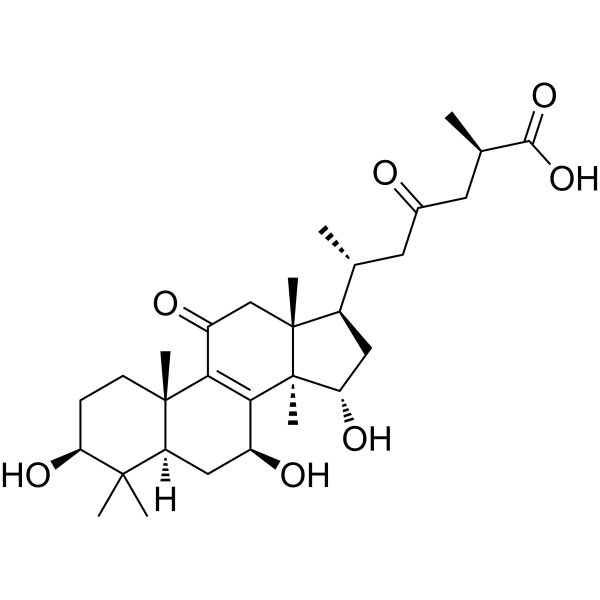
Ganoderic acid C6Aldose reductase Inhibitor -
HY-N1511
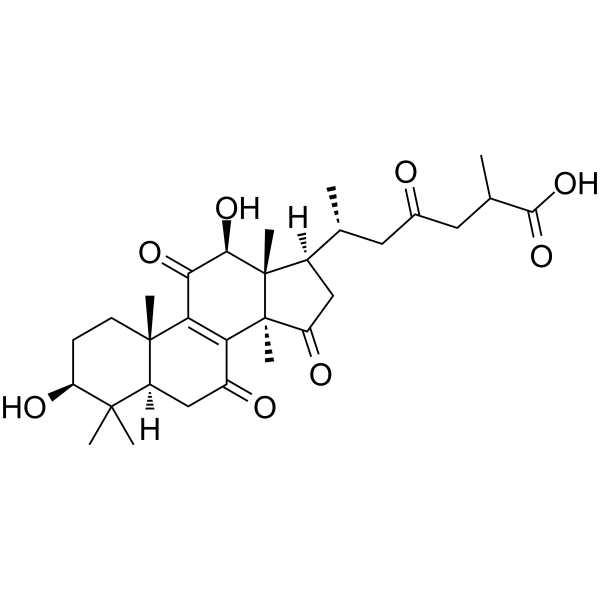
Ganoderic acid DApoptosis Inducer -
HY-N2006
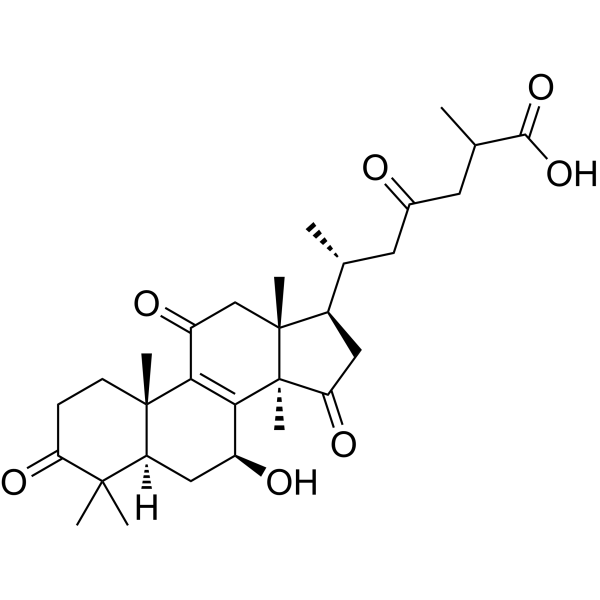
Ganoderic acid BHIV Protease Inhibitor -
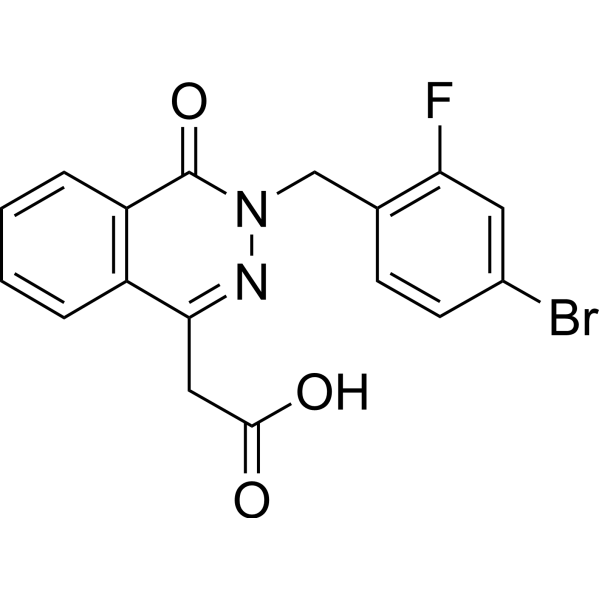
HY-106697
PonalrestatAldose Reductase Inhibitor -
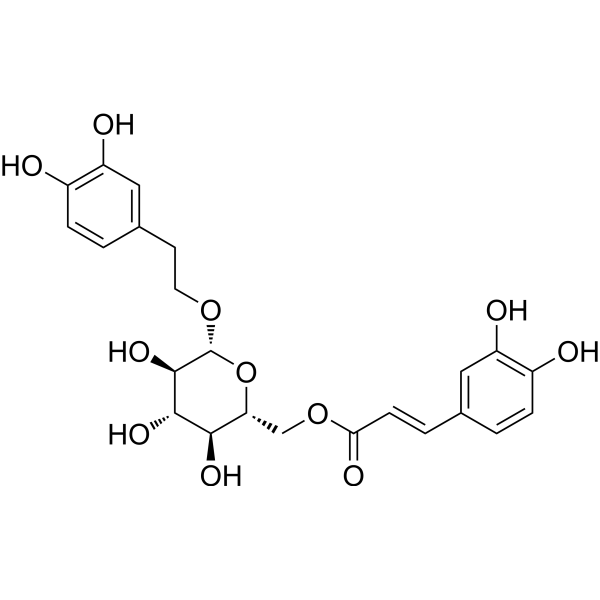
HY-N0539
Calceolarioside BPhenylethanoid Glycoside -
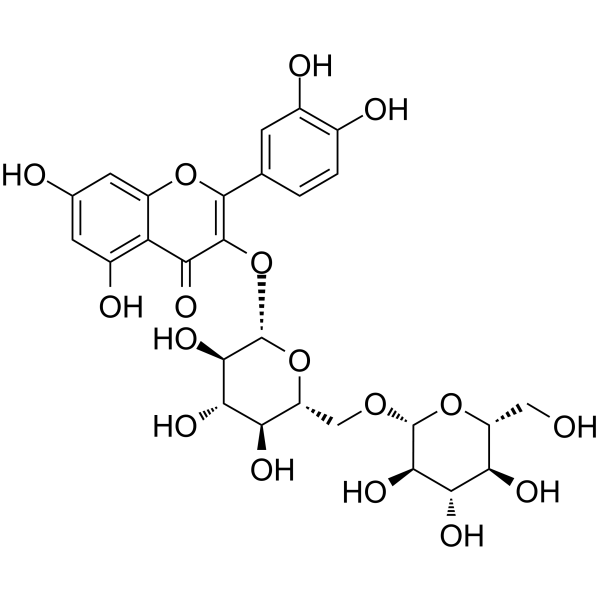
HY-N4089
Quercetin 3-gentiobiosideAromatase Inhibitor -
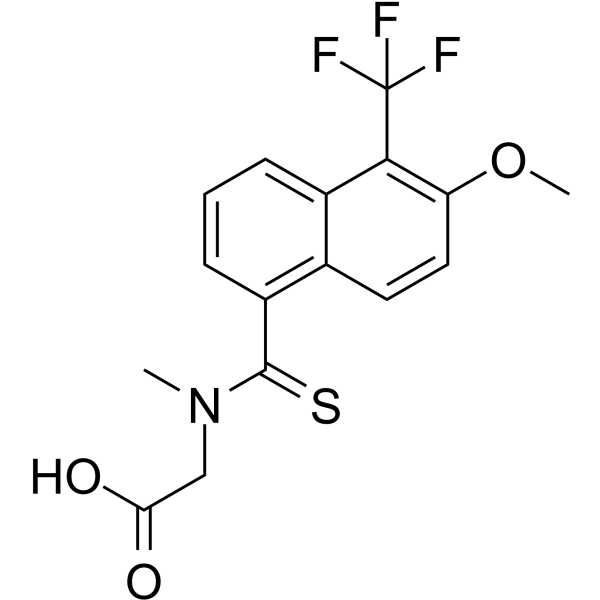
HY-16500
TolrestatAldose Reductase Inhibitor -

HY-16500R
Tolrestat (Standard)Aldose Reductase Inhibitor -
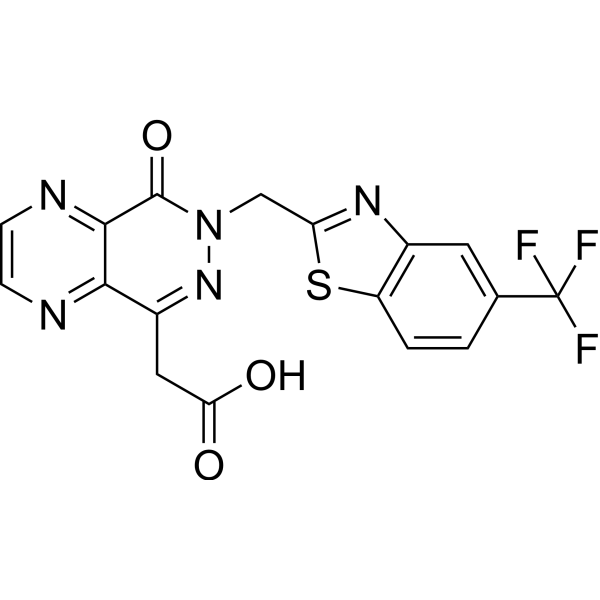
HY-18967
CaficrestatAldose Reductase Inhibitor -
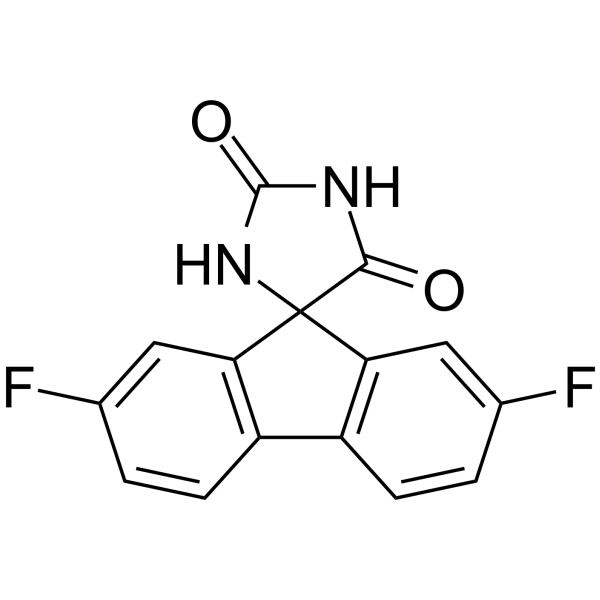
HY-16255
ImirestatAldose Reductase Inhibitor -
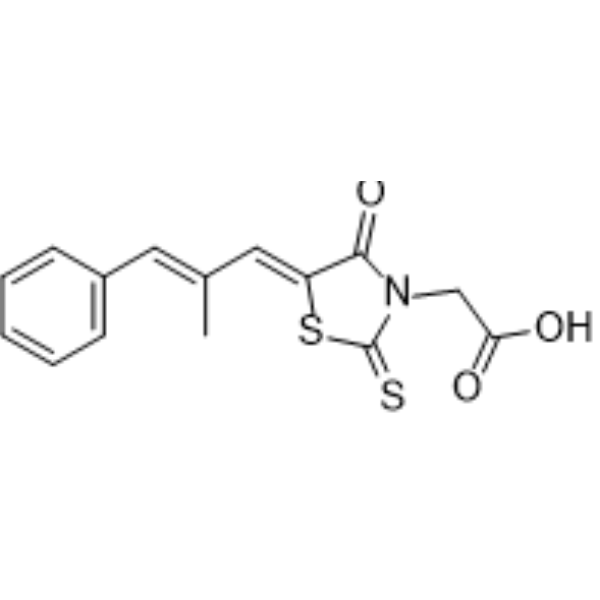
HY-66009
EpalrestatAldose Reductase Inhibitor -

HY-N1517R
Ganoderic acid C2 (Standard)Aldose Reductase Inhibitor


Activité biologique
Description
Cellular Effect
|
Cell Line

|
Type | Value | Description | References |
|---|---|---|---|---|
| Bel-7402 | IC50 |
7.25 μM
Compound: 9
|
Cytotoxicity against human Bel7402 cells
Cytotoxicity against human Bel7402 cells
|
[PMID: 23092389] |
| HepG2 | IC50 |
>100 μM
Compound: 16
|
Anticancer activity against human HepG2 cells assessed as cell viability after 48 hrs by MTT assay
Anticancer activity against human HepG2 cells assessed as cell viability after 48 hrs by MTT assay
|
[PMID: 24974349] |
| P388 | IC50 |
7.25 μM
Compound: 9
|
Cytotoxicity against mouse P388 cells
Cytotoxicity against mouse P388 cells
|
[PMID: 23092389] |
| SGC-7901 | IC50 |
7.25 μM
Compound: 9
|
Cytotoxicity against human SGC7901 cells
Cytotoxicity against human SGC7901 cells
|
[PMID: 23092389] |
In Vivo
MedChemExpress (MCE) has not independently confirmed the accuracy of these methods. They are for reference only.
-
Animal Model:Cyclophosphamide (HY-17420)-induced mouse immunosuppression models[3]
-
Dosage:10-40 mg/kg
-
Administration:po, once daily for 14 days
-
Result:Improved the weight loss and decreased immune organ index.
Improved the number of white blood cells, neutrophils and lymphocytes.
Improved levels of inflammatory factors (TNF-α, IL-12, IL-4, IFN-γ) and immunoglobulin (IgA and IgG).


Chemical Information
-
CAS No. 103773-62-2
-
Appearance Solid
-
Masse moléculaire 518.68
-
Formule C30H46O7
-
Color White to off-white
-
SMILES
CC1(C)[C@@H](O)CC[C@]2(C)C3=C([C@@]4([C@@H](O)C[C@@H]([C@]4(CC3=O)C)[C@H](C)CC(C[C@@H](C)C(O)=O)=O)C)[C@@H](O)C[C@@]12[H]
-
Structure Classification
-
Livraison
Room temperature in continental US; may vary elsewhere.
-
Stockage
4°C, protect from light
* In solvent : -80°C, 6 months; -20°C, 1 month (protect from light)


Solvant et solubilité
In Vitro:
DMSO : 50 mg/mL (96.40 mM; Need ultrasonic; Hygroscopic DMSO has a significant impact on the solubility of product, please use newly opened DMSO)
Please refer to the solubility information to select the appropriate solvent. Once prepared, please aliquot and store the solution to prevent product inactivation from repeated freeze-thaw cycles.
Storage method and period of stock solution: -80°C, 6 months; -20°C, 1 month (protect from light). When stored at -80°C, please use it within 6 months. When stored at -20°C, please use it within 1 month.
Please refer to the solubility information to select the appropriate solvent. Once prepared, please aliquot and store the solution to prevent product inactivation from repeated freeze-thaw cycles.
Storage method and period of stock solution: -80°C, 6 months; -20°C, 1 month (protect from light). When stored at -80°C, please use it within 6 months. When stored at -20°C, please use it within 1 month.
Concentration (start) × Volume (start) = Concentration (final) × Volume (final)
In Vivo:
Select the appropriate dissolution method based on your experimental animal and administration route.
- For the following dissolution methods, please ensure to first prepare a clear stock solution using an In Vitro approach and then sequentially add co-solvents:
- To ensure reliable experimental results, the clarified stock solution can be appropriately stored based on storage conditions. As for the working solution for In Vivo experiments, it is recommended to prepare freshly and use it on the same day.
- The percentages shown for the solvents indicate their volumetric ratio in the final prepared solution. If precipitation or phase separation occurs during preparation, heat and/or sonication can be used to aid dissolution.
Add each solvent one by one: 10% DMSO 40% PEG300 5% Tween-80 45% Saline
Solubility: ≥ 1.25 mg/mL (2.41 mM); Clear solution
This protocol yields a clear solution of ≥ 1.25 mg/mL (saturation unknown).
Taking 1 mL working solution as an example, add 100 μL DMSO stock solution (12.5 mg/mL) to 400 μL PEG300, and mix evenly; then add 50 μL Tween-80 and mix evenly; then add 450 μL Saline to adjust the volume to 1 mL.
Preparation of Saline: Dissolve 0.9 g sodium chloride in ddH₂O and dilute to 100 mL to obtain a clear Saline solution.
Add each solvent one by one: 10% DMSO 90% (20% SBE-β-CD in Saline)
Solubility: ≥ 1.25 mg/mL (2.41 mM); Clear solution
This protocol yields a clear solution of ≥ 1.25 mg/mL (saturation unknown).
Taking 1 mL working solution as an example, add 100 μL DMSO stock solution (12.5 mg/mL) to 900 μL 20% SBE-β-CD in Saline, and mix evenly.
Preparation of 20% SBE-β-CD in Saline (4°C, storage for one week): 2 g SBE-β-CD powder is dissolved in 10 mL Saline, completely dissolve until clear.
In Vivo Dissolution Calculator
Please enter the basic information of animal experiments:
-
-
-
-
Recommended: Prepare an additional quantity of animals to account for potential losses during experiments.
Please enter your animal formula composition:
-
%DMSO +
Recommended: Keep the proportion of DMSO in working solution below 2% if your animal is weak.
-
%+
-
+%Tween-80 + +
-
%Saline +
The co-solvents required include: DMSO, . All of co-solvents are available by MedChemExpress (MCE). , Tween 80. All of co-solvents are available by MedChemExpress (MCE).
Working solution concentration: 0.22 mg/mL
Method for preparing stock solution: mg drug dissolved in μL DMSO. Stock solution concentration: mg/mL. * In solvent : -80°C, 6 months; -20°C, 1 month (protect from light)
1. Take μL DMSO stock solution;
2. Add μL .
μL , mix evenly;
3. Then add μL Tween 80, mix evenly;
4. Then add μL
Please ensure that the stock solution in the first step is dissolved to a clear state, and add co-solvents in sequence. You can use ultrasonic heating (ultrasonic cleaner, recommended frequency 20-40 kHz), vortexing, etc. to assist dissolution.


Pureté et documentation
-
Fiche technique (276 KB)
-
SDS (252 KB)
- English - EN (252 KB)
- Français - FR (252 KB)
- Deutsch - DE (252 KB)
- Norwegian - NO (252 KB)
- Español - ES (252 KB)
- Swedish - SV (252 KB)
- Italian - IT (252 KB)
- Korean - KR (252 KB)
- Portuguese - PT (252 KB)
-
Instruction de manipulation (2659 KB)
Références
[1]. Guo XY, et al. l characterization of minor metabolites and pharmacokinetics of ganoderic acid C2 in rat plasma by HPLC coupled with electrospray ionization tandem mass spectrometry. J Pharm Biomed Anal. 2013 Mar 5;75:64-73. [Content Brief]
[2]. Fatmawati S, et al. Inhibition of aldose reductase in vitro by constituents of Ganoderma lucidum. Planta Med. 2010 Oct;76(15):1691-3. [Content Brief]
[3]. Liu Y, et al., Ganoderic acid C2 exerts the pharmacological effects against cyclophosphamide-induced immunosuppression: a study involving molecular docking and experimental validation. Sci Rep. 2023 Oct 18;13(1):17745. [Content Brief]


Complete Stock Solution Preparation Table
Please refer to the solubility information to select the appropriate solvent. Once prepared, please aliquot and store the solution to prevent product inactivation from repeated freeze-thaw cycles.
Storage method and period of stock solution: -80°C, 6 months; -20°C, 1 month (protect from light). When stored at -80°C, please use it within 6 months. When stored at -20°C, please use it within 1 month.
| Optional Solvent | Concentration Solvent Mass | 1 mg | 5 mg | 10 mg | 25 mg |
|---|---|---|---|---|---|
| DMSO | 1 mM | 1.9280 mL | 9.6399 mL | 19.2797 mL | 48.1993 mL |
| 5 mM | 0.3856 mL | 1.9280 mL | 3.8559 mL | 9.6399 mL | |
| 10 mM | 0.1928 mL | 0.9640 mL | 1.9280 mL | 4.8199 mL | |
| 15 mM | 0.1285 mL | 0.6427 mL | 1.2853 mL | 3.2133 mL | |
| 20 mM | 0.0964 mL | 0.4820 mL | 0.9640 mL | 2.4100 mL | |
| 25 mM | 0.0771 mL | 0.3856 mL | 0.7712 mL | 1.9280 mL | |
| 30 mM | 0.0643 mL | 0.3213 mL | 0.6427 mL | 1.6066 mL | |
| 40 mM | 0.0482 mL | 0.2410 mL | 0.4820 mL | 1.2050 mL | |
| 50 mM | 0.0386 mL | 0.1928 mL | 0.3856 mL | 0.9640 mL | |
| 60 mM | 0.0321 mL | 0.1607 mL | 0.3213 mL | 0.8033 mL | |
| 80 mM | 0.0241 mL | 0.1205 mL | 0.2410 mL | 0.6025 mL |


Ganoderic acid C2 Related Classifications
HY-N1517 Related Classifications
 Powered by Bioz