



Mefenamic acid
Based on 2 publication(s) in Google Scholar
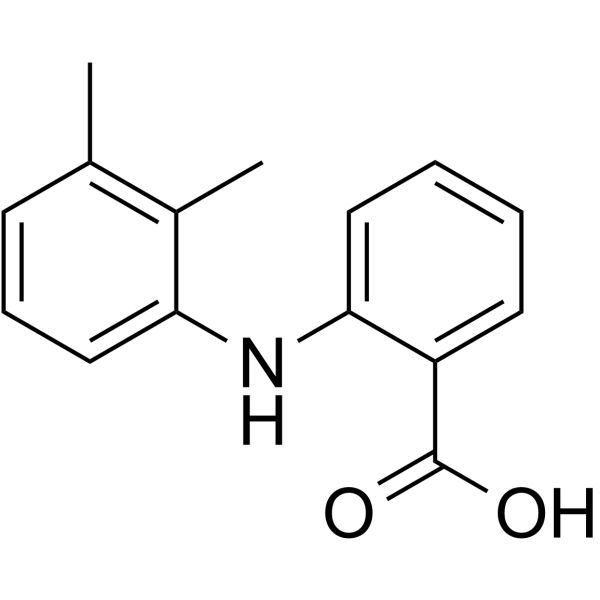
Mefenamic acid is a BBB-permeable and non-steroidal anti-inflammatory agent, acting as a competitive inhibitor of hCOX-1 and hCOX-2, with IC50s of 40 nM and 3 μM for hCOX-1 and hCOX-2, respectively.
Nos produits utilisent uniquement pour la recherche. Nous ne vendons pas aux patients.
- Pureté : 99.95%
- CAS No.: 61-68-7
- Formule: C15H15NO2
- Masse moléculaire:241.29
-
Stockage:Powder -20°C, 3 years , 4°C, 2 years ; In solvent -80°C, 2 years , -20°C, 1 year

To place orders, for customer services and technical support, please contact: MedChemExpress USA
Tel: 609-228-6898 E-mail: [email protected] [email protected]


-
 Activité biologique
-
Chemical Information
-
Solvant et solubilité
- Protocole
- Pureté et documentation
- Références
-
 Help & FAQs


-
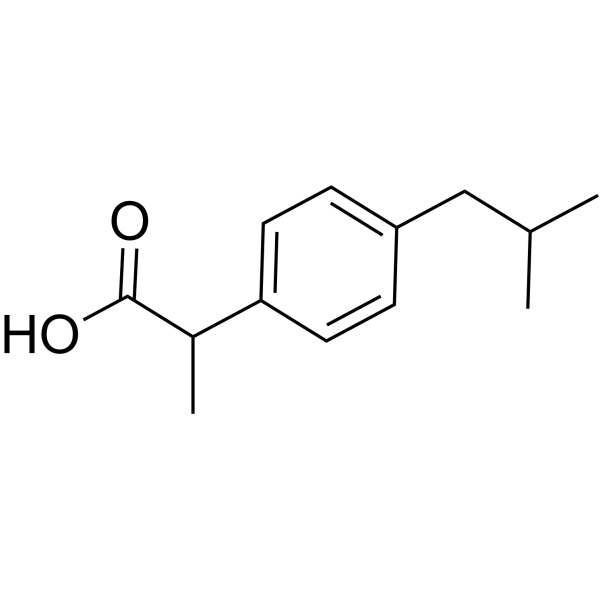
HY-78131
IbuprofenCOX-1 Inhibitor -
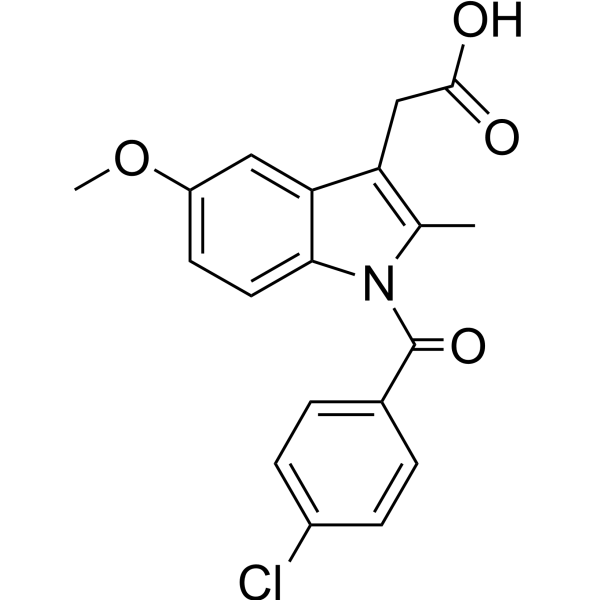
HY-14397
IndomethacinCOX1/2 Inhibitor -
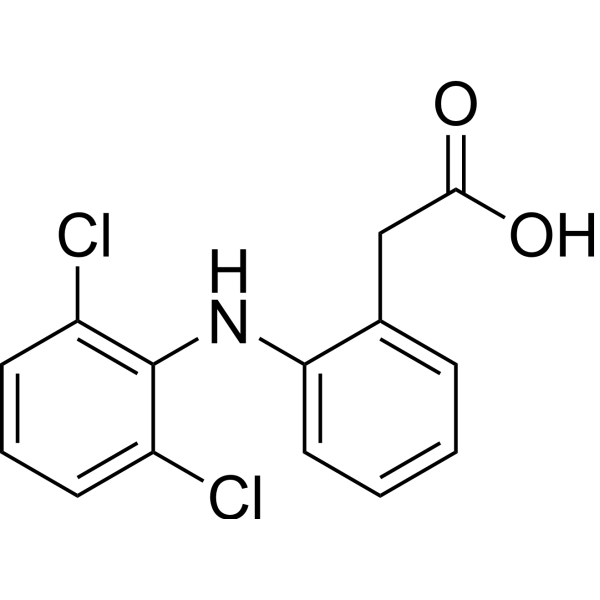
HY-15036
DiclofenacCOX Inhibitor -
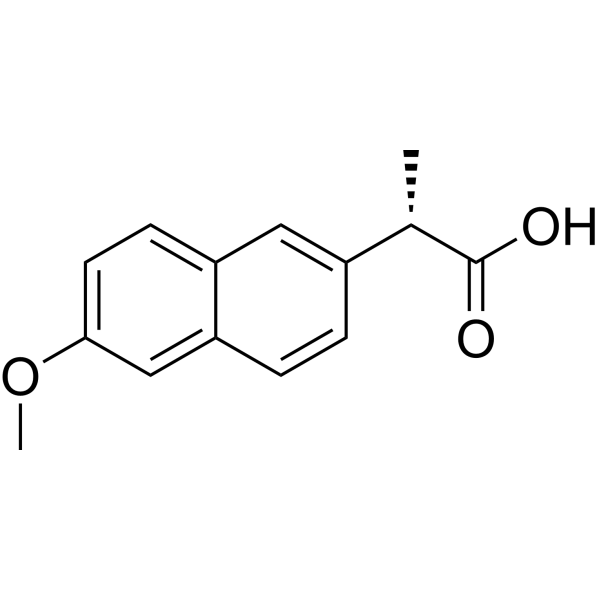
HY-15030
NaproxenCOX Inhibitor -
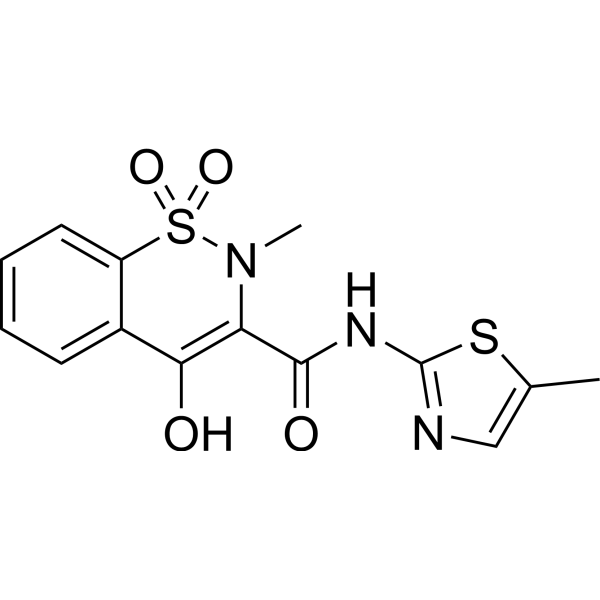
HY-B0261
MeloxicamCOX Inhibitor -
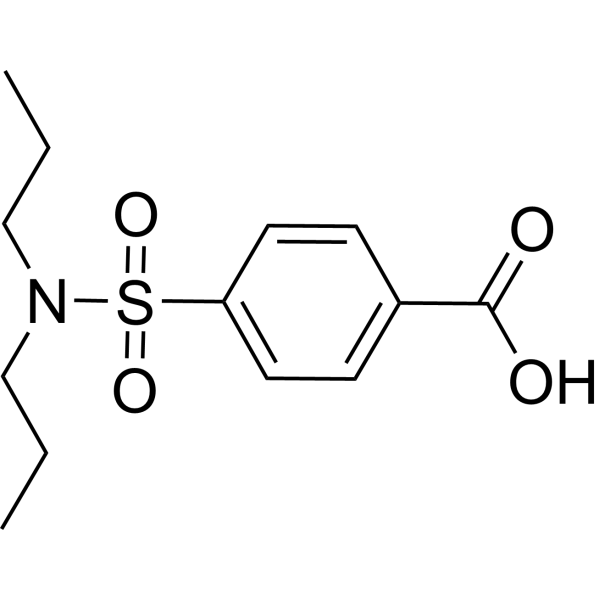
HY-B0545
ProbenecidBacterial Inhibitor -
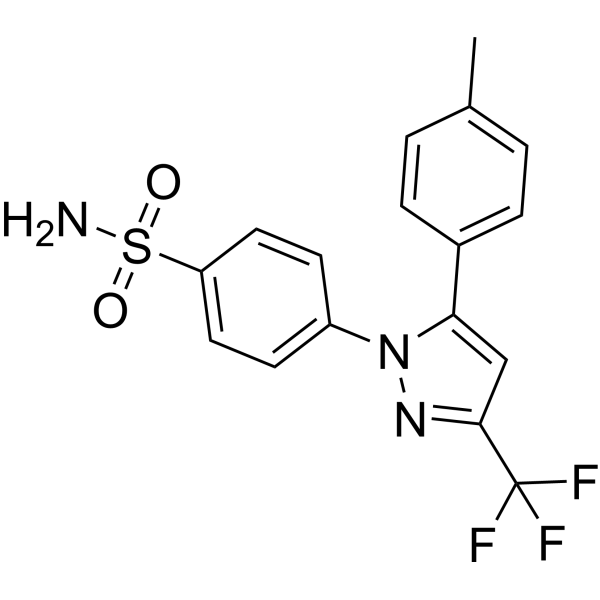
HY-14398
CelecoxibCOX-2inhibitor -
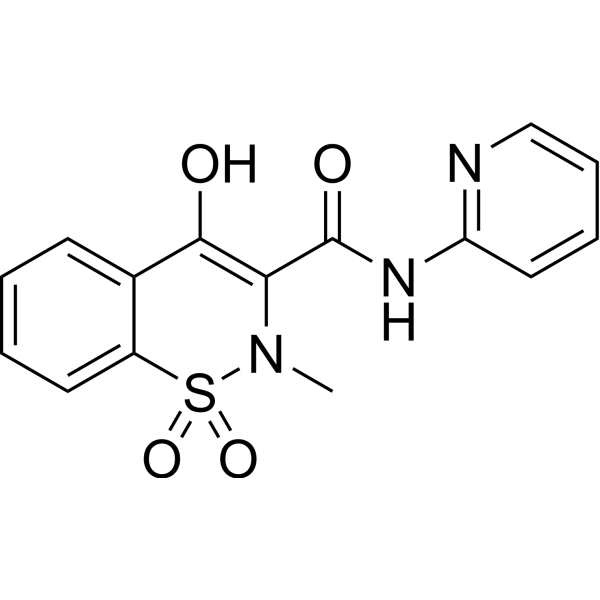
HY-B0253
PiroxicamCOX Inhibitor -
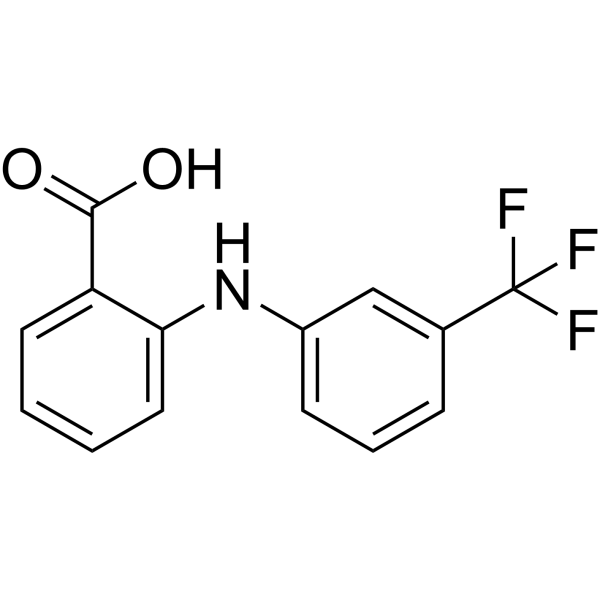
HY-B1221
Flufenamic acidCOX Inhibitor -
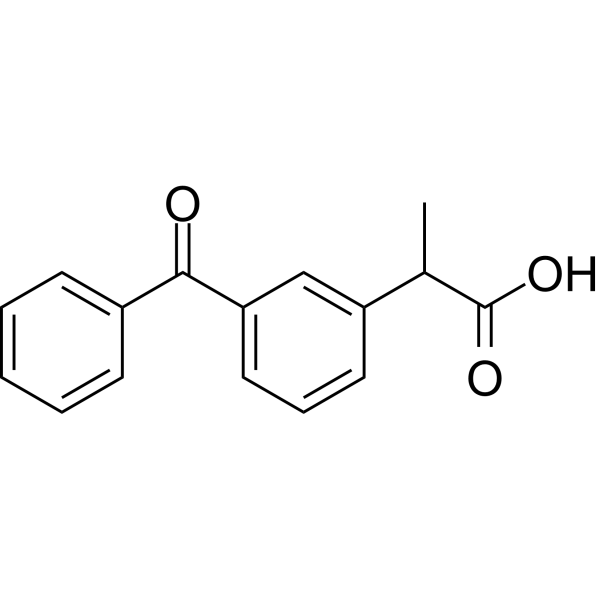
HY-B0227
KetoprofenAnti-inflammatory agent -
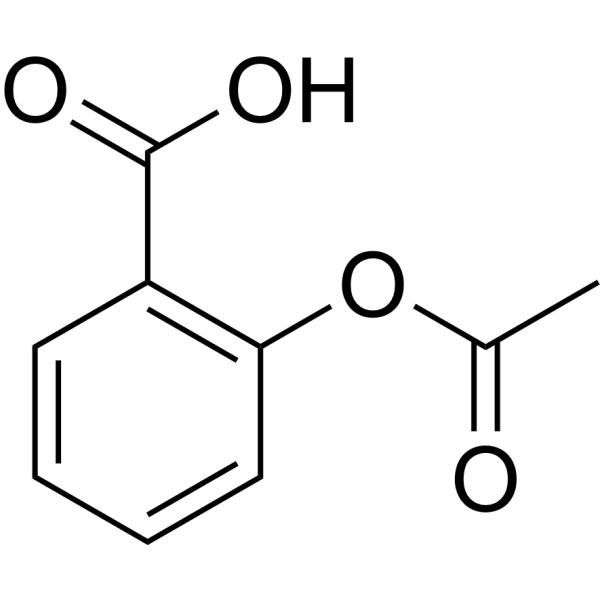
HY-14654
AspirinCOX Inhibitor -
HY-B0008
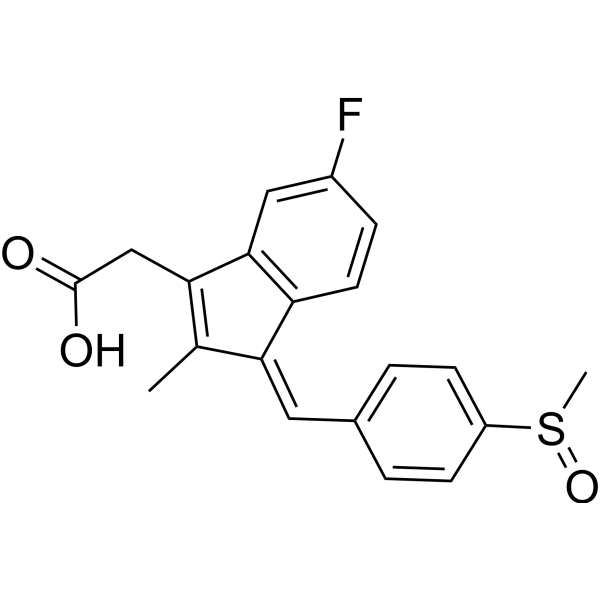
SulindacAnti-inflammatory Agent
Publications Citing Use of MedChemExpress (MCE) Mefenamic acid
More

Activité biologique
Description
IC50 & Target
[1]|
hCOX-1 40 nM (IC50) |
hCOX-2 3 μM (IC50) |
Cellular Effect
|
Cell Line

|
Type | Value | Description | References |
|---|---|---|---|---|
| HEK293 | EC50 |
16 μM
Compound: MFA
|
Agonist activity at human TRPA1 expressed in HEK293 cells assessed as increase in calcium influx by Fluo-4-AM dye based fluorescence assay
Agonist activity at human TRPA1 expressed in HEK293 cells assessed as increase in calcium influx by Fluo-4-AM dye based fluorescence assay
|
[PMID: 30878828] |
In Vitro
Mefenamic acid is a non-steroidal anti-inflammatory agent, acting as a competitive inhibitor of hCOX-1, with IC50s of 40 nM and 3 μM for hCOX-1 and hCOX-2, respectively[1]. Mefenamic acid (0-100 μM) has cytotoxic effects on KB, Saos-2, and 1321N cells, however, U-87MG cells are resistant to Mefenamic acid[2].
MedChemExpress (MCE) has not independently confirmed the accuracy of these methods. They are for reference only.
Essai clinique
| NCT Number | Sponsor | Condition | Start Date |
Phase
|
|---|---|---|---|---|
| NCT01329991 | 2011-05 | PHASE1 |


Chemical Information
-
CAS No. 61-68-7
-
Appearance Solid
-
Masse moléculaire 241.29
-
Formule C15H15NO2
-
Color White to off-white
-
SMILES
O=C(O)C1=CC=CC=C1NC2=CC=CC(C)=C2C
-
Livraison
Room temperature in continental US; may vary elsewhere.
-
Stockage
Powder -20°C 3 years 4°C 2 years In solvent -80°C 2 years -20°C 1 year


Publications (2)
-
Journal Impact Factor
-
Most Recent
-
Cell Rep Methods
RECOVER identifies synergistic drug combinations in vitro through sequential model optimization. [Abstract]2023 Oct 23;3(10):100599. PMID: 37797618 -
Neurosci Lett
2019 Mar 23:696:67-73. PMID: 30528877


Solvant et solubilité
In Vitro:
DMSO : ≥ 100 mg/mL (414.44 mM; Hygroscopic DMSO has a significant impact on the solubility of product, please use newly opened DMSO)
H2O : < 0.1 mg/mL (insoluble)
* "≥" means soluble, but saturation unknown.
Please refer to the solubility information to select the appropriate solvent. Once prepared, please aliquot and store the solution to prevent product inactivation from repeated freeze-thaw cycles.
Storage method and period of stock solution: -80°C, 2 years; -20°C, 1 year. When stored at -80°C, please use it within 2 years. When stored at -20°C, please use it within 1 year.
Please refer to the solubility information to select the appropriate solvent. Once prepared, please aliquot and store the solution to prevent product inactivation from repeated freeze-thaw cycles.
Storage method and period of stock solution: -80°C, 2 years; -20°C, 1 year. When stored at -80°C, please use it within 2 years. When stored at -20°C, please use it within 1 year.
Concentration (start) × Volume (start) = Concentration (final) × Volume (final)
In Vivo:
Select the appropriate dissolution method based on your experimental animal and administration route.
- For the following dissolution methods, please ensure to first prepare a clear stock solution using an In Vitro approach and then sequentially add co-solvents:
- To ensure reliable experimental results, the clarified stock solution can be appropriately stored based on storage conditions. As for the working solution for In Vivo experiments, it is recommended to prepare freshly and use it on the same day.
- The percentages shown for the solvents indicate their volumetric ratio in the final prepared solution. If precipitation or phase separation occurs during preparation, heat and/or sonication can be used to aid dissolution.
Add each solvent one by one: 10% DMSO 40% PEG300 5% Tween-80 45% Saline
Solubility: 2.5 mg/mL (10.36 mM); Suspended solution; Need ultrasonic
This protocol yields a suspended solution of 2.5 mg/mL. Suspended solution can be used for oral and intraperitoneal injection.
Taking 1 mL working solution as an example, add 100 μL DMSO stock solution (25.0 mg/mL) to 400 μL PEG300, and mix evenly; then add 50 μL Tween-80 and mix evenly; then add 450 μL Saline to adjust the volume to 1 mL.
Preparation of Saline: Dissolve 0.9 g sodium chloride in ddH₂O and dilute to 100 mL to obtain a clear Saline solution.
In Vivo Dissolution Calculator
Please enter the basic information of animal experiments:
-
-
-
-
Recommended: Prepare an additional quantity of animals to account for potential losses during experiments.
Please enter your animal formula composition:
-
%DMSO +
Recommended: Keep the proportion of DMSO in working solution below 2% if your animal is weak.
-
%+
-
+%Tween-80 + +
-
%Saline +
The co-solvents required include: DMSO, . All of co-solvents are available by MedChemExpress (MCE). , Tween 80. All of co-solvents are available by MedChemExpress (MCE).
Working solution concentration: 0.22 mg/mL
Method for preparing stock solution: mg drug dissolved in μL DMSO. Stock solution concentration: mg/mL.
1. Take μL DMSO stock solution;
2. Add μL .
μL , mix evenly;
3. Then add μL Tween 80, mix evenly;
4. Then add μL
Please ensure that the stock solution in the first step is dissolved to a clear state, and add co-solvents in sequence. You can use ultrasonic heating (ultrasonic cleaner, recommended frequency 20-40 kHz), vortexing, etc. to assist dissolution.


Pureté et documentation
-
Fiche technique (280 KB)
-
SDS (396 KB)
- English - EN (396 KB)
- Français - FR (396 KB)
- Deutsch - DE (396 KB)
- Norwegian - NO (396 KB)
- Español - ES (396 KB)
- Swedish - SV (396 KB)
- Italian - IT (396 KB)
- Korean - KR (396 KB)
- Portuguese - PT (396 KB)
-
Instruction de manipulation (2659 KB)
Références
[1]. Gierse JK, et al. Expression and selective inhibition of the constitutive and inducible forms of human cyclo-oxygenase. Biochem J. 1995 Jan 15;305 (Pt 2):479-84. [Content Brief]
[2]. Hashemipour MA, et al. In Vitro Cytotoxic Effects of Celecoxib, Mefenamic Acid, Aspirin and Indometacin on Several Cells Lines. J Dent (Shiraz). 2016 Sep;17(3):219-25. [Content Brief]
[3]. Joo Y, et al. Mefenamic acid shows neuroprotective effects and improves cognitive impairment in in vitro and in vivo Alzheimer's disease models. Mol Pharmacol. 2006 Jan;69(1):76-84. [Content Brief]


Complete Stock Solution Preparation Table
Please refer to the solubility information to select the appropriate solvent. Once prepared, please aliquot and store the solution to prevent product inactivation from repeated freeze-thaw cycles.
Storage method and period of stock solution: -80°C, 2 years; -20°C, 1 year. When stored at -80°C, please use it within 2 years. When stored at -20°C, please use it within 1 year.
| Optional Solvent | Concentration Solvent Mass | 1 mg | 5 mg | 10 mg | 25 mg |
|---|---|---|---|---|---|
| DMSO | 1 mM | 4.1444 mL | 20.7220 mL | 41.4439 mL | 103.6098 mL |
| 5 mM | 0.8289 mL | 4.1444 mL | 8.2888 mL | 20.7220 mL | |
| 10 mM | 0.4144 mL | 2.0722 mL | 4.1444 mL | 10.3610 mL | |
| 15 mM | 0.2763 mL | 1.3815 mL | 2.7629 mL | 6.9073 mL | |
| 20 mM | 0.2072 mL | 1.0361 mL | 2.0722 mL | 5.1805 mL | |
| 25 mM | 0.1658 mL | 0.8289 mL | 1.6578 mL | 4.1444 mL | |
| 30 mM | 0.1381 mL | 0.6907 mL | 1.3815 mL | 3.4537 mL | |
| 40 mM | 0.1036 mL | 0.5180 mL | 1.0361 mL | 2.5902 mL | |
| 50 mM | 0.0829 mL | 0.4144 mL | 0.8289 mL | 2.0722 mL | |
| 60 mM | 0.0691 mL | 0.3454 mL | 0.6907 mL | 1.7268 mL | |
| 80 mM | 0.0518 mL | 0.2590 mL | 0.5180 mL | 1.2951 mL | |
| 100 mM | 0.0414 mL | 0.2072 mL | 0.4144 mL | 1.0361 mL |


Mefenamic acid Related Classifications
HY-B0574 Related Classifications
 Powered by Bioz