



Bentamapimod
Based on 12 publication(s) in Google Scholar
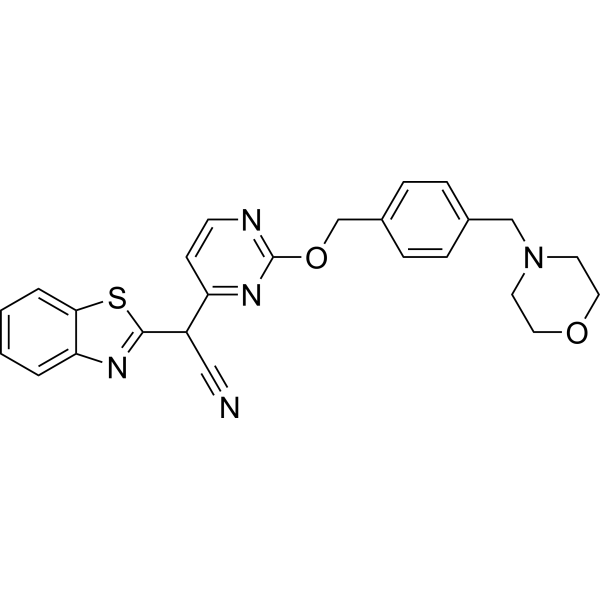
Bentamapimod (AS 602801) is an ATP-competitive JNK inhibitor with IC50 of 80 nM, 90 nM, and 230 nM for JNK1, JNK2, and JNK3, respectively.
Nur für Forschungszwecke. Wir verkaufen nicht an Patienten.
- Reinheit : 99.23%
- CAS. Nr.: 848344-36-5
- Formel: C25H23N5O2S
- Molecular Weight:457.55
-
Speicherung:Powder -20°C, 3 years , 4°C, 2 years ; In solvent -80°C, 2 years , -20°C, 1 year

To place orders, for customer services and technical support, please contact: MedChemExpress USA
Tel: 609-228-6898 E-mail: [email protected] [email protected]


-
 Biologische Aktivität
-
Chemical Information
-
Lösungsmittel & Löslichkeit
- Reinheit & Dokumentation
- Verweise
-
 Help & FAQs


-
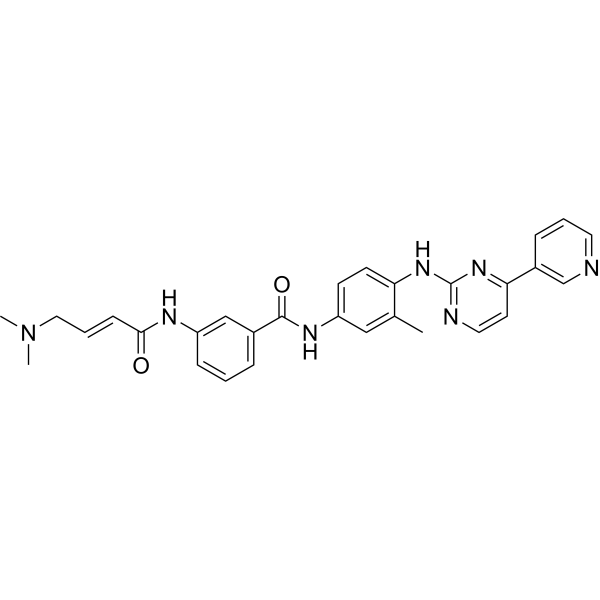
HY-13319
JNK-IN-8JNK Inhibitor -
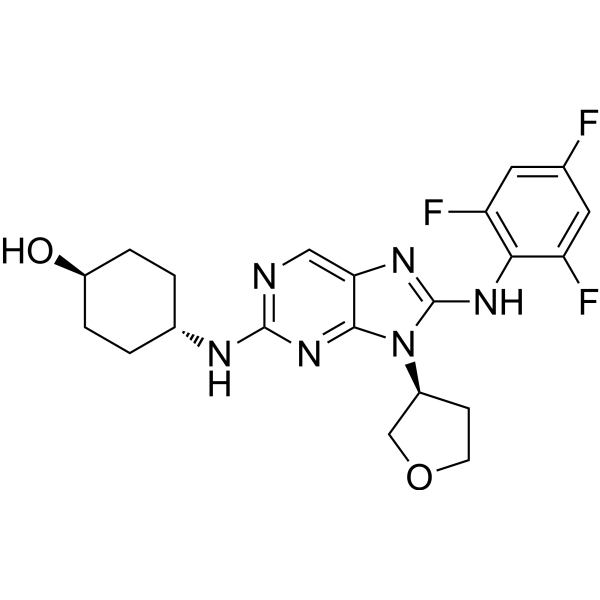
HY-15495
Tanzisertib -
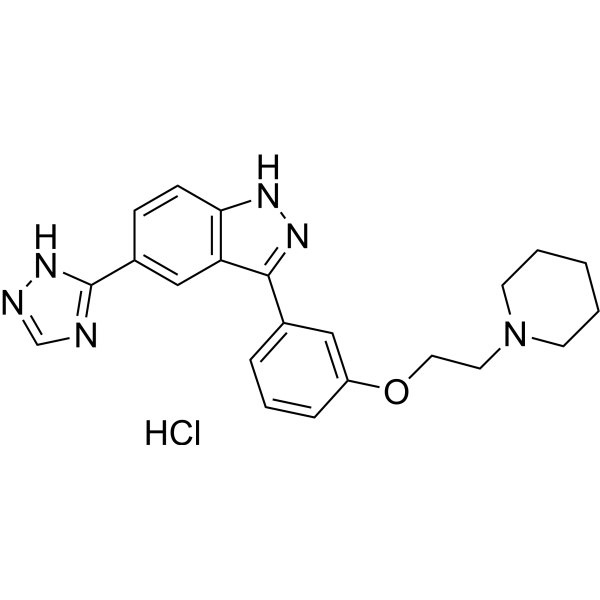
HY-13022
CC-401 hydrochlorideJNK Inhibitor -
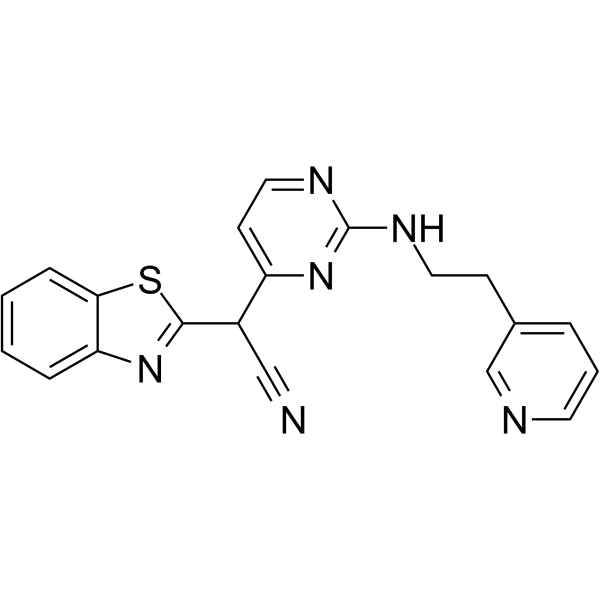
HY-11010
AS601245JNK Inhibitor -
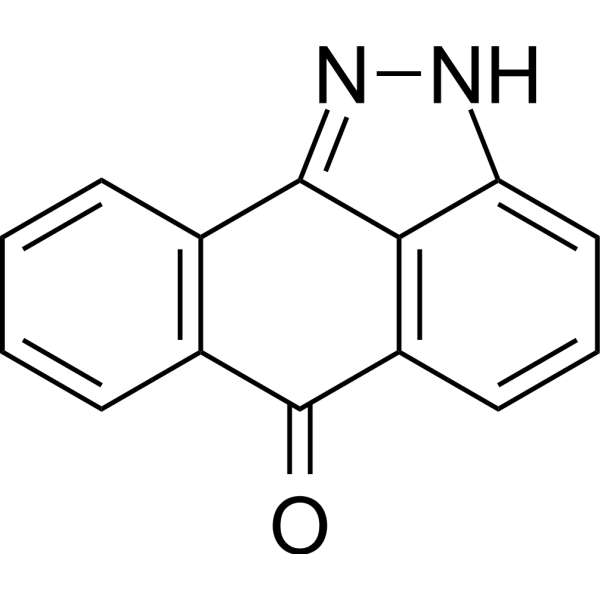
HY-12041
SP600125JNK Inhibitor -
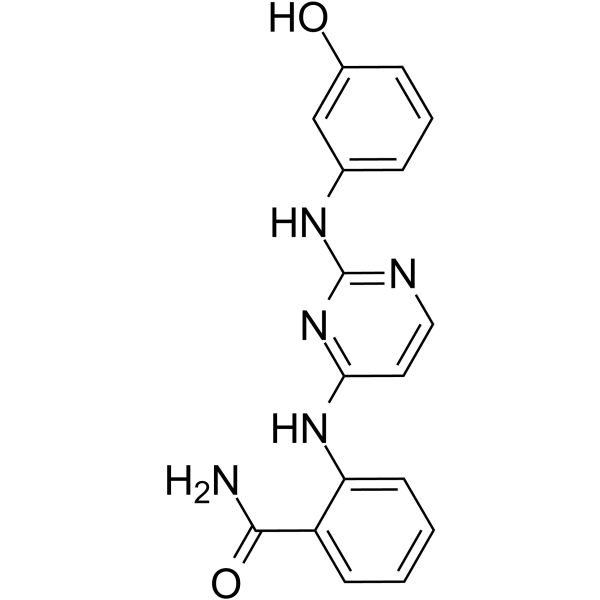
HY-15737
DB07268JNK Inhibitor -
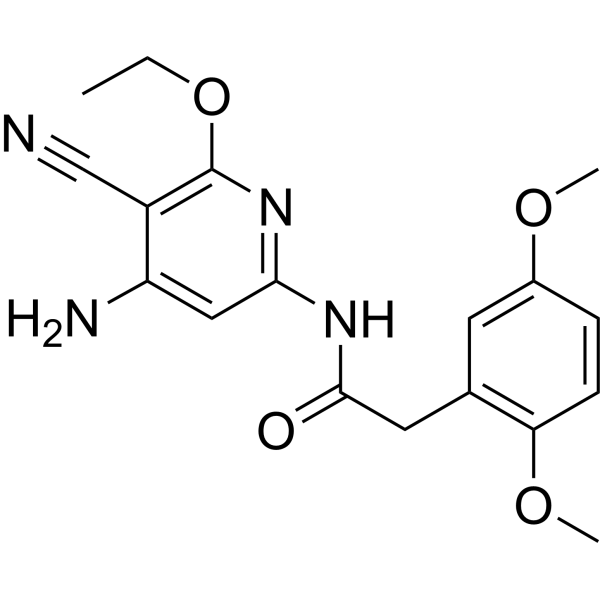
HY-107598
JNK Inhibitor VIIIJNK Inhibitor -
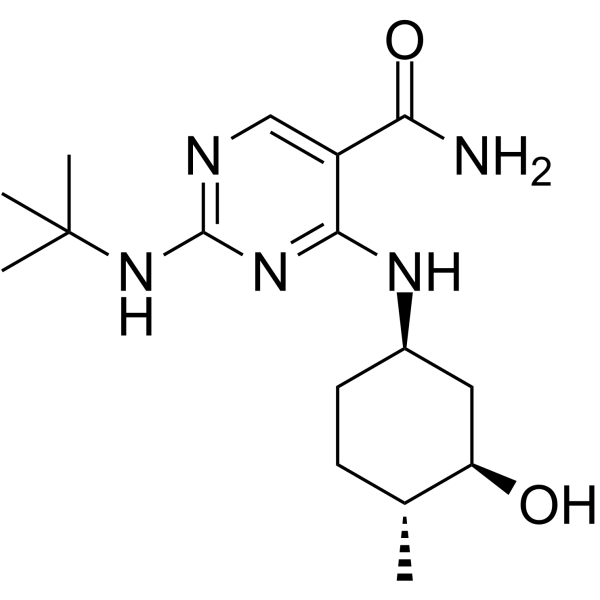
HY-138304
CC-90001JNK Inhibitor -
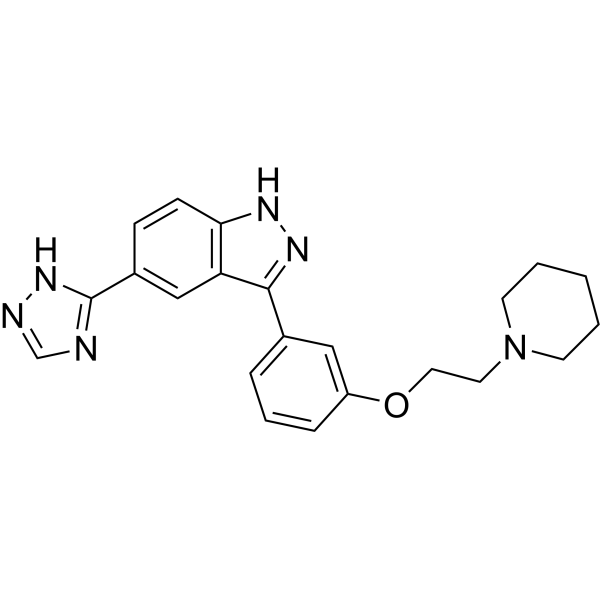
HY-13022A
CC-401JNK Inhibitor -
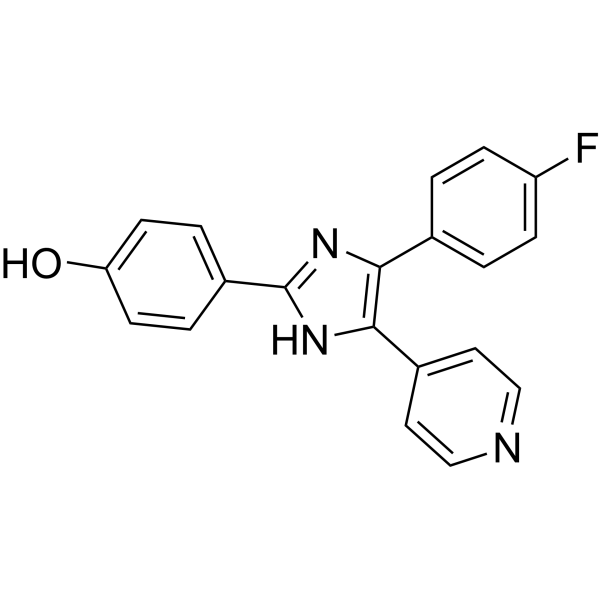
HY-10295
SB 202190p38 MAPK Inhibitor -
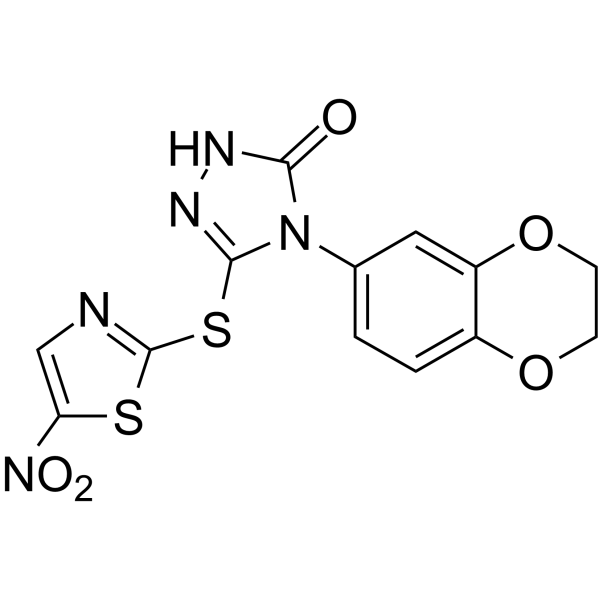
HY-10366
BI-78D3JNK Inhibitor -
HY-18982
AnisomycinProtein Synthesis Inhibitor
Publications Citing Use of MedChemExpress (MCE) Bentamapimod
More- Nat Nanotechnol. 2021 Jul;16(7):830-839. [Abstract]
- Nat Biomed Eng. 2018 Aug;2(8):578-588. [Abstract]
- Sci Transl Med. 2018 Jul 18;10(450):eaaq1093. [Abstract]
- Life Sci. 2025 Sep 15:377:123798. [Abstract]
- ACS Omega. 2024 Jun 18;9(26):28311-28322. [Abstract]
- J Photochem Photobiol B. 2026 Jan:274:113340. [Abstract]
- Npj Viruses. 2025 Sep 18;3(1):69. [Abstract]
- Anticancer Res. 2019 Feb;39(2):609-617. [Abstract]
- Anticancer Res. 2018 Dec;38(12):6699-6706. [Abstract]
- bioRxiv. 2023 Jun 25.
- Methods Mol Biol. 2018:1711:351-398. [Abstract]
- Oncotarget. 2016 May 10;7(19):27021-32. [Abstract]
 Customer Validation & Images

-
WB
-
WB
-
WB
-
WB


Biologische Aktivität
Beschreibung
IC50 & Target
[1]|
JNK1 80 nM (IC50) |
JNK2 90 nM (IC50) |
JNK3 230 nM (IC50) |
In Vitro
Bentamapimod (AS 602801) treatment induces cell death and accordingly decreased the number of viable cells in all three cell lines in a dose-dependent manner, suggesting that Bentamapimod (AS 602801) may have selective cytotoxic activity against neoplastic cells. Bentamapimod (AS 602801) exhibits cytotoxicity against both serum-cultured non-stem cancer cells and cancer stem cells derived from human pancreatic cancer, non-small cell lung cancer, ovarian cancer and glioblastoma at concentrations that did not decrease the viability of normal human fibroblasts. Bentamapimod (AS 602801) also inhibits the self-renewal and tumor-initiating capacity of cancer stem cells surviving Bentamapimod (AS 602801) treatment[2].
MedChemExpress (MCE) has not independently confirmed the accuracy of these methods. They are for reference only.
In Vivo
MedChemExpress (MCE) has not independently confirmed the accuracy of these methods. They are for reference only.


Chemical Information
-
CAS. Nr. 848344-36-5
-
Appearance Solid
-
Molecular Weight 457.55
-
Formel C25H23N5O2S
-
Color Light yellow to yellow
-
SMILES
N#CC(C1=NC(OCC2=CC=C(C=C2)CN3CCOCC3)=NC=C1)C4=NC5=CC=CC=C5S4
-
Synonyms
AS 602801
-
Versand
Room temperature in continental US; may vary elsewhere.
-
Speicherung
Powder -20°C 3 years 4°C 2 years In solvent -80°C 2 years -20°C 1 year


Publications (12)
-
Journal Impact Factor
-
Most Recent
-
Nat Nanotechnol
Therapeutically reprogrammed nutrient signalling enhances nanoparticulate albumin bound drug uptake and efficacy in KRAS-mutant cancer. [Abstract]2021 Jul;16(7):830-839. PMID: 33958764 -
Nat Biomed Eng
TLR7/8-agonist-loaded nanoparticles promote the polarization of tumour-associated macrophages to enhance cancer immunotherapy. [Abstract]2018 Aug;2(8):578-588. PMID: 31015631 -
Sci Transl Med
PP2A inhibition is a druggable MEK inhibitor resistance mechanism in KRAS-mutant lung cancer cells. [Abstract]2018 Jul 18;10(450):eaaq1093. PMID: 30021885 -
Life Sci
Dapagliflozin promotes metabolic reprogramming against myocardial infarction through the MAPK-FOXO3-STC1 and HIF-1a-STC1 pathways. [Abstract]2025 Sep 15:377:123798. PMID: 40480620 -
ACS Omega
The Role and Efficacy of JNK Inhibition in Inducing Lung Cancer Cell Death Depend on the Concentration of Cisplatin. [Abstract]2024 Jun 18;9(26):28311-28322. PMID: 38973918 -
J Photochem Photobiol B
Hydroxysafflower yellow a protects against UVA- and UVB-induced skin aging by suppressing cell apoptosis and SASP via targeting JNK and p38 MAPK pathway. [Abstract]2026 Jan:274:113340. PMID: 41421060 -
Npj Viruses
2025 Sep 18;3(1):69. PMID: 40968155 -
Anticancer Res
2019 Feb;39(2):609-617. PMID: 30711936
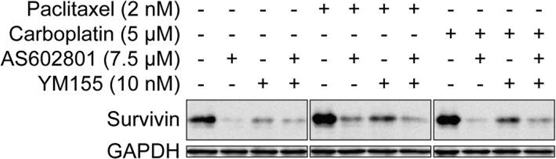
Bentamapimod purchased from MedChemExpress. Usage Cited in: Anticancer Res. 2019 Feb;39(2):609-617. [Abstract]
A2780 CSLCs are treated with paclitaxel (2 nM) or carboplatin (5 μM) in the presence or absence of AS602801 (7.5 μM) and/or YM155 (10 nM) for 3 days, and then subjected to western blot analysis of survivin and glyceraldehyde 3-phosphate dehydrogenase (GAPDH).
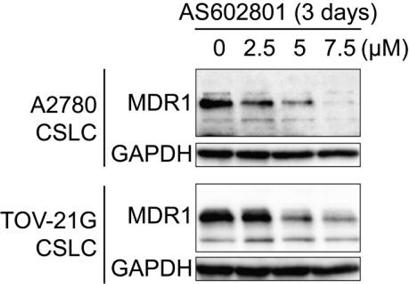
Bentamapimod purchased from MedChemExpress. Usage Cited in: Anticancer Res. 2019 Feb;39(2):609-617. [Abstract]
A2780 CSLCs and TOV-21G CLSCs are treated with AS602801 at 7.5 μM for the indicated time and the cells are subjected to western blot analysis of multidrug resistance protein 1 (MDR1) and glyceraldehyde 3-phosphate dehydrogenase (GAPDH).
-
Anticancer Res
AS602801, an Anticancer Stem Cell Candidate Drug, Reduces Survivin Expression and Sensitizes A2780 Ovarian Cancer Stem Cells to Carboplatin and Paclitaxel. [Abstract]2018 Dec;38(12):6699-6706. PMID: 30504379
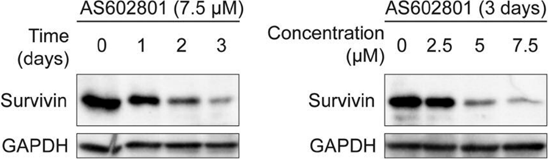
Bentamapimod purchased from MedChemExpress. Usage Cited in: Anticancer Res. 2018 Dec;38(12):6699-6706. [Abstract]
The protein expression of analysis Survivin with or without the treatment of AS602801 in different times and concentrations.
-
-
Methods Mol Biol
2018:1711:351-398. PMID: 29344898 -
Oncotarget
2016 May 10;7(19):27021-32. PMID: 27027242
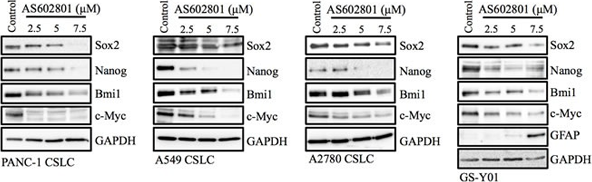
Bentamapimod purchased from MedChemExpress. Usage Cited in: Oncotarget. 2016 May 10;7(19):27021-32. [Abstract]
AS602801 treatment causes loss of stem cell marker expression in cancer stem cells. Subsequent analysis revealed that the levels of other stem cell markers, such as Sox2, Nanog, and Bmi1, are decreased similarly to CD133.


Lösungsmittel & Löslichkeit
In Vitro:
DMSO : 8.33 mg/mL (18.21 mM; ultrasonic and warming and heat to 60°C; Hygroscopic DMSO has a significant impact on the solubility of product, please use newly opened DMSO)
Please refer to the solubility information to select the appropriate solvent. Once prepared, please aliquot and store the solution to prevent product inactivation from repeated freeze-thaw cycles.
Storage method and period of stock solution: -80°C, 2 years; -20°C, 1 year. When stored at -80°C, please use it within 2 years. When stored at -20°C, please use it within 1 year.
Please refer to the solubility information to select the appropriate solvent. Once prepared, please aliquot and store the solution to prevent product inactivation from repeated freeze-thaw cycles.
Storage method and period of stock solution: -80°C, 2 years; -20°C, 1 year. When stored at -80°C, please use it within 2 years. When stored at -20°C, please use it within 1 year.
Konzentration (Stammlösung) × Volumen (Stammlösung) = Konzentration (Ziellösung) × Volumen (Ziellösung)
In Vivo:
Select the appropriate dissolution method based on your experimental animal and administration route.
- For the following dissolution methods, please ensure to first prepare a clear stock solution using an In Vitro approach and then sequentially add co-solvents:
- To ensure reliable experimental results, the clarified stock solution can be appropriately stored based on storage conditions. As for the working solution for In Vivo experiments, it is recommended to prepare freshly and use it on the same day.
- The percentages shown for the solvents indicate their volumetric ratio in the final prepared solution. If precipitation or phase separation occurs during preparation, heat and/or sonication can be used to aid dissolution.
Add each solvent one by one: 10% DMSO 40% PEG300 5% Tween-80 45% Saline
Solubility: ≥ 0.83 mg/mL (1.81 mM); Suspended solution
This protocol yields a suspended solution of ≥ 0.83 mg/mL (saturation unknown). Suspended solution can be used for oral and intraperitoneal injection.
Taking 1 mL working solution as an example, add 100 μL DMSO stock solution (8.3 mg/mL) to 400 μL PEG300, and mix evenly; then add 50 μL Tween-80 and mix evenly; then add 450 μL Saline to adjust the volume to 1 mL.
Preparation of Saline: Dissolve 0.9 g sodium chloride in ddH₂O and dilute to 100 mL to obtain a clear Saline solution.
In Vivo Dissolution Calculator
Please enter the basic information of animal experiments:
-
-
-
-
Recommended: Prepare an additional quantity of animals to account for potential losses during experiments.
Please enter your animal formula composition:
-
%DMSO +
Recommended: Keep the proportion of DMSO in working solution below 2% if your animal is weak.
-
%+
-
+%Tween-80 + +
-
%Saline +
The co-solvents required include: DMSO, . All of co-solvents are available by MedChemExpress (MCE). , Tween 80. All of co-solvents are available by MedChemExpress (MCE).
Working solution concentration: 0.22 mg/mL
Method for preparing stock solution: mg drug dissolved in μL DMSO. Stock solution concentration: mg/mL.
1. Take μL DMSO stock solution;
2. Add μL .
μL , mix evenly;
3. Then add μL Tween 80, mix evenly;
4. Then add μL
Please ensure that the stock solution in the first step is dissolved to a clear state, and add co-solvents in sequence. You can use ultrasonic heating (ultrasonic cleaner, recommended frequency 20-40 kHz), vortexing, etc. to assist dissolution.


Reinheit & Dokumentation
-
Data Sheet (278 KB)
-
SDS (393 KB)
- English - EN (393 KB)
- Français - FR (393 KB)
- Deutsch - DE (393 KB)
- Norwegian - NO (393 KB)
- Español - ES (393 KB)
- Swedish - SV (393 KB)
- Italian - IT (393 KB)
- Korean - KR (393 KB)
- Portuguese - PT (393 KB)
-
Handling Instructions (2659 KB)
Verweise
[1]. Messoussi A, et al. Recent progress in the design, study, and development of c-Jun N-terminal kinase inhibitors as anticanceragents. Chem Biol. 2014 Nov 20;21(11):1433-43. [Content Brief]
[2]. Okada M, et al. The novel JNK inhibitor AS602801 inhibits cancer stem cells in vitro and in vivo. Oncotarget. 2016 May 10;7(19):27021-32. [Content Brief]
[3]. Palmer SS, et al. Bentamapimod (JNK Inhibitor AS602801) Induces Regression of Endometriotic Lesions in Animal Models. Reprod Sci. 2016 Jan;23(1):11-23. [Content Brief]


Complete Stock Solution Preparation Table
Please refer to the solubility information to select the appropriate solvent. Once prepared, please aliquot and store the solution to prevent product inactivation from repeated freeze-thaw cycles.
Storage method and period of stock solution: -80°C, 2 years; -20°C, 1 year. When stored at -80°C, please use it within 2 years. When stored at -20°C, please use it within 1 year.
| Optional Solvent | Concentration Solvent Mass | 1 mg | 5 mg | 10 mg | 25 mg |
|---|---|---|---|---|---|
| DMSO | 1 mM | 2.1856 mL | 10.9278 mL | 21.8555 mL | 54.6388 mL |
| 5 mM | 0.4371 mL | 2.1856 mL | 4.3711 mL | 10.9278 mL | |
| 10 mM | 0.2186 mL | 1.0928 mL | 2.1856 mL | 5.4639 mL | |
| 15 mM | 0.1457 mL | 0.7285 mL | 1.4570 mL | 3.6426 mL |


Bentamapimod Related Classifications
HY-14761 Related Classifications
 Powered by Bioz