



Adezkibart

Based on 1 Customer Validation
Adezkibart is a human monoclonal antibody immunosuppressant targeting the human FMS-like tyrosine kinase 3 ligand (FLT3LG). Adezkibart is found in the Chinese hamster ovary cell line CHO-K1, which binds to FLT3LG to block the relevant signaling pathway, inhibits the immune response, and exerts immunosuppressive activity. Adezkibart is promising for research of immune-related diseases.
Nur für Forschungszwecke. Wir verkaufen nicht an Patienten.
- Reinheit : 96%
- CAS. Nr.: 2921564-55-6
- Molecular Weight:144.962 kDa
-
Speicherung:Shipping with dry ice
Please store the product under the recommended conditions in the Certificate of Analysis.


To place orders, for customer services and technical support, please contact: MedChemExpress USA
Tel: 609-228-6898 E-mail: [email protected] [email protected]


-
 Biologische Aktivität
-
Chemical Information
- Reinheit & Dokumentation
- Verweise
-
 Help & FAQs




Biologische Aktivität
Beschreibung
IC50 & Target
FLT3LG
Anwendung
ELISA, FACS, Functional assay
Verified Bioactivity
-
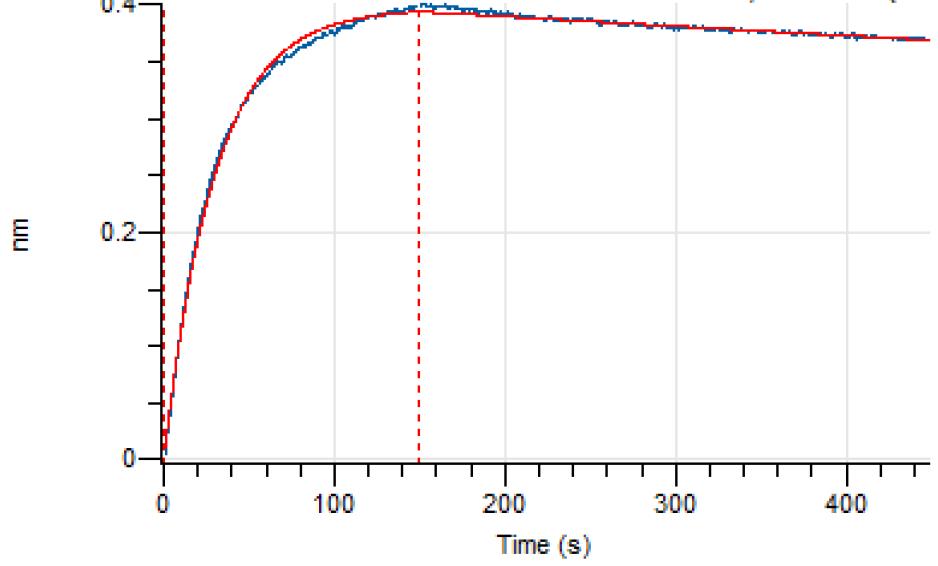 Loaded Adezkibart on ProA biosensor, can bind HY-P70544 FLT3LG Protein,Human (HEK293, His) with an affinity constant of 6.621E-10 M as determined in BLI assay.
-
 Flow cytometric analysis of 1X10⁶ Hela cells labeling FLT3L with Adezkibart (HY-P991114, red). Cells were stained with the primary antibody at 1/200 dilution for an hour at 4℃. AF488-conjugated Goat Anti-Human IgG H&L (AF488) (HY-P83776) was used as the secondary antibody at 1/1,000 dilution for 30 minutes at 4℃. Human IgG1 lambda2 (HY-P990096, blue) was used as the isotype control.


Product Details
-
CAS. Nr. 2921564-55-6
-
Accession P49771
-
Molecular Weight 144.962 kDa
-
Species Reactivity
Human
-
Conjugated
Unconjugated
-
Isotype
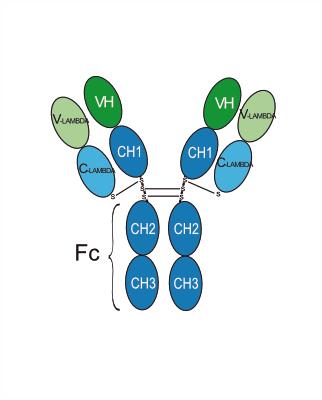
Human IgG1 lambda2
-
Recommend Isotype Controls
-
Format
-
IgG1-lambda
-
Product Properties
-
Appearance
Liquid
-
Formulation
Please refer to the lot-specific COA for specific buffer information.
-
Reinheit
96%
-
Reconstitution
The product can be reconstituted/diluted with sterile PBS or saline.
-
Storage & Stability
Please store the product under the recommended conditions in the Certificate of Analysis.
-
Versand
Shipping with dry ice.
Reinheit & Dokumentation


Verweise

Calculators
Konzentration (Stammlösung) × Volumen (Stammlösung) = Konzentration (Ziellösung) × Volumen (Ziellösung)


Adezkibart Related Classifications
HY-P991114 Related Classifications
 Powered by Bioz