



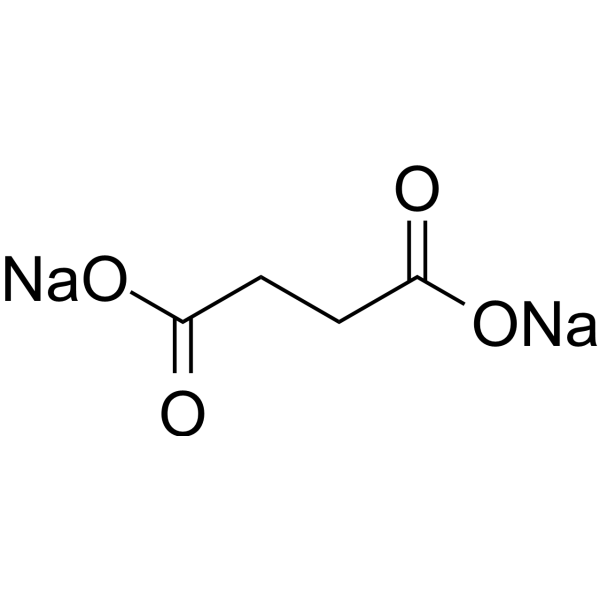
Disodium succinate
Based on 11 publication(s) in Google Scholar
Disodium succinate is an anti-anxiety agent with oral activity. Disodium succinate is the salt form of Succinic acid. Disodium succinate is an intermediate product of the tricarboxylic acid cycle. Disodium succinate is an important platform chemical. Disodium succinate can be used as surfactant, additive, ion chelating agent, flavoring agent and other applications in chemical, pharmaceutical and food fields.
Nur für Forschungszwecke. Wir verkaufen nicht an Patienten.
- Reinheit : 99.99%
- CAS. Nr.: 150-90-3
- Formel: C4H4Na2O4
- Molecular Weight:162.05
-
Speicherung:
Store at room temperature, keep dry and cool.
In solvent -80°C, 1 year , -20°C, 6 months

To place orders, for customer services and technical support, please contact: MedChemExpress USA
Tel: 609-228-6898 E-mail: [email protected] [email protected]


-
 Biologische Aktivität
-
Chemical Information
-
Lösungsmittel & Löslichkeit
- Reinheit & Dokumentation
- Verweise
-
 Help & FAQs


-
HY-N0420
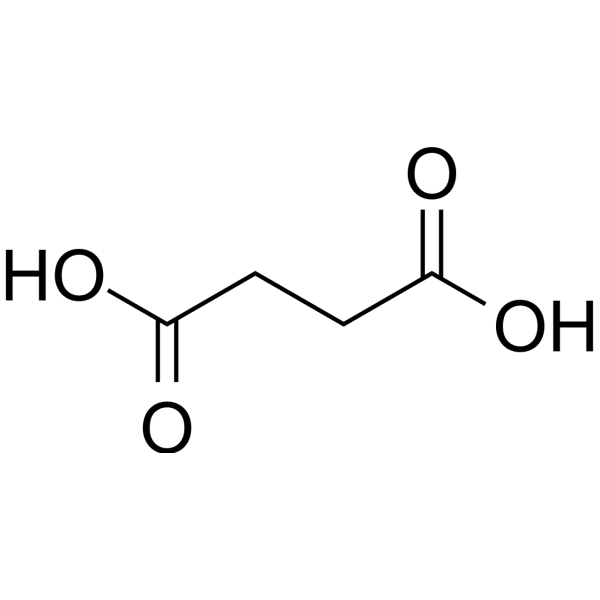
Succinic acidFood Additive, Platform chemical -
HY-B2176
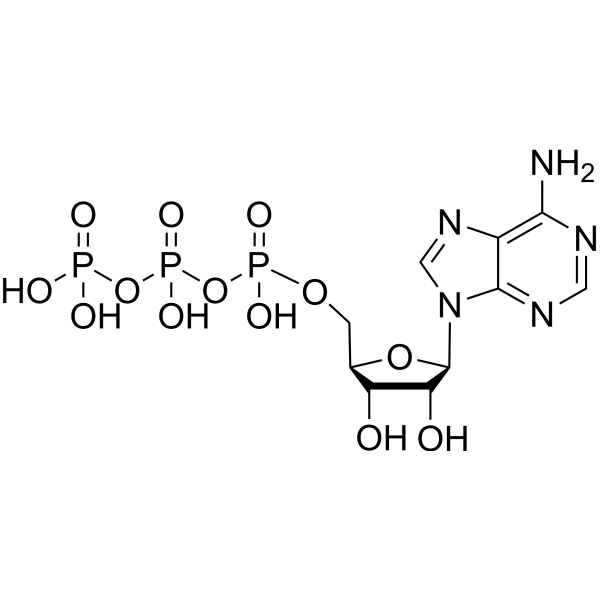
ATPEndogenous Metabolite -
HY-N0390
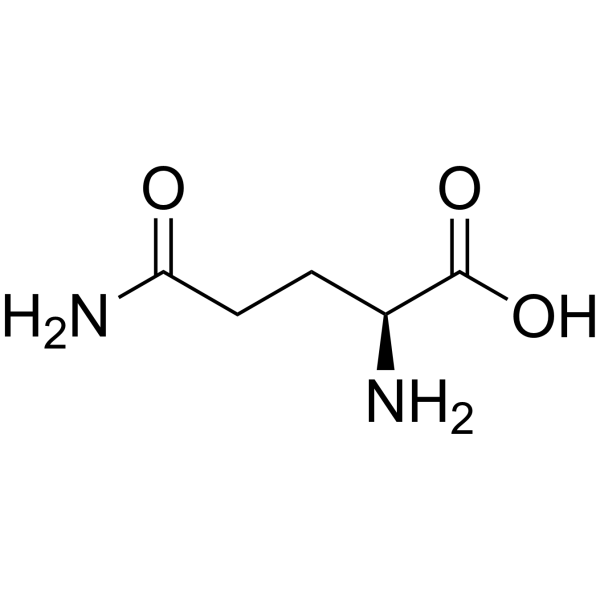
L-GlutamineEndogenous Metabolite -
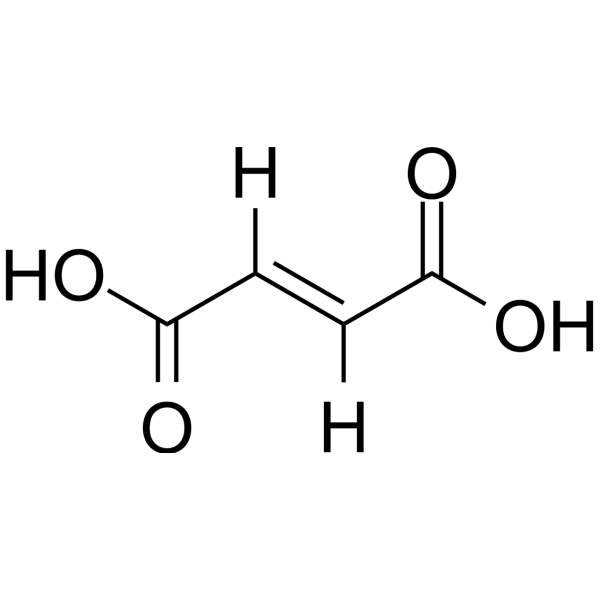
HY-W015883
Fumaric acidAnti-inflammatory agent -

HY-Y0808
Dimethyl succinateSuccinate Analogue -
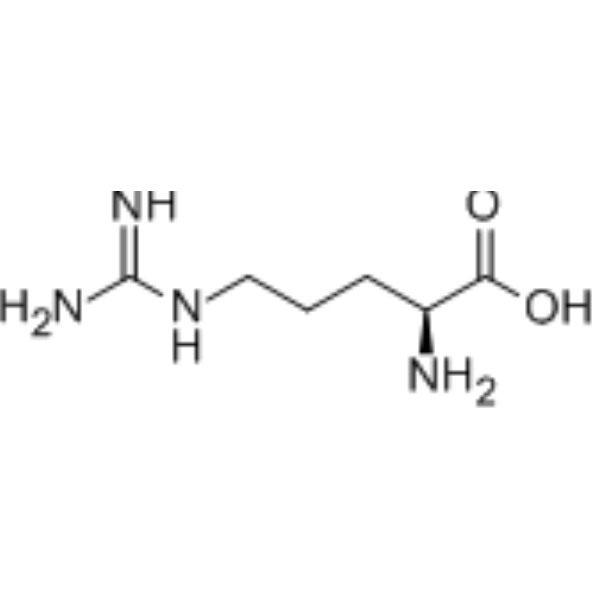
HY-N0455
L-ArginineeNOS Substrate -
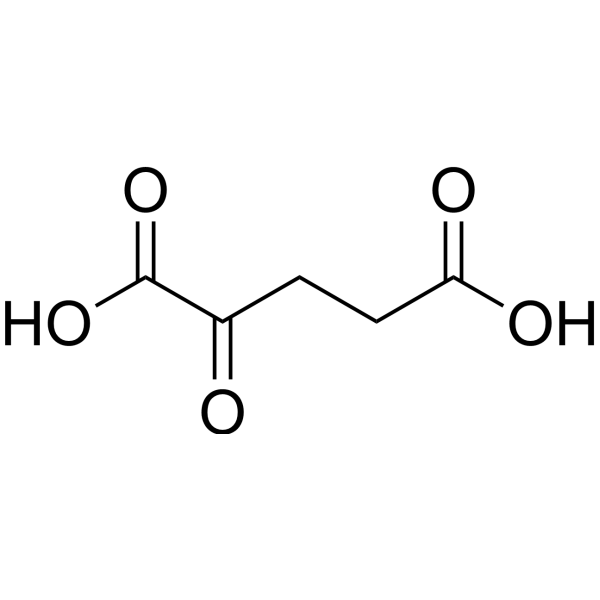
HY-W013636
2-Ketoglutaric acidKrebs Cycle Intermediate -
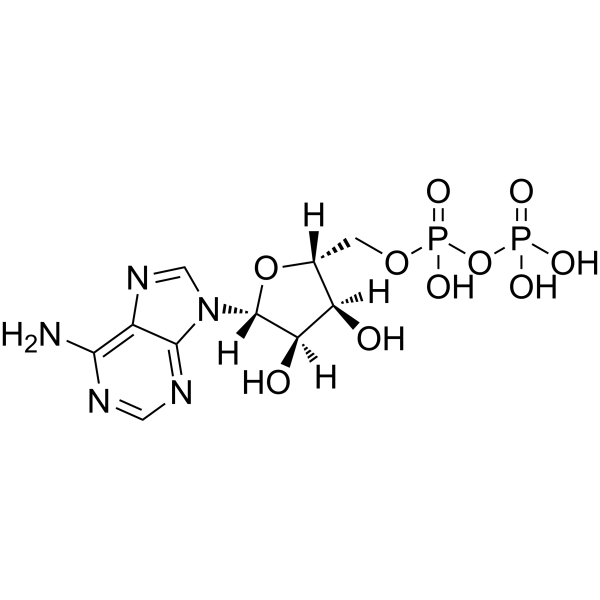
HY-W010918
Adenosine 5'-diphosphate -
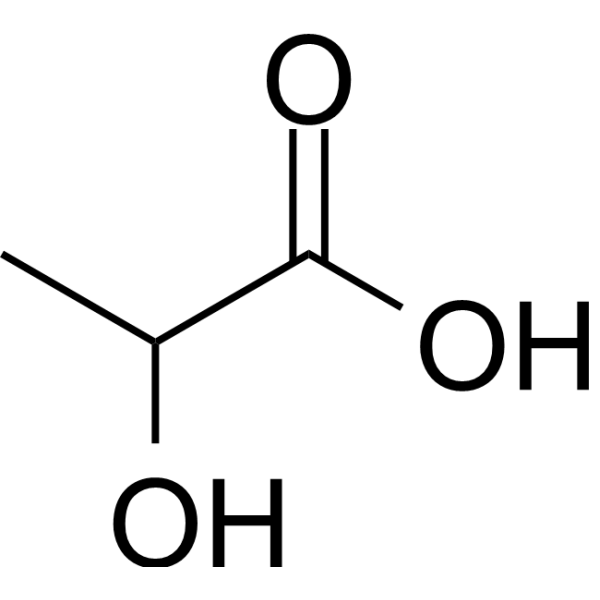
HY-B2227
Lactic acidGlycolysis Production -
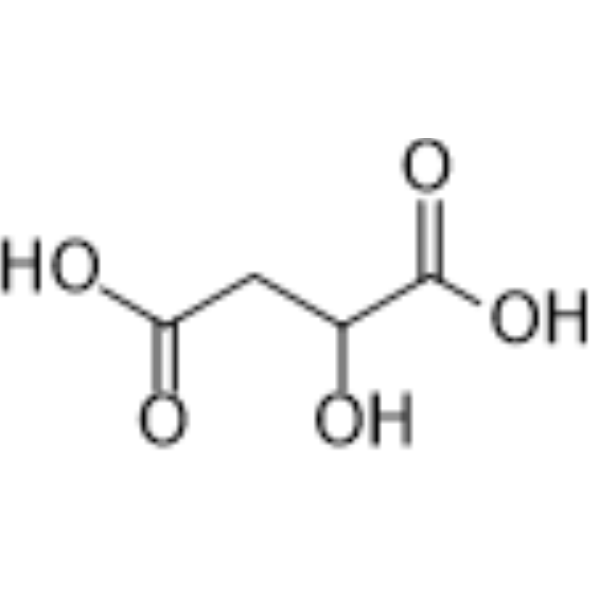
HY-Y1311
Malic acidDicarboxylic Acid -
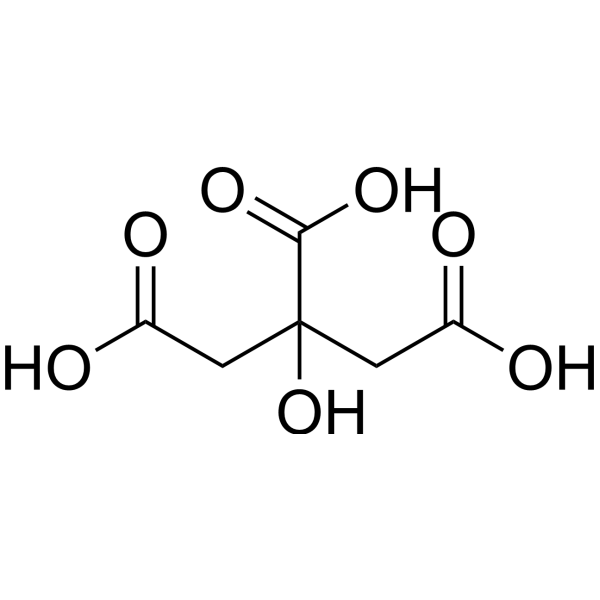
HY-N1428
Citric acidOrganic Acid -
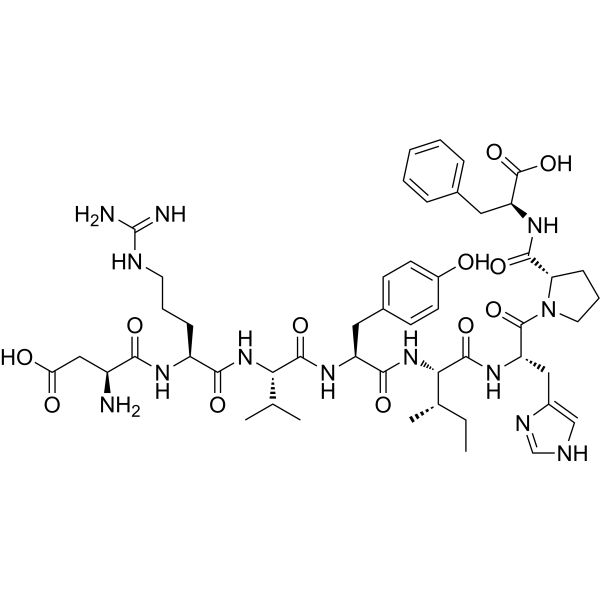
HY-13948
Angiotensin II humanVasoconstrictor
Publications Citing Use of MedChemExpress (MCE) Disodium succinate
More- Nature. 2025 Jul;643(8070):192-200. [Abstract]
- Cell Host Microbe. 2023 May 10;31(5):781-797.e9. [Abstract]
- Acta Pharm Sin B. 2024 Dec;14(12):5267-5285. [Abstract]
- Cell Mol Gastroenterol Hepatol. 2026 Apr 15;20(8):101789. [Abstract]
- Stem Cell Res Ther. 2025 Jul 23;16(1):399. [Abstract]
- Cell Rep. 2026 Feb 25;45(3):117047. [Abstract]
- Inflamm Res. 2025 Nov 6;74(1):156. [Abstract]
- Oncol Res. 2026 Jan 19;34(2):25. [Abstract]
- Water Air Soil Pollut. 232, 473 (2021).
- J Proteomics. 2024 Apr 30:298:105155. [Abstract]
- Research Square Print. December 9th, 2022.
 Customer Validation & Images

-
In Vivo Efficacy Study
-
In Vivo Efficacy Study
-
In Vivo Efficacy Study
-
RT-PCR
-
WB
Alle Endogenous Metabolite Isoform-spezifische Produkte anzeigen
More

Biologische Aktivität
Beschreibung
IC50 & Target
|
Microbial Metabolite |
Human Endogenous Metabolite |
In Vivo
MedChemExpress (MCE) has not independently confirmed the accuracy of these methods. They are for reference only.
-
Animal Model:Elevated plus-maze test mice model[3]
-
Dosage:3 mg/kg, 6 mg/kg
-
Administration:Oral gavage (p.o.); Single dose
-
Result:At doses of 3.0 and 6.0 mg/kg significantly increased the percentage of mice that entered the open arm and the percentage of time that the open arm stayed.
-
Animal Model:Food intake mice model [3]
-
Dosage:3 mg/kg, 6 mg/kg, 12 mg/kg
-
Administration:Intraperitoneal injection (i.p.); Single dose
-
Result:Significantly increased the mice's food intake within 5 minutes after administration.
-
Animal Model:Stress-induced hyperthermia test mice model[3]
-
Dosage:1.5 mg/kg, 3 mg/kg, 6 mg/kg
-
Administration:Oral gavage (p.o.); Single dose
-
Result:Inhibited stress-induced hyperthermia at a dose of 1.5 mg/kg.


Chemical Information
-
CAS. Nr. 150-90-3
-
Appearance Solid
-
Molecular Weight 162.05
-
Formel C4H4Na2O4
-
Color White to off-white
-
SMILES
O=C(O[Na])CCC(O[Na])=O
-
Structure Classification
-
Initial Source
-
Versand
Room temperature in continental US; may vary elsewhere.
-
Speicherung
Store at room temperature, keep dry and cool
In solvent -80°C 1 year -20°C 6 months


Publications (11)
-
Journal Impact Factor
-
Most Recent
-
Nature
2025 Jul;643(8070):192-200. PMID: 39695227 -
Cell Host Microbe
Fusobacterium nucleatum-derived succinic acid induces tumor resistance to immunotherapy in colorectal cancer. [Abstract]2023 May 10;31(5):781-797.e9. PMID: 37130518
Disodium succinate purchased from MedChemExpress. Usage Cited in: Cell Host Microbe. 2023 May 10;31(5):781-797.e9. [Abstract]
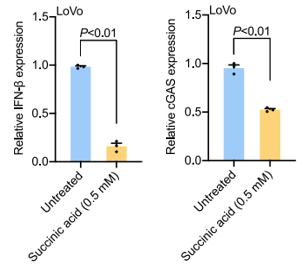
Relative mRNA expression of IFN-b and cGAS in LoVo cells treated with succinic acid (0.5 mM;24 h) or F. nucleatum supernatant
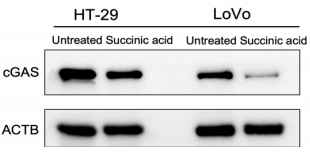
Disodium succinate purchased from MedChemExpress. Usage Cited in: Cell Host Microbe. 2023 May 10;31(5):781-797.e9. [Abstract]
Representative immunoblotting of cGAS expression in HT29 and LoVo cells treated with succinic acid (0.5 mM; 24 h).
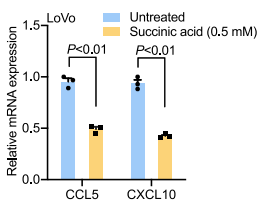
Disodium succinate purchased from MedChemExpress. Usage Cited in: Cell Host Microbe. 2023 May 10;31(5):781-797.e9. [Abstract]
Relative mRNA expression of CCL5 and CXCL10 in LoVo cells treated with succinic acid (0.5 mM; 24 h) or F. nucleatum supernatant.
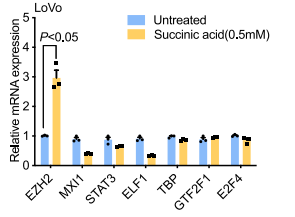
Disodium succinate purchased from MedChemExpress. Usage Cited in: Cell Host Microbe. 2023 May 10;31(5):781-797.e9. [Abstract]
Relative expression of candidate transcriptional regulation elements in LoVo cells treated with succinic acid (0.5 mM; 24 h).
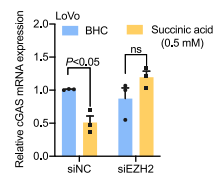
Disodium succinate purchased from MedChemExpress. Usage Cited in: Cell Host Microbe. 2023 May 10;31(5):781-797.e9. [Abstract]
Relative cGAS mRNA expression in LoVo cells transfected with EZH2 siRNA, then treated with succinic acid (0.5 mM; 24 h).
-
Acta Pharm Sin B
2024 Dec;14(12):5267-5285. PMID: 39807334
Disodium succinate purchased from MedChemExpress. Usage Cited in: Acta Pharm Sin B. 2024 Dec;14(12):5267-5285. [Abstract]
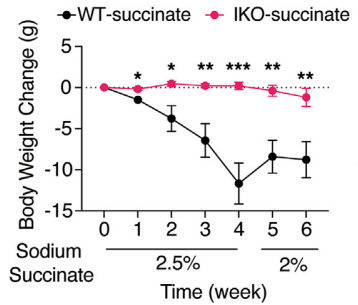
After lowering the concentration of Disodium succinate from 2.5% to 2% in water for 2 weeks, the body weight of the WT mice rebounded, whereas that of the IKO mice remained the same. Changes in body weight after the administration of sodium succinate to WT and IKO mice (fed with HFD for 24 week).
Disodium succinate purchased from MedChemExpress. Usage Cited in: Acta Pharm Sin B. 2024 Dec;14(12):5267-5285. [Abstract]
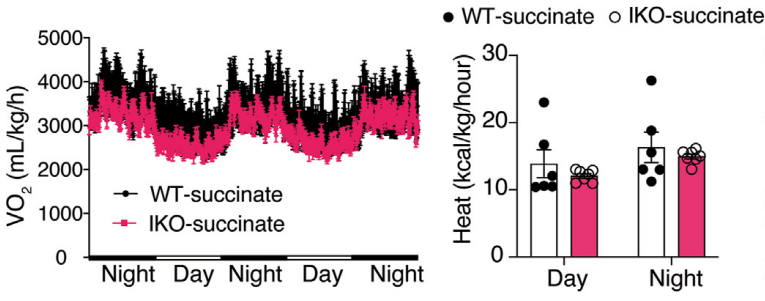
Oxygen consumption rate and energy expenditure (heat production) of HFD-fed WT and IKO mice after 4 weeks of Disodium succinate administration (2.5%), as measured by CLAMS.
Disodium succinate purchased from MedChemExpress. Usage Cited in: Acta Pharm Sin B. 2024 Dec;14(12):5267-5285. [Abstract]
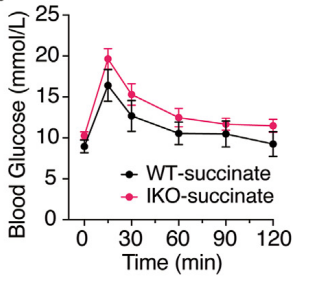
Oral glucose tolerance tests (OGTTs) after 4 weeks of 2.5% Disodium succinate administration to HFD-fed (24-week-old) WT and IKO mice.
-
Cell Mol Gastroenterol Hepatol
Microbial Monotherapy With Leuconostoc sp LB-P8 Improves Inflammation and Fibrosis in Mouse Primary Sclerosing Cholangitis by Inhibiting Transforming Growth Factor β1/SMAD Signaling. [Abstract]2026 Apr 15;20(8):101789. PMID: 41997362 -
Stem Cell Res Ther
From inflammation to healing: the crucial role of GPR91 activation and SDH inhibition in chronic diabetic wound recovery. [Abstract]2025 Jul 23;16(1):399. PMID: 40702577 -
Cell Rep
Streptococcus anginosus-generated succinate promotes the progression of gastric cancer via the succinate/SUCNR1/ABRAXAS1 axis. [Abstract]2026 Feb 25;45(3):117047. PMID: 41746808 -
Inflamm Res
PGC1α alleviates M1 macrophage polarization through dual regulation of succinate metabolism and TRAF5 expression to mitigate TLR4/NF-κB-driven inflammatory cascades and myocardial ischemia/reperfusion injury. [Abstract]2025 Nov 6;74(1):156. PMID: 41196309 -
Oncol Res
SDHA Deficiency in Hepatocellular Carcinoma Promotes Tumor Progression through Succinate-Induced M2 Macrophage Polarization. [Abstract]2026 Jan 19;34(2):25. PMID: 41613800 -
-
J Proteomics
Global proteomic analysis reveals lysine succinylation is involved in the pathogenesis of hypertrophic scar. [Abstract]2024 Apr 30:298:105155. PMID: 38460743 -
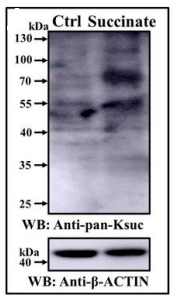
Disodium succinate purchased from MedChemExpress. Usage Cited in: Research Square Print. December 9th, 2022.
Disodium succinate (40 mM; 48 h) in ovaries were stripped from 21-day-old female KM mice elevated the global Ksuc level of mouse ovary cultured in vitro.
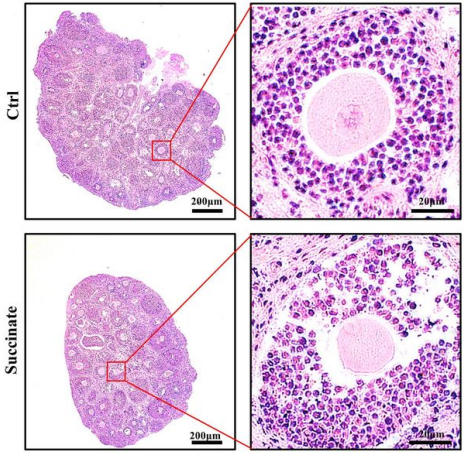
Disodium succinate purchased from MedChemExpress. Usage Cited in: Research Square Print. December 9th, 2022.
Disodium succinate (40 mM; 48 h) in ovaries were stripped from 21-day-old female KM mice showed the GCs in the ovaries of the succinate administration group were more sparsely arranged around the follicles compared to the control group.
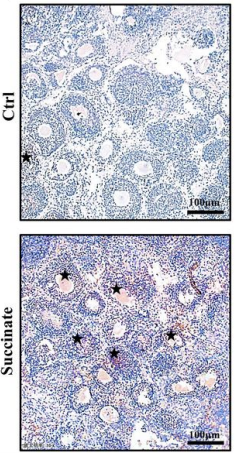
Disodium succinate purchased from MedChemExpress. Usage Cited in: Research Square Print. December 9th, 2022.
Disodium succinate (40 mM; 48 h) in ovaries of 21-day-old female KM mice showed an increased staining in ovarian cells in the succinate group as compared with the control group.
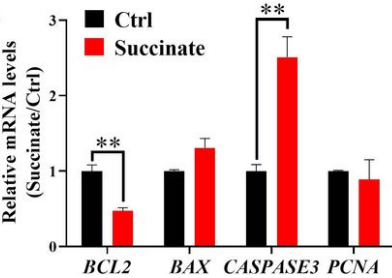
Disodium succinate purchased from MedChemExpress. Usage Cited in: Research Square Print. December 9th, 2022.
Disodium succinate (40 mM; 48 h) in ovaries of 21-day-old female KM mice verified that B-cell lymphoma-2 (Bcl-2) significantly decreased and Cleaved-caspase 3 significantly increased in succinate-treated ovaries, whereas BCL2-associated X (Bax) and proliferating cell nuclear antigen (PCNA) did not change significantly in mRNA levels.
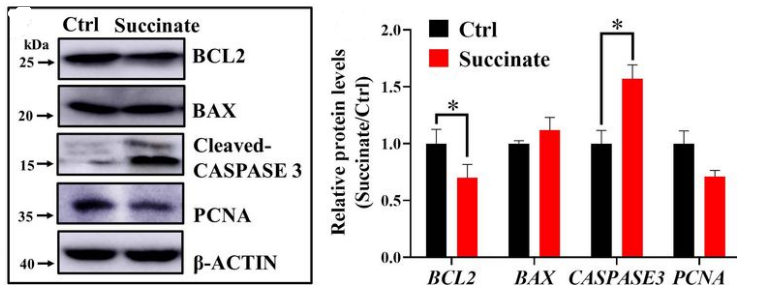
Disodium succinate purchased from MedChemExpress. Usage Cited in: Research Square Print. December 9th, 2022.
Disodium succinate (40 mM; 48 h) in ovaries of 21-day-old female KM mice verified that B-cell lymphoma-2 (Bcl-2) significantly decreased and Cleaved-caspase 3 significantly increased in succinate-treated ovaries, whereas BCL2-associated X (Bax) and proliferating cell nuclear antigen (PCNA) did not change significantly in protein levels.


Lösungsmittel & Löslichkeit
In Vitro:
H2O : ≥ 100 mg/mL (617.09 mM)
DMSO : < 1 mg/mL (insoluble or slightly soluble)
* "≥" means soluble, but saturation unknown.
Please refer to the solubility information to select the appropriate solvent. Once prepared, please aliquot and store the solution to prevent product inactivation from repeated freeze-thaw cycles.
Storage method and period of stock solution: -80°C, 1 year; -20°C, 6 months. When stored at -80°C, please use it within 1 year. When stored at -20°C, please use it within 6 months.
* Note: If you choose water as the stock solution, please dilute it to the working solution, then filter and sterilize it with a 0.22 μm filter before use.
Please refer to the solubility information to select the appropriate solvent. Once prepared, please aliquot and store the solution to prevent product inactivation from repeated freeze-thaw cycles.
Storage method and period of stock solution: -80°C, 1 year; -20°C, 6 months. When stored at -80°C, please use it within 1 year. When stored at -20°C, please use it within 6 months.
* Note: If you choose water as the stock solution, please dilute it to the working solution, then filter and sterilize it with a 0.22 μm filter before use.
Konzentration (Stammlösung) × Volumen (Stammlösung) = Konzentration (Ziellösung) × Volumen (Ziellösung)
In Vivo:
For the following dissolution methods, please prepare the working solution directly:
It is recommended to prepare fresh solutions and use them promptly within a short period of time.
The percentages shown for the solvents indicate their volumetric ratio in the final prepared solution. If precipitation or phase separation occurs during preparation, heat and/or sonication can be used to aid dissolution.
Add each solvent one by one: PBS
Solubility: 100 mg/mL (617.09 mM); Clear solution; Need ultrasonic


Reinheit & Dokumentation
-
Data Sheet (276 KB)
-
SDS (480 KB)
- English - EN (480 KB)
- Français - FR (480 KB)
- Deutsch - DE (480 KB)
- Norwegian - NO (480 KB)
- Español - ES (480 KB)
- Swedish - SV (480 KB)
- Italian - IT (480 KB)
- Korean - KR (480 KB)
- Portuguese - PT (480 KB)
-
Handling Instructions (2659 KB)
Verweise
[1]. Zhang YJ, et al. Optimization of succinic acid fermentation with Actinobacillus succinogenes by response surface methodology (RSM). J Zhejiang Univ Sci B. 2012 Feb;13(2):103-10. [Content Brief]
[2]. Johns A T. The production of propionic acid by decarboxylation of succinic acid in a bacterial fermentation[J]. The Biochemical journal, 1948, 42(1): ii. [Content Brief]
[3]. Chen SW, Xin Q, Kong WX, Min L, Li JF. Anxiolytic-like effect of succinic acid in mice. Life Sci. 2003 Nov 7;73(25):3257-64. doi: 10.1016/j.lfs.2003.06.017. PMID: 14561530. [Content Brief]


Complete Stock Solution Preparation Table
Please refer to the solubility information to select the appropriate solvent. Once prepared, please aliquot and store the solution to prevent product inactivation from repeated freeze-thaw cycles.
Storage method and period of stock solution: -80°C, 1 year; -20°C, 6 months. When stored at -80°C, please use it within 1 year. When stored at -20°C, please use it within 6 months.
| Optional Solvent | Concentration Solvent Mass | 1 mg | 5 mg | 10 mg | 25 mg |
|---|---|---|---|---|---|
| H2O | 1 mM | 6.1709 mL | 30.8547 mL | 61.7093 mL | 154.2734 mL |
| 5 mM | 1.2342 mL | 6.1709 mL | 12.3419 mL | 30.8547 mL | |
| 10 mM | 0.6171 mL | 3.0855 mL | 6.1709 mL | 15.4273 mL | |
| 15 mM | 0.4114 mL | 2.0570 mL | 4.1140 mL | 10.2849 mL | |
| 20 mM | 0.3085 mL | 1.5427 mL | 3.0855 mL | 7.7137 mL | |
| 25 mM | 0.2468 mL | 1.2342 mL | 2.4684 mL | 6.1709 mL | |
| 30 mM | 0.2057 mL | 1.0285 mL | 2.0570 mL | 5.1424 mL | |
| 40 mM | 0.1543 mL | 0.7714 mL | 1.5427 mL | 3.8568 mL | |
| 50 mM | 0.1234 mL | 0.6171 mL | 1.2342 mL | 3.0855 mL | |
| 60 mM | 0.1028 mL | 0.5142 mL | 1.0285 mL | 2.5712 mL | |
| 80 mM | 0.0771 mL | 0.3857 mL | 0.7714 mL | 1.9284 mL | |
| 100 mM | 0.0617 mL | 0.3085 mL | 0.6171 mL | 1.5427 mL |
* Note: If you choose water as the stock solution, please dilute it to the working solution, then filter and sterilize it with a 0.22 μm filter before use.


Disodium succinate Related Classifications
HY-W015410 Related Classifications
 Powered by Bioz