



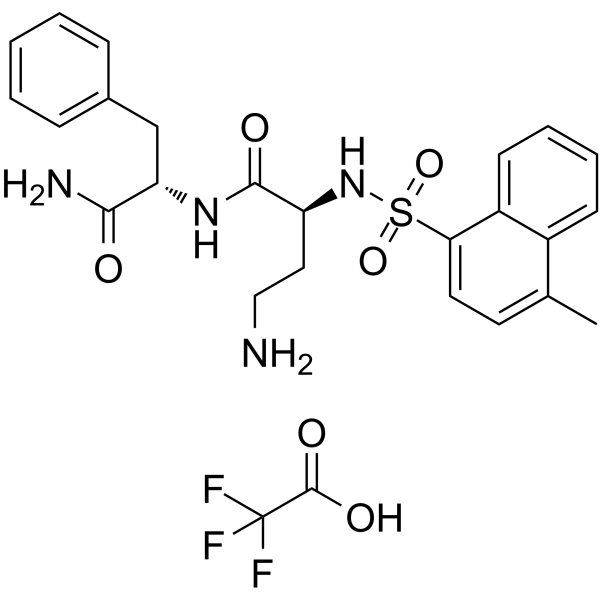
J-2156 TFA

Based on 1 Customer Validation
J-2156 TFA is a high potent, selective somatostatin receptor type 4 (SST4 receptor) agonist with IC50s of 0.05 nM and 0.07 nM for human and rat SST4 receptors, respectively. J-2156 TFA has anti-inflammatory activity and it is used for the relief of mechanical allodynia and mechanical hyperalgesia in the ipsilateral hindpaws in rats.
Nur für Forschungszwecke. Wir verkaufen nicht an Patienten.
- Reinheit : 99.88%
- CAS. Nr.: 2387505-73-7
- Formel: C26H29F3N4O6S
- Molecular Weight:582.59
-
Speicherung:
Sealed storage, away from moisture and light, under nitrogen.
Powder -80°C, 2 years , -20°C, 1 year* In solvent : -80°C, 6 months; -20°C, 1 month (sealed storage, away from moisture and light, under nitrogen)

To place orders, for customer services and technical support, please contact: MedChemExpress USA
Tel: 609-228-6898 E-mail: [email protected] [email protected]


-
 Biologische Aktivität
-
Chemical Information
-
Lösungsmittel & Löslichkeit
- Protokoll
- Reinheit & Dokumentation
- Verweise
-
 Help & FAQs


-
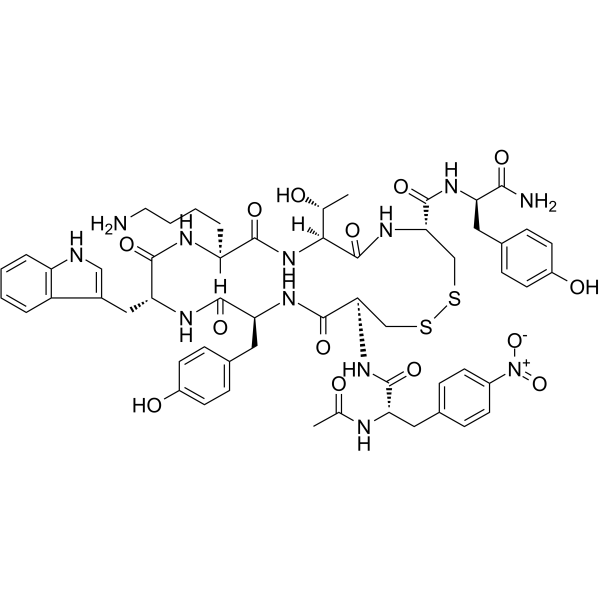
HY-P1202
CYN 154806Somatostatin SST2 Receptor Antagonist -
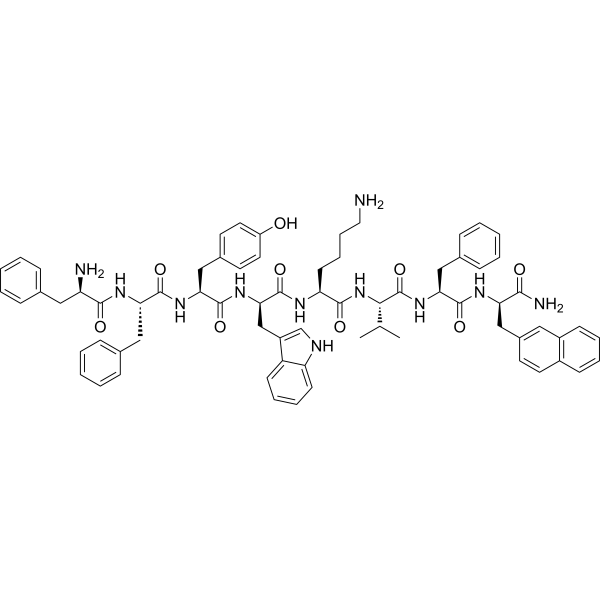
HY-P1203
BIM-23056Somatostatin Receptor Antagonist -
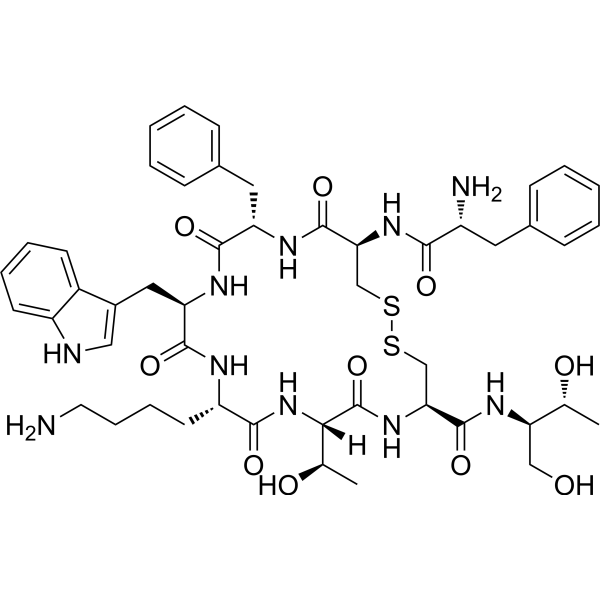
HY-P0036
OctreotideSomatostatin Receptor Agonist -
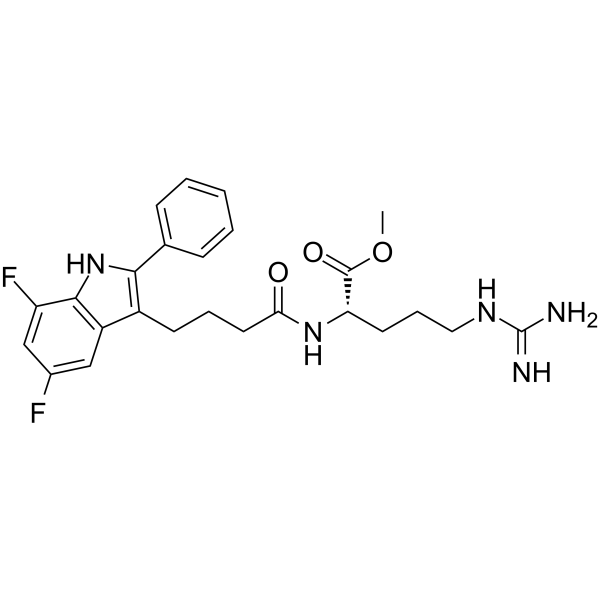
HY-108497
L-803087sst4 Receptor Agonist -
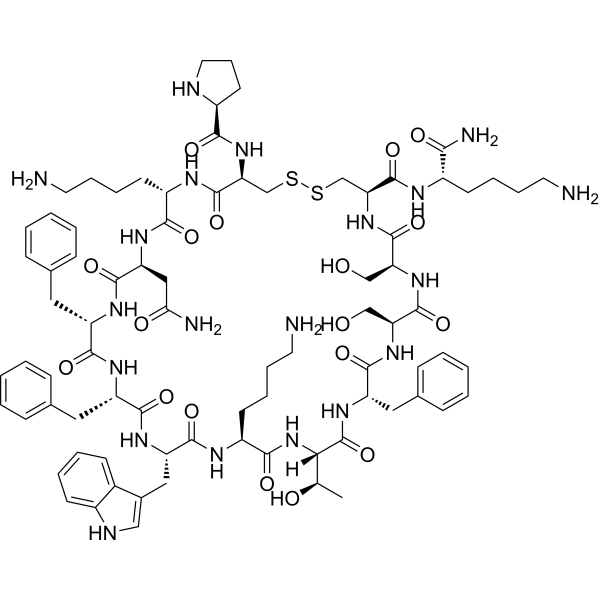
HY-P1932
Cortistatin-14Somatostatin Receptor Inhibitor -
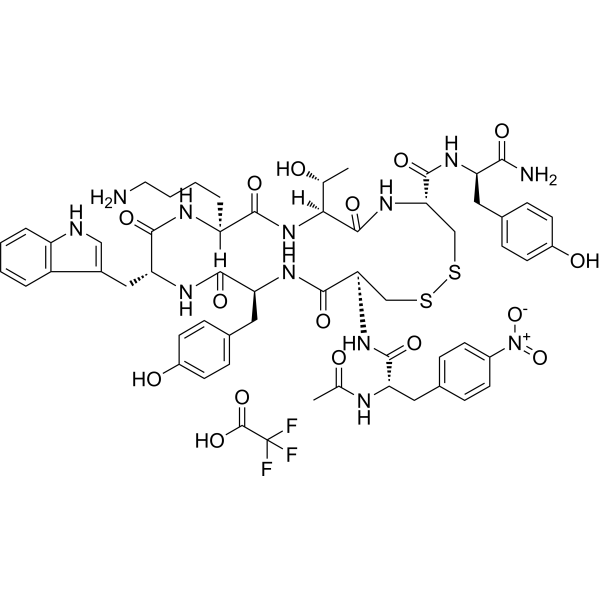
HY-P1202A
CYN 154806 TFASomatostatin SST2 Receptor Antagonist -
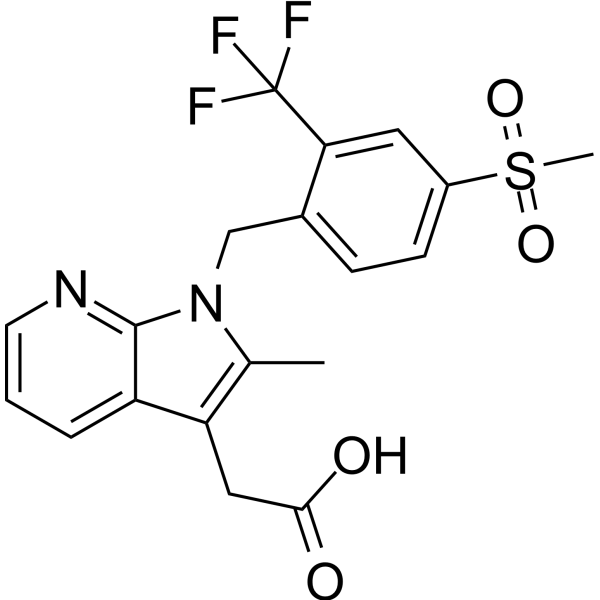
HY-16768
FevipiprantDP2 Antagonist -
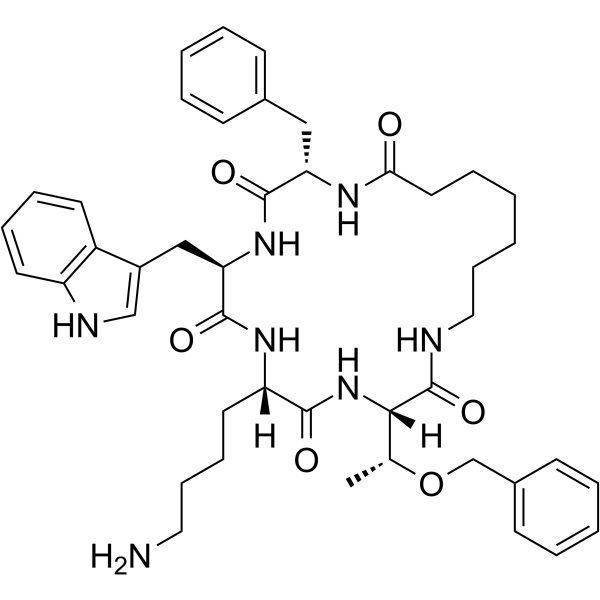
HY-P1201
CyclosomatostatinSomatostatin Receptor Antagonist -
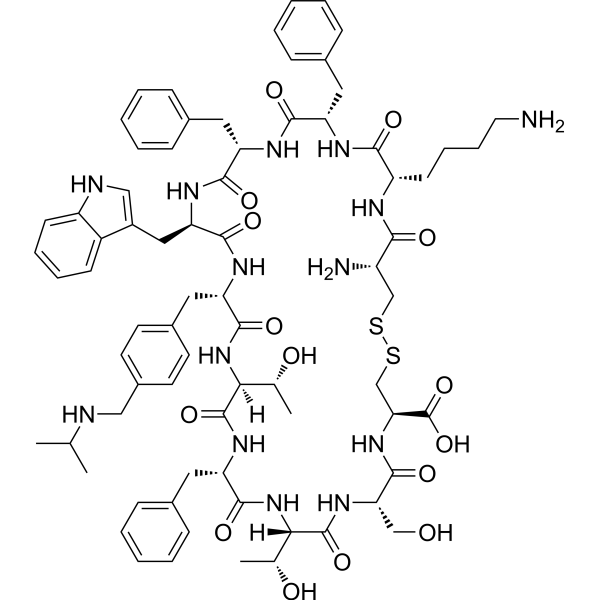
HY-P1206
CH 275SST1 Agonist -

HY-139347
MazisotineSSTR4 Agonist -
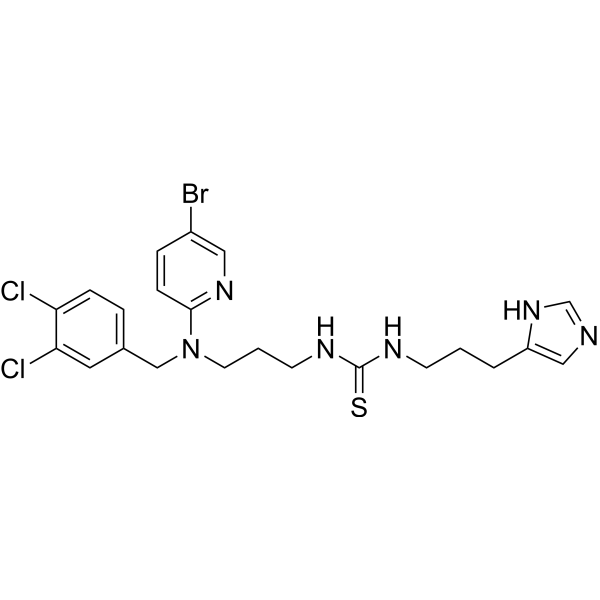
HY-108499
NNC 26-9100sst4 Agonist -
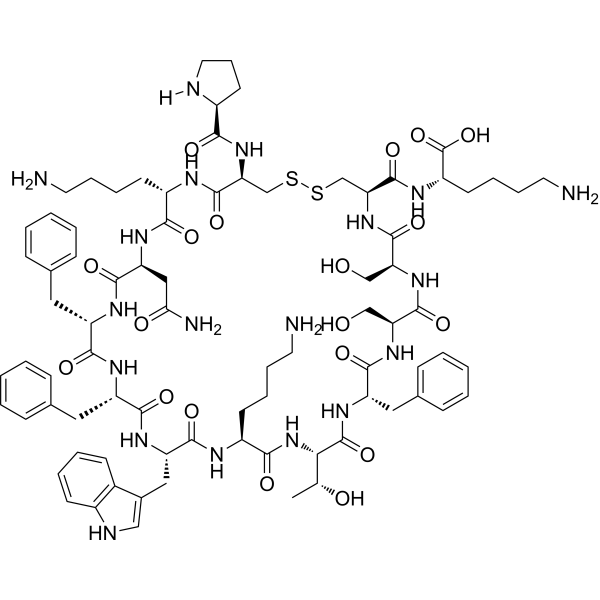
HY-P1212
Cortistatin 14 (mouse, rat)Neuropeptide


Biologische Aktivität
Beschreibung
IC50 & Target
IC50: 0.05 nM (human SST4) and 0.07 nM (rat SST4)[1]
In Vitro
J-2156 TFA binds with nanomolar affinity to the human somatostatin receptor subtype 4 (hsst4: Ki=1.2 nM) and is over 400-fold subtype-selective against the other somatostatin receptors (hsst1: Ki=0.5 μM; hsst2: Ki>5 μM; hsst3: Ki=1.4 μM; hsst5: Ki=0.54 μM) in Chinese hamster ovary (CHO) cells[2].
MedChemExpress (MCE) has not independently confirmed the accuracy of these methods. They are for reference only.
In Vivo
MedChemExpress (MCE) has not independently confirmed the accuracy of these methods. They are for reference only.
-
Animal Model:Breast cancer-induced bone pain (BCIBP)-rats[1]
-
Dosage:1, 3, 10 mg/kg
-
Administration:IP; for 3 hours
-
Result:Had anti-allodynic effect on ipsilateral and contralateral in BCIBP-rats.


Chemical Information
-
CAS. Nr. 2387505-73-7
-
Appearance Solid
-
Molecular Weight 582.59
-
Formel C26H29F3N4O6S
-
Color White to off-white
-
Versand
Room temperature in continental US; may vary elsewhere.
-
Speicherung
Sealed storage, away from moisture and light, under nitrogen
Powder -80°C 2 years -20°C 1 year * In solvent : -80°C, 6 months; -20°C, 1 month (sealed storage, away from moisture and light, under nitrogen)


Lösungsmittel & Löslichkeit
In Vitro:
H2O : 100 mg/mL (171.65 mM; Need ultrasonic)
DMSO : 100 mg/mL (171.65 mM; Need ultrasonic; Hygroscopic DMSO has a significant impact on the solubility of product, please use newly opened DMSO)
Please refer to the solubility information to select the appropriate solvent. Once prepared, please aliquot and store the solution to prevent product inactivation from repeated freeze-thaw cycles.
Storage method and period of stock solution: -80°C, 6 months; -20°C, 1 month (sealed storage, away from moisture and light, under nitrogen). When stored at -80°C, please use it within 6 months. When stored at -20°C, please use it within 1 month.
* Note: If you choose water as the stock solution, please dilute it to the working solution, then filter and sterilize it with a 0.22 μm filter before use.
Please refer to the solubility information to select the appropriate solvent. Once prepared, please aliquot and store the solution to prevent product inactivation from repeated freeze-thaw cycles.
Storage method and period of stock solution: -80°C, 6 months; -20°C, 1 month (sealed storage, away from moisture and light, under nitrogen). When stored at -80°C, please use it within 6 months. When stored at -20°C, please use it within 1 month.
* Note: If you choose water as the stock solution, please dilute it to the working solution, then filter and sterilize it with a 0.22 μm filter before use.
Konzentration (Stammlösung) × Volumen (Stammlösung) = Konzentration (Ziellösung) × Volumen (Ziellösung)
In Vivo:
Select the appropriate dissolution method based on your experimental animal and administration route.
- For the following dissolution methods, please ensure to first prepare a clear stock solution using an In Vitro approach and then sequentially add co-solvents:
- To ensure reliable experimental results, the clarified stock solution can be appropriately stored based on storage conditions. As for the working solution for In Vivo experiments, it is recommended to prepare freshly and use it on the same day.
- The percentages shown for the solvents indicate their volumetric ratio in the final prepared solution. If precipitation or phase separation occurs during preparation, heat and/or sonication can be used to aid dissolution.
Add each solvent one by one: 10% DMSO 40% PEG300 5% Tween-80 45% Saline
Solubility: ≥ 2.5 mg/mL (4.29 mM); Clear solution
This protocol yields a clear solution of ≥ 2.5 mg/mL (saturation unknown).
Taking 1 mL working solution as an example, add 100 μL DMSO stock solution (25.0 mg/mL) to 400 μL PEG300, and mix evenly; then add 50 μL Tween-80 and mix evenly; then add 450 μL Saline to adjust the volume to 1 mL.
Preparation of Saline: Dissolve 0.9 g sodium chloride in ddH₂O and dilute to 100 mL to obtain a clear Saline solution.
Add each solvent one by one: 10% DMSO 90% (20% SBE-β-CD in Saline)
Solubility: ≥ 2.5 mg/mL (4.29 mM); Clear solution
This protocol yields a clear solution of ≥ 2.5 mg/mL (saturation unknown).
Taking 1 mL working solution as an example, add 100 μL DMSO stock solution (25.0 mg/mL) to 900 μL 20% SBE-β-CD in Saline, and mix evenly.
Preparation of 20% SBE-β-CD in Saline (4°C, storage for one week): 2 g SBE-β-CD powder is dissolved in 10 mL Saline, completely dissolve until clear.
For the following dissolution methods, please prepare the working solution directly:
It is recommended to prepare fresh solutions and use them promptly within a short period of time.
The percentages shown for the solvents indicate their volumetric ratio in the final prepared solution. If precipitation or phase separation occurs during preparation, heat and/or sonication can be used to aid dissolution.
Add each solvent one by one: PBS
Solubility: 100 mg/mL (171.65 mM); Clear solution; Need ultrasonic
In Vivo Dissolution Calculator
Please enter the basic information of animal experiments:
-
-
-
-
Recommended: Prepare an additional quantity of animals to account for potential losses during experiments.
Working solution concentration: 0.22 mg/mL
This product has good water solubility, please refer to the measured solubility data in water/PBS/Saline for details.


Reinheit & Dokumentation
-
Data Sheet (279 KB)
-
SDS (254 KB)
- English - EN (254 KB)
- Français - FR (254 KB)
- Deutsch - DE (254 KB)
- Norwegian - NO (254 KB)
- Español - ES (254 KB)
- Swedish - SV (254 KB)
- Italian - IT (254 KB)
- Korean - KR (254 KB)
- Portuguese - PT (254 KB)
-
Handling Instructions (2659 KB)
Verweise
[1]. Shenoy PA, et al. The Somatostatin Receptor-4 Agonist J-2156 Alleviates Mechanical Hypersensitivity in a Rat Model of Breast Cancer Induced Bone Pain. Front Pharmacol. 2018 May 15;9:495. [Content Brief]
[2]. Mia Engström, et al. Superagonism at the Human Somatostatin Receptor Subtype 4. J Pharmacol Exp Ther. 2005 Jan;312(1):332-8. [Content Brief]


Complete Stock Solution Preparation Table
Please refer to the solubility information to select the appropriate solvent. Once prepared, please aliquot and store the solution to prevent product inactivation from repeated freeze-thaw cycles.
Storage method and period of stock solution: -80°C, 6 months; -20°C, 1 month (sealed storage, away from moisture and light, under nitrogen). When stored at -80°C, please use it within 6 months. When stored at -20°C, please use it within 1 month.
| Optional Solvent | Concentration Solvent Mass | 1 mg | 5 mg | 10 mg | 25 mg |
|---|---|---|---|---|---|
| H2O / DMSO | 1 mM | 1.7165 mL | 8.5824 mL | 17.1647 mL | 42.9118 mL |
| 5 mM | 0.3433 mL | 1.7165 mL | 3.4329 mL | 8.5824 mL | |
| 10 mM | 0.1716 mL | 0.8582 mL | 1.7165 mL | 4.2912 mL | |
| 15 mM | 0.1144 mL | 0.5722 mL | 1.1443 mL | 2.8608 mL | |
| 20 mM | 0.0858 mL | 0.4291 mL | 0.8582 mL | 2.1456 mL | |
| 25 mM | 0.0687 mL | 0.3433 mL | 0.6866 mL | 1.7165 mL | |
| 30 mM | 0.0572 mL | 0.2861 mL | 0.5722 mL | 1.4304 mL | |
| 40 mM | 0.0429 mL | 0.2146 mL | 0.4291 mL | 1.0728 mL | |
| 50 mM | 0.0343 mL | 0.1716 mL | 0.3433 mL | 0.8582 mL | |
| 60 mM | 0.0286 mL | 0.1430 mL | 0.2861 mL | 0.7152 mL | |
| 80 mM | 0.0215 mL | 0.1073 mL | 0.2146 mL | 0.5364 mL | |
| 100 mM | 0.0172 mL | 0.0858 mL | 0.1716 mL | 0.4291 mL |
* Note: If you choose water as the stock solution, please dilute it to the working solution, then filter and sterilize it with a 0.22 μm filter before use.


J-2156 TFA Related Classifications
HY-111615A Related Classifications
 Powered by Bioz