
130 Results for "

kinetics

" in MedChemExpress (MCE) Product Catalog:
Products (130)

130 Results for "kinetics" in MCE Product Catalog:

23
23 Publications Verification
Art. -Nr.: HY-W099571
CAS. Nr.: 4485-12-5
Synonyms: Stearic acid lithium; Lithium octadecanoate
Forschungsgebiete:  

Others

Lithium stearate (Stearic acid (lithium)) is a compound that forms vesicles in reaction with silver nitrate, thereby changing the reaction kinetics of the nucleation and self-assembly process of silver stearate. It has the activity that even in the presence of excess silver nitrate, only about 80% can be converted into silver stearate and the residual lithium stearate will inhibit the growth process of silver stearate crystals, thereby producing silver stearate crystals that are much smaller than those obtained from sodium stearate, providing an opportunity to further control the self-assembly and crystal growth of silver stearate.
loading...
    loading...
8
8 Cited Publications
Art. -Nr.: HY-100903
CAS. Nr.: 113158-34-2
Reinheit:  98.91%
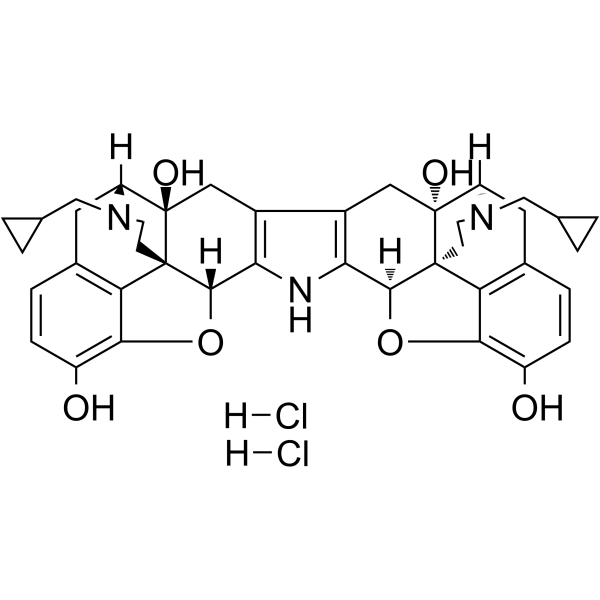
Synonyms: nor-Binaltorphimine dihydrochloride; nor-BNI dihydrochloride
Target:  

Opioid Receptor

Forschungsgebiete:  

Neurological Disease

Norbinaltorphimine dihydrochloride (nor-Binaltorphimine dihydrochloride; nor-BNI dihydrochloride) is a selective, long-acting competitive antagonist of the κ-opioid receptor. Norbinaltorphimine dihydrochloride blocks κ-opioid receptor-mediated analgesic effects, and inhibits butorphanol-induced changes in κ-opioid receptor binding kinetics, desensitization and down-regulation. Norbinaltorphimine dihydrochloride suppresses specific opioid withdrawal symptoms, precipitates withdrawal behaviors in butorphanol-dependent rats, and serves as a molecular probe for studying κ-opioid receptor-agonist interactions. Norbinaltorphimine dihydrochloride is applicable to research related to neurological disorders such as pain .
loading...
    loading...
8
8 Cited Publications
Art. -Nr.: HY-117040
CAS. Nr.: 105618-26-6
Reinheit:  98.70%
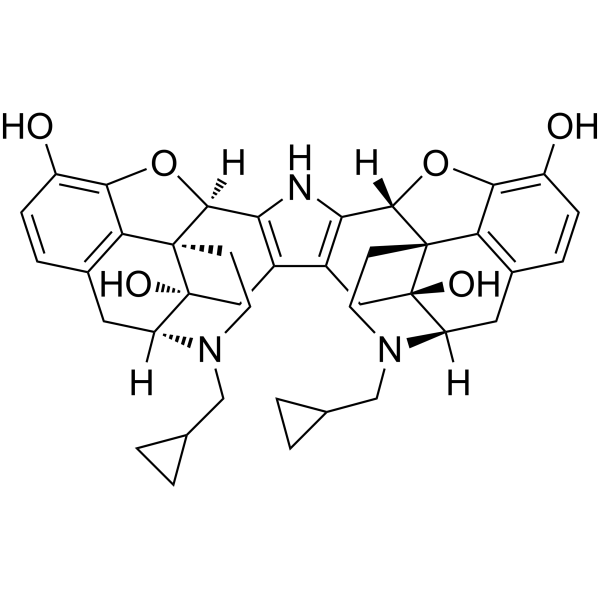
Synonyms: Norbinaltorphimine; NorBNI
Target:  

Opioid Receptor

Forschungsgebiete:  

Neurological Disease

nor-Binaltorphimine (Norbinaltorphimine; NorBNI) is a selective, long-acting competitive antagonist of the κ-opioid receptor. nor-Binaltorphimine blocks κ-opioid receptor-mediated analgesic effects, and inhibits butorphanol-induced changes in κ-opioid receptor binding kinetics, desensitization and down-regulation. nor-Binaltorphimine suppresses specific opioid withdrawal symptoms, precipitates withdrawal behaviors in butorphanol-dependent rats, and serves as a molecular probe for studying κ-opioid receptor-agonist interactions. nor-Binaltorphimine is applicable to research related to neurological disorders such as pain .
loading...
    loading...
6
6 Cited Publications
Art. -Nr.: HY-100034
CAS. Nr.: 383907-43-5
Reinheit:  99.29%
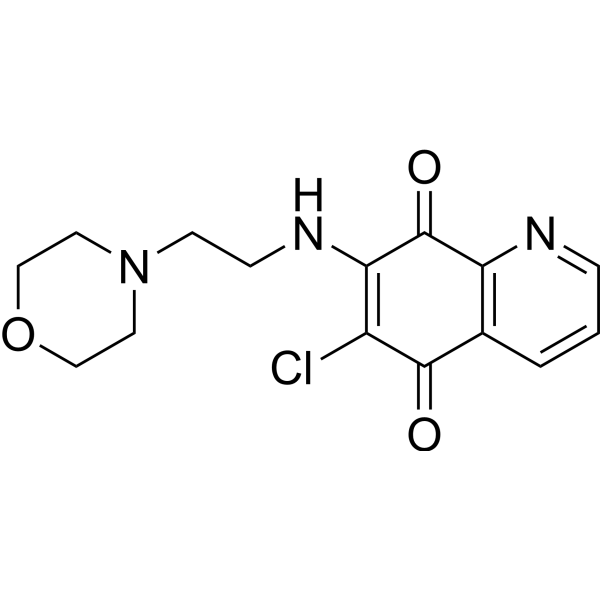
Synonyms: DA-3003-1
Forschungsgebiete:  

Cancer

NSC 663284 (DA-3003-1) is a potent, cell-permeable, and irreversible Cdc25 dual specificity phosphatase inhibitor, has an IC50 for Cdc25B2 of 0.21 μM. NSC 663284 exhibits mixed competitive kinetics against Cdc25A, Cdc25B(2), and Cdc25C with Ki values of 29, 95, and 89 nM, respectively . NSC 663284 inhibits NSD2 (IC50 of 170 nM) through a direct interaction with the catalytic SET domain (Kd of 370 nM) .
loading...
    loading...
2
2 Cited Publications
Art. -Nr.: HY-D1069
CAS. Nr.: 1782950-79-1
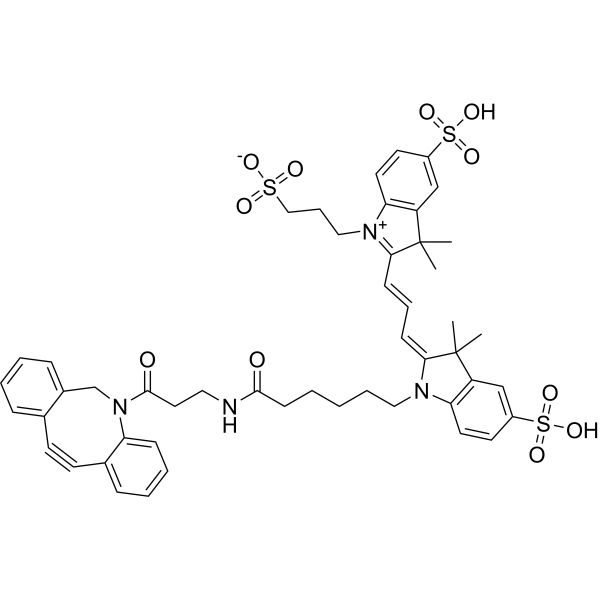
Synonyms: DBCO-Sulfo-Cy3
DBCO-Cy3 (DBCO-Sulfo-Cy3) is the derivative of Cyanine3 fluorophore, a pH insensitive from pH (4-10) orange fluorescent dyewith excitation maximum 555 nm and emission maximum of 580nm. DBCO-Cy3 has fast reaction kinetics and good stability, and is productive to use in many standard fluorescent instrumentations. DBCO-Cy3 is a click chemistry reagent, it contains a DBCO group that can undergo strain-promoted alkyne-azide cycloaddition (SPAAC) with molecules containing Azide groups.
loading...
    loading...
2
2 Cited Publications
Art. -Nr.: HY-113066A
CAS. Nr.: 7415-69-2
Reinheit:  ≥95.0%
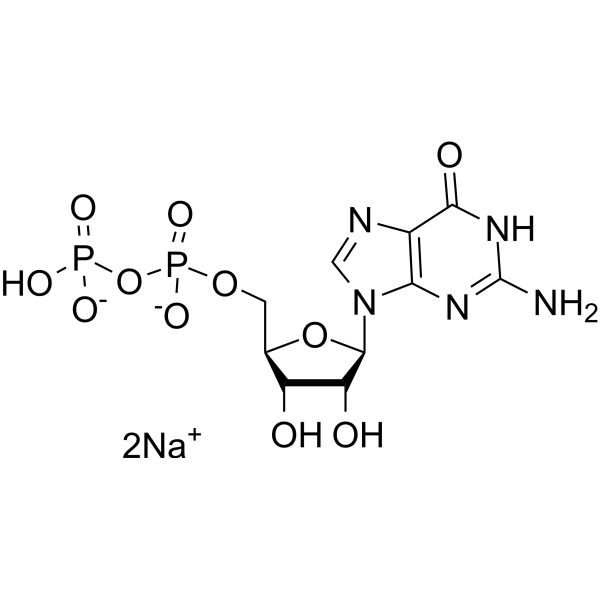
Synonyms: GDP disodium salt
Guanosine 5'-diphosphate (GDP) disodium salt, a purine nucleoside diphosphate, is interconverted to guanosine by the action of exonucleotidase and phosphorylation of nucleoside to guanine. Guanosine 5'-diphosphate disodium salt activates adenosine 5'-triphosphate-sensitive K + channel and is used to study the kinetics and characteristics of GTPases such as those associated with G-protein coupled receptors (GPCR). Guanosine 5'-diphosphate disodium salt is a potential iron mobilizer, which prevents the Hepcidin (HY-P70400)-ferroportin interaction and modulates the interleukin-6 (IL-6)/stat-3 pathway. Elevated levels of guanosine 5’-diphosphate are associated with the pathogenesis of neurological diseases. Guanosine 5'-diphosphate disodium salt is promising for the research of inflammation, such as anemia of inflammation (AI) .
loading...
    loading...
1
1 Cited Publications
Art. -Nr.: HY-N1495
CAS. Nr.: 34620-76-3
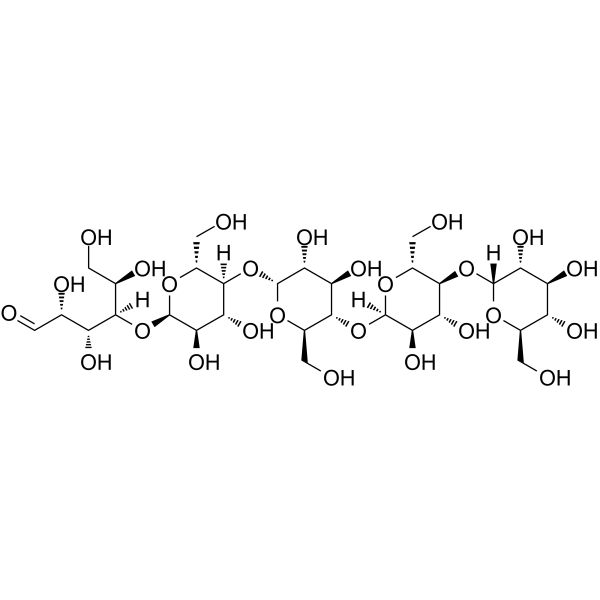
Synonyms: Maltopentose
Maltopentaose is the shortest chain oligosaccharide. Maltopentaose is a substrate for α-amylases. Maltopentaose can be classified as maltodextrin and is also used in a study to investigate glycation and phosphorylation of α-lactalbumin. Maltopentaose is used to study the inhibition kinetics of human pancreatic α-amylase by dehydrodieugenol B .
loading...
    loading...
1
1 Cited Publications
Art. -Nr.: HY-137441
CAS. Nr.: 1000999-96-1
Reinheit:  99.52%
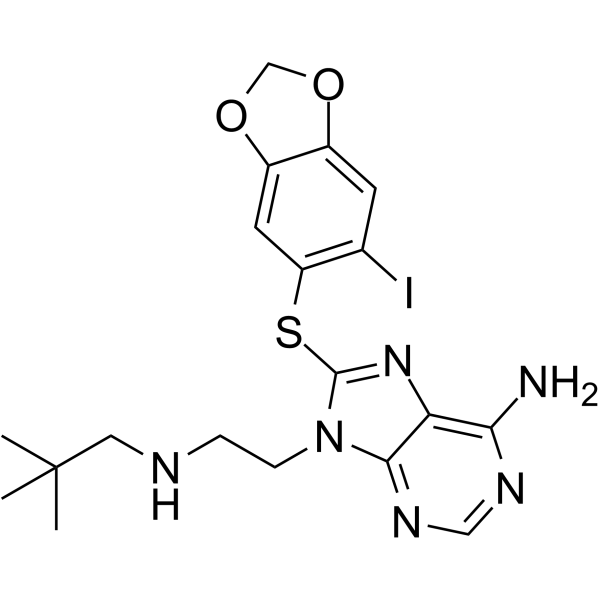
Synonyms: PU-HZ151
Target:  

HSP

Forschungsgebiete:  

Neurological Disease Cancer

Icapamespib (PU-HZ151; PU-AD) is a selective, orally active inhibitor of Epichaperomes assembled by HSP90 with slow dissociation kinetics. Icapamespib can cross the blood-brain barrier (BBB) ??and induce epichaperome disassembly by non-covalently binding to HSP90, restoring the normal protein-protein interaction network. Icapamespib can specifically disrupt disease-related abnormal protein interaction networks, reduce neurotoxic protein aggregation and tumor cell survival signals. Icapamespib can be used in the research of neurodegenerative diseases such as Alzheimer's disease, as well as cancers such as glioblastoma and metastatic breast cancer .
loading...
    loading...
1
1 Cited Publications
Art. -Nr.: HY-P2876
CAS. Nr.: 9024-00-4
Target:  

Bacterial

Forschungsgebiete:  

Others

Tryptophanase is a zymogen-converting enzyme and inducible enzyme that can convert its inactive precursor form into an active enzyme without additional polypeptide synthesis. In Escherichia coli K12, tryptophanase functions as an inducible enzyme, and its induction kinetics are similar to those of β-galactosidase. Tryptophanase catalyzes the conversion of L-tryptophan to indole .
loading...
    loading...
1
1 Cited Publications
Art. -Nr.: HY-137441A
CAS. Nr.: 2267287-26-1
Reinheit:  98.67%
Synonyms: PU-HZ151 hydrochloride
Target:  

HSP

Forschungsgebiete:  

Neurological Disease Cancer

Icapamespib (PU-HZ151; PU-AD) hydrochloride is a selective, orally active inhibitor of Epichaperomes assembled by HSP90 with slow dissociation kinetics. Icapamespib hydrochloride can cross the blood-brain barrier (BBB) ??and induce epichaperome disassembly by non-covalently binding to HSP90, restoring the normal protein-protein interaction network. Icapamespib hydrochloride can specifically disrupt disease-related abnormal protein interaction networks, reduce neurotoxic protein aggregation and tumor cell survival signals. Icapamespib hydrochloride can be used in the research of neurodegenerative diseases such as Alzheimer's disease, as well as cancers such as glioblastoma and metastatic breast cancer .
loading...
    loading...
1
1 Cited Publications
Art. -Nr.: HY-120026
CAS. Nr.: 147030-48-6
Reinheit:  98.28%
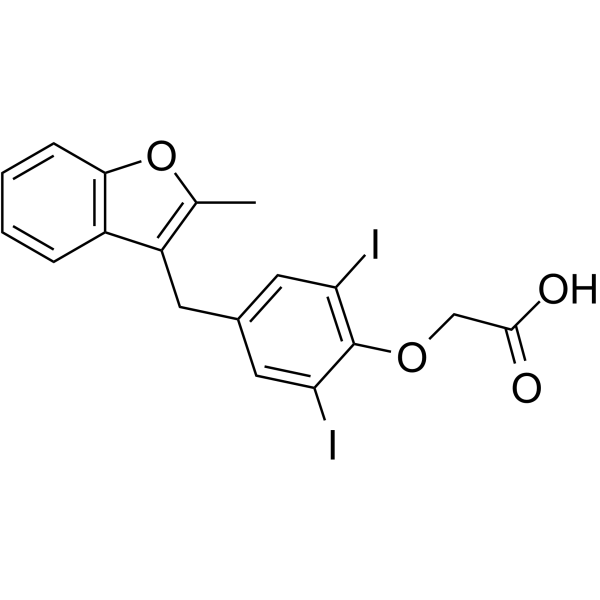
Synonyms: KB015
KB130015 (KB015) is an orally active and potent ThRα and ThRβ (thyroid hormone receptor) inhibitor, with IC50 values of 4.5 and 5.1 μM, respectively. KB130015 markedly slows the kinetics of inactivation of Na + channels. KB130015 activates hERG1 channels (EC50 = 12.2 μM) and large-conductance Ca 2+-activated K + (BKCa) channels formed by hSlo1 (α) subunits in HEK 293 cells. KB130015 has antiarrhythmic properties. KB130015 can be used for the study of cardiovascular disease .
loading...
    loading...
Art. -Nr.: HY-E70336
CAS. Nr.: 93792-13-3
Target:  

Endogenous Metabolite

Forschungsgebiete:  

Others

Peroxidase, Lignin is a biocatalyst and a key enzyme in new biocatalyst technology. Enzyme engineering focuses on enhancing enzyme reaction kinetics, substrate selectivity, and activity under harsh conditions such as low or high pH. By introducing stimulus responsiveness to these enzyme modifications, dynamic control of activity is also possible .
loading...
    loading...
Art. -Nr.: HY-W134328
CAS. Nr.: 87915-38-6
Synonyms: Dextran blue (MW 2000000)
Blue dextran (Dextran blue) (MW 2000000) is a high-molecular-weight long-chain polymer of D-glucose. Blue dextran (MW 2000000) serves as an important model macromolecular drug and molecular weight estimation marker, and can be used as a standard for gel permeation chromatography. The release of Blue dextran (MW 2000000) from alginate microspheres is regulated by preparation conditions; its release rate in a pH 6.8 environment is significantly faster than that in pH 1.2, and it exhibits release characteristics close to zero-order kinetics under this condition .
loading...
    loading...
Art. -Nr.: HY-137333
CAS. Nr.: 72626-61-0
Reinheit:  99.43%
Forschungsgebiete:  

Others

4-Methylumbelliferyl β-D-cellobioside is a substrate of Cellulase (HY-B2220). 4-Methylumbelliferyl β-D-cellobioside is hydrolyzed to generate fluorescent 4-methylumbelliferone, which is used to study cellulase kinetics .
loading...
    loading...
Art. -Nr.: HY-122376
CAS. Nr.: 28434-00-6
Reinheit:  98.16%
Synonyms: D-Trans-Allethrin; Esbiol
Forschungsgebiete:  

Neurological Disease

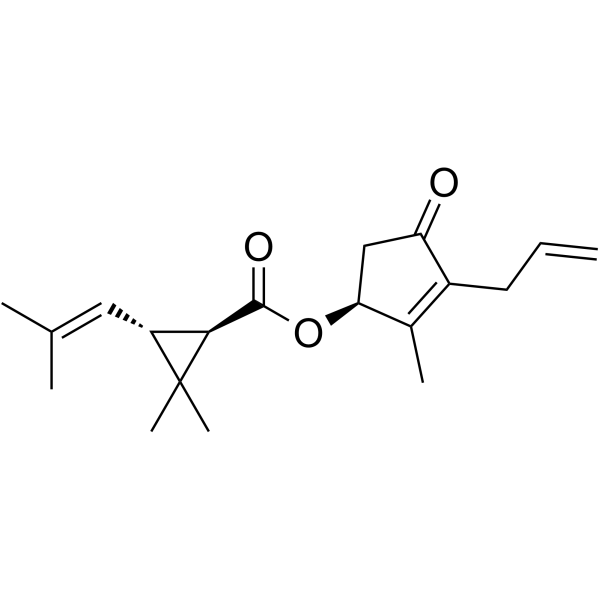
S-Bioallethrin (D-Trans-Allethrin) is a pyrethroid insecticide. S-Bioallethrin disrupts nerve function by modifying the gating kinetics of transitions between the conducting and nonconducting states of voltage-gated sodium channels. S-Bioallethrin also causes inhibition of lymphocyte proliferation and induces histamine release from human basophils .
loading...
    loading...
Art. -Nr.: HY-161928
CAS. Nr.: 1030098-18-0
Forschungsgebiete:  

Cardiovascular Disease

GPX4 activator 1 is an allosteric activator of glutathione peroxidase 4 (GPX4) with a Kd value of 5.86 μM. GPX4 activator 1 binds to a specific region of GPX4 to alter protein binding kinetics and counteract ferroptosis (EC50 = 19.19 μM). GPX4 activator 1 inhibits lipid peroxidation, rescues ferroptotic cell death and maintains cell viability. GPX4 activator 1 can be used in studies related to Doxorubicin (HY-15142A)-induced myocardial injury .
loading...
    loading...
Art. -Nr.: HY-138126
CAS. Nr.: 113527-49-4
Target:  

Inhibitory Antibodies

Forschungsgebiete:  

Others

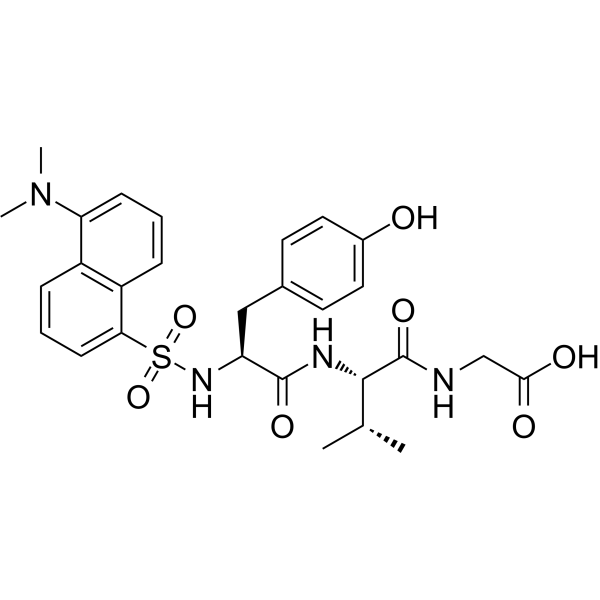
Dansyl-Tyr-Val-Gly is a substrate of peptidylglycine monooxygenase (PHM), with a KD of 22 μM for PHM. Dansyl-Tyr-Val-Gly can be used to investigate the catalytic mechanism, kinetics and inactivation characteristics of PHM .
loading...
    loading...
Art. -Nr.: HY-B0445B
CAS. Nr.: 7298-93-3
Synonyms: α-Nicotinamide Adenine Dinucleotide
α-NAD (α-Nicotinamide Adenine Dinucleotide) serves as a substrate for reninase, functions as an analog of β-NAD, affects the kinetics of NAD-dependent enzymes, and also plays a critical role as a cofactor in mitochondrial redox reactions .
loading...
    loading...
Art. -Nr.: HY-151720
CAS. Nr.: 1857352-95-4
Reinheit:  ≥99.0%
Target:  

ADC Linkers

Forschungsgebiete:  

Others

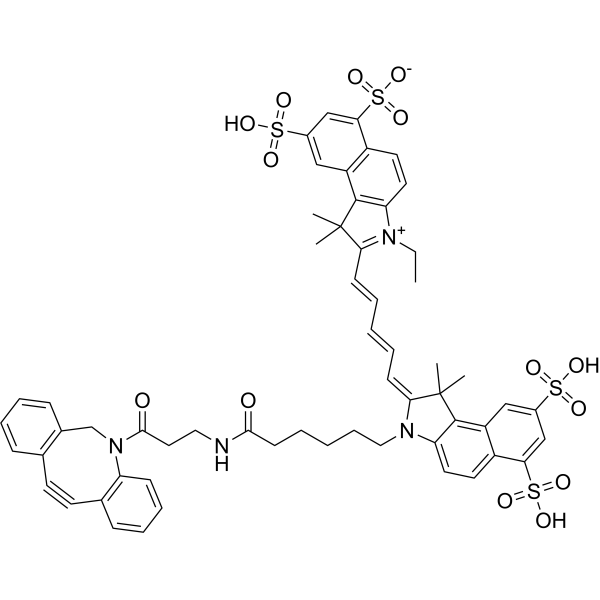
Cy5.5 DBCO is a click chemistry reagent containing an cycloalkynes group. Cy5.5 DBCO is a linker of Cyanine5.5 fluorophore. DBCO group enables copper free biocompatible click chemistry with fast reaction kinetics and good stability .
loading...
    loading...
Art. -Nr.: HY-E70332
Target:  

Endogenous Metabolite

Forschungsgebiete:  

Others

Lipase, Aspergillus niger is a biocatalyst and a key enzyme in new biocatalyst technology. Enzyme engineering focuses on enhancing enzyme reaction kinetics, substrate selectivity, and activity under harsh conditions such as low or high pH. By introducing stimulus responsiveness to these enzyme modifications, dynamic control of activity is also possible .
loading...
    loading...

