



Trisdecanoin

Based on 1 Customer Validation
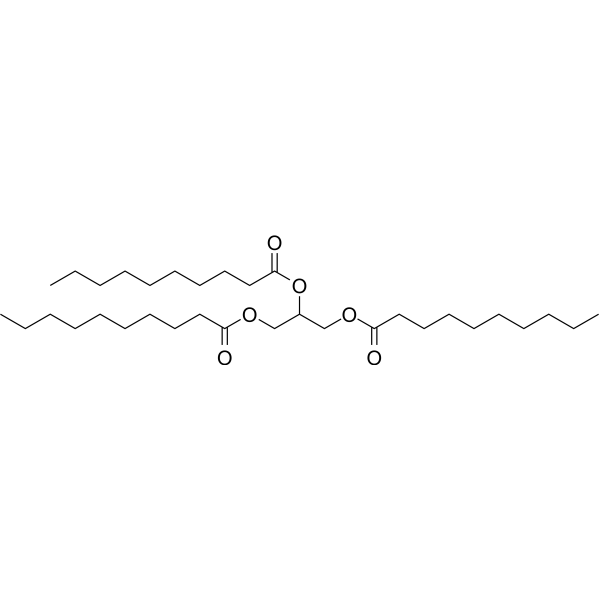
Trisdecanoin (Tricaprin; Glyceryl tridecanoate) is an orally available precursor of decanoic acid (DA precursor) that can be hydrolyzed to decanoic acid. Trisdecanoin and its metabolite capric acid not only provide the body with a quick source of energy, but can also affect lipid metabolism. Trisdecanoin is a major component of medium chain triglycerides (MCT), which has preventive or inhibitory properties for abdominal aortic aneurysms (AAA), inhibition of cardiovascular disease, and anti-androgen (NSAA) and anti-hyperglycemic properties. Trisdecanoin can be used as an additive in food, medicine and cosmetics.
Nur für Forschungszwecke. Wir verkaufen nicht an Patienten.
- Reinheit : 98.0%
- CAS. Nr.: 621-71-6
- Formel: C33H62O6
- Molecular Weight:554.84
-
Speicherung:Powder -20°C, 3 years , 4°C, 2 years ; In solvent -80°C, 6 months , -20°C, 1 month

To place orders, for customer services and technical support, please contact: MedChemExpress USA
Tel: 609-228-6898 E-mail: [email protected] [email protected]


-
 Biologische Aktivität
-
Chemical Information
-
Lösungsmittel & Löslichkeit
- Protokoll
- Reinheit & Dokumentation
- Verweise
-
 Help & FAQs


-
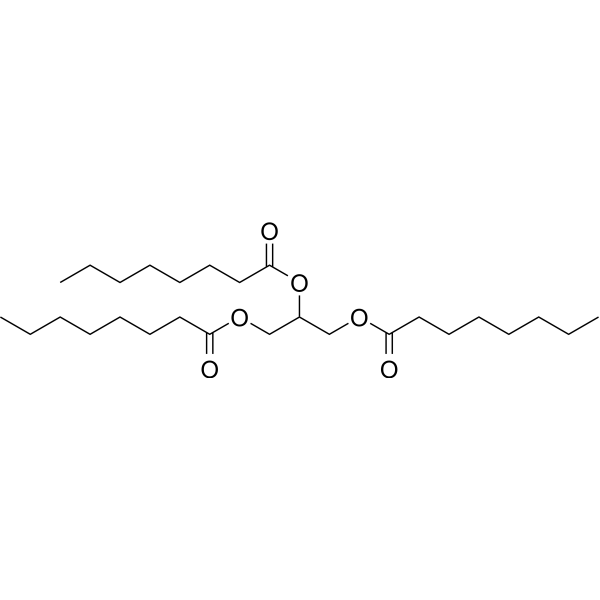
HY-B1804
TricaprilinKetogenic Agent -
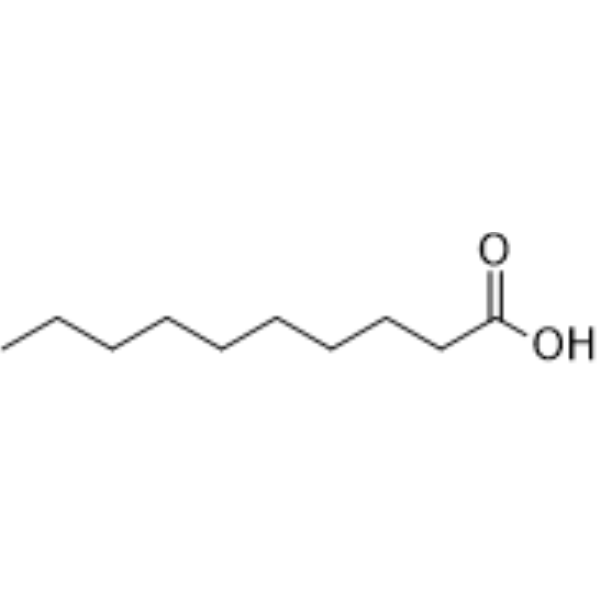
HY-W015309
Decanoic acidTyrosinase Inhibitor; Melanosome Inhibitor; mTORC1 Signaling Inhibitor -
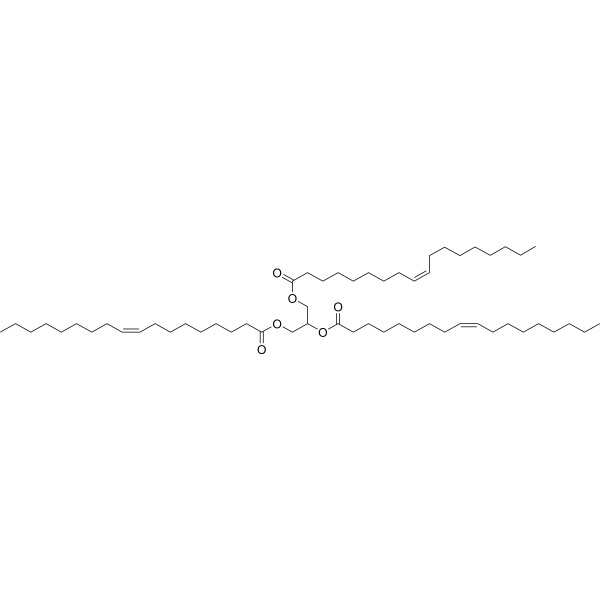
HY-N1981
TrioleinMonoacid Triglyceride -
HY-W013136
TriheptanoinNutritional Supplement/Anaplerotic Agent -
HY-W127534
TricaproinBiochemical Assay Reagent -

HY-N1981R
Triolein (Standard)Monoacid Triglyceride -

HY-N6660R
Trisdecanoin (Standard)DA Precursor -
HY-128393
TrilinoleinAnticancer Agent -
HY-W013061
Propane-1,2,3-triyl tripalmitateGlycerol Tristearate Lymphatic Transport Promoter -
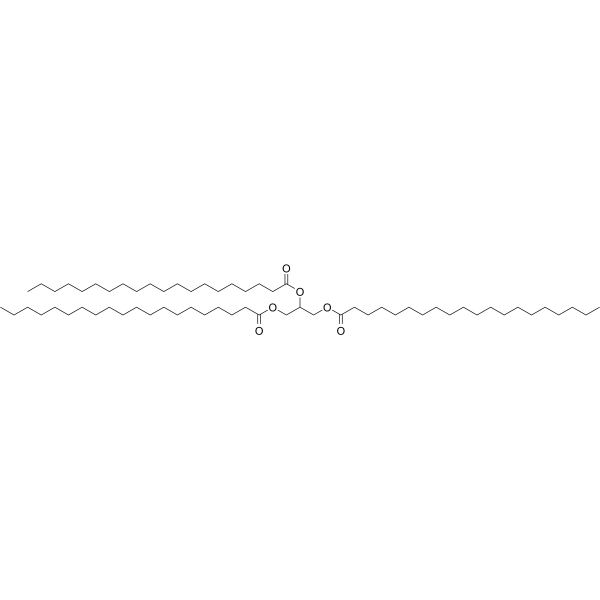
HY-125671
TriarachidinEndogenous Metabolite -
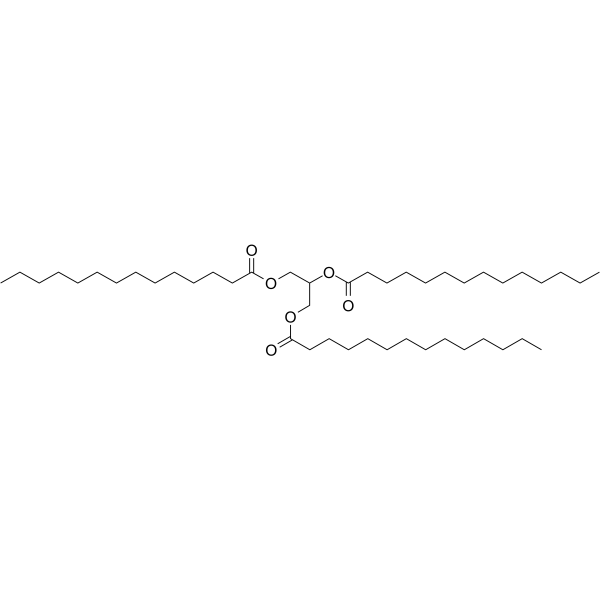
HY-N2511
Trimyristinacetylcholinesterase Inhibitor, acid phosphatase Inhibitor, alkaline phosphatase Inhibitor -
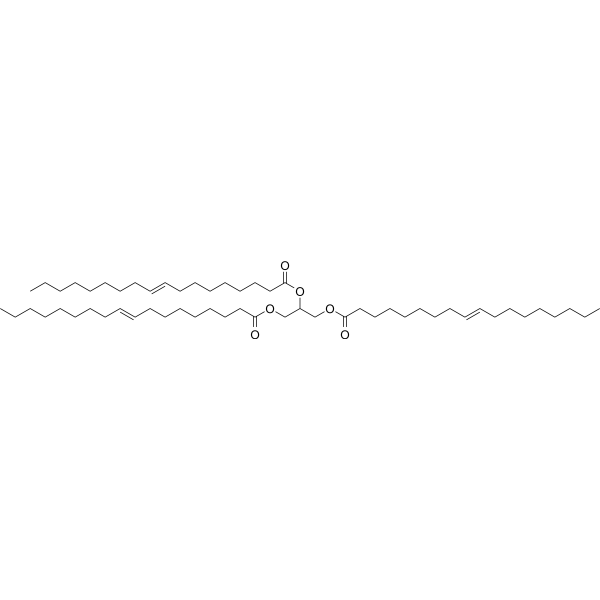
HY-W127506
TrielaidinBiochemical Assay Reagent
Alle Endogenous Metabolite Isoform-spezifische Produkte anzeigen
More

Biologische Aktivität
Beschreibung
In Vivo
Trisdecanoin (1145 mg/kg/day; Oral gavage (p.o.); two weeks) can prevent and inhibit the development of abdominal aortic aneurysms and alleviate the apoptosis and dysfunction of early smooth muscle cells (SMCs) in Male Sprague-Dawley rat models[3].
MedChemExpress (MCE) has not independently confirmed the accuracy of these methods. They are for reference only.
-
Animal Model:Male Sprague-Dawley rats[3]
-
Dosage:1145 mg/kg/day
-
Administration:Oral gavage (p.o.)
-
Result:There was no significant difference in the incidence of AAA between the control and ricaprylin groups (30.2% vs 24.0%). In contrast, the incidence of AAA in Trisdecanoin was significantly lower than in the control group (30.2% vs. 3.6%).
The AAA rupture rates in control group and C8-TG group were 31.3% and 33.3%, respectively. There was no aneurysm rupture in Trisdecanoin group.
The mean aortic diameter of Trisdecanoin group was significantly lower than that of control group..
Clinical Trial
| NCT Number | Sponsor | Condition | Start Date |
Phase

|
|---|---|---|---|---|
| NCT01329991 | Plexxikon| | 2011-05 | PHASE1 |


Chemical Information
-
CAS. Nr. 621-71-6
-
Appearance Solid
-
Molecular Weight 554.84
-
Formel C33H62O6
-
Color White to off-white
-
SMILES
CCCCCCCCCC(OCC(COC(CCCCCCCCC)=O)OC(CCCCCCCCC)=O)=O
-
Synonyms
Tricaprin; Glyceryl tridecanoate
-
Structure Classification
-
Initial Source
-
Versand
Room temperature in continental US; may vary elsewhere.
-
Speicherung
Powder -20°C 3 years 4°C 2 years In solvent -80°C 6 months -20°C 1 month


Lösungsmittel & Löslichkeit
In Vitro:
DMSO : 100 mg/mL (180.23 mM; Need ultrasonic; Hygroscopic DMSO has a significant impact on the solubility of product, please use newly opened DMSO)
Please refer to the solubility information to select the appropriate solvent. Once prepared, please aliquot and store the solution to prevent product inactivation from repeated freeze-thaw cycles.
Storage method and period of stock solution: -80°C, 6 months; -20°C, 1 month. When stored at -80°C, please use it within 6 months. When stored at -20°C, please use it within 1 month.
Please refer to the solubility information to select the appropriate solvent. Once prepared, please aliquot and store the solution to prevent product inactivation from repeated freeze-thaw cycles.
Storage method and period of stock solution: -80°C, 6 months; -20°C, 1 month. When stored at -80°C, please use it within 6 months. When stored at -20°C, please use it within 1 month.
Konzentration (Stammlösung) × Volumen (Stammlösung) = Konzentration (Ziellösung) × Volumen (Ziellösung)
In Vivo:
Select the appropriate dissolution method based on your experimental animal and administration route.
- For the following dissolution methods, please ensure to first prepare a clear stock solution using an In Vitro approach and then sequentially add co-solvents:
- To ensure reliable experimental results, the clarified stock solution can be appropriately stored based on storage conditions. As for the working solution for In Vivo experiments, it is recommended to prepare freshly and use it on the same day.
- The percentages shown for the solvents indicate their volumetric ratio in the final prepared solution. If precipitation or phase separation occurs during preparation, heat and/or sonication can be used to aid dissolution.
Add each solvent one by one: 10% DMSO 40% PEG300 5% Tween-80 45% Saline
Solubility: ≥ 2.5 mg/mL (4.51 mM); Clear solution
This protocol yields a clear solution of ≥ 2.5 mg/mL (saturation unknown).
Taking 1 mL working solution as an example, add 100 μL DMSO stock solution (25.0 mg/mL) to 400 μL PEG300, and mix evenly; then add 50 μL Tween-80 and mix evenly; then add 450 μL Saline to adjust the volume to 1 mL.
Preparation of Saline: Dissolve 0.9 g sodium chloride in ddH₂O and dilute to 100 mL to obtain a clear Saline solution.
Add each solvent one by one: 10% DMSO 90% (20% SBE-β-CD in Saline)
Solubility: ≥ 2.5 mg/mL (4.51 mM); Clear solution
This protocol yields a clear solution of ≥ 2.5 mg/mL (saturation unknown).
Taking 1 mL working solution as an example, add 100 μL DMSO stock solution (25.0 mg/mL) to 900 μL 20% SBE-β-CD in Saline, and mix evenly.
Preparation of 20% SBE-β-CD in Saline (4°C, storage for one week): 2 g SBE-β-CD powder is dissolved in 10 mL Saline, completely dissolve until clear.
In Vivo Dissolution Calculator
Please enter the basic information of animal experiments:
-
-
-
-
Recommended: Prepare an additional quantity of animals to account for potential losses during experiments.
Please enter your animal formula composition:
-
%DMSO +
Recommended: Keep the proportion of DMSO in working solution below 2% if your animal is weak.
-
%+
-
+%Tween-80 + +
-
%Saline +
The co-solvents required include: DMSO, . All of co-solvents are available by MedChemExpress (MCE). , Tween 80. All of co-solvents are available by MedChemExpress (MCE).
Working solution concentration: 0.22 mg/mL
Method for preparing stock solution: mg drug dissolved in μL DMSO. Stock solution concentration: mg/mL.
1. Take μL DMSO stock solution;
2. Add μL .
μL , mix evenly;
3. Then add μL Tween 80, mix evenly;
4. Then add μL
Please ensure that the stock solution in the first step is dissolved to a clear state, and add co-solvents in sequence. You can use ultrasonic heating (ultrasonic cleaner, recommended frequency 20-40 kHz), vortexing, etc. to assist dissolution.

Protokoll
-
Research Protocol for Endocrine Diseases
Endocrine diseases often arise from disrupted hormone production, hormone signaling, or target-tissue responsiveness; for diabetes-focused endocrine disease models, insulin signaling regulates glucose uptake, hepatic glucose output, lipid metabolism, and β-cell compensation. Type 2 diabetes develops through interacting defects in insulin resistance, β-cell dysfunction, adipose inflammation, hepatic glucose overproduction, altered incretin signaling, and ectopic lipid metabolism. A major unresolved question is whether endocrine dysfunction is driven primarily by target-tissue insulin resistance, intrinsic β-cell failure, immune/inflammatory stress, or combined multi-organ failure that differs by disease stage.
-
Research Protocol for Cardiovascular Diseases
Cardiovascular disease can be modeled as maladaptive cardiac remodeling, where ischemic injury or pressure overload activates inflammatory signaling, fibroblast activation, extracellular-matrix deposition, cardiomyocyte hypertrophy, vascular remodeling, and progressive ventricular dysfunction. The TGF-β/SMAD axis is a central profibrotic pathway after myocardial injury and pressure overload, while innate immune and cytokine pathways regulate leukocyte recruitment, scar formation, and adverse remodeling. Key unresolved questions include which inflammatory signals are reparative versus harmful, when fibrosis is protective versus maladaptive, and whether pathway inhibition improves function without weakening necessary infarct healing or compensatory remodeling.


Reinheit & Dokumentation
-
Data Sheet (269 KB)
-
SDS (393 KB)
- English - EN (393 KB)
- Français - FR (393 KB)
- Deutsch - DE (393 KB)
- Norwegian - NO (393 KB)
- Español - ES (393 KB)
- Swedish - SV (393 KB)
- Italian - IT (393 KB)
- Korean - KR (393 KB)
- Portuguese - PT (393 KB)
-
Handling Instructions (2659 KB)
Verweise
[2]. Suzuki A, et al. Tricaprin Rescues Myocardial Abnormality in a Mouse Model of Triglyceride Deposit Cardiomyovasculopathy. J Oleo Sci. 2018;67(8):983-989. [Content Brief]
[3]. Kugo H, et al. Tricaprin can prevent the development of AAA by attenuating aortic degeneration. Biomed Pharmacother. 2023;160:114299. [Content Brief]


Complete Stock Solution Preparation Table
Please refer to the solubility information to select the appropriate solvent. Once prepared, please aliquot and store the solution to prevent product inactivation from repeated freeze-thaw cycles.
Storage method and period of stock solution: -80°C, 6 months; -20°C, 1 month. When stored at -80°C, please use it within 6 months. When stored at -20°C, please use it within 1 month.
| Optional Solvent | Concentration Solvent Mass | 1 mg | 5 mg | 10 mg | 25 mg |
|---|---|---|---|---|---|
| DMSO | 1 mM | 1.8023 mL | 9.0116 mL | 18.0232 mL | 45.0580 mL |
| 5 mM | 0.3605 mL | 1.8023 mL | 3.6046 mL | 9.0116 mL | |
| 10 mM | 0.1802 mL | 0.9012 mL | 1.8023 mL | 4.5058 mL | |
| 15 mM | 0.1202 mL | 0.6008 mL | 1.2015 mL | 3.0039 mL | |
| 20 mM | 0.0901 mL | 0.4506 mL | 0.9012 mL | 2.2529 mL | |
| 25 mM | 0.0721 mL | 0.3605 mL | 0.7209 mL | 1.8023 mL | |
| 30 mM | 0.0601 mL | 0.3004 mL | 0.6008 mL | 1.5019 mL | |
| 40 mM | 0.0451 mL | 0.2253 mL | 0.4506 mL | 1.1265 mL | |
| 50 mM | 0.0360 mL | 0.1802 mL | 0.3605 mL | 0.9012 mL | |
| 60 mM | 0.0300 mL | 0.1502 mL | 0.3004 mL | 0.7510 mL | |
| 80 mM | 0.0225 mL | 0.1126 mL | 0.2253 mL | 0.5632 mL | |
| 100 mM | 0.0180 mL | 0.0901 mL | 0.1802 mL | 0.4506 mL |


Trisdecanoin Related Classifications
HY-N6660 Related Classifications
 Powered by Bioz