



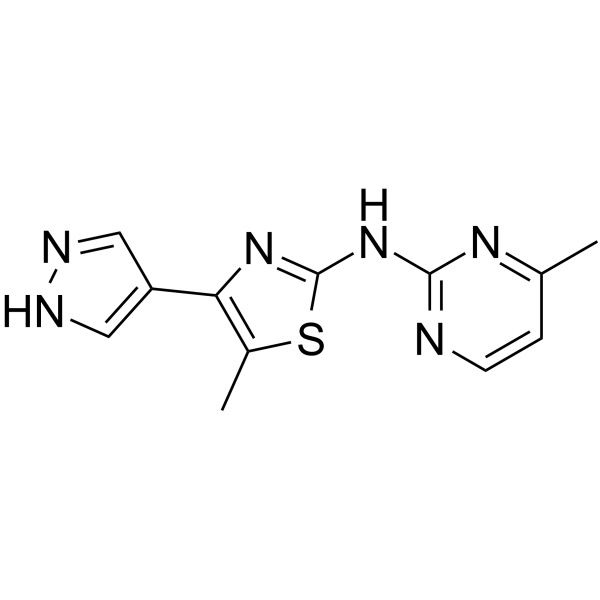
ADX88178
Based on 1 publication(s) in Google Scholar
ADX88178 is an orally active, blood-brain barrier-penetrant, selective positive allosteric modulator of mGluR4, with an EC50 of 3.5 nM against hmGluR4. ADX88178 modulates mGlu4 activity, enhances glutamate-mediated receptor activation, and increases the apparent affinity of glutamate for the receptor. ADX88178 reverses haloperidol-induced catalepsy, potentiates the effects of levodopa (L-DOPA) and quinpirole, but fails to alleviate established abnormal involuntary movements, does not exacerbate L-DOPA-induced dyskinesia, and does not affect forelimb akinesia when administered alone. ADX88178 can be used in research related to L-DOPA-induced dyskinesia and Parkinson's disease.
Nos produits utilisent uniquement pour la recherche. Nous ne vendons pas aux patients.
- Pureté : 99.50%
- CAS No.: 1235318-89-4
- Formule: C12H12N6S
- Masse moléculaire:272.33
-
Stockage:Powder -20°C, 3 years , 4°C, 2 years ; In solvent -80°C, 2 years , -20°C, 1 year

To place orders, for customer services and technical support, please contact: MedChemExpress USA
Tel: 609-228-6898 E-mail: [email protected] [email protected]


-
 Activité biologique
-
Chemical Information
-
Solvant et solubilité
- Protocole
- Pureté et documentation
- Références
-
 Help & FAQs


-
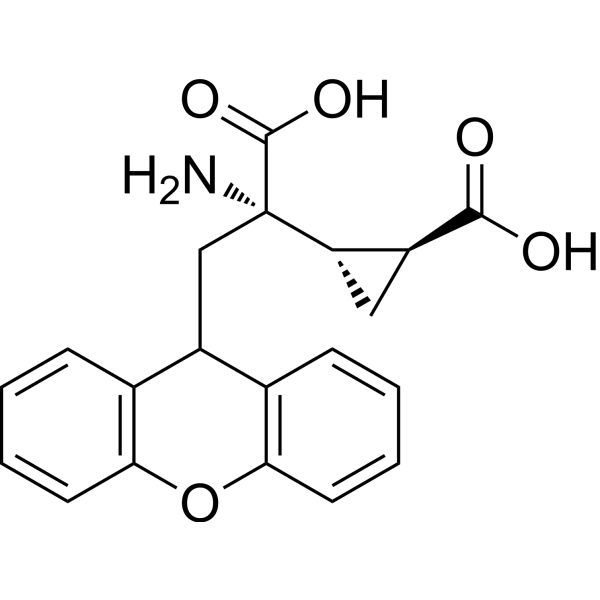
HY-70059
LY341495mGluR Antagonist -
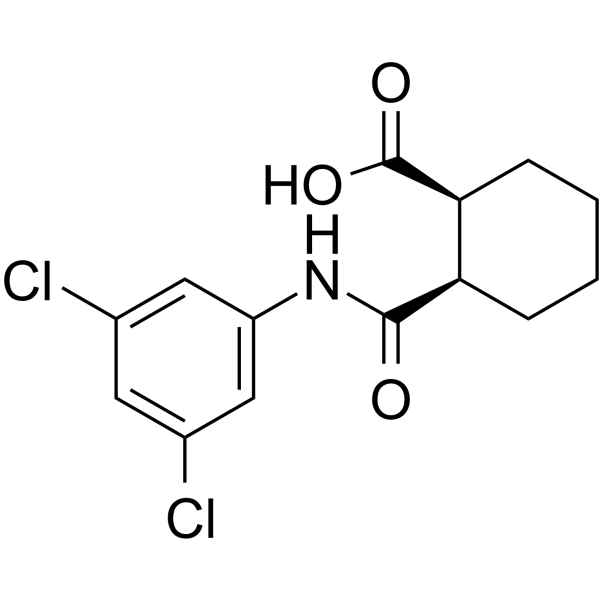
HY-14417
VU0155041mGluR4 Allosteric Agonist -
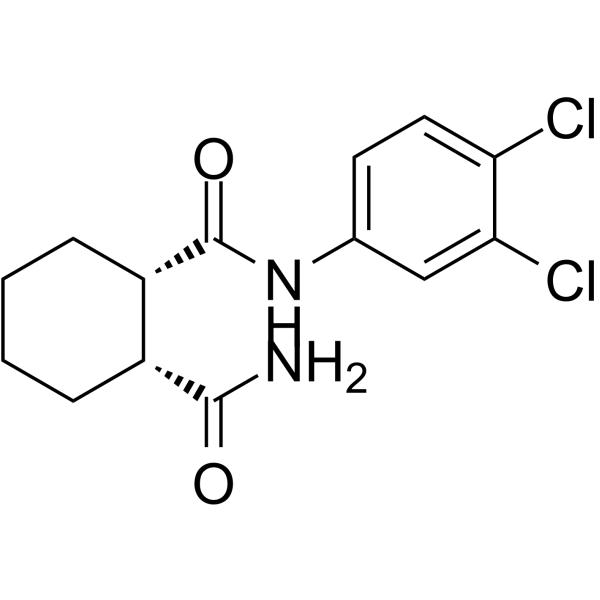
HY-100366
Lu AF21934mGlu4 Receptor PAM -
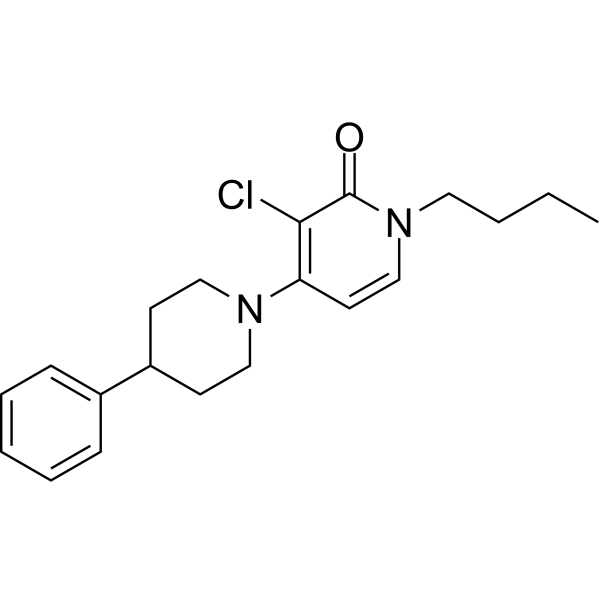
HY-15748
JNJ-40411813Glu2R Positive Allosteric Modulator -
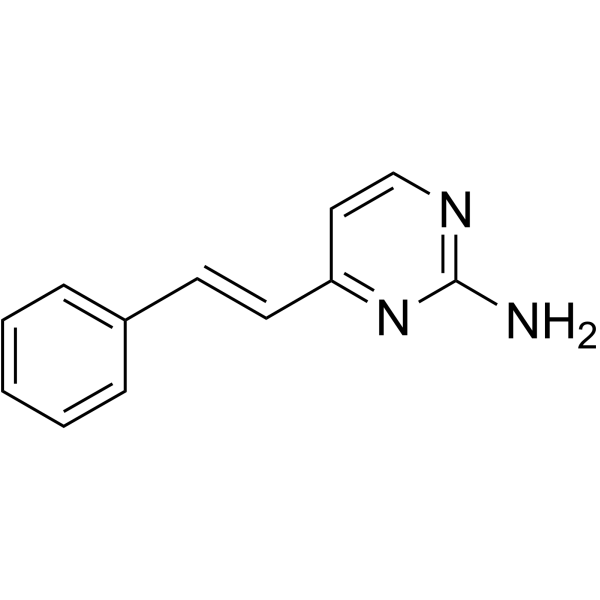
HY-14419
TCN238mGlu4 Receptor PAM -
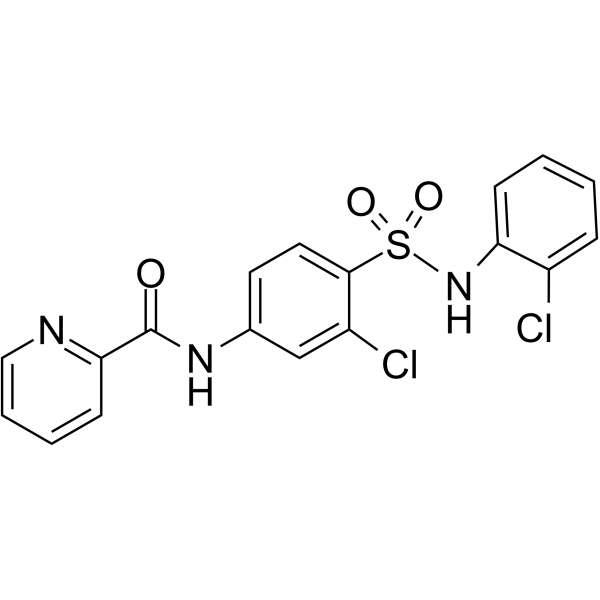
HY-15476
VU 0364439mGlu4 Allosteric Modulator -
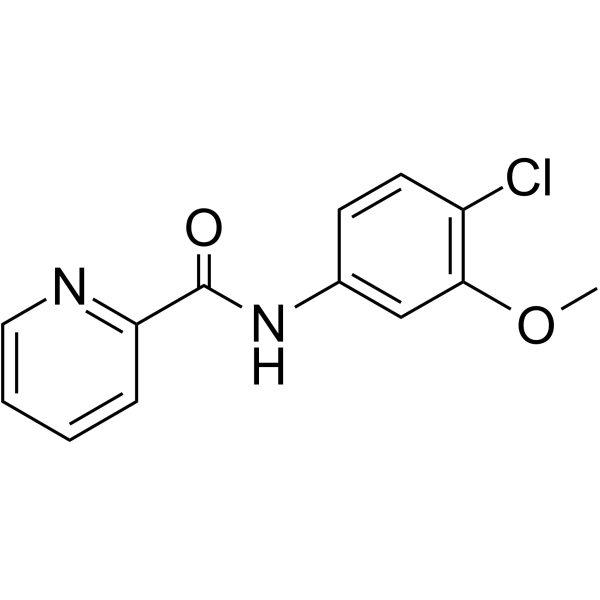
HY-14418
VU0361737mGluR4 PAM -
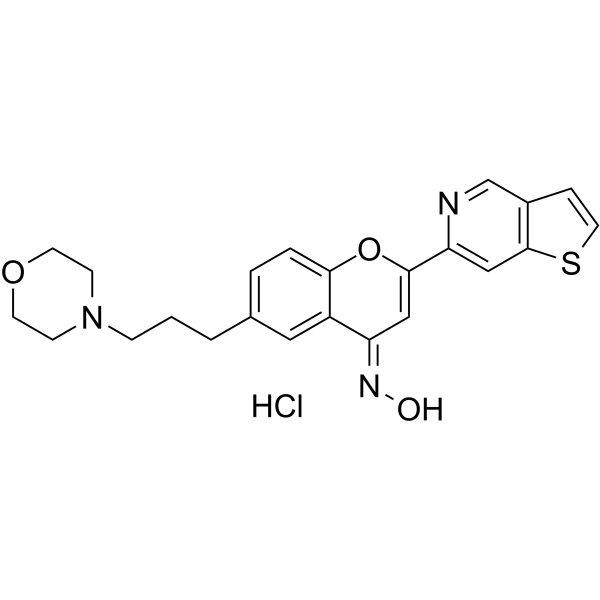
HY-108703A
Foliglurax monohydrochloridemGluR Agonist
Publications Citing Use of MedChemExpress (MCE) ADX88178
More

Activité biologique
Description
IC50 & Target
[1]|
hmGluR4 3.5 nM (EC50) |
In Vitro
ADX88178 (30 nM-3 μM) potently enhances glutamate-mediated calcium mobilization in HEK293 cells expressing hmGluR4, with an EC50 of 3.5 nM, and exhibits no intrinsic agonist activity[2].
ADX88178 enhances glutamate-mediated calcium mobilization in HEK293 cells expressing rat mGluR4, with an EC50 of 9.1 nM, and exhibits no intrinsic agonist activity[2].
ADX88178 exerts inhibitory effects of varying intensities on cytochrome P450 enzymes, with the strongest inhibitory activity against CYP1A2 (IC50 = 0.46 μM) and weak inhibitory activity against CYP2D6 (IC50 >50 μM)[2].
ADX88178 (1000 ng/mL) shows low plasma protein binding, with a free fraction of 8.1% in rat plasma and 21.5% in mouse plasma[2].
MedChemExpress (MCE) has not independently confirmed the accuracy of these methods. They are for reference only.
In Vivo
ADX88178 (0.1-10 mg/kg; p.o.) produces dose-dependent reversal of haloperidol-induced catalepsy in male Sprague-Dawley rats, with an ED50 of 1.1 mg/kg and significant effects observed at 3 and 10 mg/kg[2].
ADX88178 (3-30 mg/kg; p.o.; 10 mg/kg; i.p.; 20-60 minutes before L-DOPA or vehicle) alone does not improve forelimb akinesia in 6-OHDA-lesioned male Sprague-Dawley rats, but it dose-dependently potentiates the efficacy of submaximal L-DOPA doses, with full reversal of motor deficits achieved at 30 mg/kg ADX88178 plus 6 mg/kg L-DOPA[2].
MedChemExpress (MCE) has not independently confirmed the accuracy of these methods. They are for reference only.
-
Animal Model:Sprague-Dawley (male, 270-300 g, 6-hydroxydopamine-lesioned, primed with L-DOPA + benserazide to establish stable AIMs)[1]
-
Dosage:10 mg/kg; 30 mg/kg
-
Administration:p.o.; single dose 30 min prior to L-DOPA + benserazide
-
Result:Failed to produce a significant reduction in total AIMs scores compared to vehicle.
Failed to produce significant effects on axial, forelimb, or orolingual AIMs subtypes.
-
Animal Model:Sprague-Dawley (male, 260-450 g, haloperidol-induced catalepsy)[2]
-
Dosage:0.1 mg/kg; 0.3 mg/kg; 1 mg/kg; 3 mg/kg; 10 mg/kg
-
Administration:p.o.
-
Result:Produced a dose-dependent reversal of catalepsy.
Reduced catalepsy latency to 33.4 seconds (a 62.3% reduction from haloperidol alone) at 3 mg/kg.
Reduced catalepsy latency to 25.7 seconds (a 71.0% reduction from haloperidol alone) at 10 mg/kg.
Achieved an ED50 of 1.1 mg/kg for catalepsy reversal.
Reached an in vivo plasma EC50 of 92 ng/mL (338 nM).
-
Animal Model:Sprague-Dawley (male, 225-300 g, bilateral striatal 6-hydroxydopamine lesions)[2]
-
Dosage:3-30 mg/kg (p.o.); 10 mg/kg (i.p.)
-
Administration:p.o.; i.p.;
-
Result:Showed no significant effect on forelimb stepping scores when administered alone at 3, 10, or 30 mg/kg p.o.
Increased forelimb steps to ~18 when coadministered with 6 mg/kg L-DOPA at 3 mg/kg p.o.
Increased forelimb steps to ~23 when coadministered with 6 mg/kg L-DOPA at 10 mg/kg p.o.
Fully reversed forelimb stepping deficit, restoring steps to pre-lesion levels (~35) when coadministered with 6 mg/kg L-DOPA at 30 mg/kg p.o.
Potentiated L-DOPA efficacy at 10 mg/kg i.p., allowing full reversal of akinesia at 60 mg/kg L-DOPA (vs. 120 mg/kg L-DOPA alone).


Chemical Information
-
CAS No. 1235318-89-4
-
Appearance Solid
-
Masse moléculaire 272.33
-
Formule C12H12N6S
-
Color Light yellow to yellow
-
SMILES
CC1=C(C2=CNN=C2)N=C(NC3=NC=CC(C)=N3)S1
-
Livraison
Room temperature in continental US; may vary elsewhere.
-
Stockage
Powder -20°C 3 years 4°C 2 years In solvent -80°C 2 years -20°C 1 year


Publications (1)
-
Journal Impact Factor
-
Most Recent
-
Cell Res
Structural insights into dimerization and activation of the mGlu2-mGlu3 and mGlu2-mGlu4 heterodimers. [Abstract]2023 Oct;33(10):762-774. PMID: 37286794


Solvant et solubilité
In Vitro:
DMSO : 16.67 mg/mL (61.21 mM; Need ultrasonic; Hygroscopic DMSO has a significant impact on the solubility of product, please use newly opened DMSO)
Please refer to the solubility information to select the appropriate solvent. Once prepared, please aliquot and store the solution to prevent product inactivation from repeated freeze-thaw cycles.
Storage method and period of stock solution: -80°C, 2 years; -20°C, 1 year. When stored at -80°C, please use it within 2 years. When stored at -20°C, please use it within 1 year.
Please refer to the solubility information to select the appropriate solvent. Once prepared, please aliquot and store the solution to prevent product inactivation from repeated freeze-thaw cycles.
Storage method and period of stock solution: -80°C, 2 years; -20°C, 1 year. When stored at -80°C, please use it within 2 years. When stored at -20°C, please use it within 1 year.
Concentration (start) × Volume (start) = Concentration (final) × Volume (final)
In Vivo:
Select the appropriate dissolution method based on your experimental animal and administration route.
- For the following dissolution methods, please ensure to first prepare a clear stock solution using an In Vitro approach and then sequentially add co-solvents:
- To ensure reliable experimental results, the clarified stock solution can be appropriately stored based on storage conditions. As for the working solution for In Vivo experiments, it is recommended to prepare freshly and use it on the same day.
- The percentages shown for the solvents indicate their volumetric ratio in the final prepared solution. If precipitation or phase separation occurs during preparation, heat and/or sonication can be used to aid dissolution.
Add each solvent one by one: 10% DMSO 90% (20% SBE-β-CD in Saline)
Solubility: ≥ 1.67 mg/mL (6.13 mM); Clear solution
This protocol yields a clear solution of ≥ 1.67 mg/mL (saturation unknown).
Taking 1 mL working solution as an example, add 100 μL DMSO stock solution (16.7 mg/mL) to 900 μL 20% SBE-β-CD in Saline, and mix evenly.
Preparation of 20% SBE-β-CD in Saline (4°C, storage for one week): 2 g SBE-β-CD powder is dissolved in 10 mL Saline, completely dissolve until clear.
In Vivo Dissolution Calculator
Please enter the basic information of animal experiments:
-
-
-
-
Recommended: Prepare an additional quantity of animals to account for potential losses during experiments.
Please enter your animal formula composition:
-
%DMSO +
Recommended: Keep the proportion of DMSO in working solution below 2% if your animal is weak.
-
%+
-
+%Tween-80 + +
-
%Saline +
The co-solvents required include: DMSO, . All of co-solvents are available by MedChemExpress (MCE). , Tween 80. All of co-solvents are available by MedChemExpress (MCE).
Working solution concentration: 0.22 mg/mL
Method for preparing stock solution: mg drug dissolved in μL DMSO. Stock solution concentration: mg/mL.
1. Take μL DMSO stock solution;
2. Add μL .
μL , mix evenly;
3. Then add μL Tween 80, mix evenly;
4. Then add μL
Please ensure that the stock solution in the first step is dissolved to a clear state, and add co-solvents in sequence. You can use ultrasonic heating (ultrasonic cleaner, recommended frequency 20-40 kHz), vortexing, etc. to assist dissolution.


Pureté et documentation
-
Fiche technique (279 KB)
-
SDS (393 KB)
- English - EN (393 KB)
- Français - FR (393 KB)
- Deutsch - DE (393 KB)
- Norwegian - NO (393 KB)
- Español - ES (393 KB)
- Swedish - SV (393 KB)
- Italian - IT (393 KB)
- Korean - KR (393 KB)
- Portuguese - PT (393 KB)
-
Instruction de manipulation (2659 KB)
Références
[1]. Finlay CJ, et al. Metabotropic Glutamate Receptor 4 (mGlu4) Positive Allosteric Modulators Lack Efficacy in Rat and Marmoset Models of L-DOPA-Induced Dyskinesia. J Parkinsons Dis. 2024;14(2):245-259. [Content Brief]
[2]. Le Poul E, et al. A potent and selective metabotropic glutamate receptor 4 positive allosteric modulator improves movement in rodent models of Parkinson's disease. J Pharmacol Exp Ther. 2012;343(1):167-177. [Content Brief]


Complete Stock Solution Preparation Table
Please refer to the solubility information to select the appropriate solvent. Once prepared, please aliquot and store the solution to prevent product inactivation from repeated freeze-thaw cycles.
Storage method and period of stock solution: -80°C, 2 years; -20°C, 1 year. When stored at -80°C, please use it within 2 years. When stored at -20°C, please use it within 1 year.
| Optional Solvent | Concentration Solvent Mass | 1 mg | 5 mg | 10 mg | 25 mg |
|---|---|---|---|---|---|
| DMSO | 1 mM | 3.6720 mL | 18.3601 mL | 36.7202 mL | 91.8004 mL |
| 5 mM | 0.7344 mL | 3.6720 mL | 7.3440 mL | 18.3601 mL | |
| 10 mM | 0.3672 mL | 1.8360 mL | 3.6720 mL | 9.1800 mL | |
| 15 mM | 0.2448 mL | 1.2240 mL | 2.4480 mL | 6.1200 mL | |
| 20 mM | 0.1836 mL | 0.9180 mL | 1.8360 mL | 4.5900 mL | |
| 25 mM | 0.1469 mL | 0.7344 mL | 1.4688 mL | 3.6720 mL | |
| 30 mM | 0.1224 mL | 0.6120 mL | 1.2240 mL | 3.0600 mL | |
| 40 mM | 0.0918 mL | 0.4590 mL | 0.9180 mL | 2.2950 mL | |
| 50 mM | 0.0734 mL | 0.3672 mL | 0.7344 mL | 1.8360 mL | |
| 60 mM | 0.0612 mL | 0.3060 mL | 0.6120 mL | 1.5300 mL |


ADX88178 Related Classifications
HY-18654 Related Classifications
 Powered by Bioz