



Chlorhexidine (Standard)

Based on 1 Customer Validation
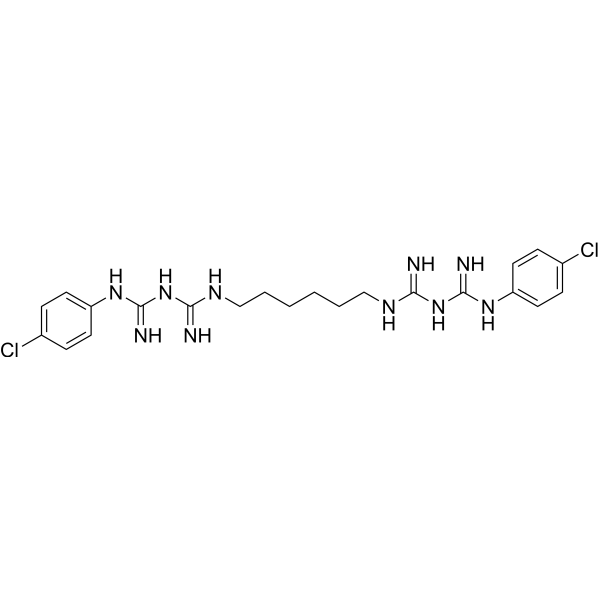
Chlorhexidine (Standard) is the analytical standard of Chlorhexidine (HY-B1248). This product is intended for research and analytical applications. Chlorhexidine is a orally active cationic antimicrobial agent that targets microbial cell membranes. Chlorhexidine binds to cell membrane phospholipids non-specifically, destroys membrane structure and induces leakage of cell contents. Chlorhexidine has broad-spectrum bactericidal activity against both Gram-positive and Gram-negative bacteria. Chlorhexidine can interfere with membrane permeability, cause protein precipitation and energy metabolism disorders, such as rapid inhibition of microbial growth and induction of cell death (necrosis or apoptosis).
Nos produits utilisent uniquement pour la recherche. Nous ne vendons pas aux patients.
- Pureté : 98.96%
- CAS No.: 55-56-1
- Formule: C22H30Cl2N10
- Masse moléculaire:505.45
-
Stockage:
Please store the product under the recommended conditions in the Certificate of Analysis.


To place orders, for customer services and technical support, please contact: MedChemExpress USA
Tel: 609-228-6898 E-mail: [email protected] [email protected]


-
 Product Information
-
Chemical Information
- Pureté et documentation
-
 Help & FAQs


-
HY-B1248
ChlorhexidineBacterial Inhibitor -
HY-B1145
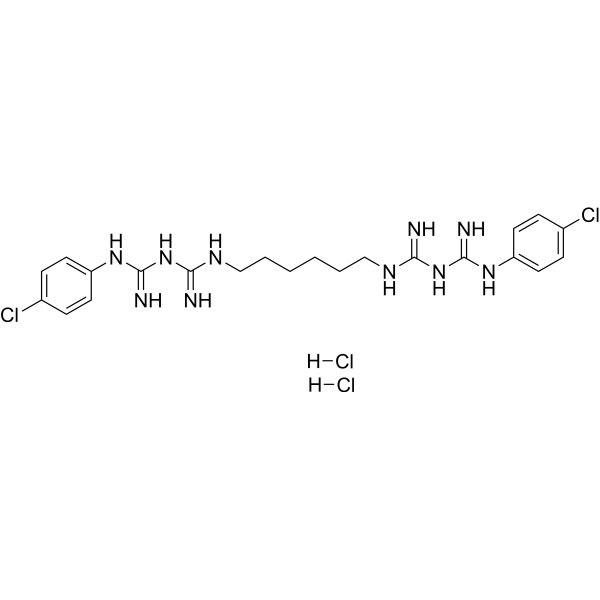
Chlorhexidine dihydrochlorideAntibacterial Agent -
HY-17471A
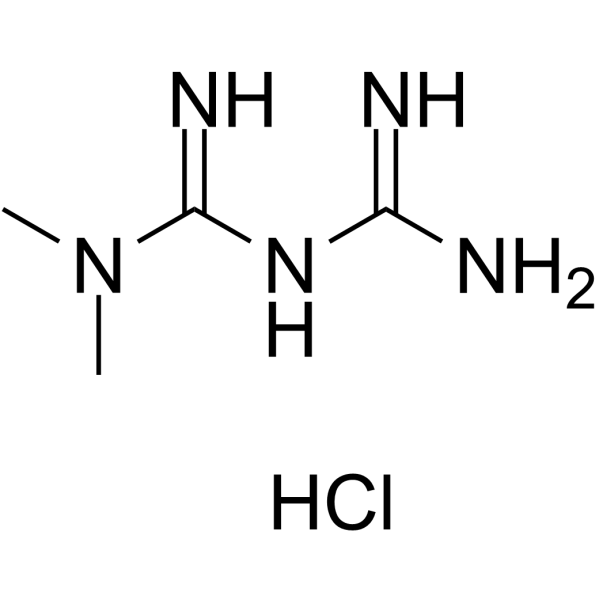
Metformin hydrochlorideAntihyperglycemic Agent -
HY-W013699
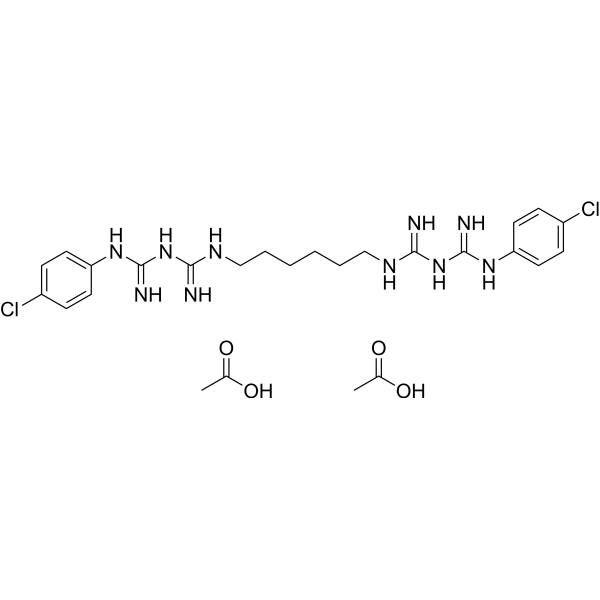
Chlorhexidine diacetateAntibacterial Agent -
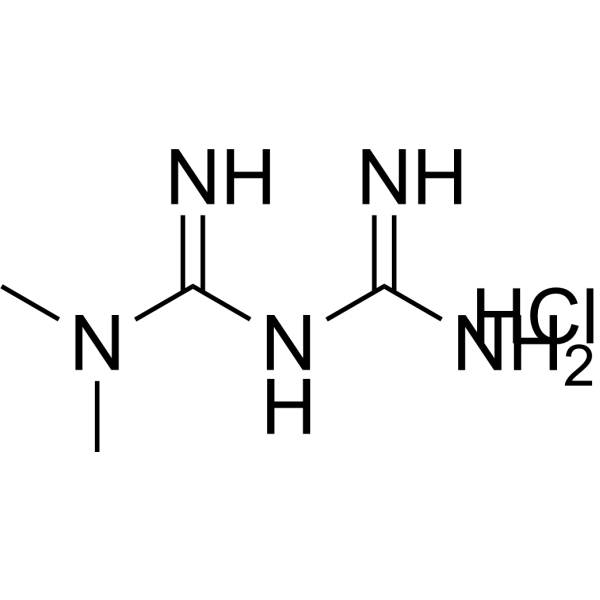
HY-17471AR
Metformin hydrochloride (Standard)Analytical Standard -
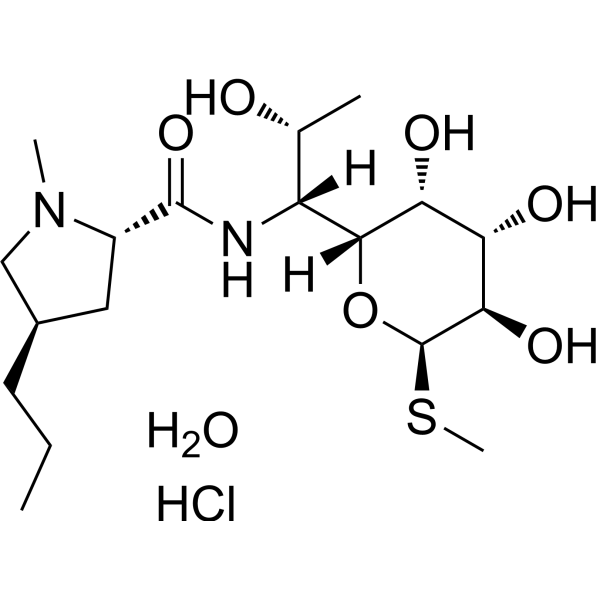
HY-B1358
Lincomycin hydrochloride monohydrateRibosome Inhibitor -

HY-B1145R
Chlorhexidine dihydrochloride (Standard)Antibacterial Agent -

HY-W013699R
Chlorhexidine diacetate (Standard)Antibacterial Agent -

HY-B1358R
Lincomycin hydrochloride monohydrate (Standard)Standard of Lincomycin hydrochloride monohydrate


Product Information
Information
Application
The compound is the grade of analytical standard, which is the reference standard supplied assay. It is commonly used in qualitative, quantitative and methodological research experiments in HPLC, GC and MS.


Chemical Information
-
CAS No. 55-56-1
-
Appearance Solid
-
Masse moléculaire 505.45
-
Formule C22H30Cl2N10
-
Color White to off-white
-
SMILES
N=C(NC1=CC=C(Cl)C=C1)NC(NCCCCCCNC(NC(NC2=CC=C(Cl)C=C2)=N)=N)=N
-
Livraison
Room temperature in continental US; may vary elsewhere.
-
Stockage
Please store the product under the recommended conditions in the Certificate of Analysis.


Pureté et documentation
-
SDS (562 KB)
- English - EN (562 KB)
- Français - FR (562 KB)
- Deutsch - DE (562 KB)
- Norwegian - NO (562 KB)
- Español - ES (562 KB)
- Swedish - SV (562 KB)
- Italian - IT (562 KB)
- Korean - KR (562 KB)
- Portuguese - PT (562 KB)
-
Instruction de manipulation (2659 KB)
Références
[1]. Faria G, et al. Evaluation of chlorhexidine toxicity injected in the paw of mice and added to cultured l929 fibroblasts. J Endod. 2007 Jun;33(6):715-22. [Content Brief]
[2]. Sanchez IR, et al. Chlorhexidine diacetate and povidone-iodine cytotoxicity to canine embryonic fibroblasts and Staphylococcus aureus. Vet Surg. 1988;17(4):182-185. [Content Brief]
[3]. Zhang J, et al. Pulmonary Toxicity Assessment after a Single Intratracheal Inhalation of Chlorhexidine Aerosol in Mice. Toxics. 2023 Nov 7;11(11):910. [Content Brief]
[4]. Ribeiro DA, et al. Chlorhexidine induces DNA damage in rat peripheral leukocytes and oral mucosal cells. J Periodontal Res. 2004 Oct;39(5):358-61. [Content Brief]

Calculators
Concentration (start) × Volume (start) = Concentration (final) × Volume (final)


Chlorhexidine (Standard) Related Classifications
HY-B1248R Related Classifications
 Powered by Bioz